There exists a rarefied tier of American golf clubs where membership is measured not in dollars, but in legacy, influence, and an unwavering commitment to the game's highest traditions. These institutions guard some of the most celebrated holes in golf architecture—designs that have shaped championships, broken hearts, and elevated the sport to an art form.
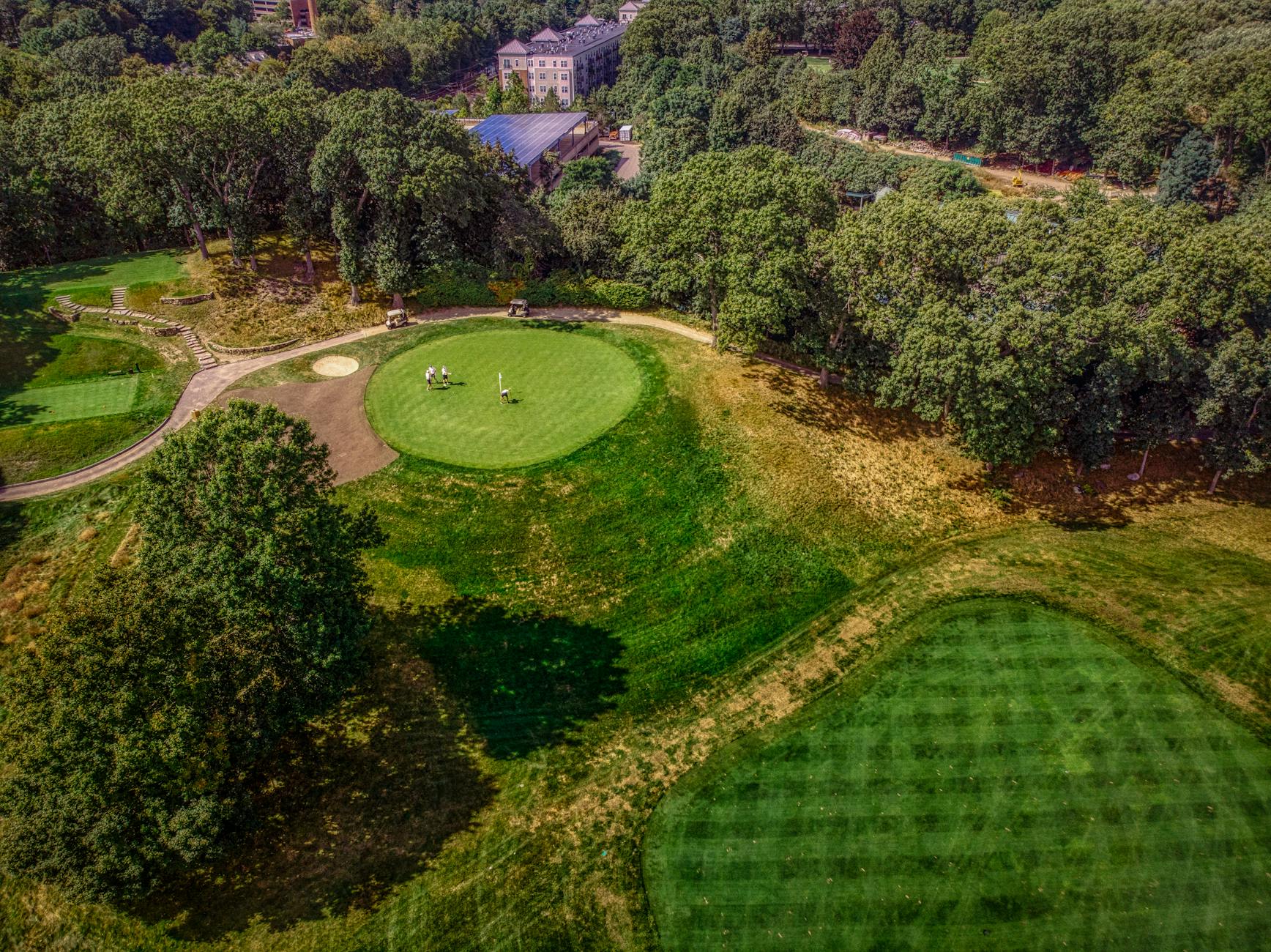
For the serious golfer, understanding these signature holes offers more than architectural appreciation. It provides insight into strategic design principles that challenge the world's finest players and reveal why certain layouts endure as benchmarks of excellence.
Augusta National Golf Club: Where Legends Are Made
No discussion of American golf's pinnacle begins anywhere but Augusta National. The brainchild of Bobby Jones and Alister MacKenzie, this Georgia sanctuary hosts the Masters Tournament each April, transforming its immaculate grounds into golf's most watched theatre.
The 12th hole, Golden Bell, stands as perhaps the most nerve-wracking 155 yards in championship golf. This deceptively simple par-3 plays across Rae's Creek to a shallow green protected by bunkers front and rear. The challenge lies not in distance but in wind judgment—swirling currents through the Amen Corner pines have destroyed countless Masters dreams.
There is no other hole in golf where the weights of history and expectation press so heavily upon a single iron shot.
— Golf Course Architecture Analysis
The green's extreme width relative to its depth demands precise distance control. Club selection here becomes a psychological test as much as a technical one, with players often watching competitors' shots for wind clues before committing to their own.
Pine Valley Golf Club: The Ultimate Test
Pine Valley in New Jersey consistently ranks among the world's greatest courses, and its 13th hole exemplifies why. This 446-yard par-4 presents a driving challenge that separates elite ball-strikers from the merely good.
The fairway appears generous from the tee, but sand and scrub consume anything offline. The approach must carry a vast sandy waste to reach a green perched like an island amid chaos. Course management here rewards those who understand their true capabilities rather than aspirational distance.
- Strategic bunkering demands precise positioning off the tee
- Approach shots require committed swings over hazards
- Green complexes offer limited bail-out options
- Wind stability in ball flight becomes crucial for scoring
Cypress Point Club: Where Golf Meets the Pacific
Alister MacKenzie's masterpiece along the Monterey Peninsula features the incomparable 16th hole—a 231-yard par-3 that plays entirely over the Pacific Ocean to a green carved into the rocky coastline. It remains one of golf's most photographed and feared shots.

The carry over churning surf demands commitment and precise execution. When winds howl off the Pacific, even professionals opt for the safer layup to a fairway left of the green, accepting bogey rather than risking the depths. For those who choose to go for it, the reward of finding that green creates memories that last lifetimes.
Shinnecock Hills: Links Golf on American Soil
As one of America's founding golf clubs, Shinnecock Hills on Long Island has hosted multiple U.S. Opens, with its 7th hole standing as a testament to strategic par-4 design. The hole doglegs left around native fescue, demanding a precise tee shot that balances aggression with discretion.
The approach plays to an elevated green complex where wind off the Atlantic makes club selection an educated guess at best. Shinnecock's firm, fast conditions reward players who can control trajectory and spin—the ball must land softly on surfaces that reject anything struck without conviction.
The Art of the Approach
What distinguishes Shinnecock's challenge is its demand for creative shot-making. Players must shape approaches into prevailing winds, using terrain contours to funnel balls toward pin positions. This represents links golf at its finest on American shores.
Merion Golf Club: Compact Brilliance
Merion's East Course in Pennsylvania proves that great golf need not sprawl across vast acreage. The 16th hole, known as the Quarry, plays just 428 yards but presents an approach over an abandoned quarry to a green that falls away on all sides.
This hole epitomizes risk-reward calculus. Aggressive lines from the tee open better approach angles but bring quarry edges into play. Conservative players face longer, more demanding second shots to a putting surface that punishes anything less than precise execution.
- Tee shot positioning determines approach difficulty
- Quarry carry requires committed ball-striking
- Green contours demand precise landing spots
- Recovery options are severely limited
Oakmont Country Club: Relentless Challenge
Pittsburgh's Oakmont remains among America's most demanding layouts, with its Church Pews bunker complex on the 3rd and 4th holes achieving legendary status. These parallel bunkers feature rows of grass ridges that make recovery nearly impossible—players must often play sideways to escape.
The 3rd hole's tee shot demands accuracy between these hazards and out-of-bounds left. When the U.S. Open visits Oakmont, this stretch routinely claims victims who underestimate its severity. The design philosophy here is uncompromising: precision or penalty.
What These Holes Teach Us
Each signature hole discussed shares common DNA: they demand strategic thinking before physical execution. Course management at this level means understanding not just where to hit the ball, but why certain positions create advantages and how environmental factors influence optimal play.
For golfers seeking to elevate their games, studying these designs offers invaluable lessons. The principles of risk-reward assessment, wind management, and approach angle optimization apply whether playing a bucket-list venue or your home course.
Great holes don't simply penalize poor shots—they reward intelligent ones. The difference defines championship architecture.
— Strategic Golf Design Principles
These private sanctuaries represent golf's highest aspirations. While access remains limited to the fortunate few, the architectural lessons they offer belong to anyone willing to study the game's deepest traditions. Understanding what makes these holes exceptional ultimately makes us better students of this endlessly fascinating sport.
Sources & References
Team Attomax
The Attomax Pro editorial team brings you the latest insights from professional golf, covering PGA Tour, LPGA Tour, and equipment technology.