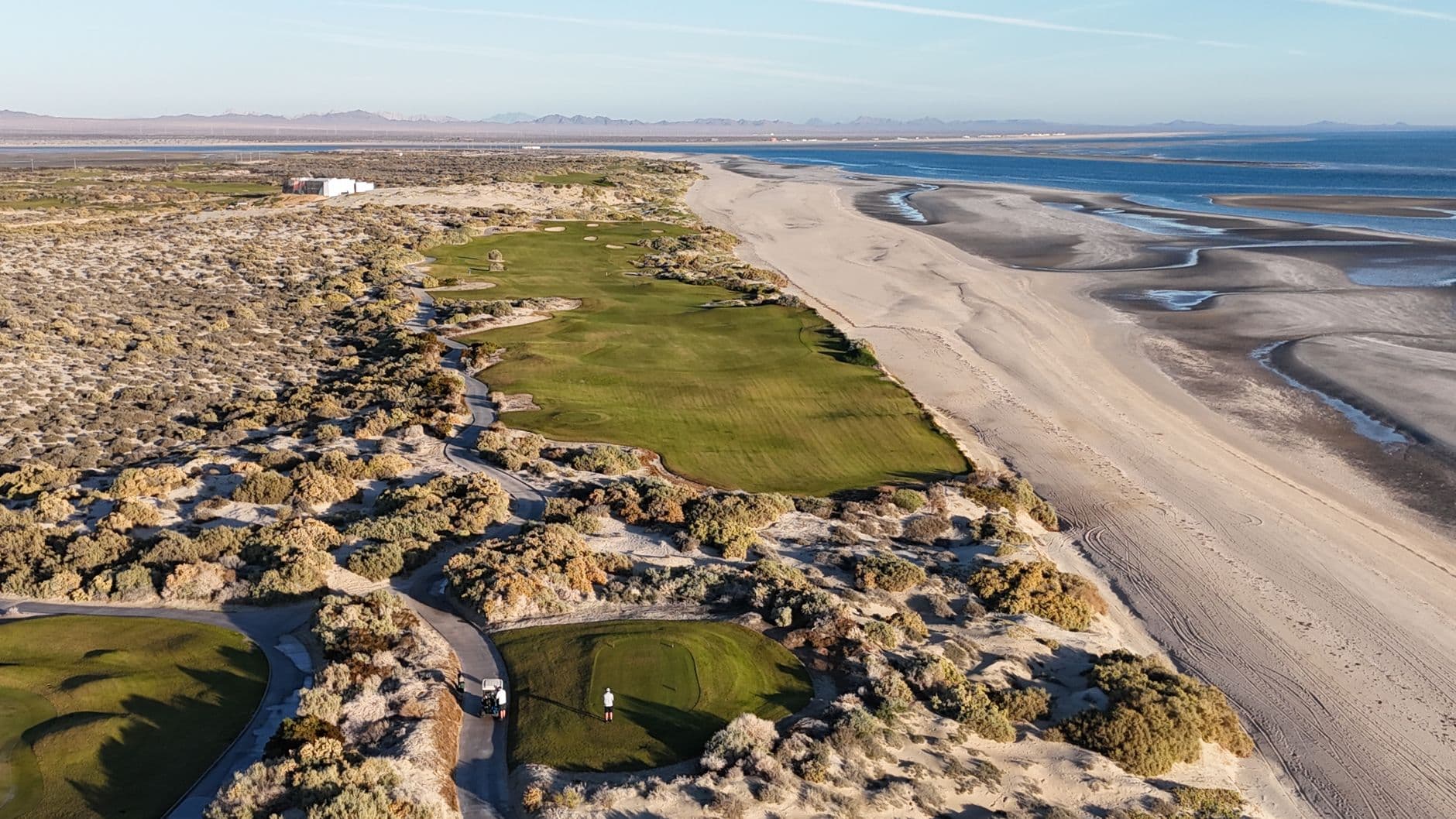
There exists a rarefied tier of American golf where membership waitlists span decades, initiation fees rival luxury automobiles, and the courses themselves represent the pinnacle of golf course architecture. These private sanctuaries have hosted major championships, shaped the careers of legends, and continue to set the standard for what elite golf should be.
But beyond the exclusivity and tradition, what truly distinguishes these clubs are their signature holes—those defining tests of skill and nerve that separate good rounds from great ones. These aren't merely difficult holes; they're architectural statements that have influenced course design for generations.
Augusta National: The 12th at Amen Corner
No discussion of signature holes begins anywhere other than the 155-yard 12th at Augusta National Golf Club. This deceptively short par-3 sits at the heart of Amen Corner, where more Masters dreams have died than perhaps any other stretch in championship golf. The shallow green, fronted by Rae's Creek and backed by bunkers, becomes a mental crucible every April.
The challenge isn't distance—it's wind. Swirling currents through the Georgia pines create conditions that change between a player's practice swing and their actual stroke. Club selection becomes a psychological battle, with competitors often watching balls that appeared perfectly struck find watery graves.
The 12th hole at Augusta National is the most demanding tournament hole in the world.
— Jack Nicklaus
Pine Valley: The Intimidating 7th
Pine Valley Golf Club in New Jersey consistently ranks among the world's finest courses, and its 7th hole exemplifies why. This hellish par-5 stretches through sandy waste areas and dense forest, demanding three precisely executed shots with zero margin for error.
The approach shot to the elevated green requires carrying a deep bunker known as 'Hell's Half Acre,' a massive sandy expanse that has swallowed countless approach shots. Pine Valley's routing through the Pine Barrens creates a sense of isolation that intensifies every decision.
- Hell's Half Acre bunker spans approximately 100 yards
- The green is protected by steep falloffs on three sides
- No rough exists—only sand and forest await errant shots
- The course famously has no homes or real estate development
Cypress Point: The Legendary 16th
Perched on California's Monterey Peninsula, Cypress Point Club features what many consider golf's most photographed hole. The 16th is a 230-yard par-3 that requires carrying the crashing Pacific Ocean to reach a green nestled against the rocky coastline. When wind howls off the water, this becomes one of the most intimidating shots in golf.
Alister MacKenzie's design genius shines here—the bail-out area left of the green offers a safer play, but the direct line over churning surf tempts every competitor. The visual drama alone makes this hole unforgettable, but the strategic complexity elevates it to architectural immortality.

Shinnecock Hills: The Windswept 7th
Shinnecock Hills Golf Club on Long Island represents American links golf at its finest. The 7th hole, a 189-yard par-3, plays across a valley to a green perched atop a windswept knoll. Multiple U.S. Opens have showcased this hole's brutal honesty—there's nowhere to hide when the Atlantic wind builds.
The putting surface runs away from players, meaning approaches that land just short often roll back down the fronting slope. When Open conditions firm the turf, this becomes a hole where par feels like birdie.
Oakmont: The Church Pews at the 3rd
Oakmont Country Club near Pittsburgh has hosted more combined USGA championships than any other venue, and the 3rd hole's famous 'Church Pews' bunker complex defines the club's punishing philosophy. These parallel rows of grass-covered mounds within the massive bunker create a visual and strategic nightmare.
Finding the Church Pews typically means adding at least one stroke to your score, as lateral recovery shots between the rows require precision and creativity. Oakmont's greens, among the fastest in championship golf, compound any mistakes made from the tee.
What Makes a Signature Hole
These holes share common elements that elevate them beyond mere difficulty. Each presents a clear risk-reward proposition, forcing players to match their skill level against their ambition. They're visually stunning, creating memories that extend beyond scorecards. And crucially, they're fair—the challenge is apparent, and execution determines outcome.
- Strategic options reward course management over pure power
- Natural features integrate seamlessly with design elements
- Recovery opportunities exist but require exceptional skill
- The hole tells a story that builds from tee to green
The Modern Approach to Classic Design
Contemporary equipment advances have prompted many elite clubs to defend their signature holes through subtle modifications. Tees have moved back, bunkers have been repositioned, and green complexes have been restored to original contours. The goal isn't to defeat players but to preserve the architectural intent of holes designed in a different equipment era.
For those fortunate enough to experience these courses, the signature holes deliver exactly what their reputations promise. They test every aspect of the game—ball striking, course management, mental resilience, and the ability to execute under pressure.
Whether you're playing a high-density tour ball designed for wind stability or the same equipment the pros use, these holes ask the same fundamental question: can you trust your swing when everything is on the line? The greatest private clubs in America have been answering that question for over a century, and their signature holes remain the ultimate proving grounds for serious golfers.
Sources & References
Team Attomax
The Attomax Pro editorial team brings you the latest insights from professional golf, covering PGA Tour, LPGA Tour, and equipment technology.