Every golfer has an opinion on ball selection, but few decisions are as technically consequential — or as commonly misunderstood — as ball compression. It's not just about feel at impact. It's about energy transfer efficiency, spin separation between clubs, and ultimately, how many yards you're leaving on the table with every swing you take.
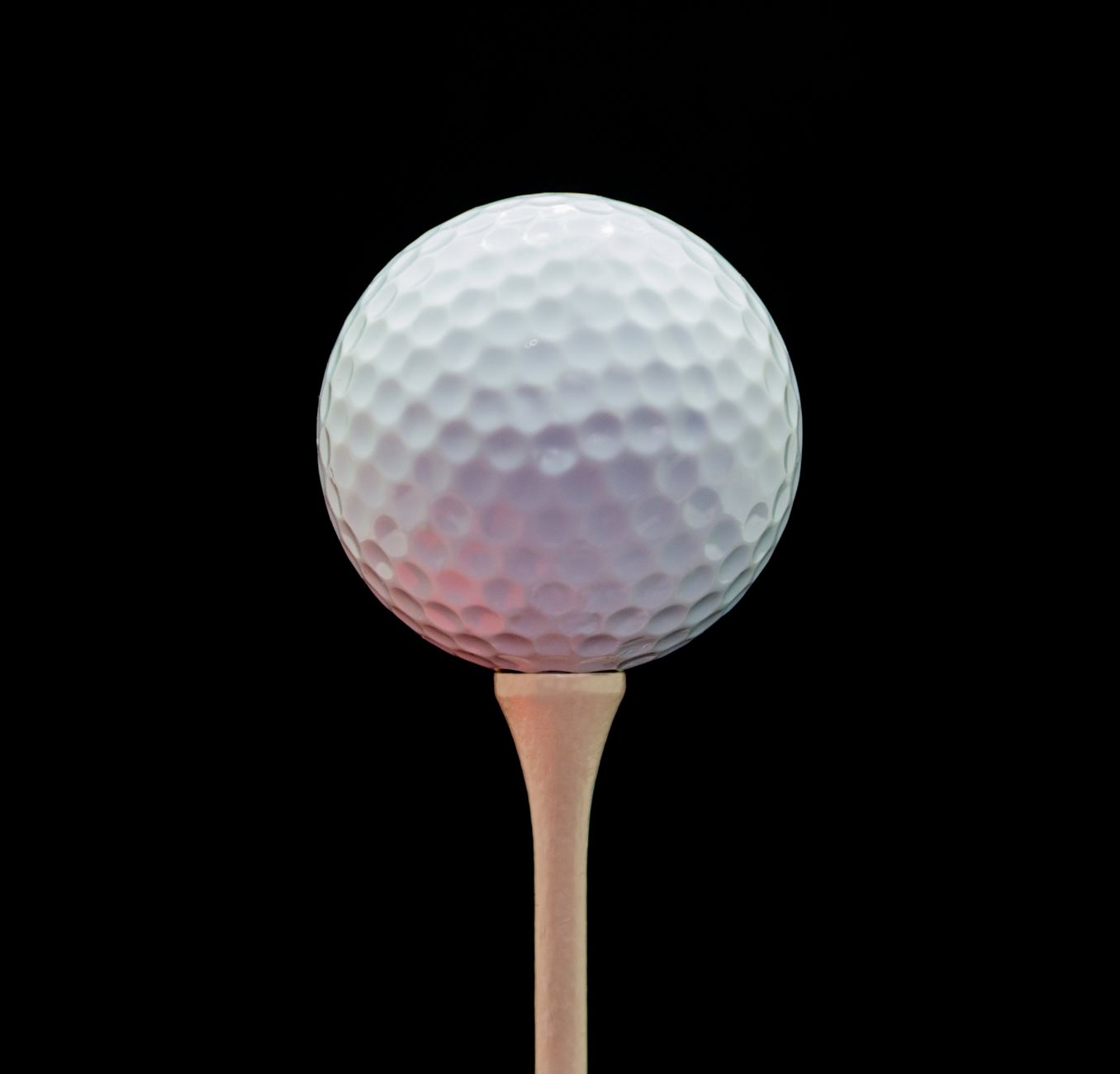
Compression is a measure of how much a golf ball deforms at the moment of impact. Expressed on a numerical scale, a lower compression rating means the ball deflects more under the force of a clubface; a higher rating means it resists that deformation. The critical variable isn't the number itself — it's whether your swing speed generates enough force to compress the ball to its optimal deflection point.
Think of it like a spring. Hit a high-compression ball at too low a swing speed, and you're never fully loading that spring. The energy return is incomplete, and the result is distance loss and a harsh, 'boardy' feel off the face. Conversely, a low-compression ball hit at elite swing speeds collapses too quickly, generating inconsistent launch and reducing the precise spin control that low-handicap players depend on.
The Three Compression Windows
The golf ball market has broadly converged around three compression categories, each corresponding to a swing speed profile. Understanding which window you fall into is the foundation of intelligent ball selection — not brand loyalty, not what your playing partners use, not what Tour players are paid to endorse.
- Low Compression (below ~70): Designed for swing speeds under approximately 85 mph. Maximizes energy return at slower velocities, delivers softer feel, and reduces the physical effort required to generate adequate spin on approach shots.
- Mid Compression (roughly 70–90): The broadest, most versatile category. Suited to the 85–105 mph swing speed range that covers the majority of competitive club golfers. Balances distance off the tee with greenside control.
- High Compression (90 and above): Built for players generating 105+ mph with the driver. Rewards aggressive, high-speed swings with superior spin separation — lower driver spin, higher wedge spin — and a penetrating, tour-caliber ball flight.
These are not rigid boundaries, and ball construction — core material, mantle layers, cover compound — interacts with compression in complex ways. A urethane-covered mid-compression ball will perform very differently from an ionomer-covered ball at the same compression rating. The cover is where short-game feel and greenside spin are largely determined, independent of the compression number.
Compression and Altitude: An Often-Ignored Variable
Golfers who play regularly at elevation — the courses threading through Colorado, the high-desert tracks of New Mexico, or the elevated layouts of parts of Europe and South Africa — need to account for how altitude modifies effective compression. Reduced air density at altitude lowers aerodynamic drag and changes the dynamic load on the ball at impact.
At high elevation, the ball carries further through the air, which means a player who normally sits at the upper edge of the mid-compression window may find a high-compression ball behaves more responsively than it would at sea level. The practical implication: players who travel between elevations should not assume their sea-level ball selection is universally optimal.

What High-Density Construction Changes
Traditional golf ball construction uses relatively standard core densities, with manufacturers adjusting compression primarily through core hardness and diameter. High-density amorphous metal technology — the engineering principle behind the Attomax Pro ball lineup — approaches the problem from a different angle entirely.
By utilizing a high-density amorphous metal core, Attomax balls achieve a more precise and consistent energy transfer coefficient across a wider range of impact velocities. This is particularly meaningful for players in the mid-compression window, where swing speed fluctuates naturally across a round — between a well-loaded drive at the first tee and a fatigue-affected swing on the 17th. A ball engineered for tighter energy return consistency across that velocity range effectively reduces variance in carry distance, which is a measurable advantage in course management.
The Attomax Pro lineup offers three distinct compression profiles — Soft, Medium, and Hard — specifically calibrated to align with the swing speed windows described above. The Hard variant, in particular, is engineered for players with elite clubhead speeds who require the spin separation and penetrating trajectory that high-compression construction enables, while the material advantages of amorphous metal maintain responsiveness at the cover level.
Spin Separation: The Tour-Level Differentiator
When Tour analysts discuss ball performance, spin separation consistently emerges as the most critical performance metric beyond raw distance. Spin separation refers to the difference in spin rate between driver strikes and short-iron or wedge strikes with the same ball.
An ideal ball for a skilled player produces low driver spin — reducing the balloon effect that robs carry and increases wind sensitivity — while generating high wedge spin, enabling aggressive flag-hunting on approach shots and precise stopping control around the green. This is a physically difficult balance to achieve, and it is largely why multi-layer construction dominates the performance ball segment.
The ball you play has more impact on your scoring than almost any other equipment variable. It's in play on every single shot — full swings, chips, putts. Yet most golfers spend far more time fitting their irons than their ball.
— Common consensus among tour-level club fitters
Low-compression balls are inherently limited in spin separation because the softer core generates elevated spin across all club types, not selectively at short irons. This is an acceptable trade-off for players whose swing speed doesn't optimize a high-compression ball, but it is a genuine performance ceiling that prevents lower-spin, higher-trajectory driving.
Temperature and Course Conditions
Compression is not a fixed property under all playing conditions. Cold temperatures measurably increase the effective compression of a golf ball — the core becomes stiffer, the cover less supple. Players competing in early-season events or links conditions in autumn will often find that their usual ball plays a half-compression category harder than expected.
This is a practical reason why some tour caddies carry a ball in an interior pocket during cold rounds — to keep it at body temperature before the player takes it from the bag. For club golfers playing winter or early spring rounds, it may be worth considering whether a one-compression-category softer ball would better match swing speed in 45-degree conditions than the ball that performs optimally in July.
Practical Protocol: How to Find Your Compression Match
- Measure your actual driver swing speed with a launch monitor, not an estimate. Many golfers overestimate their speed by 5–10 mph.
- Map that speed to the compression window above. Be honest — if you're at 88 mph, you're mid-compression, not high.
- Test within that window. Hit a minimum of 10 shots each with low, mid, and high-compression options in your category and adjacent ranges, measuring carry distance and dispersion.
- Evaluate short-game response separately. Hit half-wedge and pitch shots to assess feel, spin, and check behavior on firm greens.
- Account for your most common playing conditions — altitude, temperature, course firmness — before making a final selection.
Ball fitting is not a one-time exercise. As swing speed evolves — through strength training, technique changes, or the natural progression of age — the optimal compression window shifts accordingly. Treating ball selection as a dynamic variable, rather than a habit, is the mindset that separates equipment-intelligent golfers from those leaving tangible performance on the course.
The sophistication built into modern performance balls, particularly those utilizing advanced core materials, means the gap between playing the right ball and the wrong ball has never been wider — or more consequential. Start with your swing speed, understand the physics, and let the data drive the decision.
Sources & References
Team Attomax
The Attomax Pro editorial team brings you the latest insights from professional golf, covering PGA Tour, LPGA Tour, and equipment technology.