Of all the equipment decisions a serious golfer makes, ball selection is simultaneously the most impactful and most overlooked. You can spend thousands on a fitted driver and custom irons, then reach into a bucket of whatever balls are on sale — and immediately negate much of that investment. Compression is the foundation of that decision.
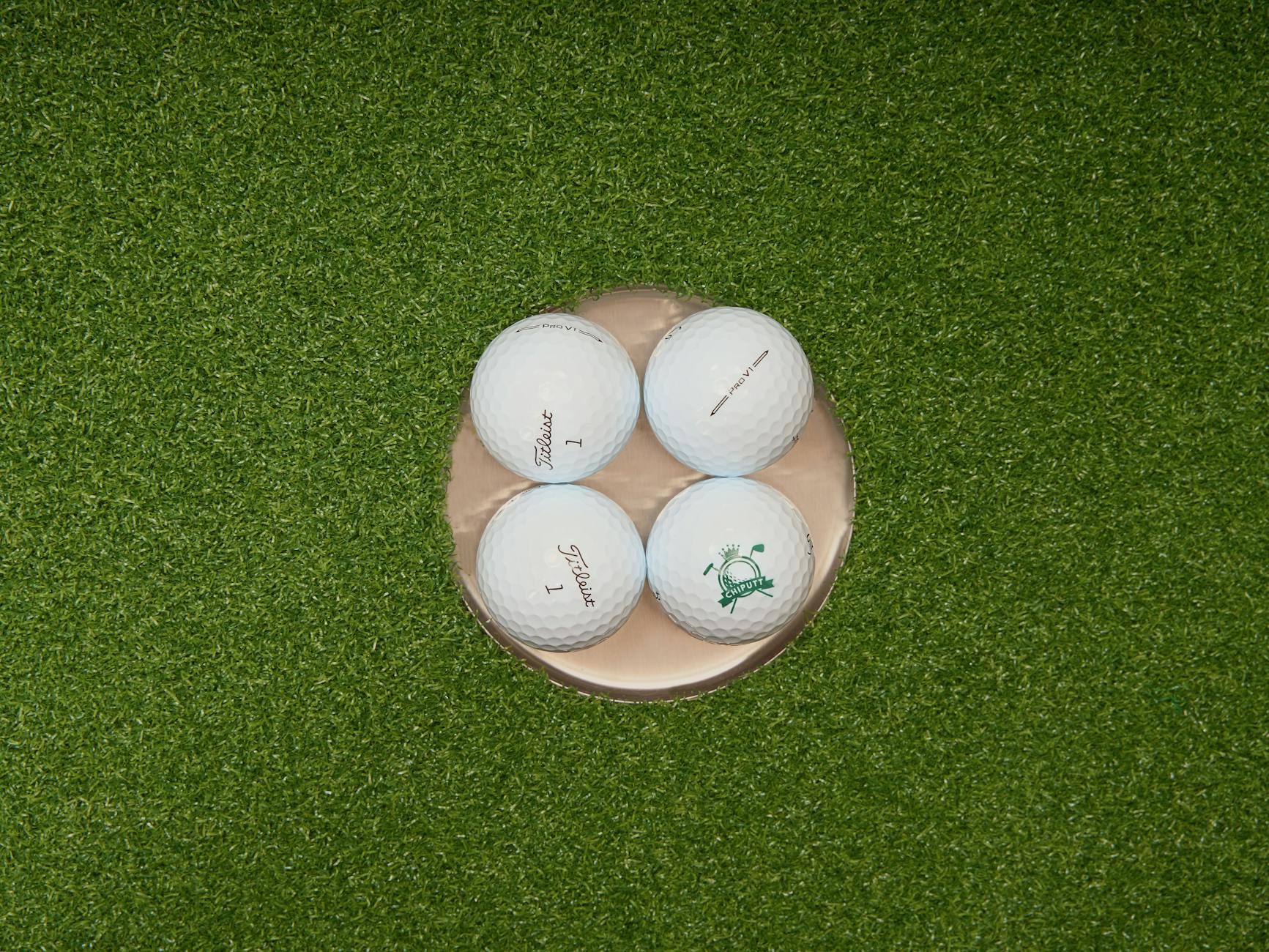
Compression is a measure of how much a golf ball deforms under the load of impact. A high-compression ball resists deformation, requiring a higher clubhead speed to achieve optimal energy transfer. A low-compression ball collapses more readily, delivering efficient energy transfer to golfers with moderate swing speeds. Get the match wrong, and you're leaving yards — and spin control — on the table.
What makes this particularly nuanced is that compression doesn't exist in isolation. It interacts with core density, cover material, dimple geometry, and the specific dynamics of your swing — attack angle, tempo, and the stiffness of your shaft. Understanding compression means understanding how all of these variables converge at impact.
What the Numbers Actually Mean
Compression ratings typically range from around 40 at the soft end of the spectrum to 110 or higher for the firmest tour-level balls. These numbers represent the degree of deflection measured in hundredths of an inch under a standardized load. A ball rated at 90 compresses roughly 90/1000ths of an inch under that load — but what matters more than the number itself is how it behaves relative to your swing speed at impact.
A common misconception is that softer always means more feel and higher always means more distance. The reality is more precise: when your swing speed is matched to the ball's compression rating, the energy transfer is maximized. A player swinging at 105+ mph with a low-compression ball will over-compress it, losing smash factor efficiency. A player at 85 mph with a tour-grade high-compression ball won't adequately load the core, sacrificing both distance and spin consistency.
- Low compression (40–65): Best suited for swing speeds under 85 mph; maximizes energy transfer at moderate impact loads
- Mid compression (65–85): The versatile middle ground; works well across a range of swing speeds and conditions
- High compression (85–110+): Designed for swing speeds above 95 mph; rewards aggressive delivery with optimal launch and spin control
- Tour-level firmness: Often paired with urethane covers for superior greenside spin, requiring high clubhead velocity to fully activate the core
Compression and Course Management
Beyond raw distance, compression directly affects how a ball responds to partial shots, punch plays, and high-spin wedge approaches — the situations where scoring decisions are won and lost. A higher-compression ball in the hands of a player who generates sufficient clubhead speed will deliver more consistent spin rates across a range of wedge trajectories, giving you greater predictability when you're firing at a tucked Sunday pin.
Temperature is another variable that serious players rarely account for properly. Cold weather — anything below 50°F — increases effective compression. A ball rated at 75 in warm conditions can play closer to 90 when it's been sitting in a bag on a cold morning. Low-compression balls become less efficient; mid-compression balls shift into a firmer range. If you play year-round in variable climates, this is not a trivial consideration.

Altitude compounds this further. At elevation — think Vail, Denver, or the high-desert courses of Arizona — the reduced air density means the ball is already traveling with less drag. A softer ball at altitude can behave unpredictably off long irons, ballooning in ways that make trajectory and carry distance harder to predict. High-compression balls, which are more stable aerodynamically under lower-resistance conditions, tend to produce more reliable ball flight in these environments.
The Density Dimension: Beyond Compression Ratings
Traditional compression metrics measure deformation, but core density — the mass distribution within the ball's interior — adds another layer of performance engineering. A high-density core packs more material into the energy transfer zone, which affects not just how the ball launches, but how it decelerates through the air and responds on landing.
This is where Attomax's high-density amorphous metal core technology departs from conventional construction. Rather than relying solely on polymer foam compounds to calibrate compression, Attomax balls use an amorphous metal core architecture that achieves consistent density distribution throughout the ball's structure. The result is more repeatable energy transfer across different impact conditions — whether you're striking it pure or slightly off-center.
Attomax offers three compression profiles — Soft, Medium, and Hard — but each one benefits from that underlying density consistency. The Soft is engineered for players seeking maximum feel and spin on approach shots without sacrificing the structural integrity of the core. The Medium sits in the performance sweet spot for mid-to-high handicap scratch players who demand both distance and short-game responsiveness. The Hard is designed for the aggressive ball-striker who wants the full payload of a high-compression ball combined with the mechanical reliability of amorphous metal construction.
The best ball for your game isn't the one the tour pro uses on television. It's the one that matches your delivery conditions so precisely that you stop thinking about the equipment entirely.
— Attomax Performance Lab
Shaft Flex and Ball Compression: The Overlooked Pairing
There's an often-ignored interaction between shaft flex and ball compression that can either amplify or undermine your fitting. A softer shaft stores and releases energy with a different timing profile than a stiff or extra-stiff shaft. When your shaft flex is properly matched to your tempo and transition speed, the energy arriving at the clubface is more consistent — and it's that consistency that allows a properly compression-matched ball to do its job.
A player using an Attomax shaft fitted to their specific load profile will experience a more predictable impact window, which in turn makes ball compression selection more reliable. If your shaft is under- or over-flexed for your swing, the timing variability at impact creates compression inconsistency regardless of the ball you're playing. Equipment fitting is a system, not a series of isolated decisions.
Making the Right Choice
The practical framework is straightforward: get a launch monitor session with multiple ball models across your typical swing speeds. Don't limit the test to a driver — include 7-iron and a 52-degree wedge. Look for the ball that optimizes carry distance on your iron shots while delivering the most consistent spin rates on partial wedge approaches. Those are your scoring clubs, and they should drive the compression decision.
If you play in cold climates or at altitude regularly, select a compression profile one tier softer than your warm-weather testing suggests. The environmental performance shift is real and measurable. And if you've recently made a shaft change, re-evaluate your ball. What worked with your previous shaft setup may no longer be optimal after a properly fitted upgrade. Compression matching isn't a one-time task — it's a dynamic calibration that evolves with your game.
Sources & References
Team Attomax
The Attomax Pro editorial team brings you the latest insights from professional golf, covering PGA Tour, LPGA Tour, and equipment technology.