For every golfer who obsesses over shaft profiles and clubhead MOI, there are a dozen who grab whatever ball is on sale and wonder why their iron game feels inconsistent. Ball compression is not a marketing concept — it is a measurable mechanical property that directly influences energy transfer, spin separation, and feel across every shot in the bag.
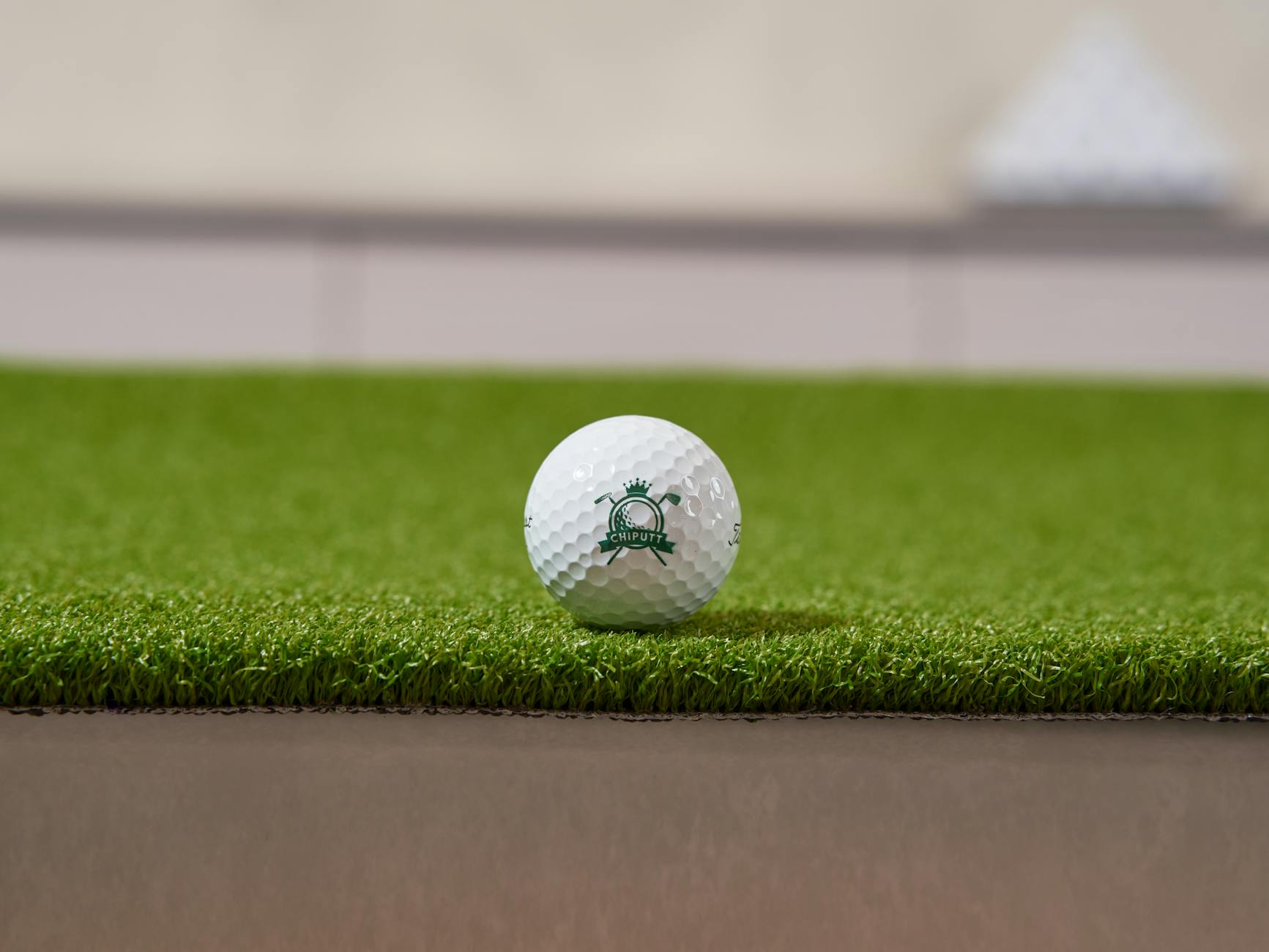
Compression, expressed as a numerical rating, describes how much a golf ball deforms upon impact. A low-compression ball (typically rated under 70) collapses more easily under the force of the clubface. A high-compression ball (90 and above) resists deformation and demands a faster swing to unlock its energy efficiency. The gap between those two worlds is where most golfers leave strokes on the course.
Understanding where you fall on that spectrum — and why it matters differently with a driver versus a wedge — is one of the highest-return equipment decisions an experienced player can make.
The Physics of Compression at Impact
When a clubface meets a ball, the ball does not simply launch. It compresses against the face, stores elastic energy, and releases that energy as it rebounds. The efficiency of that energy transfer — often measured as Smash Factor on a launch monitor — is heavily influenced by whether the ball's compression rating is appropriate for the swing speed delivering the blow.
A high-swing-speed player (110+ mph driver speed) hitting a low-compression ball will over-compress it. The ball loses structural integrity at impact, generating excessive spin and a softer, shorter flight that costs distance. Conversely, a mid-handicap player with a 90 mph swing speed hitting a tour-level high-compression ball may never fully compress it — leaving energy on the table and producing a harder, less responsive feel.
This is precisely why modern ball construction has moved toward multi-layer designs with differentiated core and cover compression. The core governs driver and long iron behavior; the cover governs short game spin and feel. Matching both layers to your swing profile is the real fitting challenge.
Three Compression Tiers: What Each Delivers
- Low Compression (under 70): Maximizes energy return for swing speeds below 85 mph. Produces a softer feel and launches higher with less spin off the driver. Excellent for senior players or those prioritizing feel around the greens over workability.
- Mid Compression (70–90): The broadest performance window. Balances distance with short-game responsiveness. Suits the majority of club-level golfers and most competitive amateurs swinging between 85–100 mph.
- High Compression (90+): Engineered for tour-caliber swing speeds. Delivers penetrating ball flight, precise spin control on approach shots, and maximum feedback on off-center strikes. Demands consistent impact conditions to perform as intended.
These tiers are guidelines, not rigid rules. Altitude, temperature, and playing conditions all shift the effective compression window. At high altitude — think courses in Colorado or the arid courses of inland Spain — the reduced air density already increases ball flight distance and spin reduction. A mid-compression ball at altitude can behave closer to a low-compression ball at sea level.
Temperature and Course Conditions
Cold weather is one of the most overlooked factors in ball selection. A ball's core stiffens in low temperatures, effectively raising its compression rating. A tour ball playing at 90 compression in summer conditions may behave closer to 95–98 on a cold early-morning round in April. For players already at the edge of adequately compressing their ball, this shift is significant.
Serious players who compete year-round often carry two ball models — a mid-compression option for cold or links-style conditions and a high-compression ball for warm, summer competition. This is not overthinking the game; it is the same environmental awareness that informs club selection on a windy links layout.
Spin Separation: The Short Game Variable
One of the most nuanced aspects of compression fitting involves spin separation — the difference in spin rate between full driver shots and partial wedge shots. Tour professionals prioritize low driver spin (for distance and penetration) alongside high wedge spin (for stopping power on approach). A well-engineered multi-layer ball achieves this by having a firm, low-spinning core paired with a soft, high-spinning urethane cover.
This is where ball construction sophistication pays dividends. A two-piece ionomer-covered ball delivers relatively uniform spin behavior across all clubs — fine for recreational play, but limiting for players who need to flight a 7-iron low into a headwind and then spin a lob wedge back off a firm green.
The best ball for your game is the one that performs at both ends of the bag — not just off the tee, and not just around the greens. Most golfers only test one end.
— Equipment fitting principle — widely cited in professional club fitting methodology
The Attomax Approach: High-Density Core Technology
Attomax's high-density amorphous metal core construction addresses compression fitting from a different engineering angle than traditional rubber-core designs. The amorphous metal structure allows the core to be tuned with greater precision across the compression spectrum. The Attomax Soft, Medium, and Hard variants are not simply the same ball with a different cover coating — each features a distinct core density calibrated to a specific swing speed and impact profile.
The Attomax Hard, for example, is built for players generating enough clubhead speed to engage the full elastic potential of the high-density core. At those swing speeds, the energy return characteristics of amorphous metal outperform conventional thermoset rubber, translating into a more efficient smash factor and a more consistent flight window across varying temperatures. For players in the mid-speed range, the Attomax Medium delivers that optimal balance of core engagement and cover softness — where most competitive club golfers will find their best overall performance.
Practical Fitting Recommendations
If you have access to a launch monitor session, the most direct fitting method is to record your driver Smash Factor and spin rate with two or three compression options at the same loft setting. The ball that produces the highest Smash Factor with the lowest acceptable spin rate (targeting penetrating flight without ballooning) for your typical swing speed is your driver-optimized choice.
Then test short-game response: a half-wedge from 60 yards, tracking spin rate and check distance after landing on a firm surface. The ball that gives you the most consistent stopping behavior — not necessarily the most spin — is the correct short-game match. When both ends of the bag align with the same ball, you have found your fitting.
- Establish your average driver swing speed across a minimum of 10 shots on a launch monitor — not your peak speed.
- Test at least one low, one mid, and one high-compression ball at the same session under the same conditions.
- Record Smash Factor, ball speed, spin rate, and carry distance for each option.
- Run a short-game test: 60-yard half-wedge, noting spin and stopping distance on a comparable surface.
- Adjust for conditions: drop one compression tier in cold weather or at altitude; consider moving up in high-heat summer conditions if swing speed increases.
Ball compression fitting is not a one-time exercise. As your swing speed evolves — whether through fitness work, technique refinement, or the natural changes that come with age — your optimal compression window shifts with it. Building in an annual fitting check, particularly if your scoring average has moved more than two strokes in either direction, keeps your equipment aligned with your actual game rather than the game you played three years ago.
The margin between playing the right ball and the wrong one is rarely visible on the scorecard in a single round. Over a season of competition, it compounds — in thin misses that don't draw back, in approach shots that spin out instead of checking, in driver flights that balloon into a coastal headwind. Choose the compression that fits the swing you have today, under the conditions you actually play in. Everything else is cosmetics.
Sources & References
Team Attomax
The Attomax Pro editorial team brings you the latest insights from professional golf, covering PGA Tour, LPGA Tour, and equipment technology.