Great golf course architecture is not about spectacle for its own sake. The layouts that endure — Augusta National, Cypress Point, Royal Melbourne, Pine Valley — share a deeper logic: every hole asks a question, and the quality of your answer determines your score. Understanding that design philosophy transforms the way you read a course, manage risk, and ultimately compete.
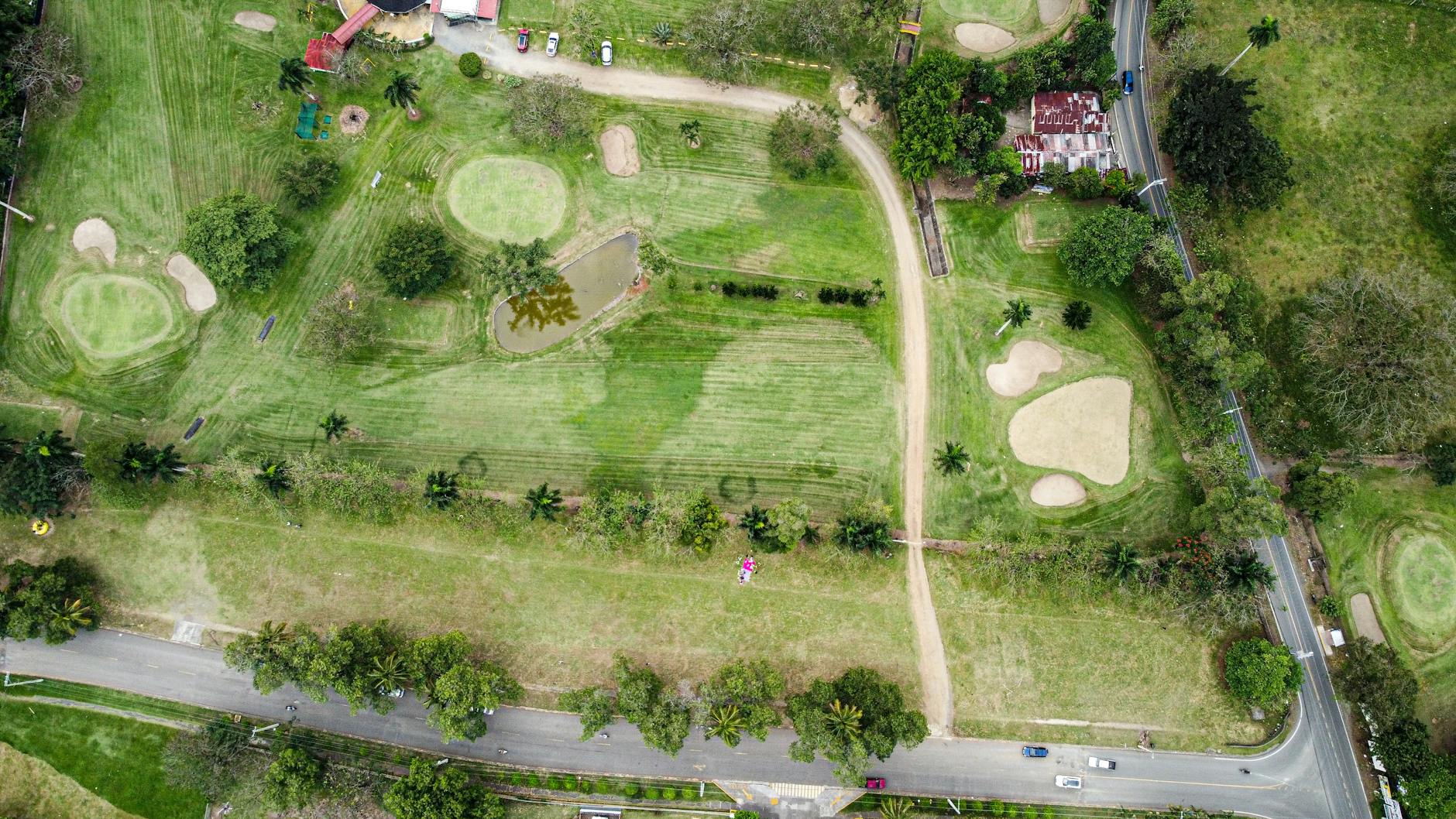
The golden age of architecture, broadly associated with designers like Alister MacKenzie, Donald Ross, and C.B. Macdonald, established a vocabulary that modern architects continue to study and reference. Their work was rooted in strategic variety — no two consecutive holes presenting the same challenge, with the wind, the land, and the player's decision-making all functioning as co-designers.
Today, that tradition is carried forward by a generation of architects who balance reverence for classic principles with the realities of modern ball flight, equipment technology, and elite athlete performance. The conversation around design has never been richer — or more urgent.
The Strategic Triangle: Risk, Reward, and Route
At the core of every compelling hole is a triangle of decision-making: what route are you offered, what risk does each route carry, and what is the reward for accepting that risk? A flat, featureless par-4 can be technically difficult, but it does not engage the golfer's mind. A hole like the 13th at Augusta National, by contrast, layers consequence upon consequence — the creek, the angled fairway, the long carry — so that every club selection on the tee shot ripples forward to the approach.
MacKenzie's principle of 'the optical illusion' is particularly relevant here. The finest holes look more threatening than they actually are when played correctly, yet they punish miscalculation with disproportionate severity. That asymmetry is what separates architecture from mere obstacle design.
- Angled fairways that reward positional play over raw distance
- Green complexes where the pin position, not just the flag, dictates approach strategy
- Bunker placement that disciplines the aggressive line without eliminating it
- Natural topography used to create ground-game options and variable bounce
- Visual deception — slopes and false fronts that distort distance perception
Green Complexes: Where Architecture Lives or Dies
If fairway strategy is the opening argument of a hole, the green complex is its conclusion. The most discussed greens in professional golf — the 17th at TPC Sawgrass, the Road Hole at St Andrews, the Postage Stamp at Royal Troon — earn their reputations not through severity alone, but through the way they force a specific, exacting shot to be played from a specific position.
Ross greens, with their subtle crowning and runoff areas, are the benchmark for complexity without brutality. A ball struck with insufficient spin or from the wrong angle simply will not hold — it drifts away from the hole by design. This is where equipment technology intersects directly with architecture: your ball's spin characteristics under pressure conditions are as relevant as your swing mechanics.
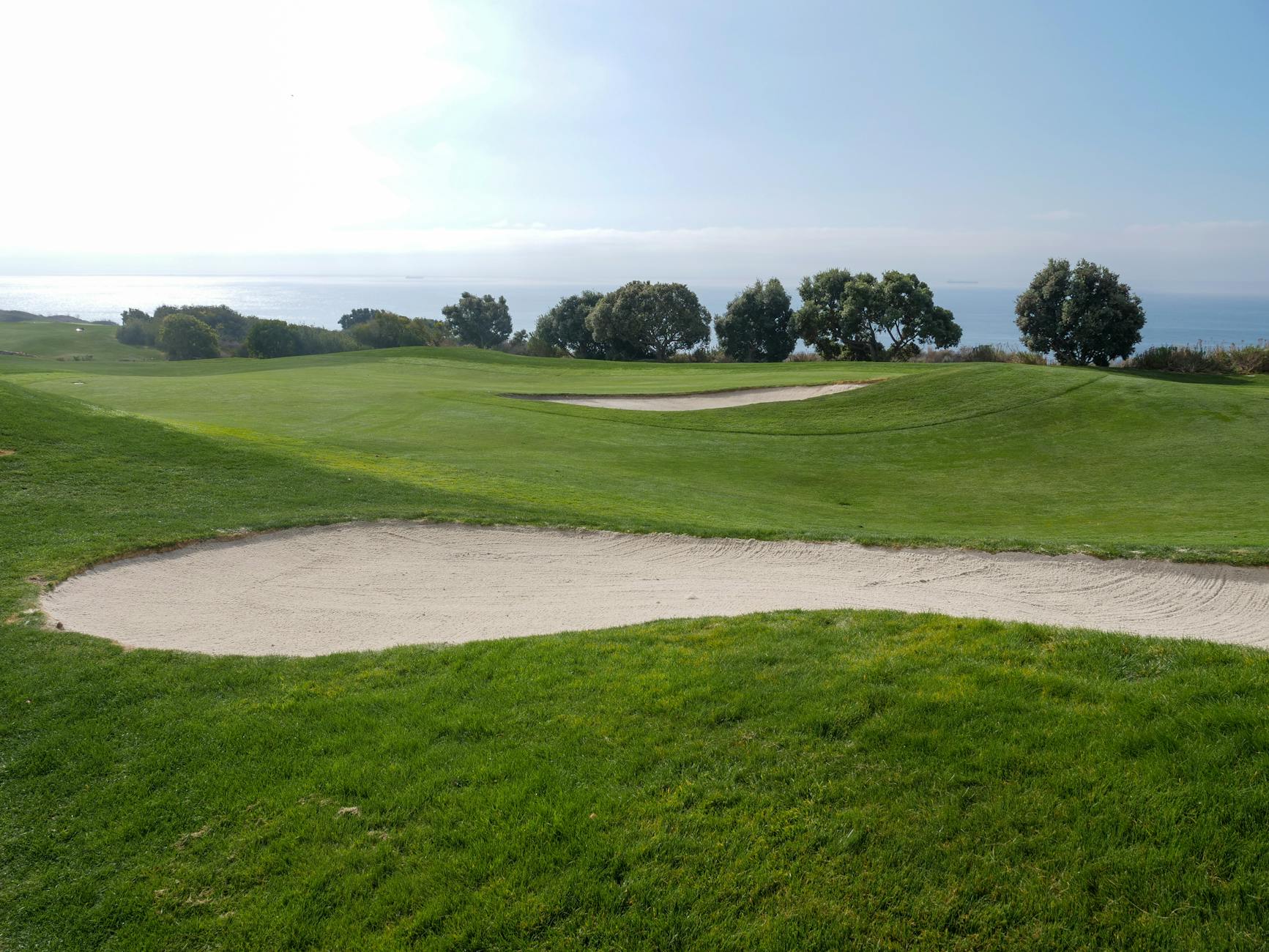
For players who compete on courses with firm, fast surfaces — links courses in particular, or parkland tracks baked out for major conditions — compression matching becomes critical. Attomax's High-Density amorphous metal construction allows precise calibration of ball feel and spin response, so that whether you're attacking a tucked Ross pin or flying a low, penetrating approach into a headwind, you're working with a ball that responds to intent rather than fighting it.
The Links Tradition and Its Design Logic
Golf is not a fair game, so why build a fair course?
— Pete Dye, Course Architect
Links architecture operates by different laws. Bunkers are deeper, greens are harder, and the ground game is not an option — it is the game. The Old Course at St Andrews remains the most studied layout in golf precisely because its hazards are invisible on the card: the Valley of Sin, the Road Hole bunker, the shared fairways of the 1st and 18th. The sophistication is earned by walking it, not reading it.
What links design demands above all is wind literacy. On a links track, shaft flex, trajectory management, and the ability to flight the ball into a stiff crosswind are skills the architecture tests on every hole. Low-launching, penetrating ball flights — aided by the right equipment pairing — become strategic weapons rather than mechanical quirks.
Modern Architecture: Where the Discipline Stands in 2026
Contemporary architects face a defining challenge: designing for an era of extraordinary ball-striking distance while preserving the strategic integrity that makes a round of golf intellectually satisfying. The instinct to simply add length is widely recognized as a failure of imagination — a longer par-4 that plays the same way as a shorter one solves nothing.
The most admired new projects lean toward the restoration of ground-game corridors, the narrowing of landing zones rather than the extension of them, and the integration of natural movement in the land. Architects like Tom Doak and Coore & Crenshaw have built reputations on working with topography rather than against it — a philosophy that produces courses with genuine replay value and shot variety that no amount of extra yardage can manufacture.
- Restore width in fairways — but restore consequence through strategic bunkering, not narrow corridors
- Design green complexes that create multiple 'correct' approaches depending on pin position
- Use natural landforms: dunes, ridges, and hollows as hazards rather than earthworks
- Create par-3s with dramatic variance — from the heroic carry to the drivable, pitch-and-putt
- Allow the ground game to function — firm fairways and receptive run-up areas bring bump-and-run back into play
The Routing: An Undervalued Art
Of all the skills in course design, routing — the placement and sequencing of holes across available land — is the least visible and the most consequential. A brilliant routing creates natural momentum, uses prevailing wind intelligently across the round, and places the most demanding holes where fatigue and competitive pressure peak. A poor routing can undermine the finest individual holes by stripping them of cumulative context.
This is why golfers who study architecture become better strategists. Reading a routing teaches you to anticipate how a designer wanted the course to be played — which holes reward aggression, which demand discipline, and where the decisive moments were designed to occur. That knowledge, applied hole by hole, is the difference between reactive golf and deliberate golf.
Architecture as the Purest Test of Equipment
The finest courses are ultimately stress tests. They expose miscalibrations in your game — and in your equipment — that benign layouts allow you to disguise. When you're playing a firm-conditioned parkland course with small, well-defended greens, the margin between a ball that checks on command and one that skips through the back is measured in shots, not inches.
Great course architecture does not reward the longest hitter or the most technically proficient striker in isolation. It rewards the player who understands the design, matches their equipment to the conditions, and executes under the cumulative pressure of a thoughtfully constructed 18-hole examination. That is golf at its most compelling — and it begins the moment you read the first tee.
Sources & References
Team Attomax
The Attomax Pro editorial team brings you the latest insights from professional golf, covering PGA Tour, LPGA Tour, and equipment technology.