The difference between a scratch golfer and a touring professional rarely comes down to ball-striking ability alone. Watch any PGA Tour event closely, and you'll notice something subtle yet profound: the best players in the world are constantly managing risk, calculating angles, and making decisions that prioritize position over power. For the accomplished amateur shooting around par, mastering these strategic elements represents the most efficient path to lower scores.
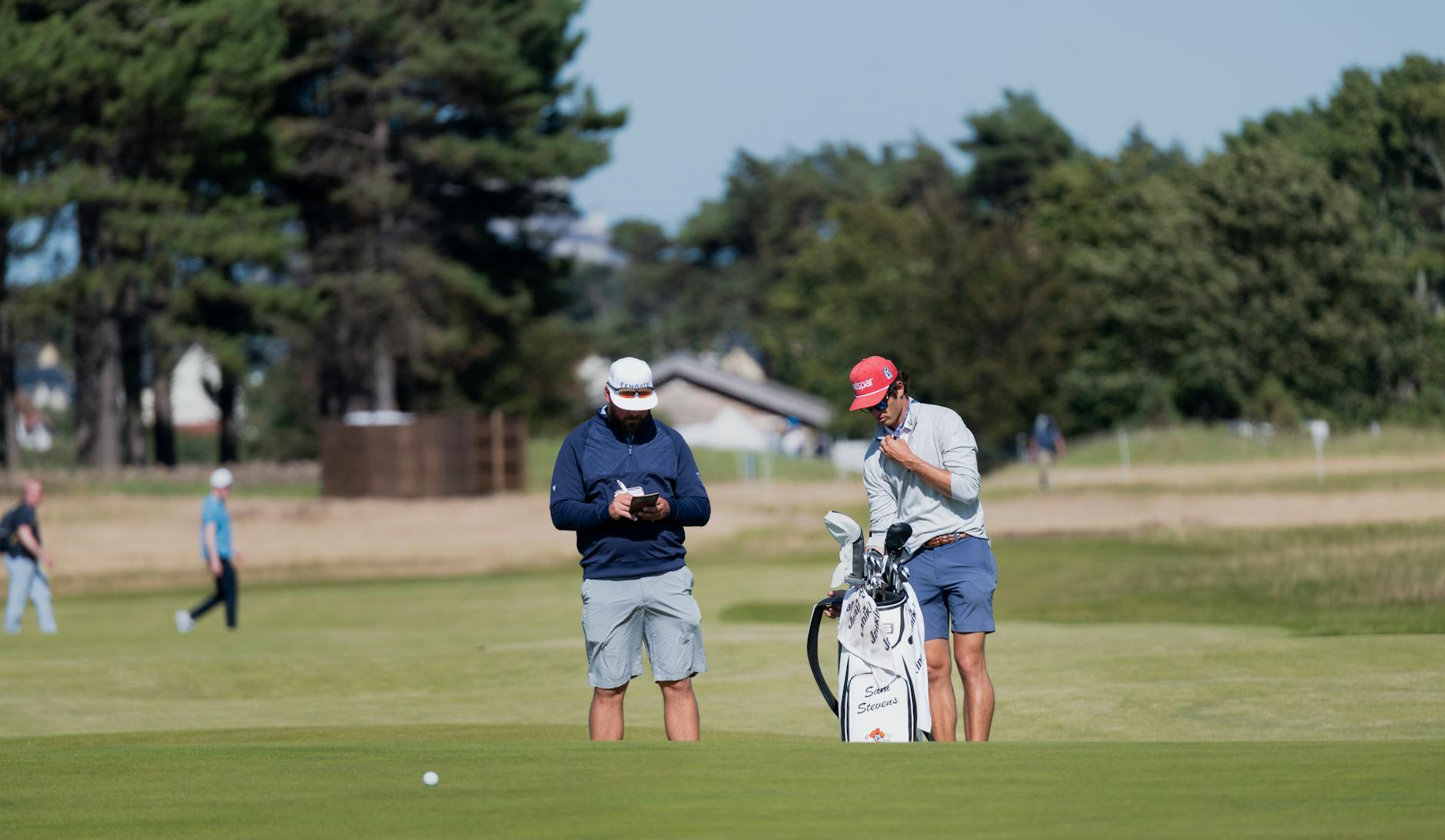
Course management isn't about playing conservatively—it's about playing intelligently. The scratch golfer who bombs driver on every par-4 and fires at every tucked pin is leaving strokes on the table, regardless of how pure their ball-striking might be.
The Art of Working Backwards from the Green
Elite course management begins at the green and works backward to the tee. Before selecting your tee shot strategy, you need to understand where the ideal miss is on your approach, which quadrant of the green offers the best birdie opportunity, and what angle provides the most margin for error.
Consider a 420-yard par-4 with a front-right pin tucked behind a bunker. The aggressive play might be a driver to the left side of the fairway, leaving a wedge from 120 yards. But if the green slopes severely from back to front, and missing long leaves a nearly impossible downhill chip, suddenly the 'aggressive' play becomes the high-risk option.
- Identify the green's natural collection areas and slopes before selecting your tee shot
- Calculate your realistic dispersion pattern, not your best-case scenario
- Prioritize approach angles that allow you to use the green's contours rather than fight them
- Factor in wind direction for both the tee shot AND the approach
Dispersion Patterns: The Truth About Your Game
Here's an uncomfortable truth that separates scratch golfers from professionals: most amateurs significantly overestimate their accuracy. Your dispersion pattern with a 7-iron isn't a tight circle around your target—it's an ellipse that stretches 15-20 yards long and 10-15 yards wide on good days.
Understanding your actual shot dispersion transforms course management decisions. When you acknowledge that your 'stock' 7-iron could land anywhere within a 300-square-yard area, suddenly aiming at a pin three yards from water seems less like confidence and more like recklessness.

Tour professionals track their strokes gained data meticulously, understanding exactly how many strokes they gain or lose from various positions on the course. While most amateurs don't have access to sophisticated tracking systems, maintaining a simple notebook of your misses over several rounds reveals patterns that inform smarter decisions.
Strategic Layups: When Par is the Smart Play
The scratch golfer's ego often prevents smart layup decisions on par-5s. The thought process typically goes: 'I can reach this green in two if I absolutely pure this 3-wood.' The problem with this thinking is that it ignores the consequences of the miss.
The best players don't ask 'Can I pull this off?' They ask 'What happens when I don't?'
— Strategic Golf Philosophy
When laying up, precision matters more than raw distance. A layup to your favorite wedge yardage from a perfect lie in the fairway is worth 20 yards over a layup that leaves you in the rough or on an uneven lie. The goal is to create the highest-percentage birdie opportunity, not to prove you can hit the ball far.
The 100-Yard Zone
Most scratch golfers have a specific yardage where their wedge game is most reliable—often somewhere between 95 and 115 yards. Smart course management means knowing your optimal distance and engineering your game to approach from there as often as possible.
This might mean hitting less club off the tee on certain holes, or laying up to a specific yardage on par-5s rather than getting as close as possible. Players using high-density golf ball technology often find their distance control improves in these scoring zones, as the consistent flight characteristics allow for more predictable yardages.
Wind Strategy: Beyond Basic Adjustments
Scratch golfers understand that wind affects ball flight, but many fail to account for the cascading effects of wind on their overall strategy. A 15-mph crosswind doesn't just move your ball laterally—it changes the shape of your dispersion pattern, affects spin rates on approach shots, and dramatically alters putting speed on exposed greens.
- In strong winds, club selection matters less than trajectory control—a lower, penetrating ball flight with modern amorphous metal construction holds its line better than traditional high-spin shots
- Approach shots in crosswinds should favor the upwind side of the green, allowing the wind to work the ball toward the center rather than pushing it off the putting surface
- Factor wind into your putting reads—a downwind putt on a fast green requires significantly more precision than most golfers realize
- Consider how wind will affect your ball's lie in the fairway—strong winds can firm up landing areas and increase roll
Mental Course Management: The Decision Framework
Every shot requires a clear decision framework that removes emotion from the equation. Before each shot, elite players assess three factors: what's the best possible outcome, what's the most likely outcome, and what's the worst possible outcome if they miss?
When the worst-case scenario includes penalty strokes or impossible recovery shots, the aggressive play rarely justifies the risk—regardless of how well you're striking the ball that day. Conversely, when the miss leaves you with a straightforward recovery, taking on additional risk becomes mathematically sound.
This framework proves especially valuable on unfamiliar courses. Without local knowledge, defaulting to center-green approaches and conservative lines off the tee eliminates the hidden hazards and severe slopes that catch aggressive players off guard.
Tournament vs. Practice Round Mentality
Scratch golfers preparing for competitive events should practice their course management strategy during practice rounds just as they practice their swing. Walking the course backward from green to tee, identifying bail-out areas, and noting wind patterns at different times of day provides information that proves invaluable under competitive pressure.
The strategic golfer who shoots 71 through intelligent course management will consistently beat the ball-striker who shoots 72 one day and 77 the next. In golf, as in most pursuits, consistency compounds over time—and course management is the most reliable path to consistent scoring.
Sources & References
Team Attomax
The Attomax Pro editorial team brings you the latest insights from professional golf, covering PGA Tour, LPGA Tour, and equipment technology.