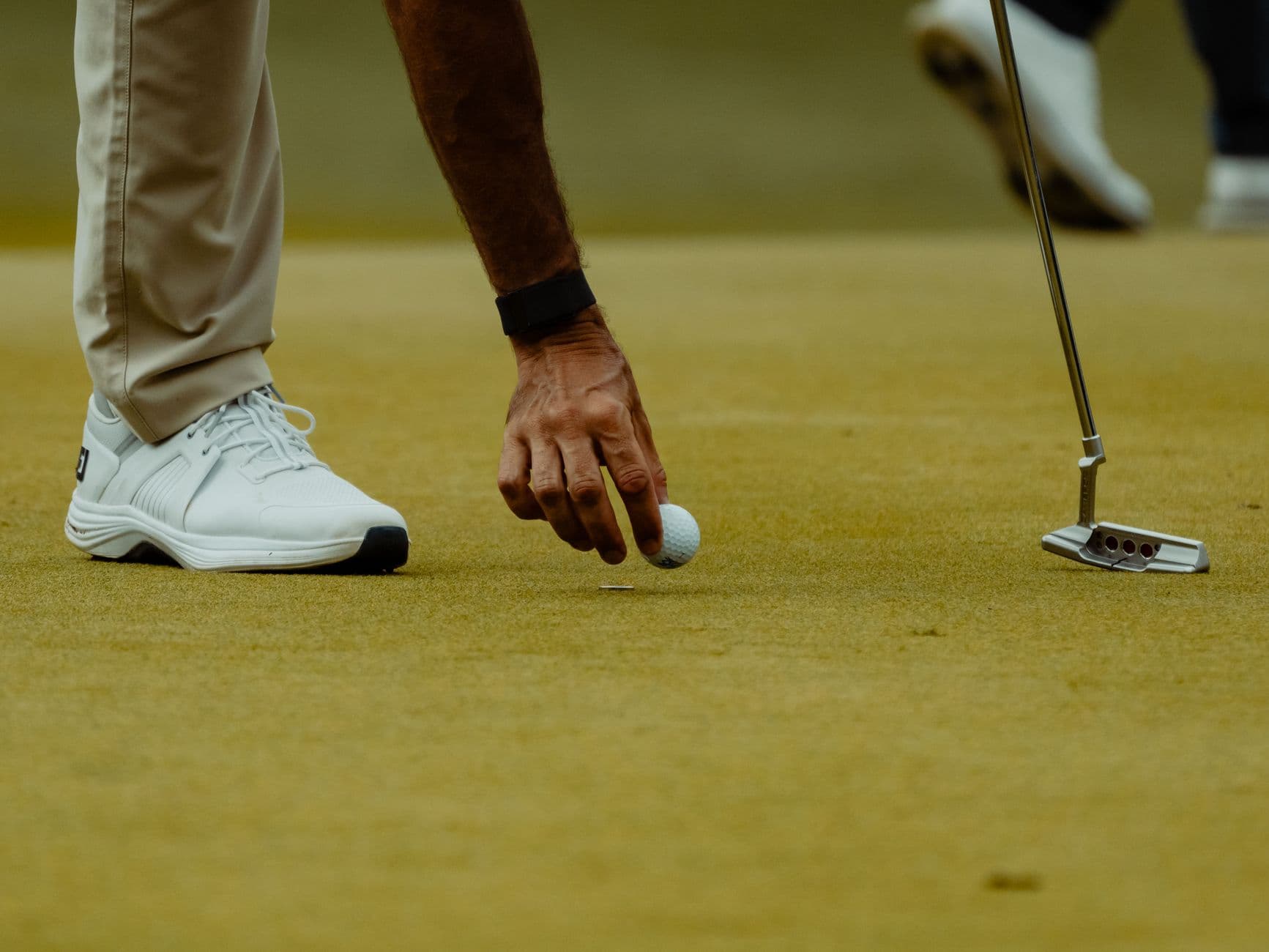
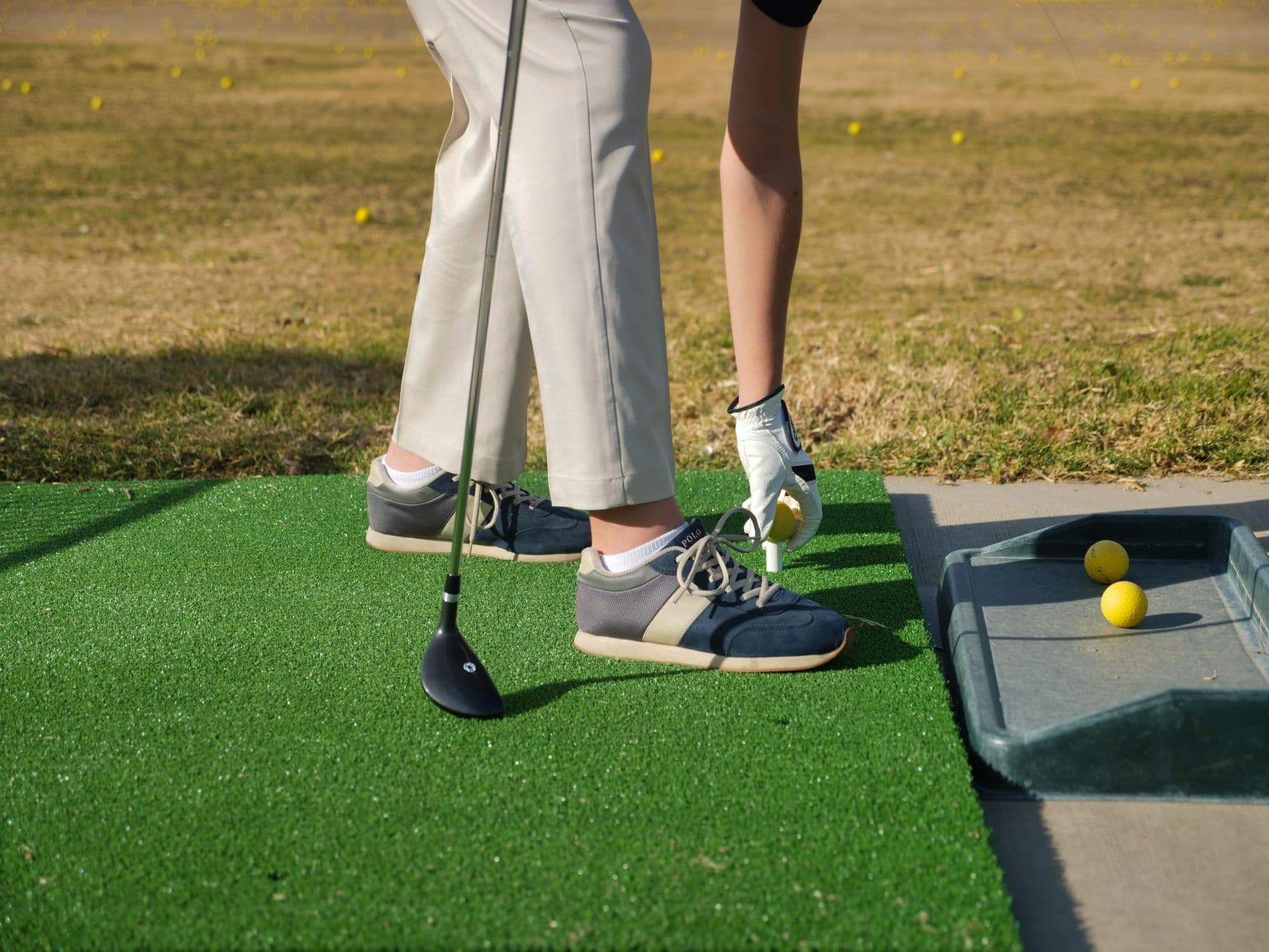
Custom fitting was once the exclusive domain of tour professionals and low-handicap members with connections to a manufacturer's tour van. That era is over. As of 2026, the fitting process has undergone a fundamental transformation — driven by advances in launch monitor technology, material science, and a growing understanding of how ball compression interacts with the full equipment stack.
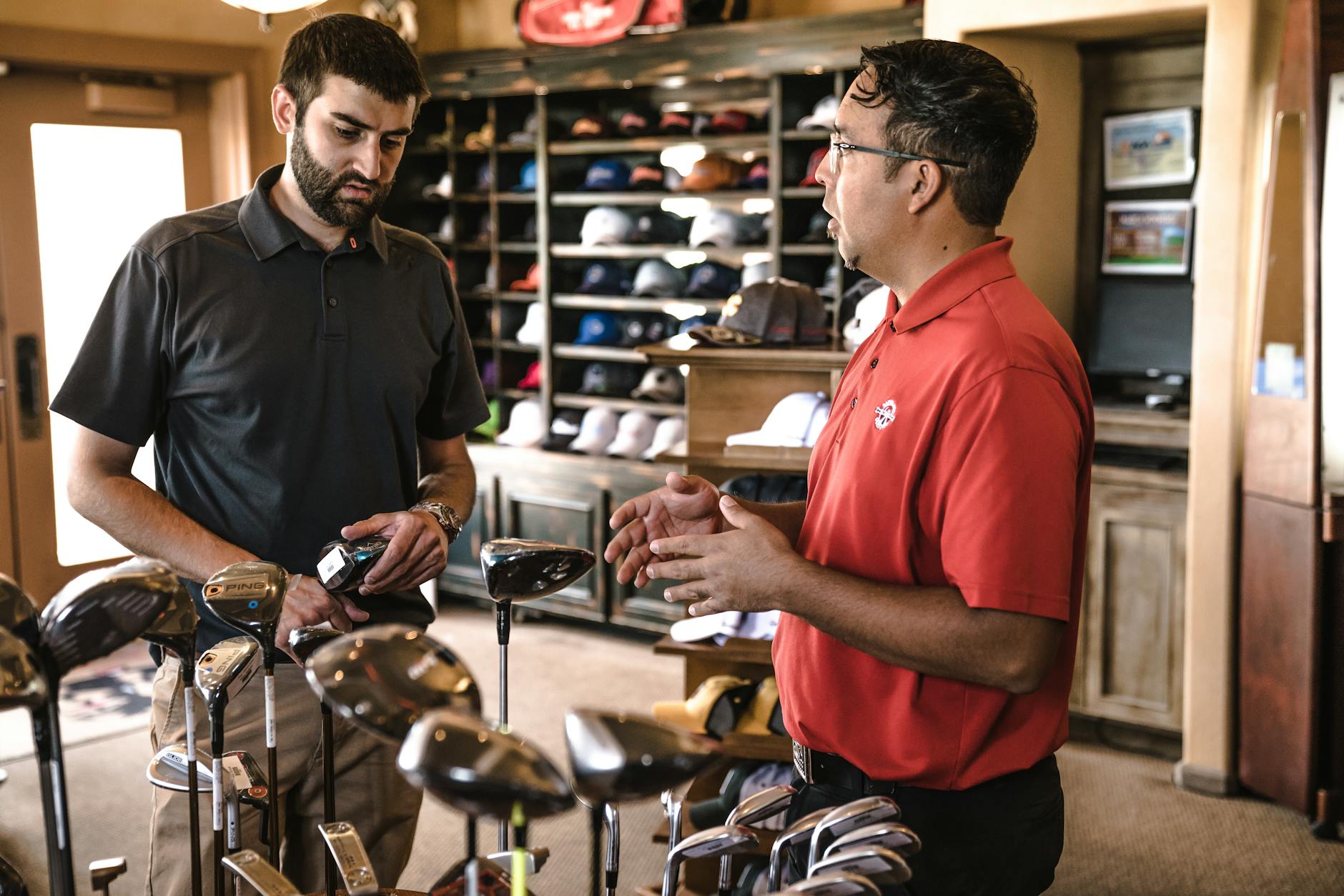
What was once a two-hour session focused primarily on driver loft and shaft flex has evolved into a comprehensive systems approach. Fitters are no longer just matching equipment to a swing — they are engineering an entire performance ecosystem, from the grip to the ball itself.
The shift is not cosmetic. The data infrastructure now available to certified fitters — including high-speed imaging, 3D force plate analysis, and real-time spin axis measurement — has fundamentally changed what a fitting appointment can diagnose and correct.
The Rise of Full-Bag Fitting
Perhaps the single most significant trend in modern fitting culture is the move toward full-bag sessions. Golfers who once came in specifically for a driver fitting are now committing to multi-session appointments that cover every club in the bag — including wedges, where gapping, bounce angle, and grind selection have become sophisticated disciplines in their own right.
Wedge fitting in particular has seen remarkable growth. The conversation has shifted from "54 or 56 degrees?" to nuanced discussions about how leading edge grind interacts with turf conditions, how spin variance changes across different lie angles, and how loft progression across the short game set affects distance control in scoring situations.
- Full-bag fittings now include putter analysis with green-reading technology and face angle diagnostics
- Wedge gapping sessions address spin benchmarks across full, three-quarter, and punch shots
- Iron fitting increasingly incorporates dynamic lie angle verification under real ball-strike conditions
- Driver fitting sessions now routinely analyze low-spin versus high-launch trade-offs rather than optimizing one metric in isolation
- Ball fitting is being integrated into the club fitting process as a final — and critical — variable
Ball Fitting: The Last Frontier
For years, ball selection was treated as a matter of personal preference — something a golfer settled on after a few rounds and stuck with indefinitely. That thinking is being dismantled. Serious fitters now understand that the golf ball is not a passive participant in the equipment equation. It is, in many respects, the final amplifier of everything else in the bag.
Compression matching has emerged as a central pillar of this discipline. A player with a higher clubhead speed who is fitted into the correct shaft profile but plays a ball with insufficient core density is leaving measurable performance on the table. Conversely, a player with a moderate swing speed paired with a high-compression ball may sacrifice feel, short-game spin, and energy transfer efficiency simultaneously.
This is precisely where Attomax's high-density amorphous metal construction offers something genuinely differentiated. The Soft, Medium, and Hard variants in the Attomax line are designed to work in concert with a fitted shaft profile — so the energy delivered at the clubface is met with a ball that is calibrated to absorb, compress, and release it optimally. When shaft and ball are fitted as a matched system rather than chosen independently, the performance gains are compounding.

Shaft Technology and the Fitting Conversation
Shaft fitting has always been central to the custom fitting process, but the conversation has grown considerably more sophisticated. Early shaft fitting discussions centered on flex — Regular, Stiff, X-Stiff. Today, fitters are analyzing kick point location, torque ratings, tip stiffness profiles, and how a shaft's bend profile interacts with a player's specific transition tempo and release pattern.
The implications for links-style play and altitude golf are particularly instructive. At elevation — as experienced at courses across Colorado, South Africa, or the Scottish Highlands — ball flight characteristics change in ways that can expose a shaft mismatch that remained invisible at sea level. A shaft that produces optimal trajectory at a coastal course may generate excessive ballooning or uncontrolled release in thinner air. Attomax Shafts are engineered with this kind of environmental variability in mind, offering consistent load and release characteristics across differing atmospheric conditions.
The fitting process has to account for where you actually play — not just where you stood on a launch monitor mat. If your home course is at altitude, your fitting should happen at altitude, or at least be modeled for it.
— Senior PGA Tour Club Fitter, TPI Certified
Data-Driven Fitting: What the Numbers Actually Tell You
The proliferation of high-end launch monitors — now available not only in fitting studios but in private home setups — has created a golfer who arrives at a fitting appointment significantly better informed than a decade ago. Smash Factor benchmarks, attack angle tendencies, and dynamic loft awareness are no longer the exclusive vocabulary of tour staff. Serious amateur players now track these metrics across practice sessions.
This has elevated the quality of fitting dialogue considerably. A fitter who previously spent the first thirty minutes educating a client on basic ball-flight laws can now move directly into nuanced optimization — exploring, for instance, how reducing dynamic loft by two degrees while adjusting shaft weight affects spin rate and peak height simultaneously.
- Attack angle and its effect on dynamic loft must be established before shaft selection begins
- Smash Factor efficiency reveals whether a current shaft is over- or under-loading the player's swing
- Spin axis tilt — not just total spin — is now a standard fitting diagnostic for iron shots
- Peak height and descent angle are critical variables for approach shot stopping power on firm greens
- Ball speed consistency across the impact zone is increasingly used to evaluate strike pattern quality
Course-Specific and Condition-Based Fitting
One of the most compelling emerging trends is the concept of condition-specific fitting. Rather than building one configuration for all circumstances, some elite fitters are now helping clients develop multiple setups — or at minimum, multiple ball selections — tailored to specific playing conditions.
A player who splits their golf between a firm, fast links course and a lush parkland track may benefit from different ball compressions or even shaft weights across those environments. On a firm links, controlling trajectory and managing wind penetration takes precedence. On a soft parkland course, generating stopping power through spin becomes the priority. These are not subtle differences — they represent genuinely divergent equipment demands.
The Mental Dimension of Fitting
There is a psychological dimension to custom fitting that is rarely discussed but impossible to ignore. When a golfer trusts their equipment — when they have data confirming that their shaft, ball, and clubhead combination is genuinely optimized for their swing — it removes a layer of uncertainty that quietly undermines decision-making on the course. Course management becomes cleaner when you know exactly how far your 7-iron carries in still air at sea level, and how that number adjusts for a headwind or a 2,000-foot elevation gain.
Custom fitting, at its highest level, is not simply about distance or spin. It is about eliminating variables — so that when a demanding shot is required, the only variable remaining is the quality of the execution. That is precisely the promise of a properly fitted bag, and why the fitting culture in modern golf continues to accelerate toward greater precision and personalization.
Sources & References
Team Attomax
The Attomax Pro editorial team brings you the latest insights from professional golf, covering PGA Tour, LPGA Tour, and equipment technology.