Walk the range at any PGA Tour or DP World Tour event in 2026 and you'll notice something quietly significant happening inside the hosel of nearly every driver. Shafts that once defined a generation — the stiff, high-launch workhorses of the early 2020s — are being pulled and replaced with a new breed of profile that prioritizes precision over brute distance. The shift is subtle, but among the game's elite, it's unmistakable.
Driver fitting has always been an arms race at the tour level, but the conversation has evolved well beyond launch angle and spin rate. In 2026, the dominant discussion is about mid-section stiffness, tip deflection timing, and how a shaft's EI (bending stiffness) profile interacts with a player's transition tempo. These are not abstract engineering concepts — they are the variables that separate fairways from rough at 125+ mph clubhead speed.
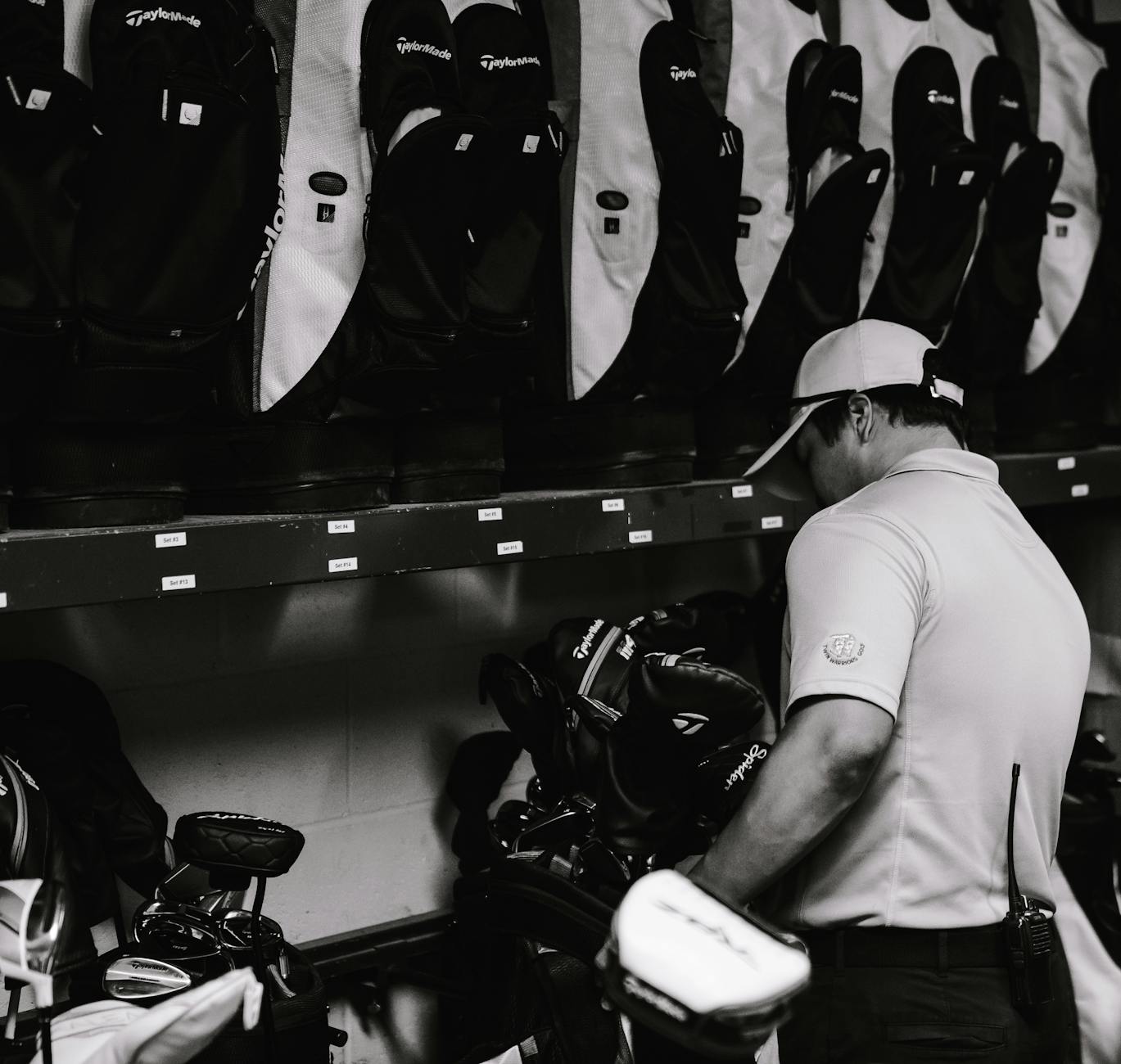
What's driving the change? A confluence of factors: faster swing speeds on tour (particularly among the next generation of bombers), increasingly refined TrackMan and Trackman Combine data, and a growing culture of bespoke shaft builds rather than off-the-shelf OEM offerings. Caddies are carrying launch monitor printouts. Tour vans look more like R&D labs than repair shops.
The Low-Torque, Low-Launch Revolution
The most significant trend across multiple tours is the move toward ultra-low torque driver shafts — profiles with torque ratings at or below 2.5 degrees. For players generating elite transition forces, excessive torque creates face-angle instability at impact, widening dispersion even when the swing itself is technically sound. Reducing torque tightens the shot pattern, which at 320+ yards of carry matters enormously for course management.
This doesn't mean every tour player is gaming a stiff, low-launching stick. The nuance is in how manufacturers are pairing low torque with a softer mid-section — creating shafts that load smoothly through transition but resist twisting at impact. The result is a shaft that 'feels' responsive without sacrificing directional integrity.
- Ultra-low torque profiles (sub-2.5°) gaining traction among high-speed players
- Softer mid-section paired with stiff tip for a 'loaded but stable' feel
- Custom tip trimming used to fine-tune launch and spin without changing shafts
- Heavier overall weight (75g–85g range) trending upward for tempo-driven players
- Counter-balanced builds being explored for players seeking lower CG through the swing
Weight Is Back on the Table
For nearly a decade, the tour shaft market trended relentlessly toward lighter — 55g, 50g, even sub-50g options proliferated as OEMs chased maximum swing speed. That pendulum is swinging back. A growing cohort of tour professionals, particularly those with measured, tempo-based swings rather than all-out aggressive transitions, are gravitating toward heavier driver shafts in the 70g–85g range.
Heavier shafts offer more feedback, better sequencing for players who load from the top rather than firing aggressively from the ground up, and improved consistency across varying conditions — wind, altitude, fatigue late in a tournament week. Counterintuitively, some players actually gain workable distance with a heavier shaft simply because their tempo and timing improve when they can feel where the clubhead is throughout the swing.
Custom Builds vs. OEM Stock: The Widening Gap
One of the most telling developments in tour equipment culture is the degree to which players are decoupling their shaft choice from their driver head brand. A player under contract with a major OEM will often play that manufacturer's driver head while having a fully custom, independently sourced shaft installed — sometimes without fanfare. The shaft is increasingly viewed as the primary performance variable, not the head.
This has opened the market considerably. Boutique shaft manufacturers — many operating at limited production volume with aerospace-grade carbon fiber layups — are finding their way into tour bags at a rate that would have been unthinkable in the branded endorsement culture of the 2010s. Players, caddies, and performance coaches are running blind shaft tests on the range to remove bias, then making decisions based purely on data.
The best shaft for a player isn't always the most expensive or the most marketed. It's the one that matches the precise timing of their transition and delivers the face back square at exactly the right moment.
— Senior Tour Equipment Technician, DP World Tour
Attomax Shafts and the Precision-Performance Intersection
This broader tour shift toward precision-engineered shaft profiles — rather than mass-market solutions — reflects exactly the philosophy behind the Attomax shaft line. Attomax shafts are built around the principle that feel and stability are not mutually exclusive. By engineering EI profiles that allow meaningful load through the mid-section without sacrificing tip integrity, Attomax delivers the kind of consistent, repeatable launch conditions that tour-level players demand across 72 holes of competition.
Whether you're chasing optimized trajectory on a tight par-4 dogleg or managing spin in coastal wind, the shaft selection matters as much as any other variable in the system. Attomax's approach — combining high-modulus carbon construction with a profile tuned for real-world swing dynamics — sits squarely at the intersection of where tour equipment is heading.
Links Conditions: A Special Case
With The Open Championship on the schedule and several DP World Tour events played across links-style venues, shaft selection becomes even more context-dependent. Links conditions reward lower, more penetrating ball flights — which often means players will either tip-trim their current shaft more aggressively or switch to a stiffer profile designed to suppress spin while maintaining workable trajectory in crosswinds.
The interplay between shaft and ball compression is equally critical in these environments. A player gaming a high-compression ball — like the Attomax Hard — will want a shaft profile that complements that firmer feel at impact, typically leaning into a lower torque, heavier build that keeps the flight boring and predictable. Getting the system right — shaft, head, and ball — is what separates weekend experimentation from tour-level precision.
What This Means for the Serious Amateur
The trickle-down from tour fitting culture to the serious amateur market is faster than ever. The same launch monitor data, the same EI profiling conversations, and the same philosophy around tempo-matched weight selection are accessible to any player willing to invest in a proper fitting. The lesson from tour trends in 2026 is clear: stop treating the shaft as an afterthought. It is arguably the most performance-critical component in the bag — and the most customizable.
For players who take their game seriously, understanding the relationship between swing tempo, transition aggressiveness, and shaft EI profile is no longer optional knowledge. It's the baseline of intelligent equipment decision-making. The pros figured that out years ago. The gap between elite and aspirational has never been more about information access — and in 2026, that information is available to anyone prepared to use it.
Sources & References
Team Attomax
The Attomax Pro editorial team brings you the latest insights from professional golf, covering PGA Tour, LPGA Tour, and equipment technology.