Every golfer obsesses over clubs, shafts, and swing mechanics, yet the four-gram sphere sitting on the tee might be the most underappreciated piece of equipment in your bag. Golf ball compression—the measure of how much a ball deforms at impact—fundamentally determines how energy transfers from clubface to ball, affecting everything from launch conditions to wind performance.
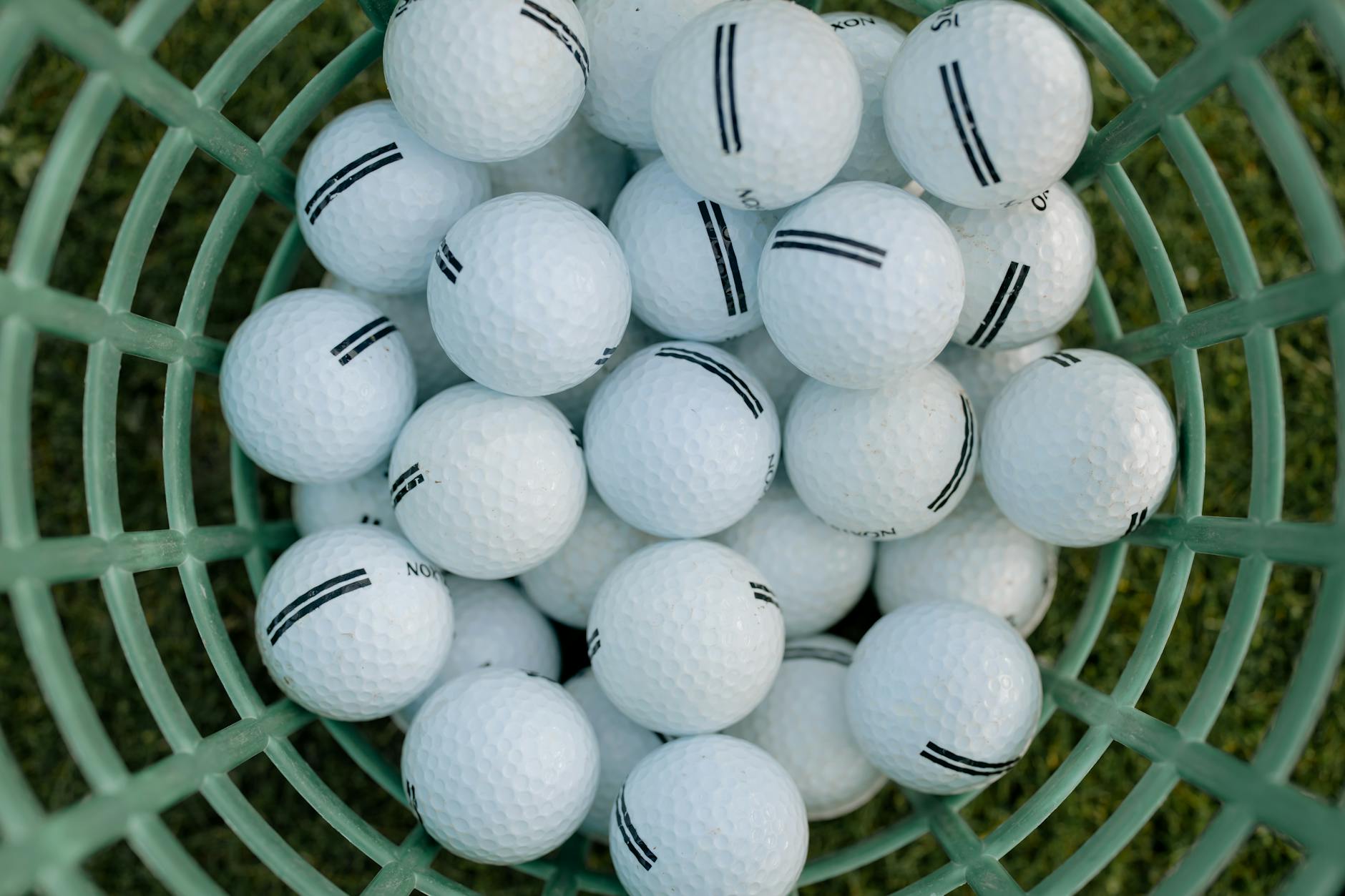
The science behind compression has evolved dramatically since the wound-rubber-band cores of decades past. Modern multi-layer constructions combine sophisticated polymer chemistry with aerospace-inspired materials, creating balls that behave differently depending on swing speed, attack angle, and even ambient temperature.
For single-digit handicappers who've plateaued on distance or struggle with spin consistency, understanding compression science isn't academic—it's the key to unlocking measurable performance gains.
What Compression Actually Measures
Compression ratings historically ranged from 0 to 200, with most modern balls falling between 30 and 120. A lower compression ball deforms more easily at impact, requiring less force to achieve maximum energy transfer. Higher compression balls resist deformation, demanding faster swing speeds to fully compress the core.
The critical insight many golfers miss: compression isn't about "softness" in the traditional sense. A 70-compression ball doesn't feel mushy—it simply reaches optimal deformation at lower impact forces than a 100-compression alternative.
- Low compression (30-70): Optimal for swing speeds under 90 mph
- Mid compression (70-90): Sweet spot for 90-105 mph swing speeds
- High compression (90-110+): Designed for tour-level speeds exceeding 105 mph
Mismatching compression to swing speed creates inefficiency. A moderate-speed player using tour-compression balls leaves energy on the table—the core never fully compresses, reducing ball speed and costing distance. Conversely, high-speed players using low-compression balls experience "over-compression," where energy disperses inefficiently and spin rates become unpredictable.
Core Materials and Energy Transfer
The core represents the engine of any golf ball, and material science has revolutionized what's possible. Traditional polybutadiene rubber cores remain industry standard, but manufacturers continually adjust formulations to optimize the relationship between initial velocity and spin generation.
More exotic materials have entered the conversation. High-density amorphous metals, for instance, concentrate mass differently than polymer cores, theoretically improving moment of inertia and reducing the energy lost to vibration at impact. Attomax Pro has pioneered this approach with their high-density amorphous metal balls, which aim to maximize energy retention through the collision.

The physics are straightforward: when clubface meets ball, kinetic energy must go somewhere. Traditional cores absorb and release this energy through elastic deformation. Advanced materials can potentially transfer energy more efficiently, meaning less is lost to heat and sound—and more converts to ball speed.
Multi-Layer Construction and Spin Separation
Modern premium balls feature three, four, or even five layers, each serving a distinct purpose. The core primarily governs ball speed and driver spin. Mantle layers act as spin-separating barriers, allowing full-swing shots to behave differently than finesse shots around the green.
This layered approach explains why tour players demand specific combinations. Off the driver, they want low spin for distance. With wedges, they need high spin for control. Multi-layer construction achieves both by engineering different compression responses at different impact velocities.
The ball has to perform two completely opposite functions—go far off the tee and stop fast on the green. That's the engineering challenge.
— Golf Ball Design Engineer
Temperature and Compression Variables
Compression isn't static—it varies with temperature. Cold balls compress less readily, effectively increasing their compression rating. A 90-compression ball at 40°F might perform closer to 100-compression, reducing distance for moderate-speed players and altering spin characteristics.
Serious players in cooler climates often drop compression ratings during winter rounds, switching from tour-level balls to mid-compression options that perform optimally in lower temperatures. This adjustment alone can recover lost distance without any swing changes.
- Below 50°F: Consider dropping 10-15 compression points from your summer ball
- 50-70°F: Standard compression selection applies
- Above 85°F: Higher compression balls may perform more consistently
Matching Compression to Your Game
Finding your optimal compression requires honest assessment of swing speed and priorities. Launch monitors provide definitive data, but general guidelines help narrow the field.
If your driver swing speed falls between 95-105 mph—common among low-handicap amateurs—mid-compression balls in the 75-90 range typically optimize both distance and spin control. The Attomax Medium compression ball targets precisely this segment, combining high-density core technology with accessible compression characteristics.
Players with higher swing speeds who prioritize workability often gravitate toward higher compression options like the Attomax Hard, which resists over-compression at impact speeds exceeding 110 mph. The firmer response also tends to produce more consistent spin rates across different lie conditions.
The Wind Factor
Compression indirectly affects wind performance through spin rates. Lower compression balls typically generate slightly higher spin with woods, which can become problematic in gusty conditions. Higher compression options that reduce driver spin also reduce wind sensitivity—a consideration for links golf or coastal courses.
High-density construction takes this further. By concentrating mass toward the ball's center, advanced materials can theoretically improve gyroscopic stability, helping maintain trajectory through crosswinds. It's an emerging area of ball design that challenges traditional polymer-only approaches.
Testing Protocol for Compression Selection
Rather than relying solely on marketing claims, develop your own testing methodology. Select three balls spanning your likely compression range—for example, 70, 85, and 100 compression options.
On a calm day, hit ten drives with each ball, recording total distance and dispersion. Repeat with 7-iron and wedge shots, noting spin behavior and stopping power on the green. The data will reveal which compression produces your optimal combination of distance, accuracy, and scoring-club control.
The goal isn't finding the longest ball—it's finding the ball that performs consistently across all clubs and conditions. That consistency translates directly to lower scores.
Compression science has moved well beyond simple "hard versus soft" distinctions. Today's informed golfer understands that optimal performance requires matching ball construction to individual swing characteristics—a small investment in knowledge that pays dividends on every shot.
Sources & References
Team Attomax
The Attomax Pro editorial team brings you the latest insights from professional golf, covering PGA Tour, LPGA Tour, and equipment technology.