Compression has become one of the most discussed—and frequently misunderstood—specifications in golf equipment. Walk into any pro shop, and you'll encounter balls marketed from ultra-soft 30-compression to tour-firm 100+ ratings. Yet the relationship between these numbers and actual on-course performance remains surprisingly nuanced.
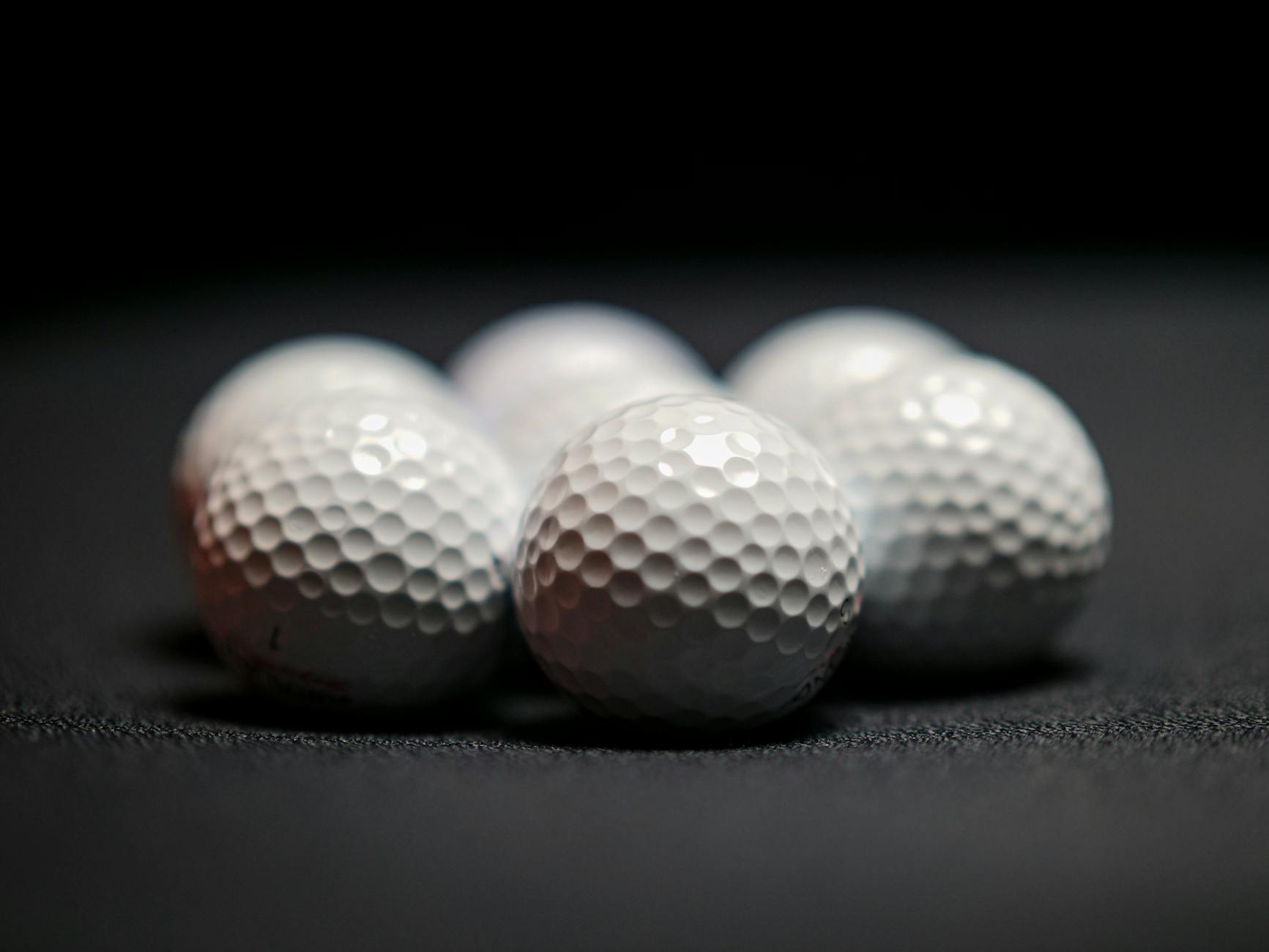
The fundamental physics are straightforward: compression measures how much a golf ball deforms at impact. Lower compression balls compress more easily, while higher compression balls resist deformation. But reducing ball selection to a simple swing speed chart oversimplifies a complex biomechanical interaction.
The Physics of Ball Deformation
When a clubface strikes a golf ball, the collision creates a contact time of approximately 450 microseconds. During this fraction of a second, the ball compresses against the face, stores elastic energy, and releases it as the ball launches. The efficiency of this energy transfer—often measured as smash factor—depends heavily on how well the ball's compression characteristics match the player's delivery.
Core construction materials play a decisive role. Traditional ionomer-covered balls use polybutadiene rubber cores, while premium urethane-covered models often feature dual or multi-layer core designs. The gradient of firmness from inner core to outer mantle creates what engineers call a 'compression profile' rather than a single compression point.
Beyond the Swing Speed Chart
Conventional wisdom suggests slower swingers need softer balls, while faster players require firmer construction. This guideline has merit—a player swinging 85 mph won't compress a 110-compression ball efficiently—but it ignores several critical variables.
- Attack angle influences effective compression more than raw speed
- Centered strikes behave differently than off-center contacts
- Temperature dramatically affects compression characteristics
- Spin requirements vary by course conditions and shot shape preferences
A player with a steep angle of attack delivers more compression force than someone with a shallow, sweeping motion at identical swing speeds. Similarly, tour professionals often prefer firmer balls not purely for distance but for the predictable spin response and workability they provide around greens.

Material Science and Modern Innovation
The golf ball industry continues exploring alternative core materials to optimize the compression-performance relationship. High-density amorphous metals, advanced polymer blends, and precisely engineered gradient cores represent the cutting edge of ball technology.
Attomax Pro's approach with high-density amorphous metal construction offers an interesting case study. By manipulating core density rather than relying solely on traditional rubber compounds, engineers can create balls that maintain consistent compression characteristics across temperature ranges while optimizing energy transfer at specific swing speeds.
The Temperature Factor
Cold weather presents a particular challenge for compression-dependent performance. Rubber cores stiffen significantly as temperatures drop, effectively raising the compression rating. A ball that performs optimally at 75°F may feel noticeably harder and produce less efficient energy transfer at 45°F.
Players competing in varied climates often carry different ball models or compression ratings seasonally. Some manufacturers now engineer cores specifically for temperature stability, though this remains an evolving area of development.
Matching Compression to Your Game
Rather than fixating on published compression numbers, sophisticated players evaluate ball performance through measurable outcomes. Launch monitor data provides objective feedback that accounts for your unique swing characteristics.
- Test balls across compression ranges on a launch monitor
- Compare ball speed and smash factor at your typical swing speed
- Evaluate spin rates on full shots, partial wedges, and chips
- Assess feel preferences—they matter for confidence and commitment
- Consider your typical playing conditions and course requirements
The best ball for your game is the one that optimizes your entire performance envelope—not just driver distance, but scoring club consistency and short game control.
— Equipment fitting principle
Tour players often select balls primarily for greenside spin and feel, accepting marginal distance trade-offs. Weekend players chasing maximum carry may prioritize different characteristics. Neither approach is wrong—they reflect different performance priorities.
The Future of Compression Technology
Manufacturers continue refining how compression interacts with other ball properties. Multi-material cores, variable-density mantles, and increasingly sophisticated cover formulations allow engineers to tune compression response for specific shot types within a single ball.
The holy grail remains a ball that compresses optimally for driver speed while still providing tour-level spin control on approach shots and delicate touch around greens. Current technology makes impressive strides toward this goal, though physics imposes inherent trade-offs.
Understanding compression science empowers better equipment decisions. Rather than defaulting to marketing claims or swing speed charts, evaluate how different constructions perform for your specific delivery and playing style. The data will guide you toward genuinely optimized performance—not just theoretical advantages.
Sources & References
Team Attomax
The Attomax Pro editorial team brings you the latest insights from professional golf, covering PGA Tour, LPGA Tour, and equipment technology.