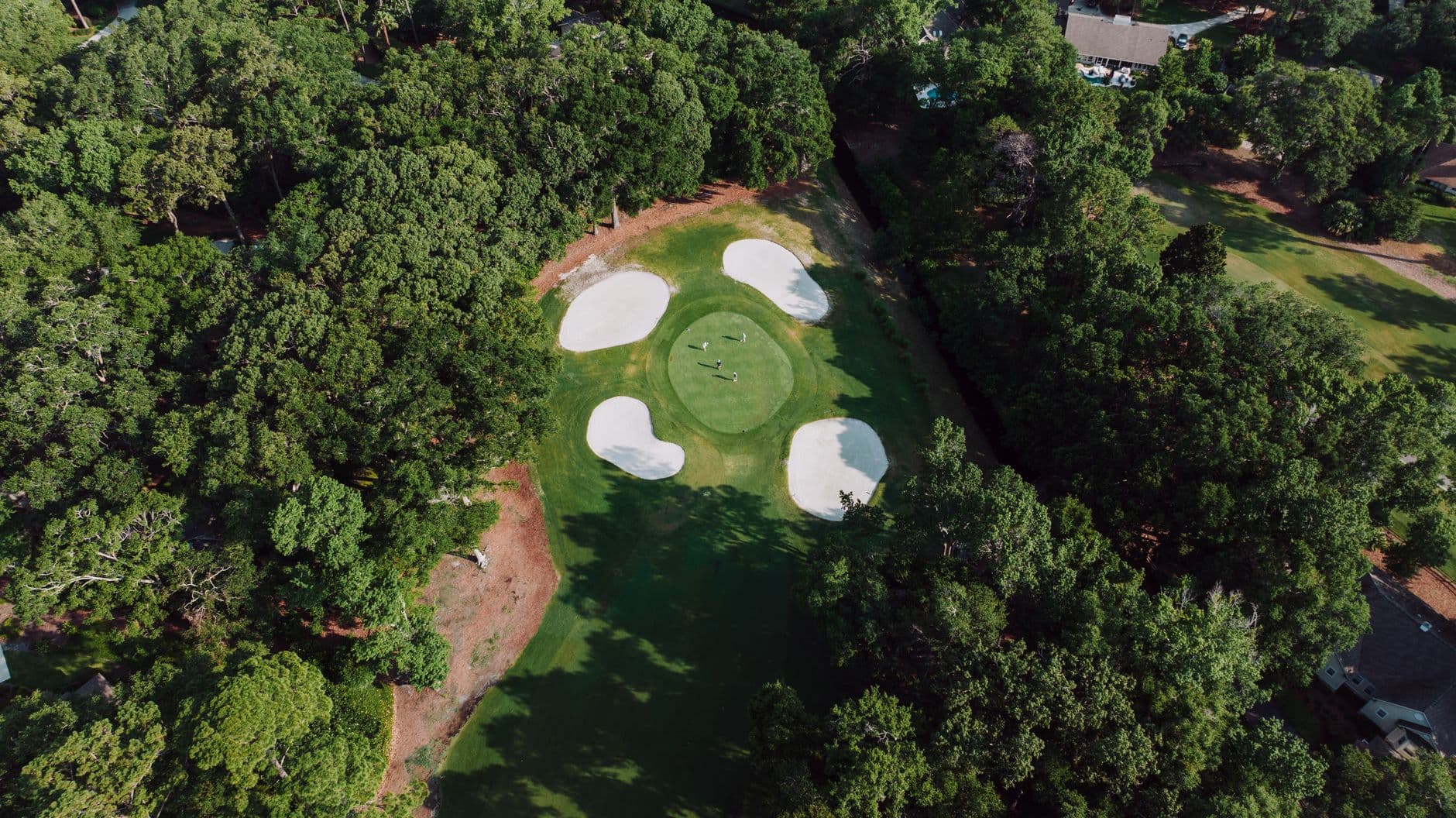
The greatest golf courses in the world are not accidents. They are arguments — precise, deliberate statements about how the game should be played, where risk should live, and what beauty is worth sacrificing for strategy. As modern fans increasingly consume elite tournament golf through broadcast angles and shot-tracking data, understanding the architectural language behind these layouts has never been more rewarding.

Course architecture is experiencing a genuine renaissance. Restorations of Golden Age designs, a surge in minimalist builds that work with natural terrain, and a broader conversation about sustainability and playability have pushed architecture to the front of golf's cultural dialogue. For the serious fan, this shift is worth paying close attention to.
The Strategic Triangle: Risk, Reward, and Route
The foundational principle of great course design is what architects call the strategic triangle. Every hole should present at least two viable lines of play — one aggressive, one conservative — with the aggressive route offering a meaningfully better approach angle but a steeper penalty for failure. When this balance collapses, you get either a target golf hole that rewards only perfection or a pedestrian par that punishes nothing.
Watch elite professionals navigate a well-designed par 4 and you will see this calculus play out in real time. A player sitting in the top ten on the leaderboard may take a completely different line off the tee than someone needing to make up ground. The course is asking a different question of each of them — and the best designs force that conversation on every single hole.
Green Complexes: Where Rounds Are Decided
No element of a golf course separates architectural generations more clearly than green design. The Golden Age architects — Alister MacKenzie, Donald Ross, A.W. Tillinghast — built greens that were expansive, wildly contoured, and fiercely dependent on approach angle. Miss from the wrong side and a birdie opportunity becomes a three-putt scramble.
Modern restorations of these layouts — Augusta National's ongoing refinements, the celebrated work done at Pinehurst No. 2, Oakmont's relentless maintenance of its terrifying speed and slope — reflect a renewed respect for this philosophy. Tournament setups that funnel pins into the most protected quadrants of these greens expose weaknesses in ball flight shape and spin control that flat, receptive greens simply cannot.
- Approach angle determines everything: a 7-iron from 165 yards left of the fairway is a fundamentally different shot than the same club from the right.
- Green firmness and speed amplify architectural intent — a soft green neutralizes contour; a firm, fast green weaponizes it.
- Backstop features like false fronts, run-off areas, and collection bowls force shot selection decisions well before the approach is hit.
- Pin position relative to slope creates a proximity-to-danger tension that is the hallmark of elite tournament setup.
Bunkering Philosophy: Penal vs. Strategic
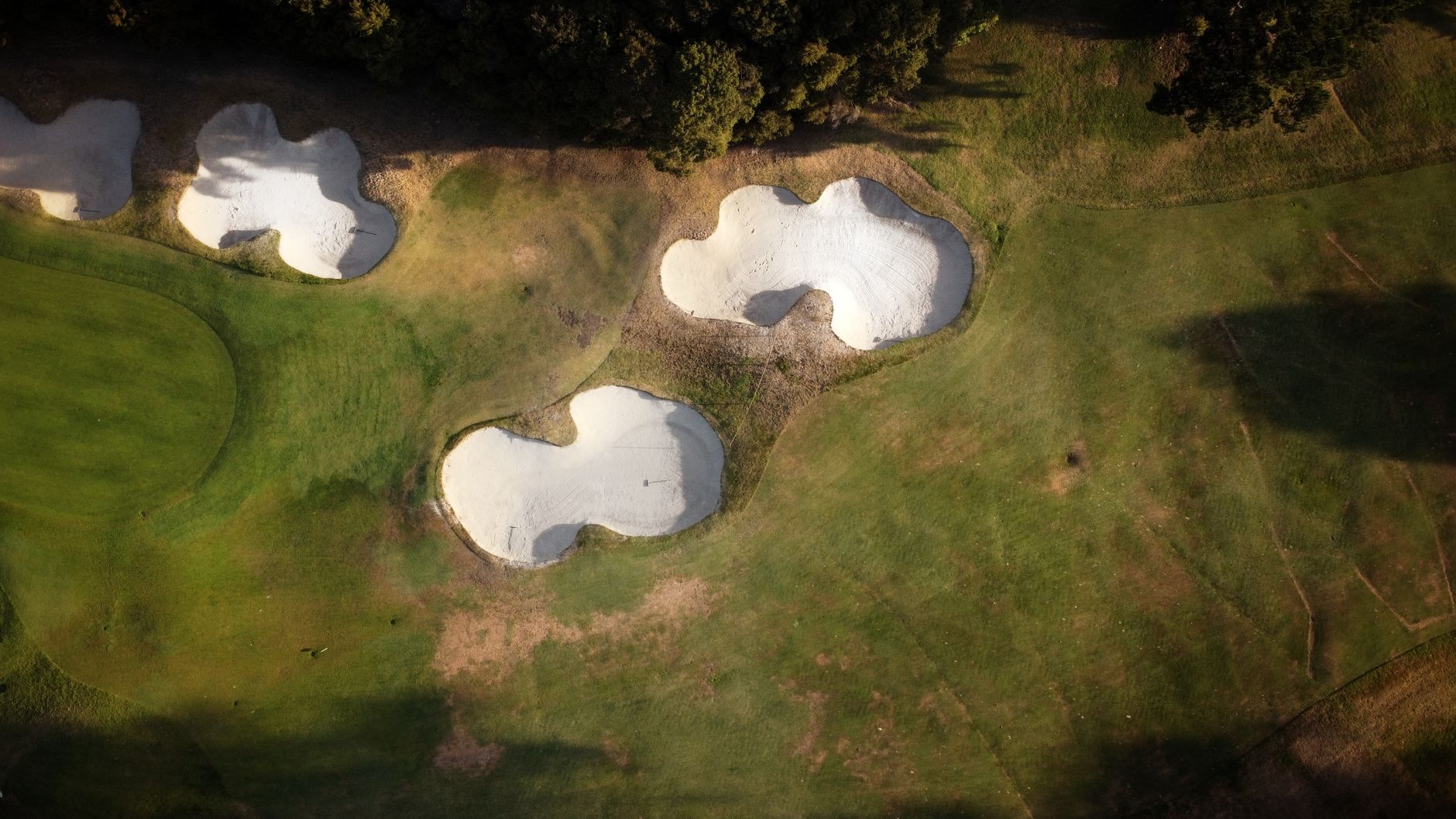
The debate between penal and strategic bunkering is one of architecture's oldest arguments. Penal design punishes error with a direct, severe consequence — deep pot bunkers at Carnoustie or Royal St George's offer little recovery and are designed explicitly to remove strokes. Strategic bunkering, by contrast, is positioned to influence shot selection before the ball is struck, with recovery often possible but the subsequent approach compromised.
The finest courses blend both traditions with intelligence. Fairway bunkers placed at the precise carry distance of a well-struck driver force a decision between taking on the carry or laying back to a less favorable angle. This is architecture speaking directly to ball flight, and it is why understanding your own carry distances — and how your equipment responds under pressure — matters far beyond the practice range.
A golf course is nothing but a series of puzzles. The architect sets the question; the player decides how boldly to answer it.
— Traditional architectural philosophy
Routing and Topography: The Invisible Architecture
The routing — how holes are sequenced across the land — is perhaps the most underappreciated element of course design. A masterful routing uses natural topography to vary wind exposure, create visual intimidation, and build to a closing stretch that maximizes both drama and difficulty. The back nine at Augusta National is the most famous example of pressure architecture in the world, but it works because the front nine has calibrated the player's confidence precisely to the breaking point.
Links courses demonstrate routing genius in a different register. St Andrews, Royal Dornoch, and Lahinch were not designed so much as discovered — the Old Course layout follows the natural land so faithfully that distinguishing between architecture and topography becomes genuinely difficult. This is why links golf rewards local knowledge, creative shot-making, and a fundamentally different relationship with ball flight than parkland or desert design.
How Equipment Interacts With Design Intent
A conversation about architecture is incomplete without acknowledging equipment's evolving role in how designs are experienced. Distance gains have rendered some strategic hazards irrelevant — bunkers positioned for 1920s carry distances may now fall short of modern driving lines entirely. This is a central tension in contemporary course management discussions, and it has renewed interest in restoration work that repositions hazards to their intended strategic locations.
Ball technology is equally relevant. On firm, contoured greens playing in the spirit of Golden Age design, compression and spin rate dictate whether a player can hold a specific quadrant or must accept a run-through to safer ground. Players who choose their ball based on short-game spin characteristics — particularly around demanding green complexes — gain a measurable advantage in precisely the situations architecture intends to create. Attomax's High-Density ball lineup, with its distinct Soft, Medium, and Hard compression options, speaks directly to this: matching compression profile to course conditions and green firmness is the kind of equipment decision that separates disciplined preparation from guesswork.
The Minimalist Movement and What It Means
The most influential trend in modern course design is minimalism — the commitment to building as little as possible and letting natural landforms generate interest, drainage, and visual character. Architects including Tom Doak, Bill Coore, and Ben Crenshaw have championed this approach for decades, and their influence is now mainstream. Courses that move minimal soil, preserve native grasses, and integrate hazards that look as though they have always been there represent the frontier of what design can achieve.
For fans watching tournament golf, the minimalist philosophy shows up most clearly in how broadcast cameras struggle to capture the full texture of a hole. Subtle fall-aways, barely visible slope changes, and tight lies that look routine on screen but demand precise trajectory control — these are the signatures of design that rewards the player who has done their homework and punishes the one relying on instinct alone.
Understanding course architecture does not require a degree in landscape design. It requires watching golf with more curiosity about why a hole is shaped the way it is — and then trusting that the best architects have left nothing to chance.
Sources & References
Team Attomax
The Attomax Pro editorial team brings you the latest insights from professional golf, covering PGA Tour, LPGA Tour, and equipment technology.