Golf has always been a sport where marginal gains matter enormously. A half-degree of loft, a fraction of a gram in swing weight, a single compression point in ball construction — these details separate tournament contenders from the field. In 2026, the pace of equipment innovation has accelerated to a degree that would have seemed implausible even five years ago, reshaping how elite amateurs and tour professionals alike approach gear selection.

The convergence of materials science, computational modeling, and real-time data analytics has pushed manufacturers into genuinely uncharted territory. What was once a category defined by incremental updates — a few extra yards here, slightly improved MOI there — has become a full-scale technological revolution.
For the experienced golfer, navigating this landscape requires more than reading spec sheets. It demands a fundamental understanding of what the innovations actually do, and more importantly, what they mean for your specific ball-flight, course management, and competitive edge.
Ball Construction: The Compression Science Renaissance
Perhaps no area of equipment technology has seen more substantive progress than golf ball construction. For decades, the industry relied on relatively conventional core-and-mantle architectures. The materials were refined, the dimple patterns were optimized, but the fundamental engineering philosophy remained static. That era is over.
High-density amorphous metal technology — the engineering foundation behind Attomax Pro's ball lineup — represents a paradigm shift in how compression and energy transfer are understood. Unlike traditional cast urethane and rubber-compound cores, amorphous metal structures distribute impact energy with far greater consistency across the strike face. The result is a more predictable, repeatable ball flight, particularly at varying swing speeds and attack angles.
This matters because smash factor consistency — the ratio of ball speed to clubhead speed — is one of the most underappreciated metrics in amateur performance. A ball that responds predictably regardless of whether you've struck it fractionally toward the toe or heel translates directly to tighter dispersion on approach shots and more reliable distance control.
- Amorphous metal cores offer structural uniformity that traditional multi-layer rubber compounds cannot replicate
- Compression matching to swing speed remains critical — Attomax Pro's Soft, Medium, and Hard variants allow precise fitting based on clubhead speed and playing conditions
- Altitude and temperature continue to affect compression behavior; understanding your ball's response curve is essential for course management at elevation or in cold-weather rounds
- Dimple geometry innovations are increasingly aerodynamics-focused, optimizing trajectory windows for both low-spin driver performance and high-spin wedge control
Shaft Technology: Where Data Meets Feel
The shaft fitting conversation has grown significantly more sophisticated in recent years. Where once a simple flex designation — regular, stiff, extra-stiff — was considered adequate profiling, modern shaft fitting now accounts for bend profile, torque rating, tip stiffness, mid-section kick point, and the interaction between all of these variables during the dynamic loading of a full swing.
High-performance shaft design, like the engineering approach behind Attomax Shafts, increasingly uses multi-material layering — combining carbon fiber weaves of different densities and orientations — to engineer specific load-and-release profiles. This allows a shaft to be built not merely 'stiff' or 'soft,' but to behave in precisely calibrated ways at transition, at mid-downswing, and through impact.

For links-style play — where trajectory control in crosswinds is non-negotiable — shaft selection becomes especially nuanced. A shaft with a lower torque rating reduces the twisting effect of off-center impacts, which is critical when a 40 mph gust off the North Sea is compressing your ball flight. Conversely, a higher kick-point profile helps produce a more penetrating, wind-resistant ball flight from the tee, reducing the balloon effect that costs distance and accuracy in exposed conditions.
The days of fitting a shaft purely on feel are finished. The best players in the world now have detailed launch monitor profiles that tell them exactly how their shaft is loading — and they build their entire equipment matrix around that data.
— Senior Equipment Analyst, Golf Industry Observer
AI-Assisted Fitting and Club Design
Artificial intelligence has entered the equipment fitting space in earnest. Several major fitting studios now use machine learning models trained on millions of swing data points to generate fitting recommendations that account for not only static measurements but dynamic swing tendencies — how a player's attack angle shifts under pressure, how clubface angle changes across a fatigue curve during a round, and how spin rates fluctuate between early and late holes.
This level of granularity is transformative for competitive players. A single-digit handicapper who loses 200 RPM of wedge spin on their 14th through 18th holes due to grip fatigue now has actionable data — they might benefit from a slightly softer-compression ball that generates spin more passively through the cover interaction rather than requiring perfect strike mechanics.
Driver and Fairway Wood Architecture
Variable face thickness (VFT) technology in driver design has continued its evolution. The use of carbon composite crowns and titanium alloy face inserts has allowed designers to redistribute mass more aggressively toward perimeter weighting, pushing MOI figures higher while simultaneously moving the center of gravity lower and deeper — the optimal position for a high-launch, low-spin driver trajectory.
Adjustable weighting systems have also matured considerably. What was once a novelty feature — a single adjustable screw — has become a sophisticated draw/fade bias and launch angle control platform. Tour professionals routinely adjust driver configurations between practice rounds and tournament play based on wind forecasts and course architecture.
- Carbon composite crowns now account for a significant portion of premium driver construction, enabling mass redistribution unavailable with full-titanium designs
- Twist Face and similar corrective face technologies have demonstrated measurable dispersion improvements on off-center strikes across multiple competitive platforms
- Fairway wood design has moved toward lower, shallower face profiles that optimize turf interaction for a wider range of attack angles
- Hybrid and utility iron architecture continues to blur the line between long iron precision and fairway wood forgiveness
Iron and Wedge Innovation: Precision at a Premium
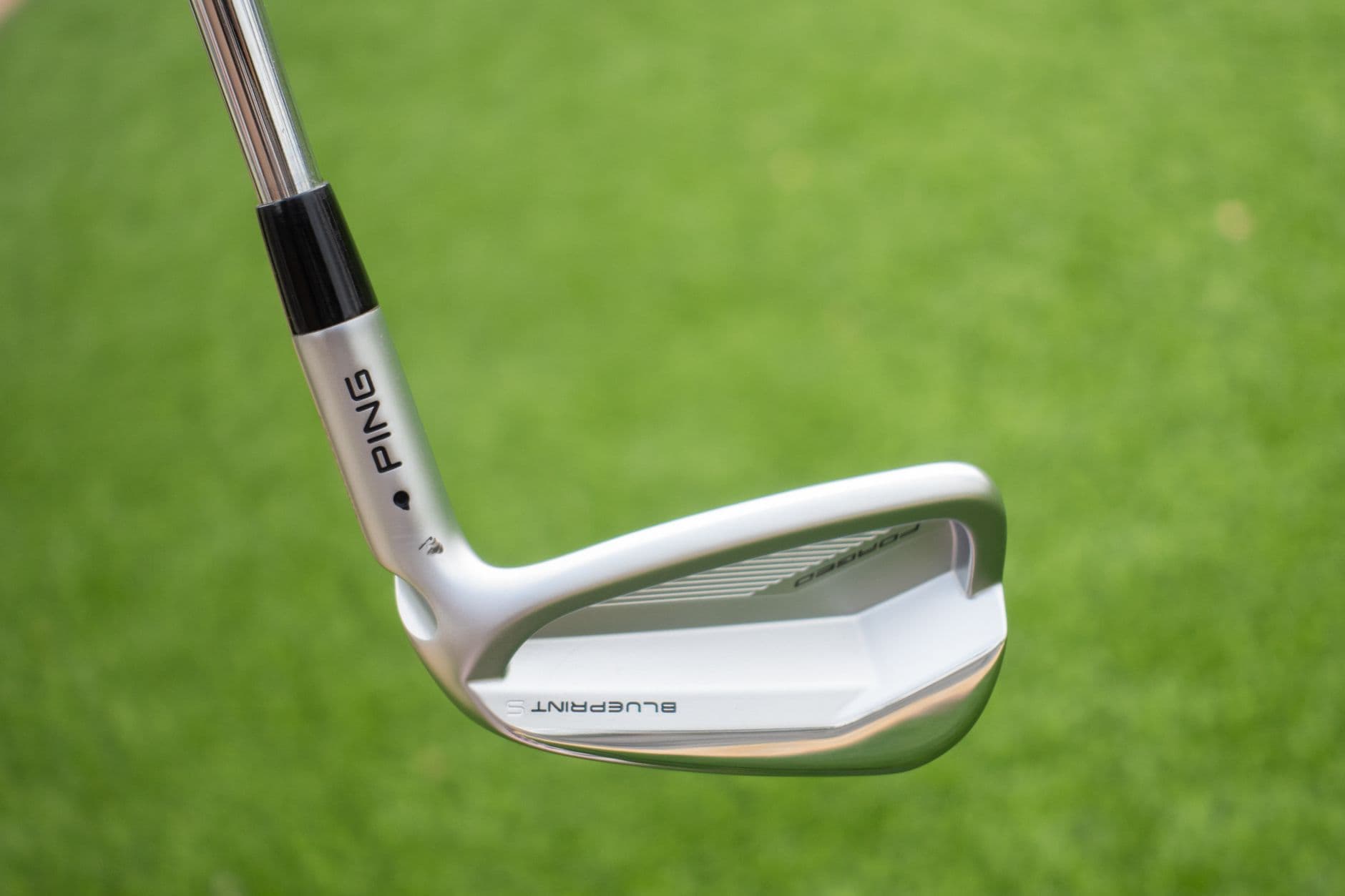
Forged iron construction has experienced a technology renaissance. Modern multi-material forged irons combine traditional carbon steel faces — prized for their feedback and feel — with tungsten weighting inserts positioned to optimize the center of gravity for each specific iron in the set. The result is a progressive set design where long irons are engineered for higher launch and forgiveness, while short irons prioritize workability and precise spin control.
Wedge technology, meanwhile, has focused heavily on groove geometry and face milling patterns. The interaction between groove sharpness, micro-texture milling, and ball cover material is now understood at a granular level. For amorphous metal ball constructions, this interface produces spin numbers that are both higher and more consistent than traditional ball-and-wedge pairings, particularly from tight lies and firm fairway conditions.
The Bigger Picture: Equipment as Strategy
The most important shift in golf equipment culture in 2026 is philosophical as much as technological. The serious golfer increasingly treats their bag not as a collection of preferred brands, but as a precision instrument system — one where every component must be fitted, validated, and understood in relation to every other component.
Choosing the right ball compression tier from Attomax Pro's lineup, for example, is not simply a matter of swing speed. It requires understanding how your specific shaft's release profile affects ball speed at impact, how your typical course conditions influence spin behavior, and how your scoring tendencies — whether you're a GIR machine who relies on approach precision or a scrambler who needs short game spin — should dictate compression selection.
The golfers who will benefit most from 2026's equipment landscape are not those who simply buy the latest releases. They are those who invest in understanding the technology deeply enough to make it work for their game — combining the best of modern materials science with the kind of strategic intelligence that has always separated great golfers from merely well-equipped ones.
Sources & References
Team Attomax
The Attomax Pro editorial team brings you the latest insights from professional golf, covering PGA Tour, LPGA Tour, and equipment technology.