Golf equipment has always been an arms race between physics and regulation — but 2026 is shaping up as one of the most technically aggressive eras the sport has ever seen. From high-density ball construction to adaptive shaft technology, the gap between average and elite performance is increasingly being fought in the engineering lab, not just on the practice range.
At every level of the game — PGA Tour, LPGA Tour, and amateur competition — players are demanding more from their equipment than ever before. The conversation has shifted decisively from aesthetics and feel to measurable performance metrics: smash factor optimization, spin rate windows, and launch angle precision.
Understanding what's driving these innovations — and how they translate to real performance on the course — is essential for any serious golfer looking to stay ahead of the curve.
Ball Construction: The Compression Revolution
For decades, golf ball construction was defined by two broad categories: soft and hard. But modern manufacturing has obliterated that binary. The emergence of high-density amorphous metal core technology is enabling ball designers to achieve compression profiles that simply weren't possible with traditional ionomer or urethane constructions alone.
The fundamental principle is energy transfer efficiency. Traditional balls dissipate a measurable portion of impact energy through core deformation that doesn't fully recover before separation from the clubface. High-density constructions — like those powering the Attomax Pro lineup — minimize that energy loss, translating directly into higher ball speeds from the same swing input. For players already maximizing their smash factor, that additional efficiency margin is meaningful.
The real sophistication, however, lies in the compression segmentation. Tour players aren't looking for a single-profile ball — they need soft short-game response without sacrificing driver velocity. The latest generation of multi-layer designs addresses this by using differentiated material densities across core, mantle, and cover layers, each tuned to a specific performance window.
Shaft Technology: Beyond Flex Ratings
The era of selecting a shaft by flex rating alone — Regular, Stiff, X-Stiff — is functionally obsolete at the performance level. Modern shaft engineering is built around load profile, kick point, and torque management across the full range of swing dynamics, not just peak clubhead speed.
What this means practically is that two players with identical swing speeds can require dramatically different shaft profiles depending on their tempo, transition force, and attack angle. A player with a fast tempo and aggressive transition generates a very different load curve than a smooth swinger at the same peak speed — and a shaft tuned for one will actively fight the other.
- Kick point position: High kick points suppress launch for players with naturally elevated dynamic loft; low kick points help those who deloft aggressively through impact
- Torque rating: Lower torque improves directional consistency for high-force swingers; higher torque can aid players who need help squaring the face
- EI profile (stiffness distribution): Tip stiffness controls spin and launch independently of overall flex rating
- Weight distribution: Counter-balanced designs are gaining traction among players managing swing fatigue across a full 72-hole event
AI-Driven Club Fitting: Data at Scale
Perhaps the most transformative development in equipment over the past few years isn't in the hardware itself — it's in how that hardware is matched to the individual. AI-driven fitting platforms have evolved from basic launch monitor integrations to genuinely predictive systems that analyze swing biomechanics, historical shot dispersion, and environmental factors to generate equipment recommendations with a precision that human fitters alone couldn't replicate at scale.
High-end fitting studios are now correlating thousands of data points — not just peak numbers like ball speed and carry distance, but the full shape of a player's shot distribution — to identify the equipment configuration that reduces variance, not just maximizes ceiling performance. The distinction matters enormously in course management terms. A ball that adds five yards of carry but increases lateral dispersion by twelve feet is often a net negative for scoring.
The best fitting isn't about finding the longest option. It's about finding the most consistent option at the player's ceiling.
— Industry fitting philosophy, widely cited among Tour-level equipment specialists
Driver and Iron Head Design: Adjustability Matures
Adjustable hosels and moveable weight systems have been mainstream for over a decade now — but the 2026 generation represents a maturation of that philosophy. Early adjustability features were broad-strokes tools: draw bias, fade bias, loft adjustments. Current systems are precise enough to target specific spin rate changes measured in hundreds of RPM, or to shift the center of gravity on a plane calibrated to address individual impact tendencies.
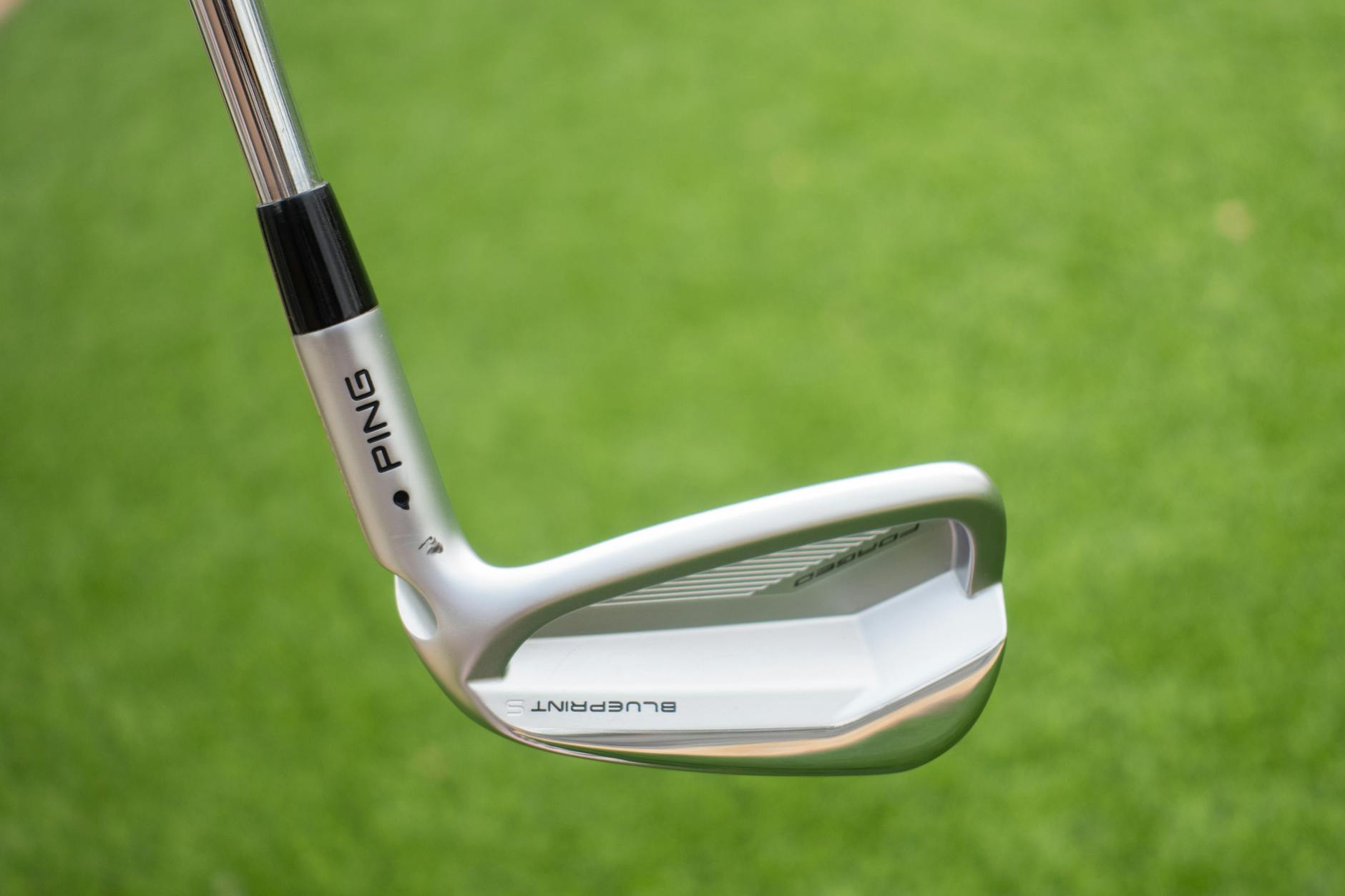
In irons, the divergence between player's distance irons and traditional blades has never been more pronounced. Distance iron technology — hollow-body constructions, speed-face engineering, extreme perimeter weighting — has closed the yardage gap with fairway metals for strong ballstrikers, fundamentally reshaping iron selection strategy for competitive amateurs and club professionals alike.
The Wedge Game: Spin Consistency Over Peak Spin
The conversation around wedge technology has evolved similarly. For years, the marketing emphasis was on maximum spin numbers. Increasingly, however, the performance focus has shifted to spin consistency across varying lie conditions — tight lies, rough, and intermediate cuts. A wedge that produces elite spin from a perfect fairway lie but collapses from rough is a liability in real course conditions.
Progressive groove geometry and specialized face textures are being engineered specifically to maintain spin rate stability across imperfect contact — a development that directly rewards the kind of course management thinking that separates skilled players from exceptional ones.
The Ball Compression-Altitude Equation
One area where ball selection sophistication is genuinely underappreciated — even among skilled players — is altitude management. At elevation, reduced air density decreases aerodynamic drag, which increases carry distance, but it also alters the interaction between spin rate and trajectory in ways that compound with ball compression choices.
Higher-compression options, like the Attomax Pro Hard, tend to produce lower spin rates at impact, which pairs well with altitude play where additional spin can elevate trajectory unpredictably. Conversely, on links-style coastal courses where wind management is paramount, the controlled spin profile of a medium-compression ball gives players more predictable trajectory windows in crosswind conditions. Matching compression to course environment — not just swing speed — is one of the finer adjustments available to the serious golfer.
What's Next: Materials Science Meets Golf
The trajectory of golf equipment innovation in 2026 points toward materials science as the primary frontier. Amorphous metals, carbon fiber composites, and nano-engineered polymers are moving from aerospace and motorsport applications into the golf equipment supply chain — bringing with them material properties that traditional manufacturing simply cannot replicate.
The USGA and R&A continue to monitor equipment regulations closely, and the ongoing conversation around conforming ball and driver standards will inevitably shape how aggressively manufacturers can deploy some of these advances. But within the current regulatory envelope, the pace of innovation remains striking — and for the golfer committed to squeezing every legitimate performance advantage from their game, 2026 represents a genuinely exciting moment to be paying close attention.
Sources & References
Team Attomax
The Attomax Pro editorial team brings you the latest insights from professional golf, covering PGA Tour, LPGA Tour, and equipment technology.