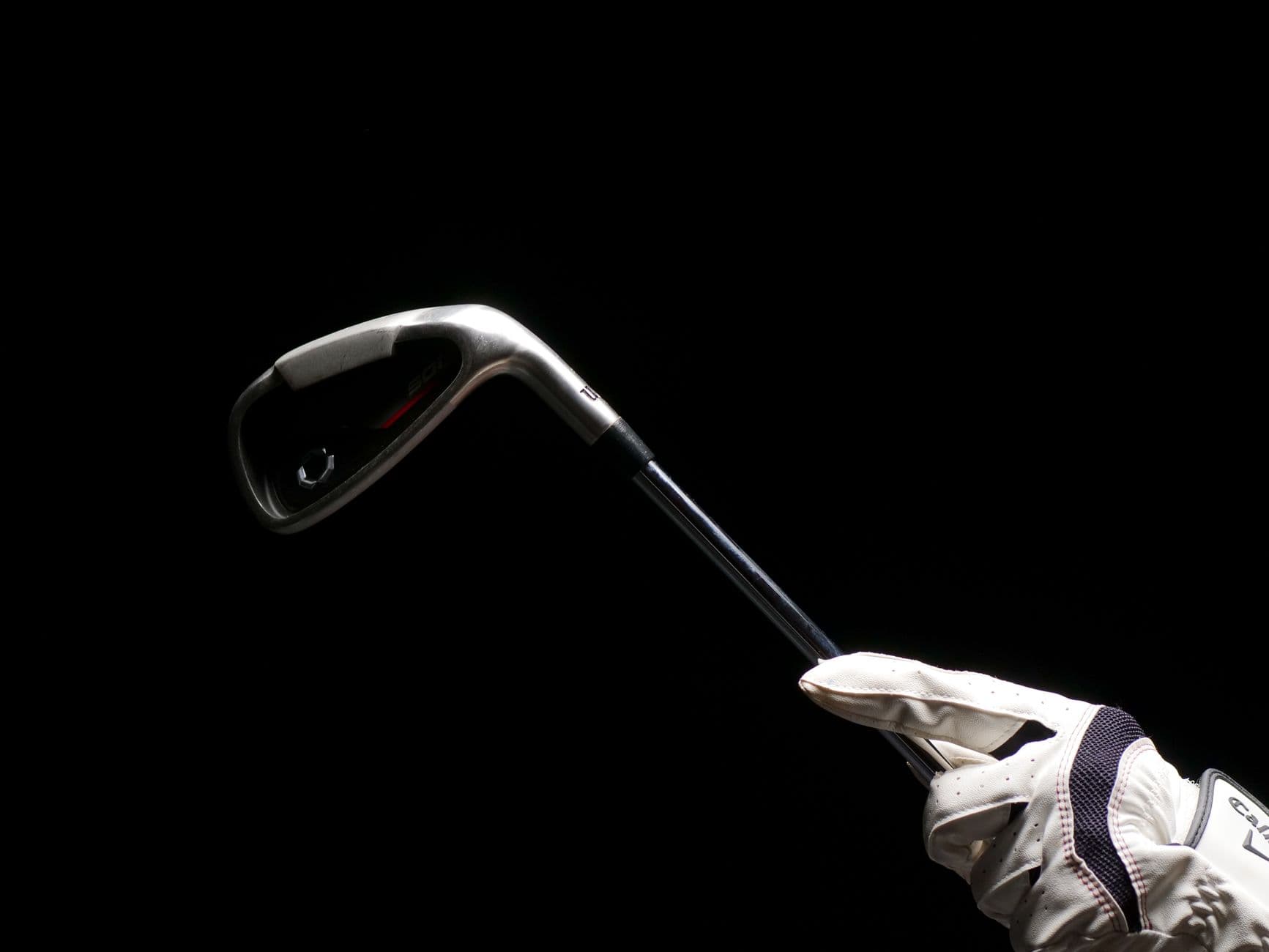
Ask any club fitter worth their TrackMan subscription, and they'll tell you the same thing: the shaft is not the engine of the golf swing — it's the transmission. It determines how power is delivered, when the clubface arrives at impact, and ultimately, how the ball launches into the air. For serious golfers chasing measurable gains, understanding shaft technology is non-negotiable.

Modern shaft engineering has evolved dramatically over the past decade. Advances in composite materials — particularly high-modulus carbon fiber and nano-resin bonding — have allowed manufacturers to engineer shafts with precision flex profiles, optimized kick points, and tightly controlled torque ratings. The result is a category of equipment that can meaningfully alter launch angle, spin rate, and dispersion patterns without touching the clubhead or ball.
Yet for all this sophistication, many golfers still treat the shaft as an afterthought. They obsess over clubhead MOI and ball compression while gaming a stock shaft that was never matched to their tempo, transition speed, or attack angle. This is where real distance and accuracy gains are left on the table.
The Flex Profile: Where Launch Is Born
Flex rating — Regular, Stiff, X-Stiff — is the entry point of shaft selection, but it's only the beginning of the conversation. What matters more to experienced players is the flex profile, which describes how the shaft bends along its entire length during the swing. A shaft can be tip-stiff with a softer butt section, or vice versa, and both will produce radically different ball flights even if the overall flex rating is identical.
A low kick point (or bend point) positions the maximum flex point closer to the clubhead, which promotes higher launch angles and more dynamic loft at impact — ideal for players who need to get the ball airborne quickly or who have a later release in their swing. A high kick point keeps the flex point toward the grip end, delaying the release and producing a lower, more penetrating ball flight favored by fast-tempo players and those who play in coastal wind conditions.
- Low kick point: Higher launch, higher spin — suits moderate swing speeds and late releasers
- Mid kick point: Balanced trajectory — versatile for a wide range of swing profiles
- High kick point: Lower launch, lower spin — preferred by aggressive transitioners and links players
- Tip stiffness: Directly affects spin rate — stiffer tips reduce spin and tighten dispersion
- Butt stiffness: Influences feel and tempo feedback through the grip
Torque, Tip Stiffness, and Dispersion Control
Torque — measured in degrees — describes a shaft's resistance to twisting around its longitudinal axis during the downswing. Lower torque ratings (typically 2.0° to 3.5° in quality driver shafts) mean the face is less likely to rotate open or closed through impact. This is especially critical for players with high swing speeds, where centrifugal force during transition can torque a softer shaft enough to cost several yards of dispersion width on every shot.
Tip stiffness, often expressed in CPM (cycles per minute) measurements, is arguably the most overlooked variable in amateur club fitting. A stiffer tip section reduces dynamic loft at impact, which lowers spin rate. For a player already generating high spin numbers — common among those with steep attack angles — switching to a higher-CPM tip profile can be the equivalent of dialing back spin by 300 to 500 RPM, which translates directly into carry distance and run-out on firm fairways.
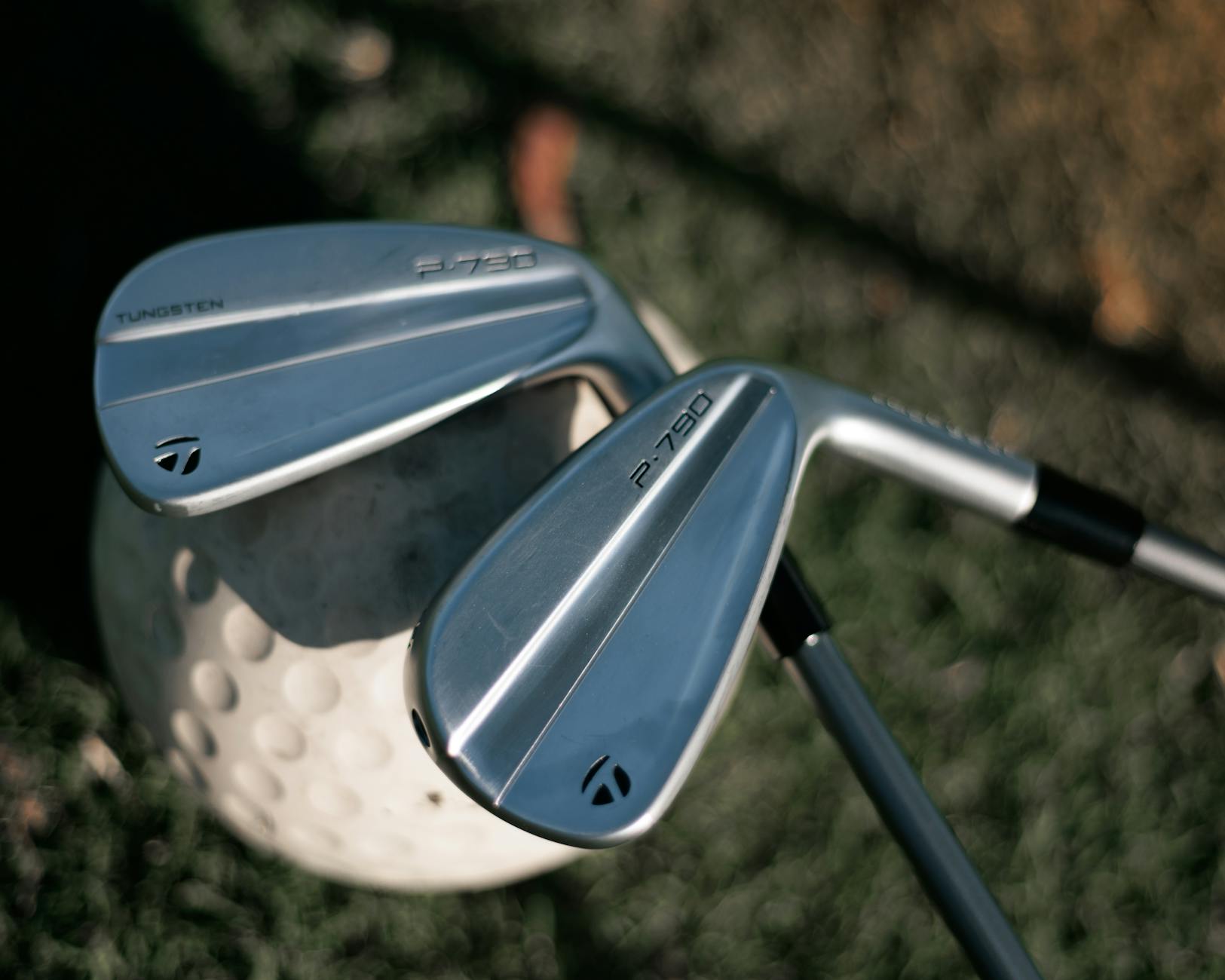
Weight, Balance Point, and Smash Factor
Shaft weight influences swing tempo and clubhead speed in ways that are often counterintuitive. Lighter shafts — in the 45g to 55g range common in premium driver builds — allow faster clubhead acceleration, which raises the ceiling on potential Smash Factor when combined with solid center-face contact. However, lighter shafts can also introduce instability for players with aggressive transition moves, leading to increased heel or toe strikes that bleed energy away from the ball.
Balance point, sometimes referred to as the shaft's 'center of gravity,' shifts the swing weight of the assembled club without changing total weight. A higher balance point moves mass toward the butt, making the club feel lighter during the swing — a sensation many tour-caliber players find helpful for maintaining consistent tempo under pressure. Counter-balanced shaft designs exploit this principle deliberately, and their adoption on Tour has grown steadily in recent seasons.
The best shaft for your game is not the one in the most expensive driver at retail. It's the one that consistently delivers the face square to your path at the speed you actually swing — not the speed you think you swing.
— Tour Club Fitter, PGA Teaching Professional
How Ball Compression Interacts With Shaft Behavior
Shaft technology does not operate in isolation. Its performance characteristics are intimately linked to the compression and construction of the golf ball being played. A low-compression ball paired with a high-torque, low kick-point shaft can balloon under certain conditions — especially in warmer temperatures or at altitude — producing excessive spin and a flight that peaks too early, costing carry distance.
This is where the ball-shaft system becomes a genuine optimization challenge. Players who invest in a precision shaft fitting should ideally be evaluated with the same ball they compete with. At Attomax, our High-Density amorphous metal golf balls — available in Soft, Medium, and Hard compression variants — are engineered with a consistent, highly uniform core that responds predictably to a wide range of dynamic loft conditions. This consistency makes shaft fitting data far more reliable: what you see on the launch monitor is genuinely what you get on the course, round after round.
Practical Takeaways for the Serious Player
Getting a shaft fitting is not a luxury reserved for Tour professionals. Any player shooting in the 70s and below will likely see measurable improvement in both distance and dispersion from a properly matched shaft profile. The key is to seek a fitter who works with launch monitor data — specifically launch angle, spin rate, and smash factor — rather than relying solely on swing speed and flex charts.
- Establish your baseline: Get measured on a launch monitor with your current setup before any changes
- Prioritize spin rate: Identify whether your primary issue is too much or too little spin — this determines kick point direction
- Test torque ranges: If your dispersion is wide, experiment with lower-torque options before blaming your swing
- Match the ball: Fit the shaft and ball together, not separately — they form a single performance system
- Validate on the range: Launch monitor data is the starting point, not the conclusion — confirm feel and flight on real turf
The golf equipment industry has reached a point where marginal gains in clubhead technology are increasingly hard to find. The shaft, by contrast, remains an area where even experienced players are underserving themselves. Whether you are optimizing for a demanding parkland layout or preparing for a wind-exposed links test, understanding the physics of shaft performance — and matching it precisely to your ball and your swing — is one of the clearest paths to a measurable, repeatable improvement in your game.
Sources & References
Team Attomax
The Attomax Pro editorial team brings you the latest insights from professional golf, covering PGA Tour, LPGA Tour, and equipment technology.