In the ongoing pursuit of distance and precision, golfers obsess over ball selection, clubhead design, and swing mechanics. Yet the shaft — that slender conduit between your hands and the clubface — remains the single most influential variable in determining how a ball actually launches, shapes, and lands. Understanding shaft technology at a mechanical level is no longer optional for serious players; it is foundational.
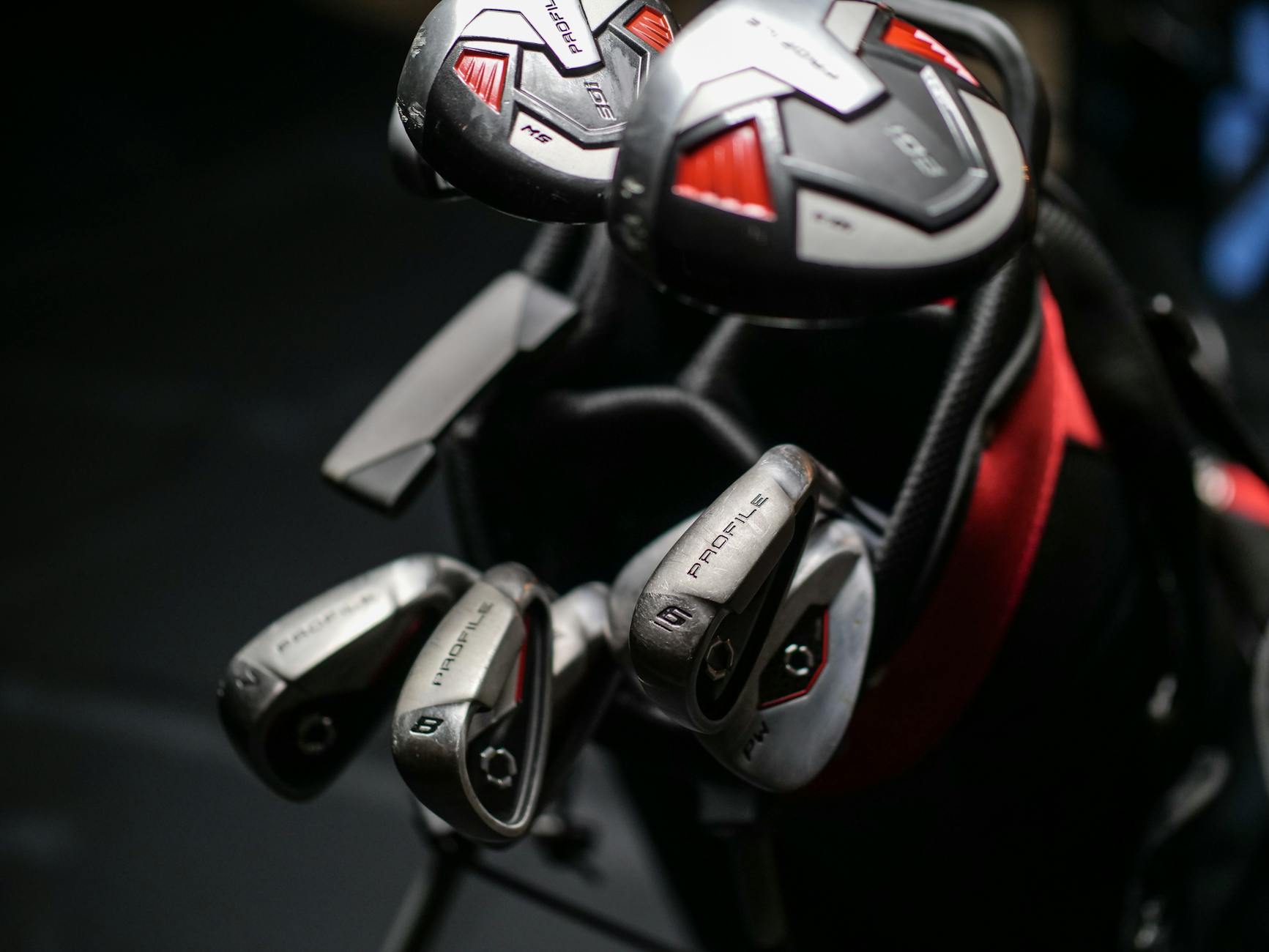
Modern shaft engineering has evolved dramatically from the hickory and steel eras. Today's premium shafts are composite structures — layered graphite, carbon fiber weaves, and in some cases, nanomaterial reinforcements — each engineered to deliver specific load profiles at specific points in the swing arc. The result is a level of launch-condition control that simply did not exist a generation ago.
The critical insight that separates elite ball-strikers from the rest of the field is this: the shaft does not merely transmit energy — it stores and releases it. The timing of that release, governed by the shaft's flex profile and kick-point, directly determines launch angle, spin rate, and ultimately, carry distance.
Flex Profile: It's Not Just Stiff vs. Regular
The traditional R/S/X flex labeling system is, frankly, a marketing convenience rather than a precision specification. Two shafts both labeled 'Stiff' can behave dramatically differently depending on where along their length they deflect under load. This is what shaft fitters refer to as the flex profile — or bend profile — a far more granular measurement than a single-letter designation.
A shaft with a soft tip section and a firm butt section will load aggressively near the head, producing higher launch angles and elevated spin — ideal for players with smooth, controlled transition tempos. Conversely, a firm-tip design resists deflection at the clubhead, delaying the kick and producing a penetrating, lower-spin ball flight preferred by players with aggressive, high-speed transitions.
- Low kick-point (tip-flex dominant): Higher launch, more spin — suits moderate swing speeds and smooth tempo
- Mid kick-point: Balanced launch and spin — the most versatile profile across swing types
- High kick-point (butt-flex dominant): Lower, piercing trajectory — favored by high-speed, aggressive transition players
- Counterbalanced designs: Shift mass toward the grip to improve tempo control and reduce twisting at impact
Torque: The Rotation You Cannot Feel but Cannot Ignore
Torque — measured in degrees of rotation under a standardized load — is perhaps the least discussed yet most consequential shaft specification for shot shape. A high-torque shaft (typically above 4°) will rotate more through the impact zone, closing the face slightly for players with faster tempos. This can promote a draw, but it also introduces dispersion risk under pressure.
Low-torque shafts (below 3°) resist that rotational twist, offering tighter dispersion and greater workability for players who shape the ball intentionally. On firm, fast links conditions — where a well-controlled draw that lands and runs is tactically superior — a low-torque shaft gives elite players the precision architecture they need to execute.

Weight Distribution and Swing Efficiency
Shaft weight directly influences swing tempo, club path, and the smash factor achieved at impact. Lighter shafts allow faster clubhead speeds, but they come with a trade-off: reduced feedback and a tendency to promote over-the-top paths in players with timing inconsistencies. Heavier shafts provide more control and a more on-plane downswing, but they demand sufficient strength and speed to maximize energy transfer.
The optimal shaft weight is not simply the lightest option a player can swing fast — it is the heaviest shaft a player can deliver consistently on-plane at maximum controllable speed. This nuance is what separates a proper shaft fitting from simply choosing the lightest graphite on the rack.
The shaft is the engine. The clubhead is just the body. If you get the engine wrong, it doesn't matter how beautiful the body is.
— Common maxim among Tour-level club fitters
Ball Compression and the Shaft Relationship
Shaft technology does not operate in isolation. The interaction between shaft behavior and ball construction is where the real performance gains — or losses — occur. A soft-compression ball played with an aggressive, low-torque, high-kick-point shaft will not produce optimal energy transfer. The shaft will unload before the ball is ready to respond, generating excessive spin and ballooning trajectory.
This is precisely why Attomax engineers their High-Density amorphous metal ball cores — Soft, Medium, and Hard — to complement a range of shaft profiles. The Attomax Hard compression core, for instance, is engineered to engage maximum energy transfer with faster-loading shafts, particularly for players generating elite clubhead speeds. The Medium core occupies the performance sweet spot for mid-handicap scratch-chasers who combine a premium shaft with a consistent, high-tempo swing.
Matching Shaft to Playing Conditions
Course management at an elite level demands that shaft selection account for more than just swing mechanics — it must account for playing conditions. On a cold, firm links course where the air is dense and the ground is fast, a stiffer, lower-torque shaft with a higher kick-point will produce a penetrating ball flight that holds its line against the crosswind and delivers maximum run-out on landing.
In contrast, high-altitude inland courses — where the air is thin and carry distance is naturally amplified — demand a shaft profile that manages spin to prevent ballooning. A mid-to-high kick-point shaft paired with a medium compression ball can be the difference between a controlled fade into a tucked pin and an overcooked approach that sails the green.
- Links / coastal conditions: Low kick-point with low torque for wind penetration and shot control
- High altitude / inland: Mid kick-point to manage spin amplification in thin air
- Soft, receptive parkland: Higher launch profile to maximize carry on soft fairways
- Hot, firm summer conditions: Balanced profile to control run-out without sacrificing carry
The Case for Professional Shaft Fitting
With the sophistication now built into premium shaft engineering, selecting a shaft based on manufacturer labels or peer recommendation is leaving measurable performance on the table. A proper fitting session — using launch monitor data to capture dynamic loft, spin axis, smash factor, and carry variance across multiple shaft candidates — is the only reliable method for optimizing this critical variable.
The industry's best fitters are not simply looking at peak carry numbers. They are evaluating consistency — the standard deviation in ball speed, launch angle, and landing angle across a full shot sample. A shaft that produces one spectacular drive and nine mediocre ones is not a performance shaft. The right shaft produces a tight, repeatable window of outcomes that a serious golfer can build a game plan around.
Shaft technology has never been more sophisticated, and the performance delta between a properly fitted shaft and a generic off-the-rack option has never been wider. For golfers who approach the game as a system — where every variable from grip pressure to ball compression is optimized — the shaft is not an accessory. It is the centerpiece of the entire performance equation.
Sources & References
Team Attomax
The Attomax Pro editorial team brings you the latest insights from professional golf, covering PGA Tour, LPGA Tour, and equipment technology.