Distance is no longer a gift — it's engineered. Across the PGA Tour and LPGA Tour, the modern professional golfer trains with the same rigor and methodology as an Olympic sprinter or professional basketball player. The days of a casual jog and some light stretching before a round are long gone. Today, elite fitness coaches, biomechanics labs, and sport scientists sit at the core of every serious professional's preparation.

What has changed most dramatically over the past decade is the understanding that driving distance is not simply about strength. It is about the efficient transfer of energy through a kinematic sequence — from ground force, through the hips, up through the torso, and finally into the arms and club. Train the wrong component in isolation, and you gain very little. Train the sequence, and the numbers on the launch monitor climb.
The equipment side of this equation matters equally. Even the most explosively trained athlete loses meaningful yards if their ball compression doesn't match their swing speed. Attomax's High-Density amorphous metal core technology is engineered specifically for players with elite swing speeds, ensuring that the energy generated in the gym isn't lost at impact — the ball responds, not resists.
Ground Force: The Foundation of Club Head Speed
Tour-level fitness programs now place an enormous emphasis on lower body power and, specifically, the ability to generate and redirect ground reaction forces. Force plates have become standard tools in elite training facilities, measuring how much vertical and lateral force a golfer pushes into the turf during the downswing. The correlation between peak ground force and club head speed is well-established in biomechanics research.
The practical training implications are significant. Single-leg deadlifts, jump squats, lateral band walks, and Olympic-style power cleans all appear regularly in tour pro programming. The goal is not raw quad strength for its own sake — it is reactive, explosive lower body power that can be expressed in the 0.2-second window of a golf downswing.
- Single-leg Romanian deadlifts — builds the hip stability required for a powerful, stable back foot plant
- Trap bar jump squats — develops vertical ground force expression and fast-twitch recruitment
- Lateral med ball slams — trains rotational power in planes that mirror the swing
- Hip airplane drills — improves internal and external hip rotation range critical for a full hip turn
- Pallof press variations — anti-rotation core stability for a controlled, powerful release
Rotational Power and the Kinematic Sequence
Elite swing coaches and biomechanists refer to the kinematic sequence as the ordered chain of body segments that accelerate from the ground up during the downswing. In a high-performance swing, the hips initiate first, followed by the torso, then the lead arm, and finally the club — each segment reaching peak rotational velocity before transferring energy to the next. A breakdown anywhere in this chain means lost speed.
This is why rotational power training has become so central. Medicine ball rotational throws against a wall, cable woodchops at various heights, and landmine rotations are staples not because they look like a golf swing — they often don't — but because they build the rotational rate of force development in the hips and thoracic spine that the sequence demands.
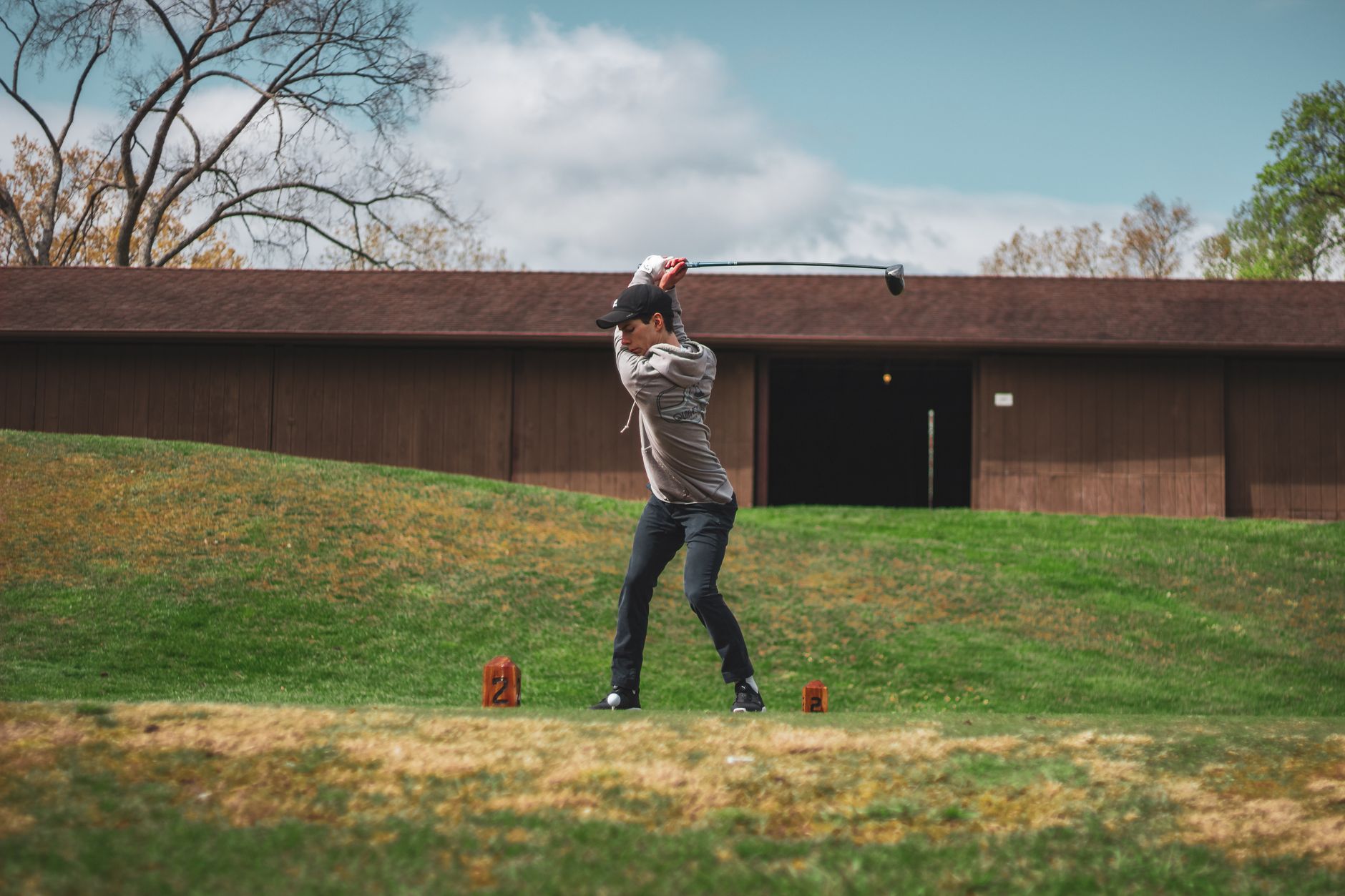
Thoracic mobility deserves its own attention. The ability to dissociate the upper torso from the hips — creating what coaches call the X-factor stretch — requires genuine thoracic rotation range. Many amateur golfers lose five to ten miles per hour of swing speed simply from thoracic stiffness accumulated through sedentary work habits. Tour pros address this daily, with targeted soft tissue work, thoracic rotation drills over a foam roller, and cat-camel variations to maintain functional spinal mobility.
Wrist and Forearm Training: The Final Speed Multiplier
Once ground force and rotational sequencing are optimized, the last lever in the speed equation sits at the wrists and forearms. The lag and release in the golf swing represents a whip-like energy transfer, and the wrists need both strength and stability to hold lag under load and then release it explosively through the impact zone.
Wrist roller exercises, rice bucket training, and forearm pronation and supination work are staples in many tour pro routines. Speed trainers such as overspeed training devices have also become widely adopted tools for neurologically priming the body to accept faster swing speeds, essentially re-educating the motor patterns that govern how fast the wrists can fire.
You have to build the engine first — mobility, stability, power — in the right order. Then the speed comes. You can't shortcut the sequence.
— Composite insight from elite golf fitness professionals
Recovery: The Often Overlooked Power Variable
Training for power is only one side of the equation. Tour pros now invest heavily in recovery protocols — sleep optimization, contrast water therapy, soft tissue maintenance, and strategic nutrition periodization — because power output degrades rapidly when the central nervous system is under-recovered. A fatigued athlete cannot express force efficiently, regardless of how well-trained they are.
For competitive golfers logging four or five competitive rounds in a week across a PGA Tour event, managing neuromuscular fatigue is as strategically important as any club selection on Sunday afternoon. This is one reason why tour-level fitness coaches are no longer simply trainers — they function as performance directors, coordinating with swing coaches, nutritionists, and sports psychologists.
Matching Power to Equipment
All of this physical development is only fully realized when the equipment is dialed to match it. A player who has trained their swing speed into the elite range needs a shaft that can handle the load — and a ball that compresses and rebounds at the appropriate threshold. Attomax shafts are engineered with this performance ceiling in mind, designed for players generating the kind of force and tempo that standard equipment simply wasn't built to optimize.
Similarly, Attomax's Hard compression ball in the High-Density line exists precisely for the high swing speed player who needs a ball that doesn't yield too early at impact, preserving both distance and the penetrating ball flight that elite conditions demand — whether it's a firm links surface, a hot summer afternoon at a tree-lined parkland course, or a Tour-caliber setup where every yard off the tee changes the angle into a green.
Where Amateurs Can Apply Tour Principles
You don't need a full-time strength coach or a biomechanics lab to benefit from these principles. Prioritizing hip mobility, building anti-rotation core stability, and incorporating even two sessions per week of rotational med ball work will measurably improve the quality of your kinematic sequence. The gains don't require elite athlete volume — they require consistency and an understanding of which variables actually drive club head speed.
The modern game rewards athleticism in a way it never previously has. Understanding how tour pros train — and why — gives every serious golfer a more intelligent roadmap for unlocking distance that doesn't come at the cost of accuracy or longevity.
Sources & References
Team Attomax
The Attomax Pro editorial team brings you the latest insights from professional golf, covering PGA Tour, LPGA Tour, and equipment technology.