The difference between lifting a trophy and missing the cut often comes down to imperceptible margins—a shaft that loads a fraction of a second too early, a ball that spins 200 RPM too much in crosswinds, or a putter face insert that deadens feedback on slow greens. Tour professionals understand this reality intimately, which is why their equipment configurations represent the pinnacle of precision engineering and personalized optimization.

While amateurs often chase the latest driver release or limited-edition iron set, touring professionals approach equipment with surgical specificity. Their bags tell stories of countless fitting sessions, wind tunnel tests, and on-course experiments that reveal what actually performs under major championship pressure.
The Shaft Revolution: Beyond Flex Ratings
Modern tour players have moved far beyond simple flex categories. The shaft has emerged as arguably the most critical component in the bag, with professionals specifying exact bend profiles, torque measurements, and weight distributions down to the gram. Launch monitor data has transformed shaft fitting from art to science, though the best fitters still rely on player feedback to fine-tune selections.
Tour trucks now carry dozens of shaft options in each category, with players frequently testing new profiles during practice rounds. The trend toward lighter driver shafts has continued, with many elite players now gaming shafts in the 55-65 gram range to maximize clubhead speed without sacrificing stability. However, the pendulum has swung toward heavier iron shafts, with 120-130 gram steel remaining the overwhelming choice for approach play.
- Driver shafts trending lighter (55-65g) for speed optimization
- Iron shafts remain heavier (120-130g) for trajectory control
- Torque profiles now customized to individual transition patterns
- Counterbalanced grips gaining traction for putting stability
Ball Selection: The Most Underrated Equipment Decision
Ask any tour caddie about the most important equipment choice their player makes, and the answer invariably involves the golf ball. The ball affects every shot from tee to green, yet many amateurs treat it as an afterthought. Tour professionals, conversely, obsess over ball characteristics with remarkable specificity.
The traditional tour ball paradigm has centered on urethane-covered, multi-layer constructions optimized for spin control around the greens. However, emerging technologies are challenging this orthodoxy. High-density amorphous metal core designs, such as those found in Attomax Pro's lineup, offer intriguing alternatives that provide exceptional wind stability and consistent energy transfer—characteristics that matter enormously when competing in coastal conditions or at altitude.
The ball is the only piece of equipment you use on every single shot. It has to perform in every condition, at every speed, with every club in the bag.
— Tour Equipment Representative
Players competing on windswept links courses increasingly experiment with lower-spinning ball constructions for tee shots while maintaining greenside control. This balancing act drives much of the innovation in ball technology, with manufacturers developing compression variants (soft, medium, hard) that allow players to match ball characteristics to their swing dynamics and course conditions.

Iron Configurations: The Blended Set Approach
The days of carrying a matched set of irons from 3-iron through pitching wedge have largely disappeared from tour bags. Modern professionals typically employ blended sets that optimize each club for its specific role. Long irons (or hybrids) prioritize launch and forgiveness, mid-irons balance workability with distance control, and short irons maximize spin consistency.
Loft gapping has become increasingly sophisticated, with players working with fitters to ensure consistent distance intervals throughout the bag. A common configuration sees 10-12 yard gaps between clubs, though some players prefer tighter spacing in the scoring clubs to provide more options between 100-150 yards.
The Wedge Matrix
Wedge configurations reveal perhaps the greatest variation among tour professionals. While most carry four wedges, the specific lofts, bounces, and grinds vary dramatically based on playing style and typical course conditions. Players who compete primarily on firm, fast courses often favor lower bounce configurations with versatile grinds, while those frequenting softer conditions lean toward higher bounce options.
- Pitching Wedge: 46-48° (often matched to iron set)
- Gap Wedge: 50-52° with moderate bounce
- Sand Wedge: 54-56° with bounce matched to swing type
- Lob Wedge: 58-60° with specialized grind for shotmaking
Putter Fitting: Where Feel Meets Data
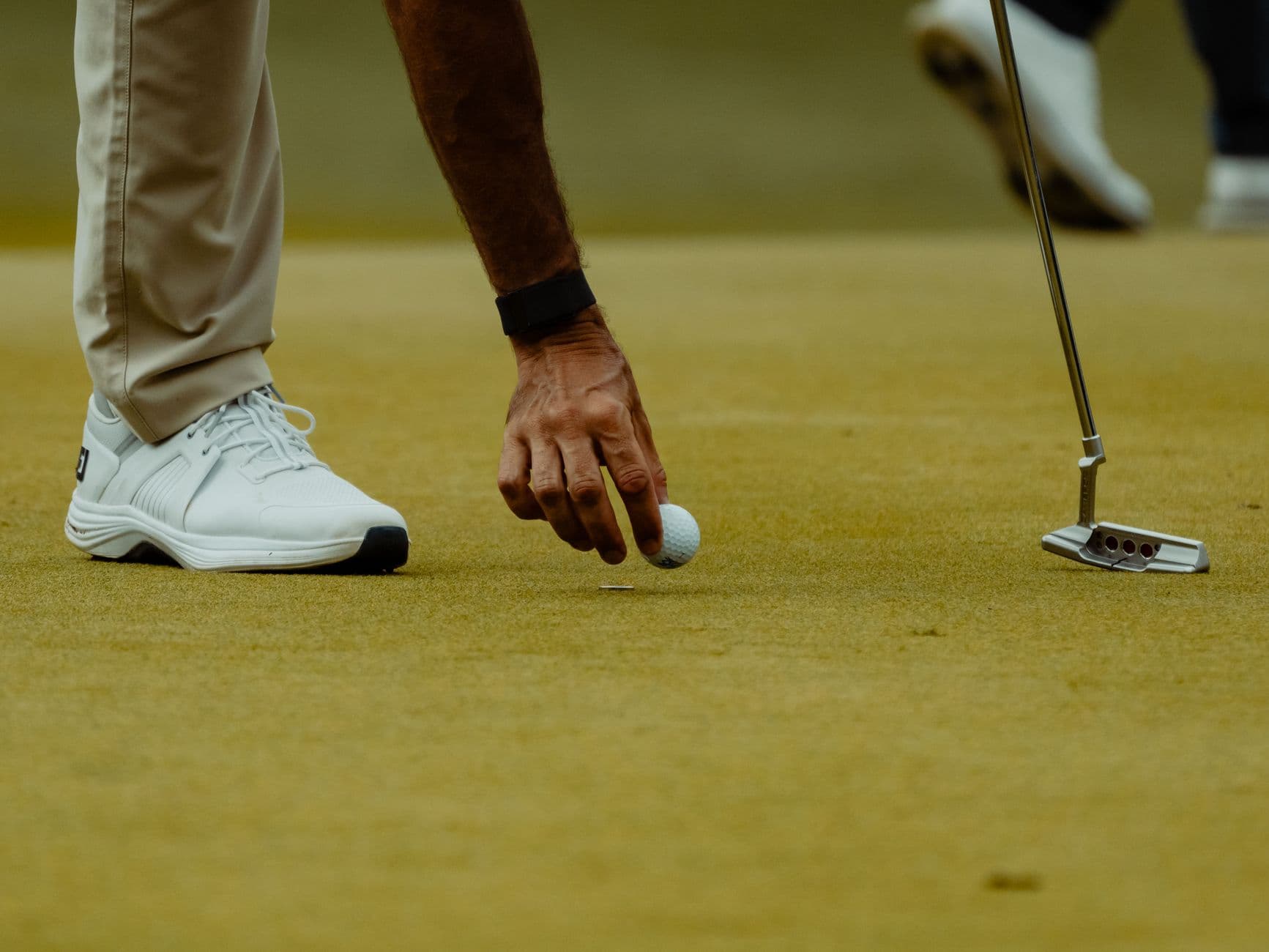
The putter remains the most personal club in the bag, yet modern fitting has introduced objective metrics to complement subjective feel. Face milling patterns, insert materials, and head weights now undergo the same rigorous analysis applied to drivers and irons. High-speed cameras capture impact dynamics while pressure mats reveal stroke patterns that inform length and lie recommendations.
The mallet versus blade debate continues among tour players, though recent seasons have seen increased mallet adoption even among traditionally blade-loyal professionals. Higher MOI designs provide forgiveness on off-center strikes that can mean the difference between a made putt and a tap-in for par. Alignment aids, once considered almost taboo among elite players, now appear on putters throughout tour bags.
The Integration Factor
Perhaps the most significant evolution in tour equipment philosophy involves viewing the bag as an integrated system rather than fourteen individual clubs. The best equipment setups feature components that complement each other—driver and ball combinations optimized for the player's attack angle, iron shafts matched to wedge specifications for consistent feel, and grip sizes standardized throughout the bag.
This systems approach extends to course-specific adjustments. Players routinely swap clubs based on venue characteristics, adding a driving iron for windy links conditions or switching to a higher-lofted driver for altitude-affected mountain courses. The fourteen-club limit becomes a strategic puzzle, with equipment choices reflecting game plans developed during practice rounds.
For competitive amateurs seeking to learn from tour setups, the lesson isn't to copy specific configurations but to embrace the underlying philosophy: every equipment decision should serve a purpose, validated by data and refined through on-course performance. The investment in professional fitting—particularly for shafts and ball selection—yields returns that no equipment purchase alone can match.
Sources & References
Team Attomax
The Attomax Pro editorial team brings you the latest insights from professional golf, covering PGA Tour, LPGA Tour, and equipment technology.