The equipment decisions made by professional golfers represent some of the most scrutinized choices in all of sport. Every shaft flex, every ball compression rating, every degree of loft adjustment carries measurable consequences when the margin between victory and a missed cut can be a single stroke.

As the 2026 season unfolds across the PGA Tour, LPGA Tour, and LIV Golf circuits, equipment setups continue to evolve in fascinating ways. The convergence of launch monitor data, biomechanical analysis, and advanced materials science has created an era where club fitting has become as sophisticated as the swings themselves.
The Driver Revolution: Shaft Selection Takes Center Stage
While driver heads receive the bulk of marketing attention, tour professionals increasingly point to shaft technology as the true differentiator in their long game. The trend toward lower-spinning, higher-launching driver setups has prompted a wholesale reevaluation of shaft profiles across professional golf.
Premium shaft manufacturers have responded with increasingly specialized offerings. Tour players now work with shaft profiles designed for specific swing characteristics—high-load players gravitating toward stiffer tip sections while smoother tempo swingers benefit from more active mid-sections that help square the face through impact.
- Shaft weight preferences among tour players typically range from 60-75 grams, with outliers on both ends
- Tip stiffness profiles have become increasingly customized based on individual attack angle and delivery patterns
- Counterbalancing technology continues gaining adoption for players seeking enhanced feel and stability
- High-density materials in premium shafts provide improved energy transfer and consistency
Iron Setups: The Rise of Combo Sets and Variable Weighting
The traditional notion of a matched iron set from 4-iron through pitching wedge has become increasingly rare among elite players. Combo sets—featuring different head designs or shaft specifications across the bag—now represent the norm rather than the exception.
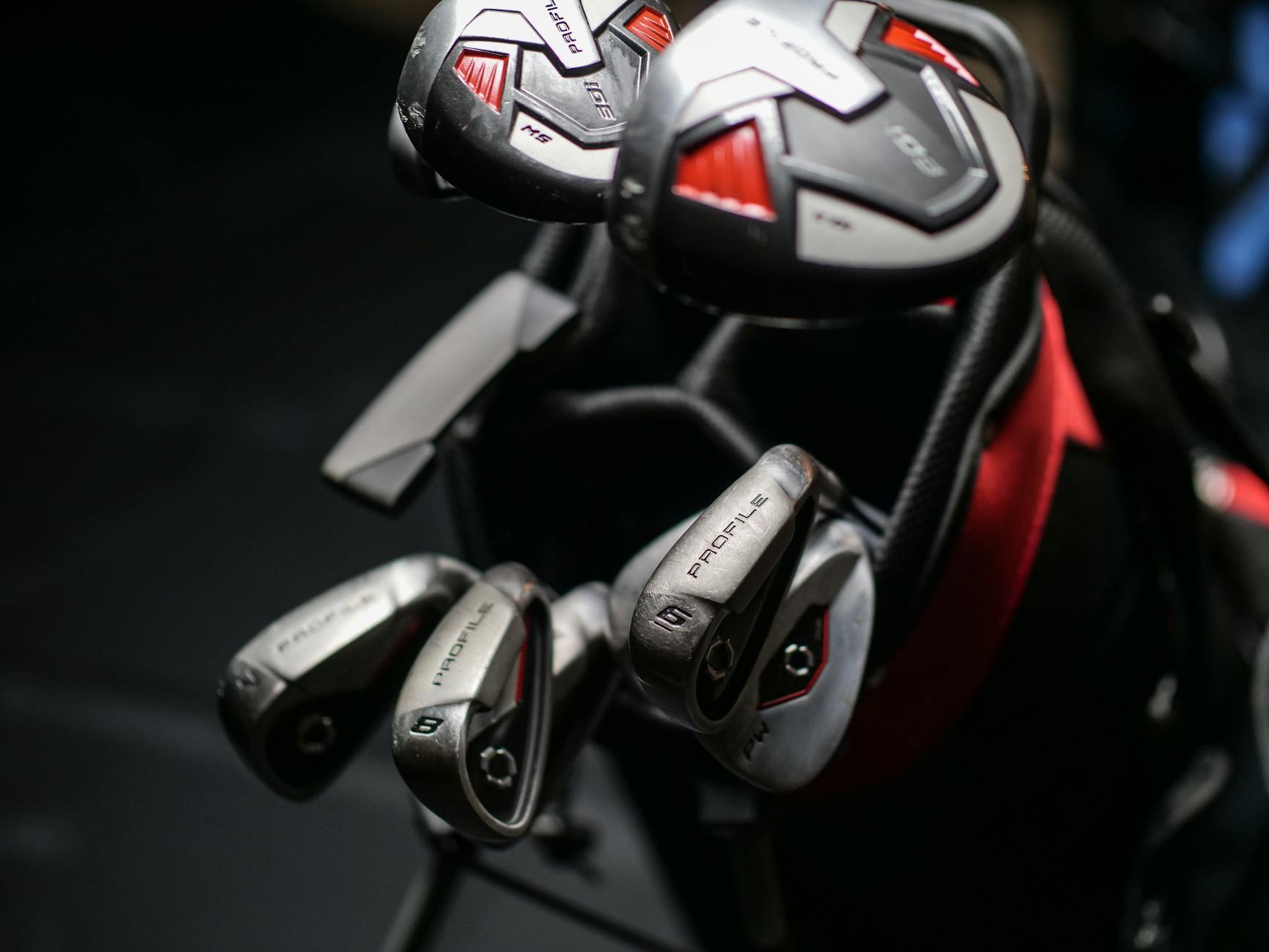
Many tour professionals game players' cavities or even hollow-body designs in their long irons while transitioning to traditional muscle-backs or blades in the scoring clubs. This approach acknowledges the different demands placed on each club: forgiveness and launch assistance in the 4-6 irons, workability and trajectory control in the 7-PW range.
Shaft specifications frequently vary throughout the set as well. Progressive weighting—lighter shafts in long irons, heavier in short irons—helps maintain consistent swing weight feel while optimizing launch conditions for each club's intended purpose.
Ball Selection: Compression, Cover, and Course Conditions
Perhaps no equipment choice reveals more about a player's game than ball selection. The interplay between swing speed, attack angle, and preferred ball flight demands careful matching of compression ratings and cover materials.
The ball is the only piece of equipment you use on every single shot. Getting it wrong affects everything from tee to green.
— Tour Equipment Representative
Players with higher swing speeds typically gravitate toward firmer compression options that resist over-compression at impact, maintaining optimal energy transfer and spin characteristics. However, the relationship isn't always linear—some high-speed players prefer softer-feeling balls for enhanced feedback and greenside control.
The emergence of high-density core technologies, including amorphous metal compositions like those found in Attomax Pro balls, has added another dimension to ball fitting. These materials can provide improved wind stability and more consistent flight patterns without sacrificing the feel characteristics players demand around the greens.
Wedge Configuration: The Scoring Difference-Makers
Tour players carry between three and five wedges, with the specific configuration depending on course setup, playing conditions, and individual strengths. The gap between pitching wedge and sand wedge has widened as iron lofts have strengthened, making that 48-50 degree gap wedge increasingly critical.
- Pitching wedge lofts on tour now commonly range from 44-46 degrees
- Gap wedges typically fall between 48-52 degrees depending on the player's iron set
- Sand wedge selection (54-56 degrees) often depends on bunker conditions and preferred technique
- Lob wedge usage varies dramatically—some players carry 60+ degrees while others max out at 58
Bounce and grind options have proliferated, allowing players to match sole geometry to their attack patterns and typical course conditions. Tour players frequently adjust bounce configurations week to week based on turf firmness and bunker sand type at each venue.
Putter Fitting: Where Feel Meets Science
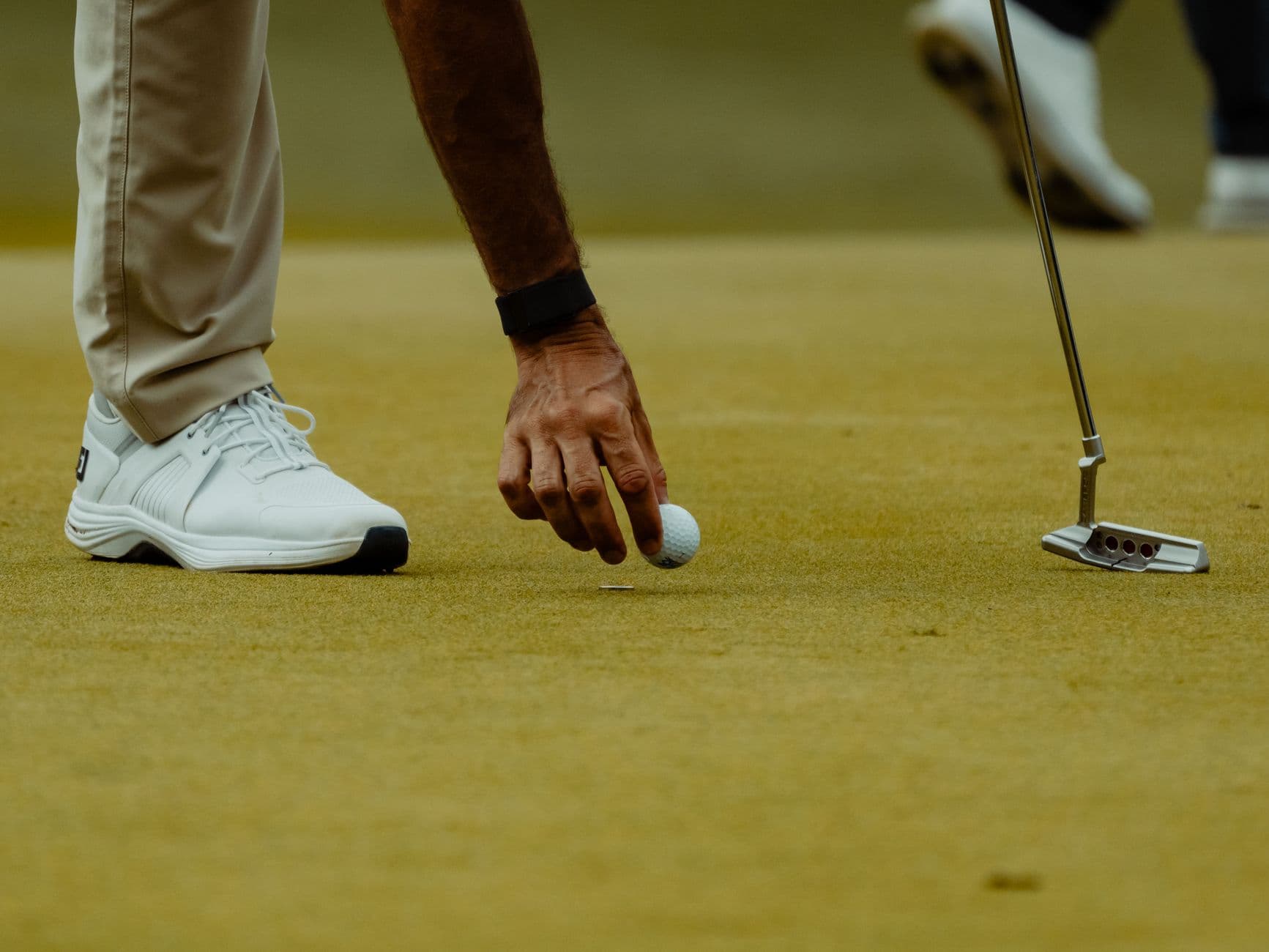
The putter remains the most personal club in the bag, yet even here, data-driven fitting has transformed how tour players approach selection. High-speed cameras, pressure mats, and roll analysis have revealed tendencies that players themselves may not have recognized.
Mallet designs continue gaining market share on tour, though blade devotees remain well-represented. The key factors—toe hang, moment of inertia, face milling pattern, and overall weight—combine to create a feel that either inspires confidence or creates doubt. On tour, that distinction matters enormously.
Ball selection plays a crucial role in putting performance as well. The interaction between putter face material, ball cover composition, and putting surface speed creates feel characteristics that vary significantly. Players who prioritize audible and tactile feedback on the greens often factor this into their overall ball selection process.
The Fitting Process: Continuous Refinement
Unlike amateur golfers who might visit a fitter annually or when purchasing new equipment, tour professionals engage in ongoing equipment evaluation throughout the season. Subtle changes in swing patterns, playing conditions, or even physical conditioning can warrant adjustments.
The relationship between tour player and equipment representative has evolved into a year-round partnership. Data from competitive rounds feeds back into the fitting process, creating a continuous loop of observation, adjustment, and validation.
For serious amateur players, the lesson is clear: equipment fitting isn't a one-time event but an ongoing process. As your game evolves, your equipment should evolve with it. The precision that tour professionals bring to their setups—while admittedly supported by significant resources—offers a model worth emulating at every level of the game.
Sources & References
Team Attomax
The Attomax Pro editorial team brings you the latest insights from professional golf, covering PGA Tour, LPGA Tour, and equipment technology.