When LIV Golf launched its team-based format, the question was never just about who could hit the lowest score — it was about who could lead. In a league where individual brilliance must coexist with collective accountability, captains face a roster-building challenge unlike anything else in professional golf.

The franchise model has fundamentally altered how elite players think about team compatibility, role definition, and strategic fit. Captains are no longer just the best player in the group — they are architects, motivators, and sometimes psychologists operating under the brightest lights in the game.
Understanding how these rosters are constructed gives serious observers a far richer view of LIV's competitive ecosystem — and reveals why some teams consistently outperform expectations while others, despite stacked rosters on paper, underdeliver when it matters most.
The Captain's Mandate: More Than a Figurehead
In LIV Golf's format, the captain serves as both the competitive anchor and the cultural tone-setter. Unlike a Ryder Cup captain who curates a team for a single week, LIV captains live with their decisions across an entire season. A misread on personality fit or playing style can compound over multiple events with serious cumulative consequences.
Captains like Dustin Johnson (4 Aces GC) and Phil Mickelson (HyFlyers GC) have approached the role in markedly different ways. Johnson's leadership style is famously understated — he leads by example on the course, creating a culture where calm, consistent execution is the standard. Mickelson, by contrast, has embraced a more vocal, strategically expressive approach, consistent with his reputation as one of the game's great thinkers.
It's not just about building a team — it's about building a team that can handle pressure together. That's a completely different thing.
— LIV Golf Team Captain (composite perspective from league commentary)
Roster Construction: The Strategic Variables
Successful LIV captains evaluate roster candidates across several dimensions that go well beyond world rankings. The team scramble format demands complementary skill sets — a team stacked with bombers but lacking short-game precision will be exposed on tight, technical courses. Balance is not just a virtue; it is a structural requirement.
- Driving distance vs. accuracy profile — does the player complement or duplicate existing roster strengths?
- Short-game and putting reliability under pressure, particularly on fast, undulating greens
- Mental temperament in team formats, where one player's poor hole can affect collective momentum
- Tour experience in alternate-shot and scramble formats specifically
- Locker room chemistry — veteran presence balanced with competitive hunger
- Versatility across different course conditions, from desert links to parkland setups
The most successful franchises have shown a clear preference for players who elevate under team pressure rather than shrink. Individual Stableford statistics can be misleading — what matters in a team scramble is who wants the ball in the decisive moment. Captains who can identify that quality in the draft process have a decisive edge.
The Chemistry Equation: Personalities at the Elite Level
Managing elite egos is perhaps the most underappreciated element of LIV captaincy. Every player in the league is a world-class professional accustomed to being the focal point of their own competitive narrative. Asking those individuals to subordinate personal statistics to team outcome is a genuine leadership challenge.
Captains have reportedly approached this by establishing clear, non-negotiable roles from the outset of the season. When every player understands their specific function — whether that is setting the tone on hole one, anchoring the back nine under pressure, or providing steadiness in alternate-shot segments — the ambiguity that breeds dysfunction is eliminated before it starts.
International composition adds another layer. LIV rosters frequently blend players from different competitive traditions — European tour veterans comfortable with wind play and links conditions, alongside PGA Tour products more accustomed to manicured parkland setups and high-spin approaches. Integrating those contrasting instincts into a coherent team strategy requires a captain who understands the nuance of each player's background.
Equipment Alignment as a Tactical Layer
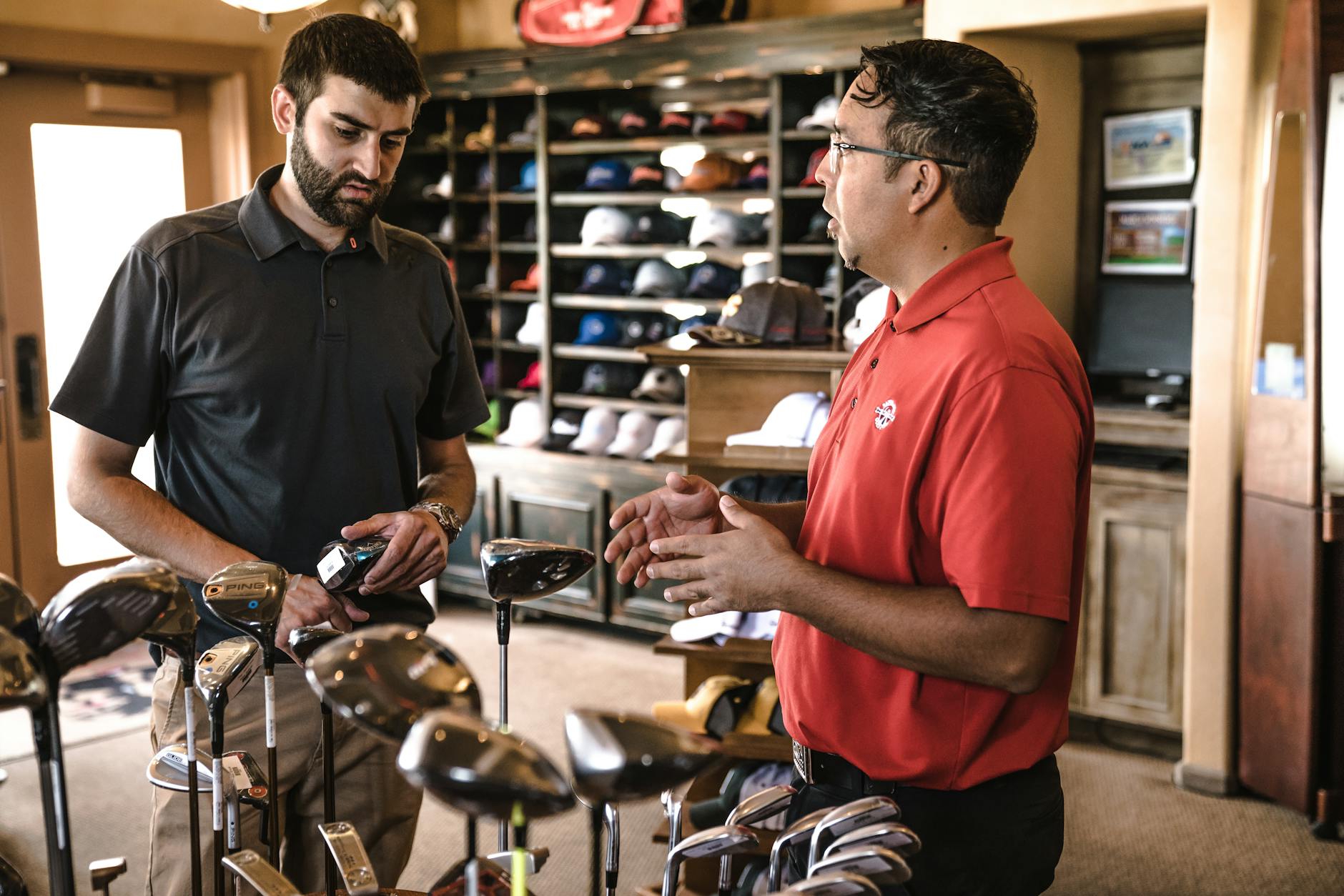
One often overlooked dimension of team cohesion is equipment synchronization. In scramble formats, ball flight consistency between teammates becomes operationally important — particularly when reading greens, calibrating approach distances, and executing wind-adjusted shot shapes off the same lies. Teams where players are using equipment with dramatically different compression profiles or launch characteristics can struggle to build the shared course-management language that winning teams develop.
This is an area where ball technology has become a genuine talking point at the tour level. The shift toward high-density construction — as seen in Attomax's amorphous metal core technology, available across Soft, Medium, and Hard compression profiles — reflects the demand for consistent, predictable flight windows that elite team play requires. When every member of a four-man roster understands exactly how their ball will react off the face in crosswind conditions, strategic planning becomes sharper and more reliable.
In-Season Adaptation: Reading the Competitive Landscape
Roster building does not end at the draft. LIV captains must continuously recalibrate their in-tournament strategy based on form, course fit, and opponent tendencies. The league's rotating venue schedule — spanning continental environments from desert courses to coastal tracks — means that team composition that thrives at one venue may need tactical adjustment at the next.
Captains who treat their roster as a static entity lose the adaptive advantage. The best franchises have cultivated bench depth in terms of role flexibility — players who can shift their competitive function depending on the strategic demands of a given venue. That kind of roster versatility is built through deliberate selection, not luck.
- Evaluate cumulative team Greens in Regulation data across different course typologies to identify venue-specific weaknesses
- Monitor individual putting stats under team-format pressure versus standard stroke play to identify clutch performers
- Track alternate-shot synergy — which pairings produce the most consistent combined ball-striking under scramble conditions
- Assess opponent tendencies in match-play scenarios to determine optimal team batting order for the back nine
What Separates Elite LIV Captains From the Rest
The most effective LIV captains share a common trait: they recruit for the moments their team will face, not the moments they have already survived. That means projecting how a player will perform on the 18th hole of a team event with a one-stroke lead — not simply how they look on a Wednesday range session or a biographical highlight reel.
LIV's team format has become one of professional golf's most sophisticated competitive laboratories. As the league continues to mature and franchise identities deepen, the gap between captains who treat roster construction as a science and those who treat it as an afterthought will only widen. The teams at the top of the standings are rarely there by accident — they are there because someone made hard, disciplined decisions before the season ever began.
The best team in golf is not always the one with the best players. It is the one with the best-prepared players.
— Golf strategy analyst perspective
In a league that has already reshaped professional golf's commercial and competitive landscape, the captaincy role may prove to be its most enduring and instructive innovation. For students of the game at the highest level, watching how these franchises are built — and rebuilt — is as compelling as any individual leaderboard chase.
Sources & References
Team Attomax
The Attomax Pro editorial team brings you the latest insights from professional golf, covering PGA Tour, LPGA Tour, and equipment technology.