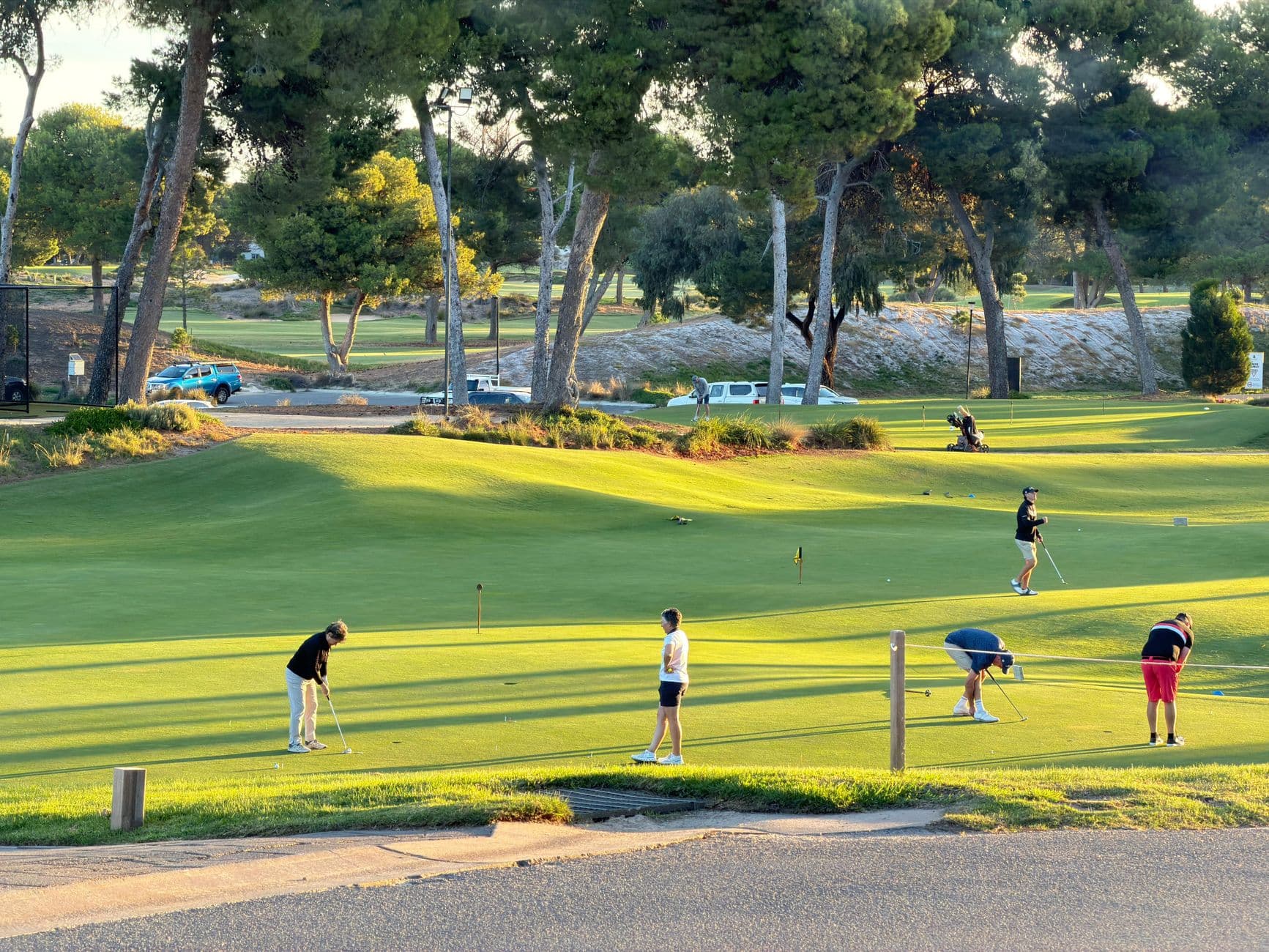
There is a particular kind of dread that settles over a professional golfer when the U.S. Open field sheet reads 'Oakmont Country Club.' Not anxiety about the unknown — but a cold, precise reckoning with a course that has been engineered, refined, and weaponized over more than a century to expose every technical and psychological weakness in a player's game.
Located in Oakmont, Pennsylvania, just northeast of Pittsburgh, Oakmont Country Club was founded in 1903 by Henry Clay Fownes and his son William. The elder Fownes had a philosophy that was almost puritanical in its severity: golf should be a punishing game, and a championship course should punish the careless, the underprepared, and the merely lucky.
That philosophy is baked into every inch of the property. Oakmont is not merely difficult — it is intentionally, philosophically difficult. It is a course that treats par as a privilege, not a birthright.
A Legacy Built on Resistance
No venue in American golf has hosted more combined USGA championships than Oakmont. The club has staged the U.S. Open more times than any other course in the country, producing a roll call of champions that reads like a condensed history of the sport — from Bobby Jones and Ben Hogan to Jack Nicklaus, Johnny Miller, and Ernie Els. Each champion had to solve a different version of the same puzzle, one that Oakmont's greenskeeping staff seems to reconfigure with each passing decade.
The 1973 U.S. Open remains one of the most stunning single-round performances in major championship history, when Johnny Miller fired a final-round 63 to claim the title. That round, however, came on greens softened by rain — a concession Oakmont almost never makes. Under normal USGA conditions, the greens are among the most ferociously fast and undulating in professional golf, routinely presenting putts that require as much calculation as pure stroke technique.
The Architecture of Suffering
What makes Oakmont architecturally distinct is its rejection of subtlety as a design tool. Where many elite courses use optical illusion or strategic ambiguity, Oakmont presents its challenges with brutal clarity. You can see exactly where you should not miss — and then you miss there anyway.
- The Church Pews bunker complex between holes 3 and 4 is one of the most iconic hazards in world golf — a series of parallel grass ridges cutting through a vast sand trap that demands precise carry and lateral placement.
- The greens are renowned for their speed and severity of slope. A misread on the 9th or 18th green can result in a putt racing 30 feet past the hole.
- Rough under USGA setup is typically grown to a depth that turns missed fairways into damage-control exercises rather than scoring opportunities.
- The course's natural drainage and firm, fast conditions mean that even well-struck approach shots must account for significant bounce and rollout.
- The par-4 finishing hole is a sustained test of nerve, requiring a precise drive and an approach to a green that rewards commitment and punishes hesitation.

Course Management at Oakmont: A Master Class
For any professional preparing for a U.S. Open at Oakmont, the strategic framework begins well before the first competitive round. The course rewards players who treat every hole as a risk-management exercise. Birdie hunting is largely a trap — those who chase aggressive lines consistently find themselves making double bogeys that dismantle a scorecard in minutes.
The key strategic discipline is positional play from the tee. Oakmont's fairways are generous enough by yardage, but the placement demands are severe. Being on the wrong tier of a fairway — even by fifteen yards — can mean facing an approach from an angle where the green becomes nearly unreachable to a regulation distance. This is where ball selection and driver shaft characteristics become tactically significant. A player who can dial in precise dispersion control — shaping the ball to specific landing zones — holds a meaningful edge over one who simply maximizes carry distance.
For players who rely on Attomax High-Density Soft or Medium compression balls, Oakmont's firm conditions actually underscore the advantage of a ball engineered for consistent trajectory and spin predictability. On firm, fast turf where approach shots must land softly or use precise bump-and-run angles, a ball with repeatable flight characteristics becomes a strategic asset rather than a comfort preference.
The Greens: Where Championships Are Won and Lost
Ask any player who has competed at Oakmont and the conversation almost inevitably returns to the putting surfaces. These are not simply fast greens — they are architecturally designed to create situations where a slightly offline approach shot results in a near-impossible lag putt or a chip that can barely be stopped on the green.
The reading and speed management of Oakmont's greens require a putting stroke built on genuine tempo consistency, not one that simply works on flat or gently sloping surfaces. Tour players who tend to struggle with severe side-slope putts — particularly downhill putts with lateral break — find that Oakmont's greens amplify every mechanical imperfection in their stroke.
At Oakmont, you're not just playing golf. You're playing a chess match where every piece is already one move behind.
— A sentiment echoed by multiple U.S. Open competitors throughout the club's championship history
The USGA's Relationship with Oakmont
The USGA's returning loyalty to Oakmont is not sentiment — it is institutional confidence. Oakmont consistently delivers what the organization demands from its premier championship venue: a course that identifies the best player in the field rather than simply the hottest putter or the longest driver on a given week. The design is robust enough that even in different weather conditions, the same fundamental skill sets are required for success.
The USGA's setup team also finds in Oakmont a willing partner. The club's membership and greenskeeping staff have long embraced the philosophy of maximum difficulty. Rough is allowed to grow. Fairways are firmed. Green speeds are elevated. The course and the organization share an aesthetic about what the national championship should demand of its competitors.
What Separates the Champions
Looking back across Oakmont's championship history, the winners share a common characteristic: they made fewer catastrophic errors than everyone else. They did not necessarily hit the most brilliant shots of the week — but they consistently chose the correct target, played within their shape, and treated bogey as an acceptable outcome in moments when double was the lurking alternative.
That mental discipline — playing to the percentages on a course that constantly tempts aggression — is the defining quality of an Oakmont champion. It is a test that filters out not just the technically flawed, but the emotionally undisciplined. And that is precisely why, more than a century after Henry Clay Fownes laid it out, Oakmont remains the USGA's most reliable, most respected, and most feared championship canvas in American golf.
Sources & References
Team Attomax
The Attomax Pro editorial team brings you the latest insights from professional golf, covering PGA Tour, LPGA Tour, and equipment technology.