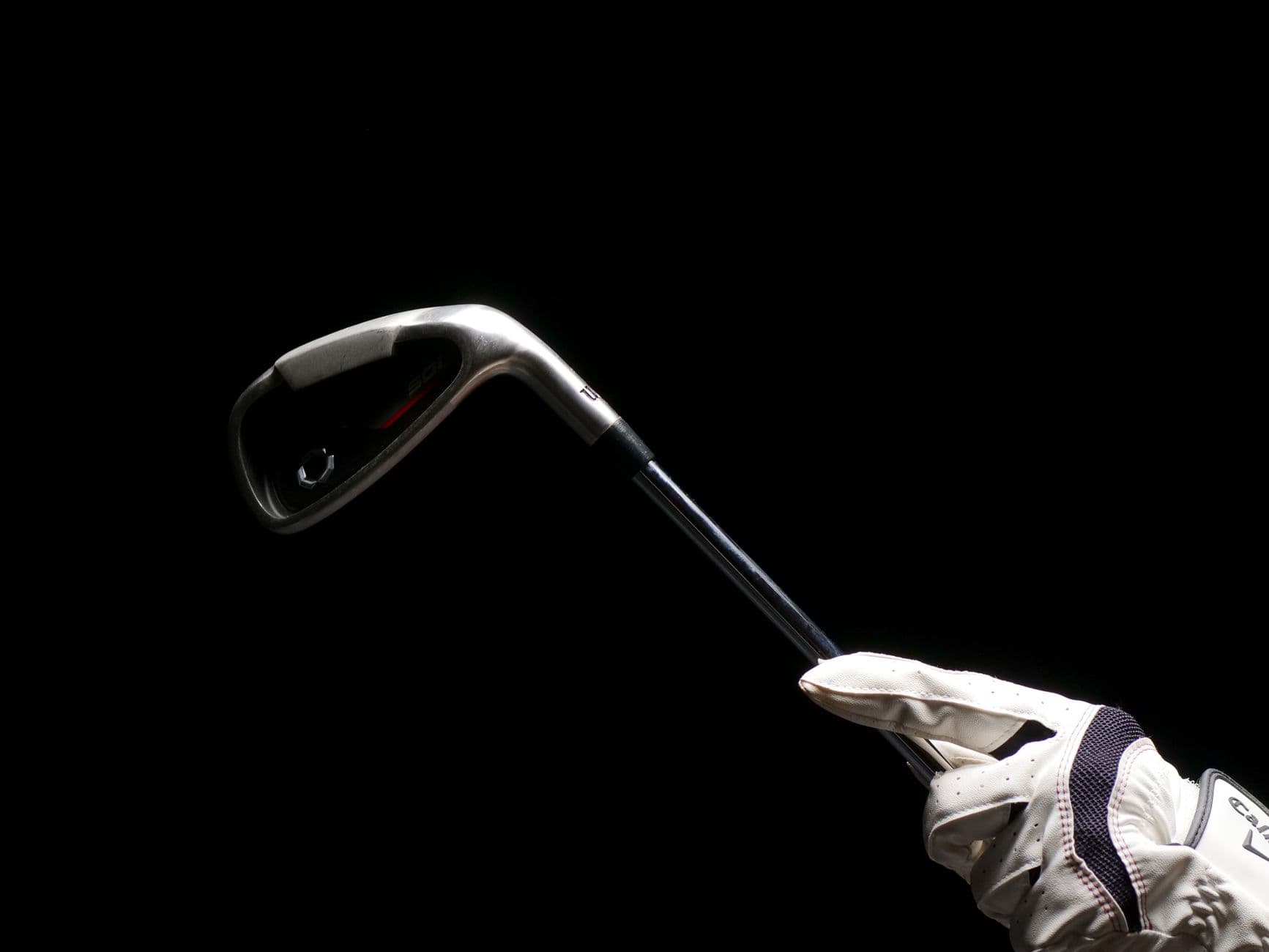
For much of his career, Rory McIlroy was defined by the thunderclap off the tee — a player whose engine ran on raw ball speed and elite iron striking. But the version of McIlroy that has emerged in recent years is something more complete: a golfer who has systematically shored up a short game that once drew criticism, transforming it into a genuine weapon.

Understanding McIlroy's wedge game requires looking beyond the highlight reels. His short game success is rooted in deliberate technical work, smart course management inside 125 yards, and a refined feel for trajectory and spin control that speaks to years of dedicated practice with his coaching staff.
What separates elite wedge players from the rest of the field is not just touch — it is the ability to pre-select a shot shape, commit to it fully, and execute under pressure. McIlroy has demonstrated this capability consistently at the game's highest level.
The Architecture of His Wedge Setup
McIlroy's wedge setup prioritizes a neutral, athletic address position with minimal manipulation. His weight distribution at address leans fractionally toward the lead side — a subtle but important detail that promotes a slightly steeper angle of attack into the ball, generating the crisp ball-turf contact that produces clean spin numbers.
His grip pressure deserves particular attention. Rather than gripping down aggressively for distance control, McIlroy tends to rely on swing length and tempo modulation. This approach allows him to maintain consistent wrist conditions through impact, which is a key driver of spin repeatability — especially on firm, fast greens.
Distance Control: The Three-Quarter Swing System
One of the most analytically interesting aspects of McIlroy's wedge game is his reliance on a well-structured three-quarter swing system. Rather than trying to manufacture awkward yardages with full swings and deceleration — a recipe for poor contact — he has built clear, repeatable swing lengths for specific distance windows.
This philosophy mirrors what the best wedge coaches on tour advocate: own three or four distances per club rather than trying to hit every yardage with the same swing. The result is a player who, when finding a comfortable wedge distance, converts at a significantly higher rate than when forced into an uncomfortable in-between number.
- Full swing wedges are reserved for maximum yardage from clean, flat lies
- Three-quarter swings cover the bulk of mid-range approach distances
- Half and punch-style swings are deployed in wind or when controlling trajectory is paramount
- Lob wedge usage is strategic — McIlroy is not reckless with high-risk, high-loft shots around greens
Trajectory Management and Wind Play
McIlroy grew up on links-adjacent courses in Northern Ireland, and that upbringing fundamentally shaped how he thinks about ball flight in wind. His ability to flight wedges low — punching into headwinds with a de-lofted face and abbreviated finish — is one of the more underappreciated skills in his arsenal.
When conditions are benign, he will attack pins with high, spinning wedges that land softly and stop quickly. But on links terrain or in coastal conditions, you will often see him choose a bump-and-run or a low-spinner that uses the ground rather than fighting against the wind. This situational awareness is what distinguishes a seasoned major champion from a player who applies the same solution regardless of conditions.

The best wedge players are not the ones with the most feel — they are the ones with the most clarity about what shot they are hitting before they step into the ball.
— Common principle among PGA Tour short game coaches
Chipping and Greenside Versatility
Around the greens, McIlroy demonstrates a maturity that was not always evident earlier in his career. His default greenside shot is a mid-trajectory chip using the leading edge, making clean contact and releasing the ball toward the hole with a controlled amount of run. He avoids the overly flicked, high-risk lob unless the situation genuinely demands it.
His bunker play has also become markedly more consistent. Using a high-bounce sand wedge, McIlroy enters the sand with a shallower attack angle than many elite players, which gives him more margin for error on varying sand textures. The result is a player who rarely takes more than two shots to escape greenside sand.
The Mental Framework: Commit and Execute
Perhaps the most significant evolution in McIlroy's short game has not been mechanical — it has been psychological. He has spoken openly about the importance of full commitment to shot selection before stepping into a chip or pitch. Indecision at address leads to deceleration, and deceleration is the single greatest enemy of clean wedge contact.
His pre-shot routine around the greens reflects this commitment. He takes his practice swings with genuine intention, visualizes the landing zone rather than the hole, and steps into the ball with a clear plan. This is not a small detail — it is the mental architecture that separates competent short game players from elite ones.
Equipment and Ball Compression: The Hidden Variable
Wedge performance does not exist in isolation from the golf ball. The interaction between a wedge's grooves and the ball's cover material is what ultimately determines how much spin a player can generate and control. Players prioritizing maximum short game spin and greenside responsiveness increasingly look toward softer urethane covers that grip the grooves more aggressively through impact.
This is where ball selection becomes a strategic decision rather than a mere preference. Attomax's High-Density Soft ball, engineered with a premium urethane cover, is designed to maximize exactly this interaction — delivering the spin and short game feel that a McIlroy-style precision approach demands, while the high-density core preserves the ball speed that modern elite players refuse to sacrifice off the tee.
The Takeaway for Serious Players
Studying McIlroy's wedge game offers a masterclass in structured simplicity. He does not rely on one magic shot or one signature technique. Instead, he has built a system — repeatable swing lengths, deliberate trajectory selection, situational awareness, and unwavering pre-shot commitment — that holds up under the pressure of major championship golf.
For the serious amateur and low-handicap player, the lesson is clear: short game improvement is not about learning more shots. It is about owning fewer shots with greater conviction, matched to a ball that gives you the feedback and responsiveness to trust your instincts when it matters most.
- Build three distinct swing lengths per wedge and own them completely
- Select landing zones, not targets — let trajectory and run do the work
- Flight the ball lower in wind rather than trying to muscle it against conditions
- Match your ball to your short game priorities — cover material matters
- Commit fully before address — indecision is a technical flaw, not a mental one
McIlroy's journey from raw power player to complete champion has been one of the most compelling storylines in modern golf. His short game transformation is proof that elite players never stop building — and that the wedge, quiet and understated as it is, remains the great separator at every level of the game.
Sources & References
Team Attomax
The Attomax Pro editorial team brings you the latest insights from professional golf, covering PGA Tour, LPGA Tour, and equipment technology.