Watch any tour-level player in slow motion and you'll notice something the scorecard never captures: the sheer violence of their rotational sequence. From the ground up, elite golfers generate, store, and release kinetic energy through a chain of movements that has less in common with a weekend range session and far more with the mechanics of an Olympic discus thrower. Rotational power training is no longer a fringe concept in professional golf — it is the foundational pillar of every serious performance program on tour.

The modern tour player trains like a hybrid athlete: part sprinter, part rotational powerlifter, part gymnast. Strength and conditioning coaches embedded in PGA Tour and LPGA Tour programs have shifted the conversation decisively away from 'golf fitness' as a concept of flexibility and light resistance work. Today, the emphasis is on producing maximal rotational force at precisely the right moment in the kinetic chain.
Understanding why this matters starts at impact. Clubhead speed is largely a product of how efficiently a golfer can transfer angular momentum from hips to thorax to arms to club. Training programs that specifically develop this transfer have become the distinguishing factor between players who plateau and those who continue to gain distance well into their competitive prime.
The Kinetic Chain: Where Power Really Comes From
The golf swing is a proximal-to-distal movement: power originates from the largest, strongest segments of the body and progressively transfers outward to the smaller, faster segments. The hips initiate, the core transmits, the thoracic spine amplifies, and the arms and club deliver the result. Break any link in that chain — through weakness, poor sequencing, or insufficient mobility — and peak clubhead speed bleeds away.
This is why elite performance coaches prioritize anti-rotation work alongside power development. A golfer who can generate tremendous rotational force but cannot stabilize against it through the lead side will leak energy at impact. The training prescription is dual: build rotational power capacity, then build the bracing strength to express it fully.
Core Training Methods Used by Tour-Level Coaches
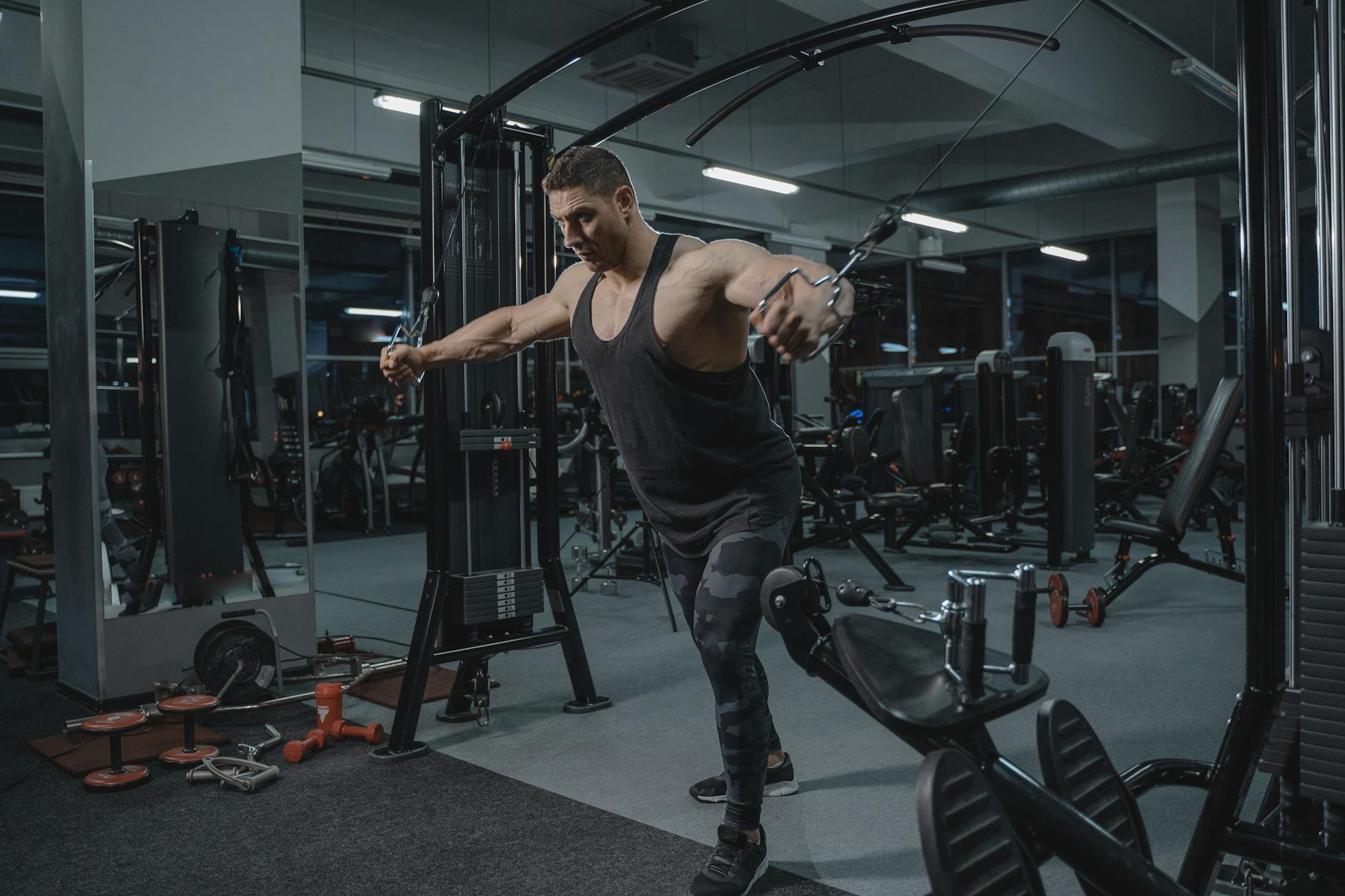
The rotational training toolkit used by tour conditioning teams has become increasingly sophisticated. Coaches and players are combining medicine ball drills, cable rotational work, and ground-based exercises into periodized blocks aligned with tournament schedules.
- Medicine Ball Rotational Throws: Performed against a wall or with a partner, these train explosive hip-to-shoulder separation at high velocity — the closest gym analog to an actual swing.
- Cable Woodchops & Pallof Press Variations: Develop the oblique sling system responsible for both generating and resisting rotation under load.
- Landmine Rotations: A particularly effective tool for training the transverse plane with controlled load, teaching the pelvis and thorax to sequence correctly under resistance.
- Hip Hinge Progressions with Rotation: Romanian deadlifts with a rotational reach cue reinforce the connection between posterior chain loading and rotational power output.
- Single-Leg Rotational Stability Work: Tour players spend considerable time on unstable single-leg positions that mirror the demands of the swing, specifically the lead-leg bracing at impact.
The Role of Thoracic Mobility in Power Output
Strength without range of motion is a ceiling. The thoracic spine — the mid and upper back — is the primary site of spinal rotation in the golf swing. Players with restricted thoracic mobility compensate through the lumbar spine, which is not designed for rotation and is far more vulnerable to injury. This is one of the most common mechanical breakdowns that separates amateur mechanics from tour-level movement.
Dedicated thoracic mobility work — including segmental rotations over a foam roller, open-book stretches, and quadruped thoracic rotation drills — directly translates to a wider, more powerful shoulder turn. For a golfer already working on rotational power through resistance training, thoracic mobility is the multiplier that unlocks the full expression of that strength.
You can't fire a cannon from a canoe. If the foundation isn't stable and mobile in the right places, you're just spinning your wheels.
— Common principle among tour-level strength and conditioning coaches
Periodization: Training Around the Tournament Schedule
One of the most critical — and often overlooked — aspects of rotational power training at the tour level is periodization. Unlike off-season athletes who can train in uninterrupted blocks, PGA Tour and LPGA Tour players compete across 30 or more weeks of the year. Training must be carefully dosed to build capacity during off-season windows while maintaining neuromuscular readiness during competition stretches.
During heavy competition periods, heavy rotational loading gives way to maintenance volumes and velocity-focused work — lighter loads, explosive intent, preserving the neural sharpness of the rotational pattern without inducing fatigue that bleeds into swing feel. This is where separating 'fitness work' from 'performance work' becomes essential to a tour player's longevity.
Translating Power Training to the Course
The bridge between the gym and the tee box is not automatic. Power developed in training must be integrated into the swing through deliberate practice — speed training protocols, overspeed work with weighted training clubs, and focused tempo drills that teach the nervous system to express newly built strength at golf-specific velocities.
Course management is also reshaped by genuine power development. A player who has meaningfully increased their rotational output has more options off the tee — the ability to take on a tight driving line with a three-wood, flight the ball lower into a prevailing wind, or simply play with a margin of error that shorter hitters do not possess. Raw power, properly developed, converts directly to strategic freedom.
Equipment That Keeps Pace with Your Power Gains
There is a necessary conversation that serious golfers often delay too long: as rotational power increases, existing equipment may no longer be optimally matched to the new swing profile. A player who has trained their way to a significantly higher clubhead speed may find that a shaft that previously felt stable has become a liability — flexing too early, releasing before impact, and costing them both distance and dispersion.
This is a conversation Attomax takes seriously. Attomax shafts are engineered for golfers who generate real speed and demand precise load profiles from their equipment. Whether a player's swing has evolved through dedicated rotational training or has always operated at the higher end of the velocity spectrum, matching shaft characteristics to actual swing dynamics — launch angle, spin rate, tempo — is non-negotiable for maximizing performance. Similarly, ball compression plays a decisive role: a high-density Attomax ball in the appropriate compression rating will reward a powerful, aggressive delivery condition with optimal energy transfer that softer, traditional constructions simply cannot match at peak impact velocities.
The Investment That Compounds Over Time
Rotational power training is not a quick fix. The neuromuscular adaptations that produce genuine, lasting increases in swing speed build over months and training cycles, not weeks. What tour players and their coaching teams understand — and what separates serious competitive golfers from casual ones — is that the investment in physical development compounds the same way a well-managed game does: with patience, specificity, and consistent execution.
For any golfer serious about playing at a higher level, the message from tour conditioning programs is unambiguous: the range matters, but the weight room is where elite performance is built. Rotational power is not the secret weapon of tomorrow's players — it is the standard equipment of today's.
Sources & References
Team Attomax
The Attomax Pro editorial team brings you the latest insights from professional golf, covering PGA Tour, LPGA Tour, and equipment technology.