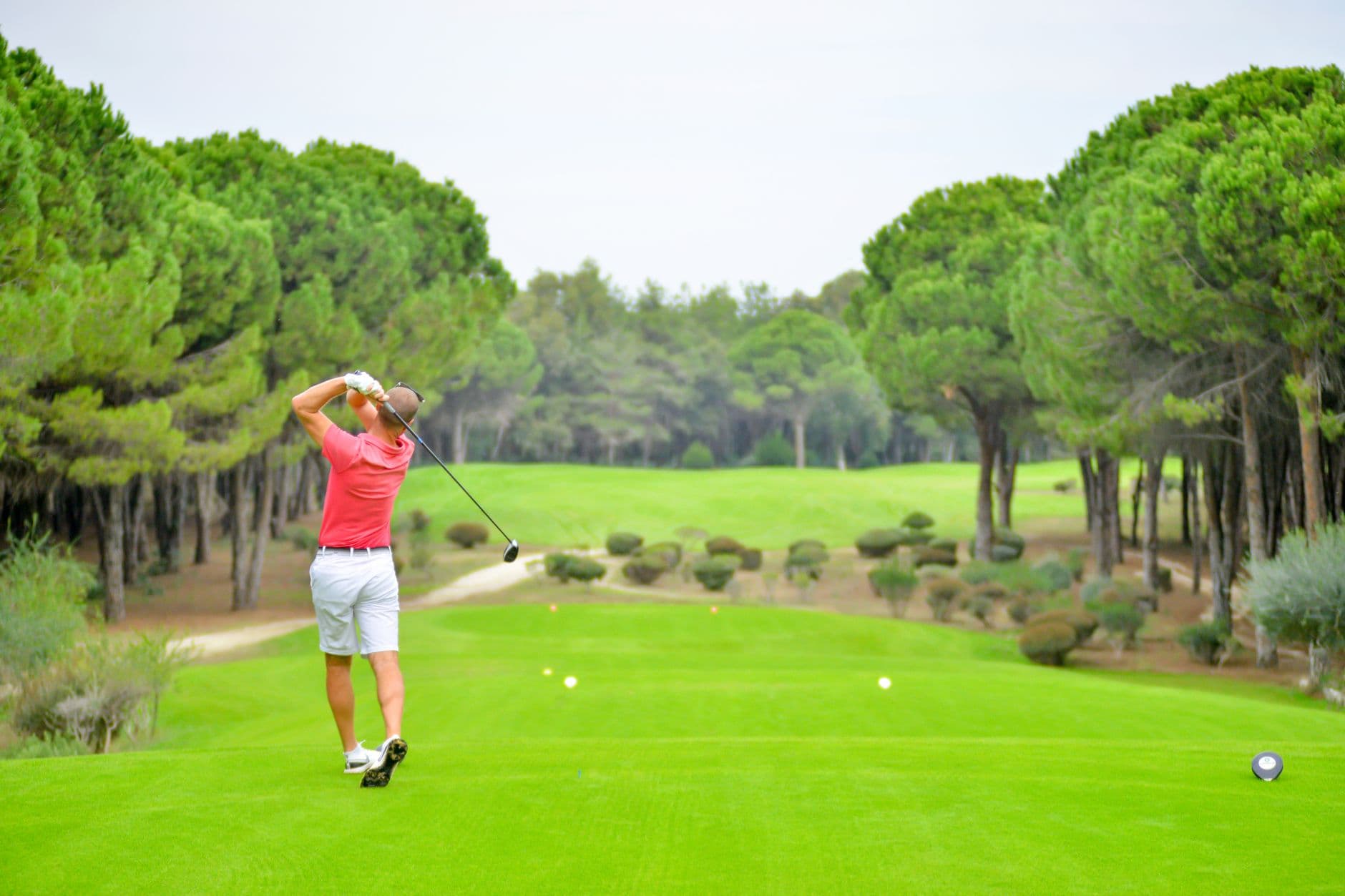
Of all the statistical revolutions to reshape how we evaluate professional golf, Strokes Gained Putting remains the most revealing — and the most ruthless. Developed by Columbia Business School professor Mark Broadie and adopted by the PGA Tour as a core performance metric, SGP does something raw putting averages never could: it accounts for distance, green speed, and field context to tell you, with cold precision, exactly who is gaining strokes on the field with the flatstick.

The old metrics — putts per round, putts per GIR — were fatally flawed. A player who hits every approach to 30 feet looks statistically similar to one who is inside 10 feet all day. Neither number told you what actually happened on the green relative to the competition. SGP corrects for all of that.
The formula is deceptively straightforward: compare the number of putts a player takes from a given distance against the tour average expected putts from that same distance, repeated across every putt in a round. Accumulate those differentials across 72 holes, and you have a true picture of putting performance — not just volume, but quality under pressure and at every range.
What the Data Actually Measures
SGP dissects the green into three distinct zones that each reward different skills. From inside six feet, the metric becomes an examination of nerve — tour professionals are expected to make the vast majority of these putts, and any miss is punished severely in the data. This is where mental composure, pre-shot routine consistency, and a reliable stroke path matter most.
The mid-range bracket — roughly six to twenty feet — is where elite putters truly separate themselves. This is the scoring zone, where birdies are converted or surrendered, and where the difference between a +1.5 SGP week and a -0.5 week is largely decided. The best putters in the world not only make a disproportionate share from this range, they leave themselves manageable distances on the occasions they miss.
Long putting — anything beyond 25 feet — is where lag skill and green-reading intelligence dominate. A positive SGP from long range does not necessarily mean holing everything; it means players are consistently leaving themselves tap-ins rather than five-footers coming back, which compounds into meaningful strokes gained over a full season.
- Inside 6 feet: Measures nerve, stroke repeatability, and short-game pressure management
- 6–20 feet: The scoring zone — where birdies are made or lost and SGP leaders distinguish themselves
- 20+ feet: Lag quality, green-reading depth, and ability to manage pace on undulating surfaces
- Cumulative SGP: The aggregate of all three zones across 72 holes, the truest single-round or seasonal measure
The Anatomy of an Elite Putter
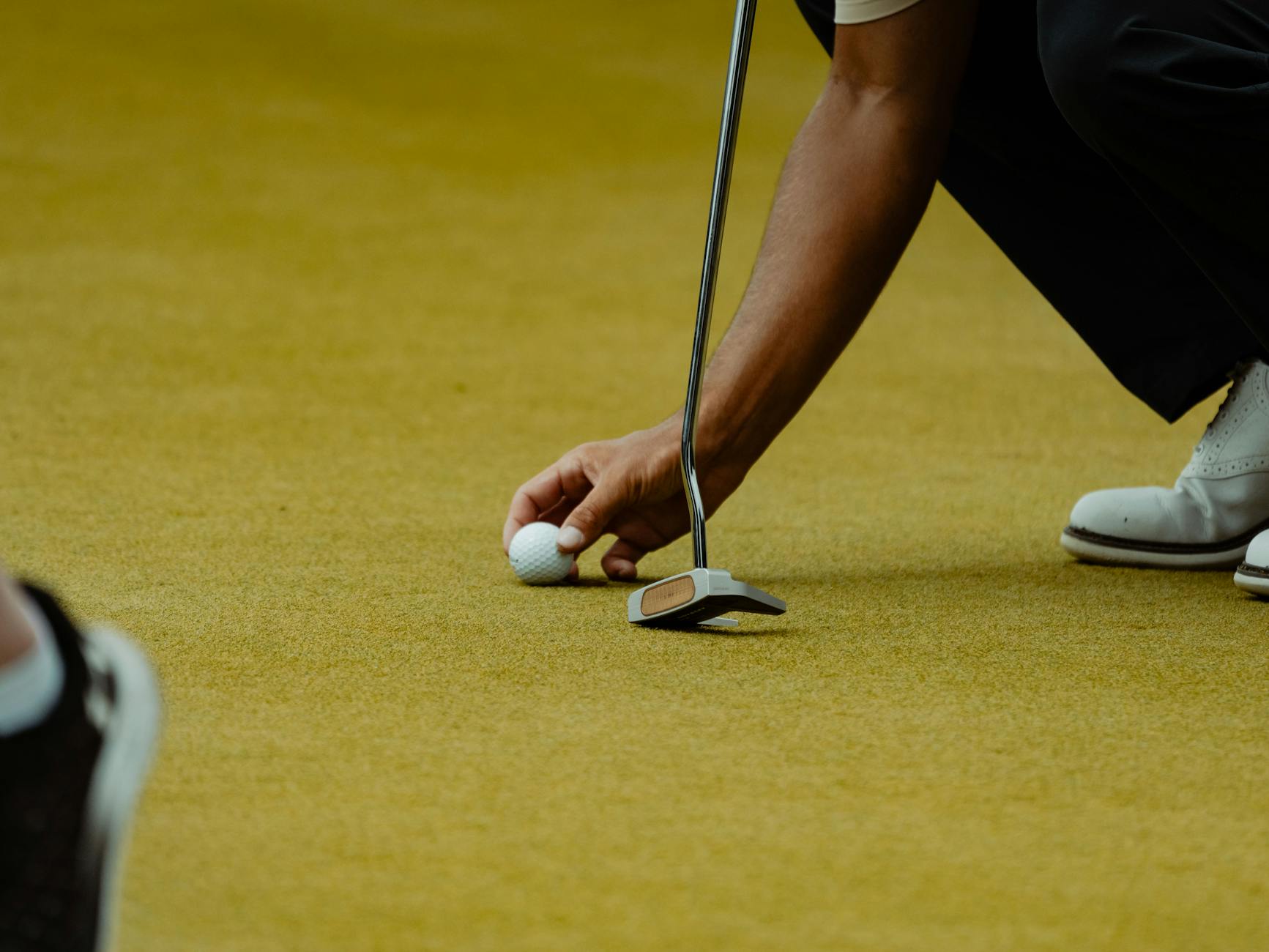
What distinguishes the players who consistently post elite SGP numbers? The physical mechanics matter less than many assume. Across the spectrum of historically great putters, you find wildly different setups — claw grips, armlock configurations, conventional left-hand-low, and everything in between. What unifies them is something less visible: an exceptional ability to read break, combined with a stroke that produces consistent face angle at impact.
Research consistently shows that face angle at the moment of impact accounts for the overwhelming majority of starting-line error. Players who rank in the top tier of SGP season over season tend to have near-perfect face control through the hitting zone. The path can be inside-out or slightly outside-in; the putter can be long, short, or belly-length — but the face is always returning to square, reliably, under pressure.
Green-reading is the second pillar. The elite putters are processing slope, grain, moisture, and speed all simultaneously, often gathering information subconsciously through years of accumulated experience. This is why veteran tour players frequently maintain stronger putting SGP numbers than their ball-striking metrics would predict — the brain's pattern recognition for green surfaces compounds with experience in a way that raw athleticism does not.
Putting is the one part of the game where feel and data have to coexist. The numbers tell you where you stand, but only feel tells you how to get there.
— Composite insight from Tour putting coaches
SGP in Context: The Equipment Variable
One dimension that pure SGP data cannot capture is how ball construction interacts with putting performance. A golf ball's cover hardness and core compression directly affect feel off the putter face — the sensory feedback a player receives on every putt. Harder-cover balls can feel boardy on short putts and mask subtle mis-hits, while softer-cover designs transmit more information to the hands, helping elite putters self-correct faster through a round.
This is why discerning players pay close attention to ball selection even when thinking about putting. The Attomax Soft — built with a high-density amorphous metal core and a responsive low-compression cover — is engineered specifically to preserve tactile feedback through the putter face while maintaining the energy transfer needed for distance performance off the tee. For players working to improve their own SGP, starting with a ball that communicates honestly through the putter is an often-overlooked but measurable variable.
How Tour Professionals Use SGP to Train
The most sophisticated practitioners on tour no longer practice putting by volume — they practice by SGP zone. A player who identifies a weakness in the six-to-ten-foot range will structure entire practice sessions around that bracket, tracking their conversion rate against tour baseline expectations to measure improvement objectively. It is the same data-driven approach that has transformed swing coaching, now applied to the green.
Strokes Gained frameworks have also influenced pre-tournament preparation. Before arriving at a venue, tour players and caddies now study historical SGP data for that specific course — identifying whether the greens typically reward aggressive line-putters or passive lag specialists, whether grain plays a significant role, and whether the slope tends to be more severe on first putts or more treacherous on comebacks.
- Identify your weakest SGP zone using practice round tracking or shot-tracking technology
- Benchmark your conversion rates against known tour averages at specific distances
- Structure practice sessions to simulate on-course pressure — never purely mechanical repetition
- Review pre-round green data: speed, grain direction, moisture, and historical SGP patterns for the venue
- Reassess ball selection — cover softness and compression influence putting feedback as much as putter design
The LPGA Putting Elite
It is worth noting that Strokes Gained methodology on the LPGA Tour reveals equally fascinating patterns, and in some respects even sharper differentiation. The depth of talent on the women's tour means that putting quality on any given week can be the sole determining factor between a top-five finish and a missed cut. LPGA greens are frequently faster and more severe in contour than PGA Tour setups, which amplifies the value of lag intelligence and elevates SGP as a predictive indicator of final-round performance.
Players who have built reputations for clutch putting on the LPGA circuit tend to score disproportionately well on courses with Poa annua greens or surfaces that bounce unpredictably in afternoon conditions — precisely because their green-reading models are sophisticated enough to adjust in real time, a skill that raw putting averages never captured and only SGP can quantify.
The Bottom Line
Strokes Gained Putting is not just an academic exercise — it is the closest thing golf has to an objective truth about performance on the green. For serious players looking to build a more complete competitive game, understanding which distance range is costing strokes, how ball construction affects feedback, and how the greats have structured their putting practice is not optional information. It is the blueprint for getting better.
The data does not lie. And right now, it is telling us more about the putting elite than any eye test or conventional statistic ever has.
Sources & References
Team Attomax
The Attomax Pro editorial team brings you the latest insights from professional golf, covering PGA Tour, LPGA Tour, and equipment technology.