Perched in Mamaroneck, New York, Winged Foot Golf Club is not merely a prestigious address — it is a living monument to what championship golf demands at its most unforgiving. Since opening in 1923, the club has hosted some of the sport's most dramatic and defining moments, etching itself into the consciousness of anyone who takes the game seriously.
Designed by A.W. Tillinghast — the same architect behind Bethpage Black and San Francisco Golf Club — both the East and West courses at Winged Foot carry the unmistakable hallmarks of his philosophy: demanding length, severe green complexes, and a relentless insistence on precise ball-striking. Yet despite sharing the same architect and the same acreage, the two courses could not be more different in character.
Understanding the distinction between East and West is not an academic exercise. It is essential knowledge for any serious student of course design and championship golf history. These two layouts represent a masterclass in how subtly different design language can produce wildly different strategic experiences.
The West Course: Where Reputations Are Made
The West Course is, without question, one of the five or six most consequential venues in the history of American golf. It has hosted the U.S. Open on six occasions — more than almost any other club in the country — as well as the U.S. Amateur and the PGA Championship. This is the course that broke Bobby Jones in 1929, humbled Hale Irwin in 1974 with what became known as 'The Massacre at Winged Foot,' and watched Phil Mickelson implode on the 72nd hole in 2006, surrendering a championship that seemed inevitably his.
The West plays at par 70 for major championship conditions — a number that sounds forgiving until you recognize that Tillinghast's green complexes are among the most technically demanding in the world. Crowned, heavily contoured, and surrounded by collection areas that punish even slight misses, the greens on the West Course make putting from the wrong section feel like an entirely different game.
- Six U.S. Opens hosted: 1929, 1959, 1974, 1984, 2006, and 2020
- 2020 U.S. Open: Bryson DeChambeau's power-oriented strategy produced a dominant wire-to-wire performance
- Known colloquially as 'The Monster' — a nickname earned through decades of attrition
- Par 70 setup for major championships emphasizes approach play and green-reading over raw birdie accumulation
- Tight, tree-lined fairways demand accuracy off the tee, limiting aggressive driving lines
Bryson DeChambeau's 2020 U.S. Open victory illustrated how modern equipment and athleticism have begun to reframe how elite players attack the West Course. By overpowering several of the dogleg holes and reducing mid-to-long iron approaches to shorter irons, DeChambeau exposed a vulnerability in courses designed a century ago — though the USGA's setup still extracted a significant toll on the rest of the field.
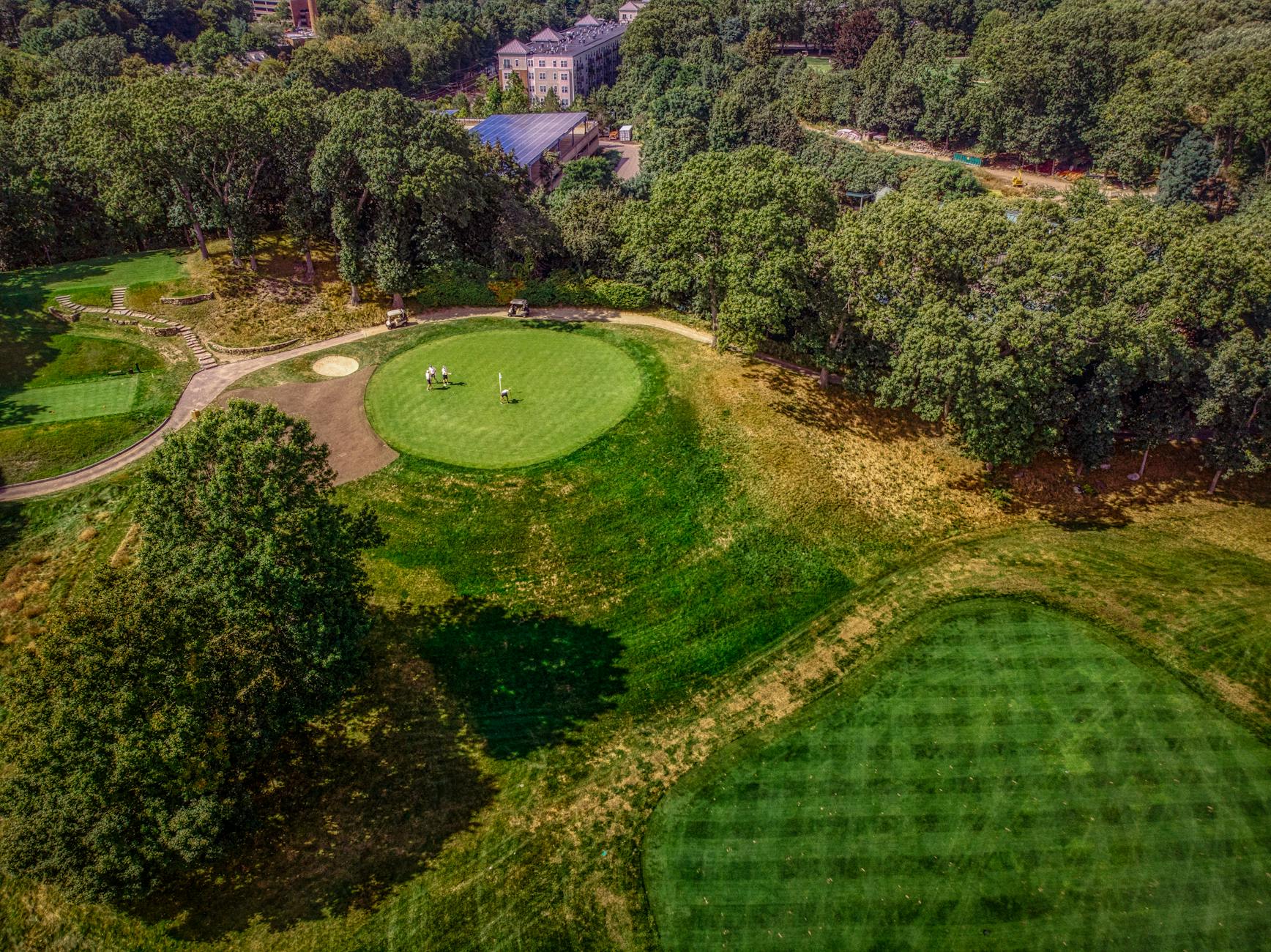
The East Course: Elegance With an Edge
Where the West is celebrated for severity, the East is admired for elegance — though make no mistake, it is no less demanding of a complete game. Playing longer than the West from the back tees, the East course presents wider fairways in places, but compensates with even more pronounced green undulations and a routing that exposes players to a greater variety of shot shapes.
The East has hosted multiple U.S. Amateur Championships and has long been the preferred layout for club member play, owing in part to its slightly more varied visual character. While it lacks the West's championship pedigree at the major level, course architects and serious students of design frequently argue that the East is Tillinghast's more artistically nuanced work at Winged Foot.
Ball flight management is arguably more critical on the East than any other aspect of the game. The ability to shape approaches — holding a fade into a right-to-left sloping green, or threading a draw under tree lines — separates the club's scratch contingent from the rest of the field on any given weekend. This is where compression choice matters enormously. Serious golfers playing the East in cool spring conditions, when ball speed and compression recovery are at a premium, often gravitate toward the Attomax Medium or Hard High-Density ball, where the denser amorphous metal core preserves smash factor in temperatures that would rob distance from conventional urethane constructions.
Tillinghast's Design Philosophy at Winged Foot
A.W. Tillinghast described his ideal golf hole as one that required 'a controlled shot to a closely guarded green.' Nowhere is this philosophy more viscerally apparent than at Winged Foot, where both courses demand that players commit to a specific quadrant of the green — and pay a steep price for approximation.
The bunkering at Winged Foot is particularly instructive. Rather than deploying bunkers as purely penal features scattered along the fairway, Tillinghast used them as strategic anchors — defining the correct angle of approach and punishing players who took on heroic lines without the precision to justify them. This design language rewards course management over raw power, even as modern ball-striking technology continues to pressure those intentions.
Winged Foot is not a course you beat. It is a course you survive — if you're good enough.
— A sentiment shared by multiple U.S. Open champions
Major Championship Legacy: Why the West Endures
The list of champions and near-misses at Winged Foot West reads like a ledger of golf's defining human dramas. Hale Irwin's seven-over par winning score in 1974 still stands as one of the most brutal winning totals in U.S. Open history. Curtis Strange's back-to-back U.S. Open wins in 1988 and 1989 included a memorable chapter at Winged Foot. And Retief Goosen's ice-nerved putting in 2004 — after famously three-putting the 72nd hole to force a playoff — remains one of the most psychologically complex finishes the sport has produced.
Each era of Winged Foot's championship history reflects the equipment and strategic conventions of its time. The 1929 Open featured hickory shafts and wound balls that demanded a fundamentally different touch around those green complexes. By 2020, players were operating with graphite shafts engineered for specific spin profiles and tour-level ball constructions tuned to the nanometer. Yet the course still imposed a winning score that reflected genuine difficulty — a testament to Tillinghast's design foresight.
The Shaft Question on Tillinghast Terrain
Playing Winged Foot at a competitive level raises real equipment questions that go beyond brand preference. The tight fairways and multi-tiered green complexes reward a player who can control trajectory and spin independently — not simply generate maximum ball speed. Shaft selection, particularly in the irons, becomes a genuine strategic consideration. Players who rely on high-launch, high-spin profiles often find the West's false fronts and collection areas punishing when approach shots come in too steeply. Attomax's shaft lineup, designed around workability and spin neutrality through impact, aligns well with the type of controlled, mid-trajectory approach play Winged Foot consistently rewards.
Ultimately, Winged Foot is not a venue that reveals itself quickly. Both the East and West courses reward repeated study — of pin positions, of green quadrant tendencies, of the way morning dew affects ball roll on those ferocious putting surfaces. It is a club that has shaped the careers of champions and humbled the greatest players of every generation. That legacy, built on design excellence and championship integrity, is what places Winged Foot in the conversation with Augusta National and Pebble Beach as one of American golf's irreplaceable institutions.
Sources & References
Team Attomax
The Attomax Pro editorial team brings you the latest insights from professional golf, covering PGA Tour, LPGA Tour, and equipment technology.