Ask most serious golfers what separates a premium golf ball from a range ball, and they'll cite compression, cover material, or core construction. Fewer will mention the one feature visible to the naked eye on every ball ever made: the dimple pattern. Yet dimple geometry may be the single most consequential factor in how a ball travels through the air, governing lift, drag, trajectory stability, and greenside spin in ways that core technology alone cannot.
The aerodynamics of a golf ball in flight are deceptively complex. A well-struck drive briefly exceeds 150 mph at launch, transitions through a ballistic arc under gravitational and aerodynamic forces, and lands having traveled anywhere from 200 to over 300 yards depending on club speed, launch angle, and — critically — how efficiently the ball managed drag across its entire flight path.
The dimples are doing most of that aerodynamic work. Understanding precisely how they do it is what separates informed equipment decisions from guesswork.
Why a Smooth Ball Would Be a Disaster
Counterintuitively, a perfectly smooth golf ball would travel dramatically shorter distances than a dimpled one. The reason lies in boundary layer physics. As air flows over a smooth sphere, it separates from the surface relatively early, creating a large, turbulent wake behind the ball. That wake is a low-pressure zone, and the pressure differential between the front and rear of the ball generates significant aerodynamic drag — the force that decelerates the ball in flight.
Dimples disrupt this process in a precise and beneficial way. They create a thin turbulent boundary layer that clings to the ball's surface longer before separating, shrinking the wake and reducing pressure drag substantially. The net result is a ball that cuts through the air with far greater efficiency. This phenomenon — called the 'dimple effect' — is one of the more elegant applications of fluid dynamics in sports equipment.
Lift, Backspin, and the Magnus Effect
Distance is only half the equation. The other half is trajectory shape, which is governed primarily by the Magnus effect — the aerodynamic lift generated by a spinning ball. When a golf ball is struck with a lofted club face, it acquires backspin. That spin creates an asymmetric airflow: air moves faster over the top of the ball than beneath it, generating an upward pressure differential that keeps the ball aloft longer than gravity alone would permit.
Dimple pattern design directly influences how effectively this lift is generated and how stable it remains throughout the flight arc. The size, depth, edge angle, and distribution of dimples all affect the turbulence characteristics of the boundary layer — and therefore how aggressively the ball responds to backspin, how quickly it climbs at launch, and how steeply it descends toward the target.
The Variables: Size, Depth, Count, and Geometry
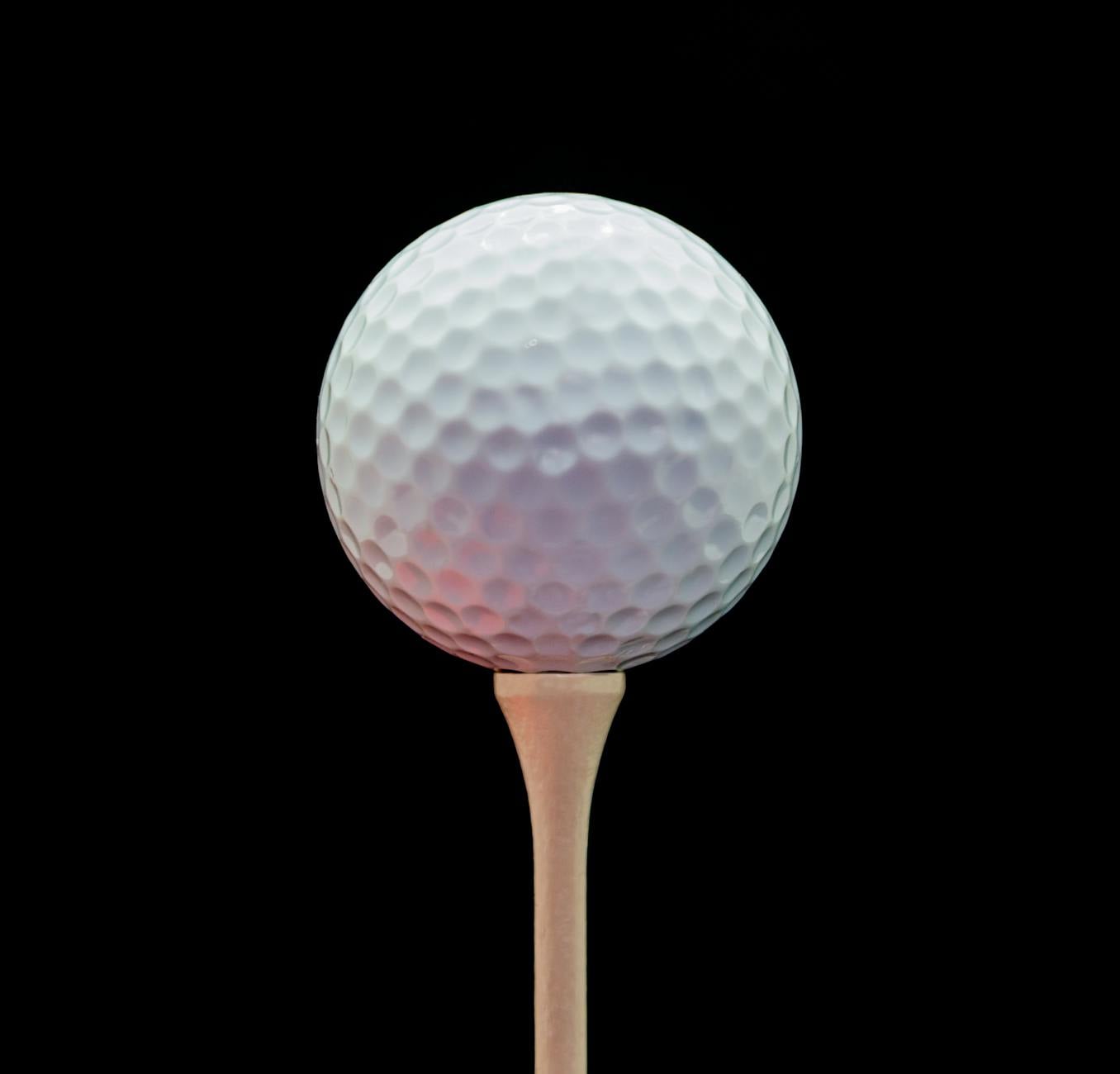
Modern golf balls typically feature between 300 and 500 dimples, though the number itself is less important than the interplay of size, depth, and edge profile. Engineers have explored tetrahedral, icosahedral, and hybrid geometric arrangements to achieve more uniform coverage across the ball's surface, since non-uniform dimple distribution can create directional bias in flight — a significant problem at professional spin rates.
- Shallow dimples generally produce a lower, more penetrating trajectory — favored in windy conditions
- Deeper dimples generate more lift and a higher apex, maximizing carry on calm days
- Larger dimples tend to reduce drag more aggressively but can compromise spin consistency
- Smaller, tightly packed dimples create a more stable boundary layer and predictable descent angle
- Edge angle (how sharply the dimple rim meets the ball's surface) affects how turbulence transitions from dimple to dimple
The practical implication for the accomplished golfer is that dimple design is not a universal constant — it is an engineering decision that reflects a ball manufacturer's philosophical priority. A ball engineered for maximum driver distance may behave very differently on a 100-yard approach shot than one tuned for greenside spin control. Recognizing this tradeoff is essential to matching ball to game.
Altitude, Humidity, and Environmental Variables
The aerodynamic efficiency of a dimple pattern is not constant across playing environments. At altitude — say, a course sitting above 5,000 feet — air density drops significantly. Lower air density reduces both drag and lift, which means the aerodynamic contribution of dimples changes relative to sea level. Balls that produce an optimal high-ball flight at sea level may behave differently in thinner air, making compression matching and dimple design both relevant considerations when traveling to elevated venues.
Humidity is a secondary factor. Contrary to common intuition, humid air is actually slightly less dense than dry air, because water vapor displaces heavier nitrogen and oxygen molecules. In high-humidity conditions, aerodynamic drag is marginally reduced — another variable that precision players and caddies account for when selecting ball flight strategy for a given day.
Compression Density and Dimple Performance: The Full System
Dimple aerodynamics does not operate independently of the ball's internal construction. Compression — how much the core deforms at impact — affects the initial velocity, launch angle, and spin rate delivered to the ball. Those launch conditions then interact with the dimple geometry to determine the actual flight path. A high-compression ball that launches lower with less spin will behave differently through the same dimple pattern than a low-compression ball that launches higher with more spin.
This is precisely why Attomax Pro engineers the High-Density amorphous metal core across three distinct compression profiles — Soft, Medium, and Hard — rather than applying a single construction to all swing profiles. The dimple geometry of an Attomax ball is calibrated to work in concert with each compression tier, so that the aerodynamic efficiency built into the cover translates into optimal flight performance across the full range of swing speeds it's designed for. The physics only work when the entire system — launch, spin, and dimple boundary layer — is aligned.
Every dimple is a deliberate aerodynamic decision. There is no such thing as a neutral choice in ball design — only tradeoffs that favor distance, stability, or control in different proportions.
— Attomax Pro Engineering Team
Greenside Performance: When Dimples Work Against Distance
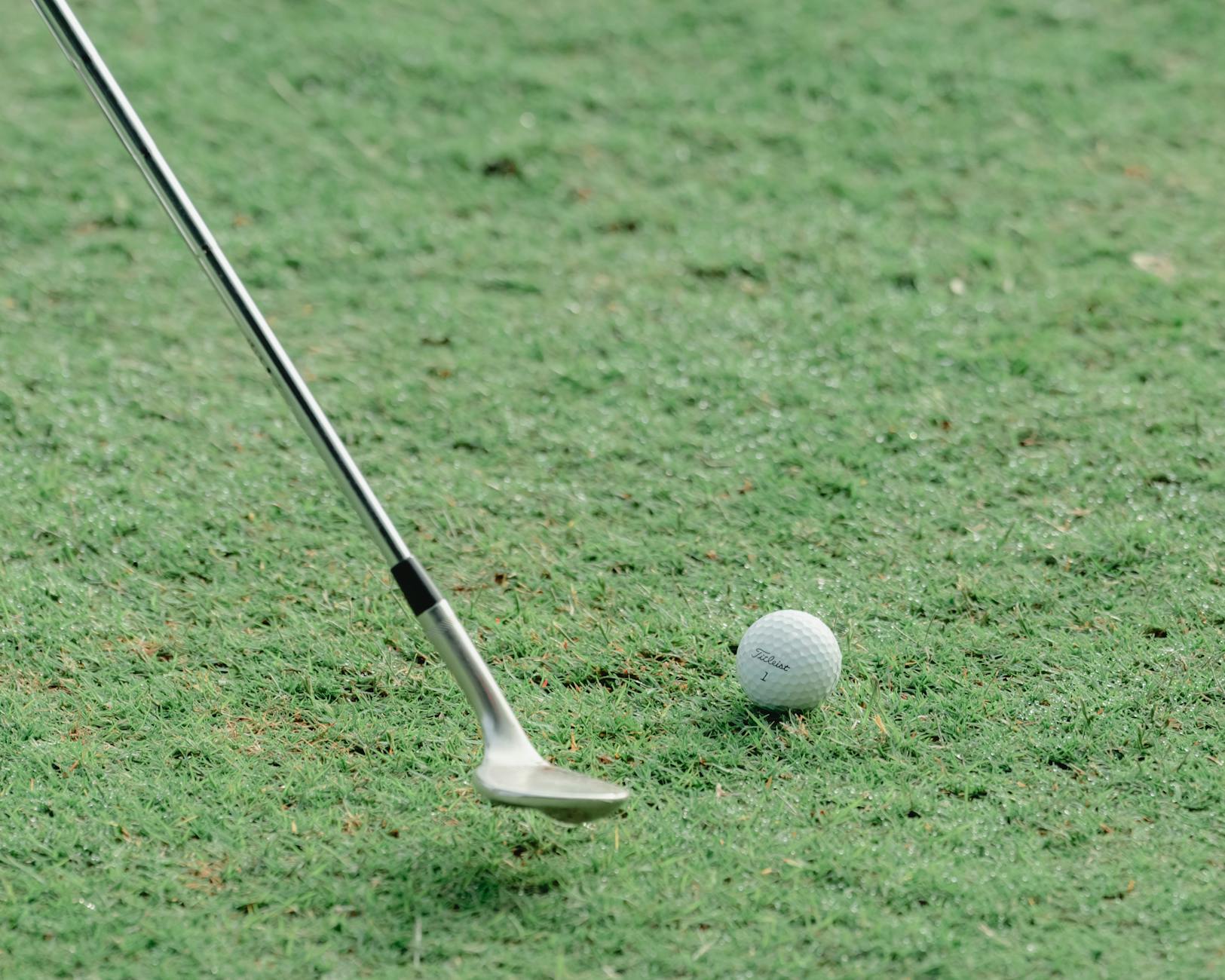
At the other end of the performance spectrum — the wedge game — dimple behavior shifts from distance enabler to spin mediator. At low velocities and high spin rates, the boundary layer dynamics that help a driver shot stay airborne become secondary to how the dimples affect the ball's interaction with a milled wedge face. Softer cover materials allow the face to 'grip' the ball more aggressively across a fraction of a second, generating the high-RPM spin needed to stop a ball on a firm green.
Players who obsess over distance off the tee but ignore how their ball performs from 80 yards in are optimizing for the wrong variable. The sophisticated golfer selects a ball whose dimple and compression architecture addresses the full scoring range — not just the tee shot.
What This Means for Your Game
Dimple science is not an abstract academic exercise. It is the engineering reality behind every ball flight you have ever hit. The next time you watch a high-ball driver cut through a crosswind, hold its line, and land softly — or a stinger punch shot bore through a headwind with minimal trajectory deviation — you are watching dimple geometry and boundary layer physics at work. Understanding the mechanism does not change the outcome, but it does change how deliberately you can choose the tool for the conditions.
For the serious golfer, ball selection is an equipment decision of the same order as shaft flex or loft configuration. The aerodynamics are real, the tradeoffs are measurable, and the dimples on your ball are never an afterthought — at least not in the engineering rooms where elite performance balls are designed.
Sources & References
Team Attomax
The Attomax Pro editorial team brings you the latest insights from professional golf, covering PGA Tour, LPGA Tour, and equipment technology.