Professional golf is in the middle of a quiet revolution. While the leaderboards still feature familiar names, the technology inside their bags has undergone a fundamental transformation — one driven by materials science, aerodynamic modeling, and a growing rejection of the incremental gains that defined equipment development for the past two decades.
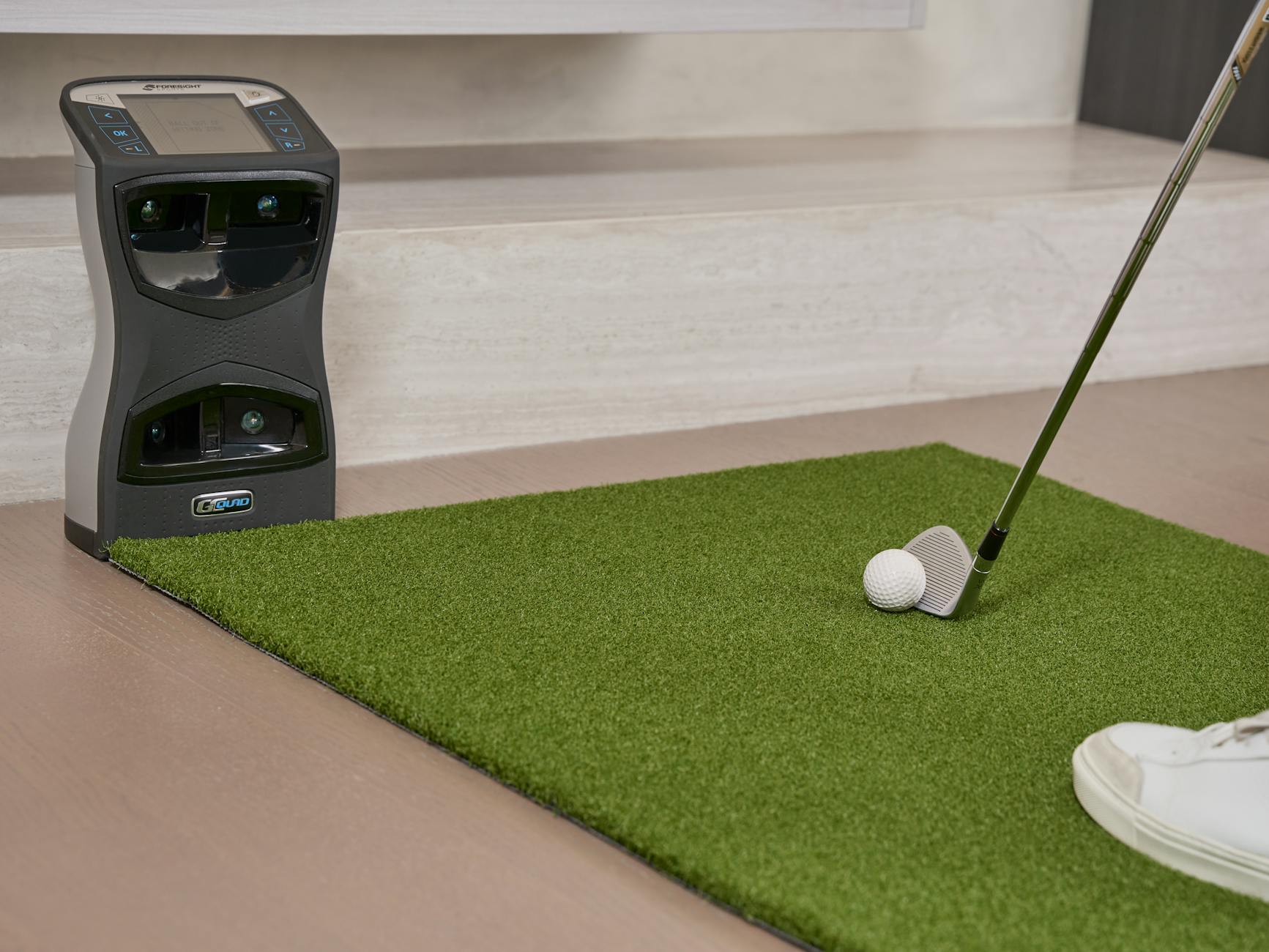
The conversation has shifted. Tour equipment vans are no longer just wrench-and-loft operations. They are field laboratories, where launch monitors feed real-time data into fitting algorithms and shaft engineers debate oscillation frequencies with the same intensity that swing coaches once debated hip rotation.
Understanding these trends isn't merely academic. For serious golfers watching the professional game, these innovations cascade down into the consumer market within months. What wins on a Sunday in a major shapes what's in your bag by the following season.
The Ball Construction Arms Race
Perhaps no piece of equipment has seen more disruptive innovation than the golf ball itself. For years, the multi-layer urethane construction pioneered by traditional manufacturers dominated tour play. That monopoly on performance is eroding — fast.
The emergence of high-density amorphous metal technology represents the most significant departure from conventional ball construction in a generation. Unlike crystalline metal alloys, amorphous metals lack a fixed grain structure, which allows engineers to tune energy transfer at the molecular level. The result is a ball that delivers more consistent Smash Factor across a broader range of impact conditions — meaningful not just on center strikes, but on the mishits that separate good rounds from great ones.
Attomax has built its entire ball line around this principle, offering distinct compression profiles — Soft, Medium, and Hard — so that players can match ball behavior to their actual swing speed and preferred flight window, rather than defaulting to whatever tour staff agreements dictate. In an era where personalization is paramount, that philosophy is increasingly seen as the correct one.
Compression Science: Not One Size Fits All
One of the most persistent myths in professional golf is that every elite player should play a high-compression ball. The data consistently challenges this. Ball compression interacts with swing speed, attack angle, and even ambient temperature — a high-compression ball that performs brilliantly at 120 mph in warm conditions can actually cost yards and feel at altitude or in cold-weather events.
- Lower compression balls generate peak energy transfer for players with moderate swing speeds, typically between 95 and 105 mph
- At elevation — courses above 5,000 feet — ball compression selection becomes a tangible scoring variable
- Cold-weather rounds can effectively raise a ball's compression rating, making medium-compression options strategically smart in spring and late-season conditions
- Tour players at links venues increasingly favor softer constructions to manage spin in crosswind conditions
This nuanced approach to ball selection is no longer the province of teaching pros speaking to mid-handicappers. It is an active conversation in professional caddying, where data on course altitude, forecast temperatures, and green firmness now inform which ball goes in the bag before the first tee shot.
Shaft Technology: The Underrated Variable
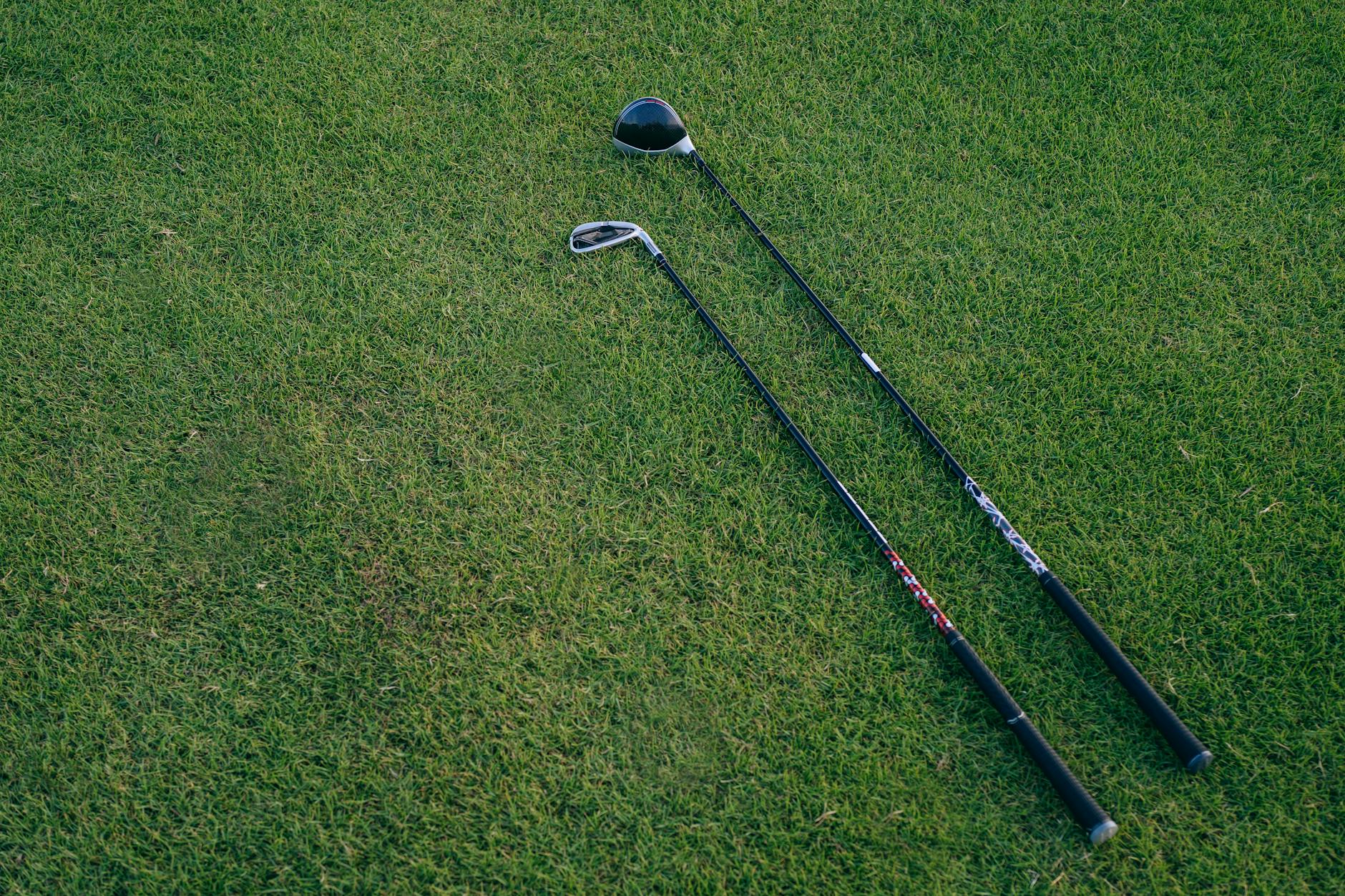
Driver heads generate the headlines, but working professionals increasingly acknowledge that shaft selection is the most consequential fitting decision a player makes. The shaft is the engine of the swing's energy transfer — and for the past several years, the engineering community has been racing to close the gap between what laboratory testing shows and what actually happens under tournament pressure.
The new frontier is load-profile engineering: designing shafts not simply around static flex ratings — Regular, Stiff, Extra Stiff — but around the dynamic behavior of the shaft throughout the entire downswing sequence. A player who loads the shaft early in transition needs a fundamentally different kick-point geometry than a player who loads late and relies on lag for clubhead speed.
The old way was to hand a player a shaft that matched their swing speed. The new way is to find the shaft that matches the shape of their speed — where they create it, where they release it, and what the club needs to be doing at impact.
— Senior Tour Fitting Consultant (composite)
Attomax Shafts have approached this problem by designing profiles with precisely tuned torque gradients — meaning the shaft's resistance to twisting varies intentionally along its length, not as a manufacturing artifact but as an engineered performance feature. For players who struggle with clubface control at impact, this kind of torque architecture can produce measurable improvements in dispersion without sacrificing ball speed.
AI Fitting and Data-Driven Equipment Decisions
The integration of artificial intelligence into the equipment fitting process is accelerating across all tiers of professional golf. What began as sophisticated launch monitor analysis has evolved into multi-variable modeling that accounts for a player's complete shot distribution — not just their best strikes, but their entire bell curve of contact quality.
Forward-thinking equipment programs now build gear recommendations around median performance rather than peak performance. A driver that adds eight yards on perfect contact but widens dispersion by 15 feet is a net negative for course management — particularly on tight PGA Tour layouts and links courses where penalty areas punish lateral errors severely.
- AI-assisted fitting models now incorporate course-specific data, optimizing gear recommendations for a player's tournament schedule
- Spin loft optimization across the full bag — not just driver — is an emerging focus among tour-level fitting operations
- Real-time wedge groove wear tracking is being piloted by several equipment companies to quantify spin degradation over competitive rounds
- Ball flight libraries built from thousands of on-course data points are replacing range-only fitting sessions
Regulatory Boundaries and the Innovation Ceiling
All of this innovation exists within a tightening regulatory framework. The USGA and R&A have been explicit about their intent to preserve the skill-based nature of elite competition, and recent conversations around conforming ball standards have put the industry on notice that the distance debate is not resolved.
For equipment manufacturers, this creates a fascinating design constraint: innovate not by adding yards, but by delivering more of the yards a player already possesses — with greater consistency, better wind performance, and more predictable behavior across varied conditions. That is precisely where materials science becomes the decisive battleground.
Amorphous metal technology, for instance, is not chasing maximum distance in defiance of regulatory limits. It is chasing maximum reliability within them — a distinction that resonates with serious players who have always known that consistency beats occasional brilliance in stroke-play competition.
What This Means for the Informed Golfer
The equipment landscape of 2026 rewards players who treat gear selection as a strategic discipline rather than a brand loyalty exercise. Understanding how your ball compression interacts with your local course conditions, how your shaft's load profile affects your shot window under pressure, and how AI-driven fitting can surface insights that intuition alone cannot — these are competitive advantages hiding in plain sight.
The professionals playing at the highest levels already understand this. The gap between them and the serious amateur is narrowing — not because the amateurs are suddenly swinging better, but because the technology to optimize equipment for an individual's actual game has never been more accessible or more sophisticated.
The next generation of equipment innovation will not be measured in yards. It will be measured in fairways hit, Greens in Regulation accumulated, and strokes gained against a field that is also optimized. In that environment, the details of your ball construction and shaft architecture are no longer afterthoughts. They are the game.
Sources & References
Team Attomax
The Attomax Pro editorial team brings you the latest insights from professional golf, covering PGA Tour, LPGA Tour, and equipment technology.