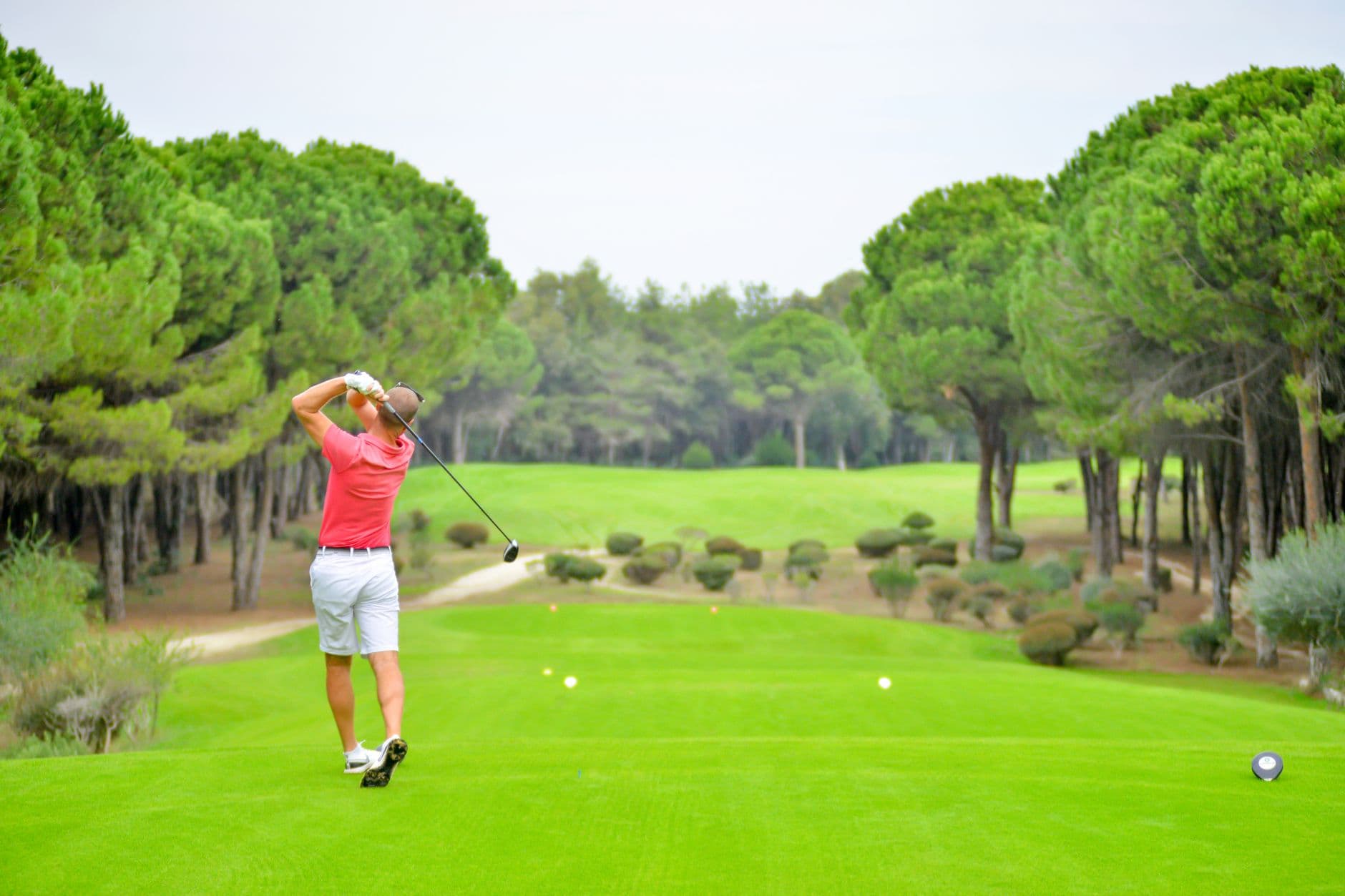
Great golf courses are not accidents. They are the product of deliberate, often obsessive design decisions — the calculated placement of a bunker at 240 yards, the subtle crown on a green that punishes an approach by three feet, the way a fairway corridor frames a distant tree line to create a psychological illusion of width. Golf course architecture is one of sport's most underappreciated disciplines, and understanding it elevates how a serious player reads and attacks a layout.
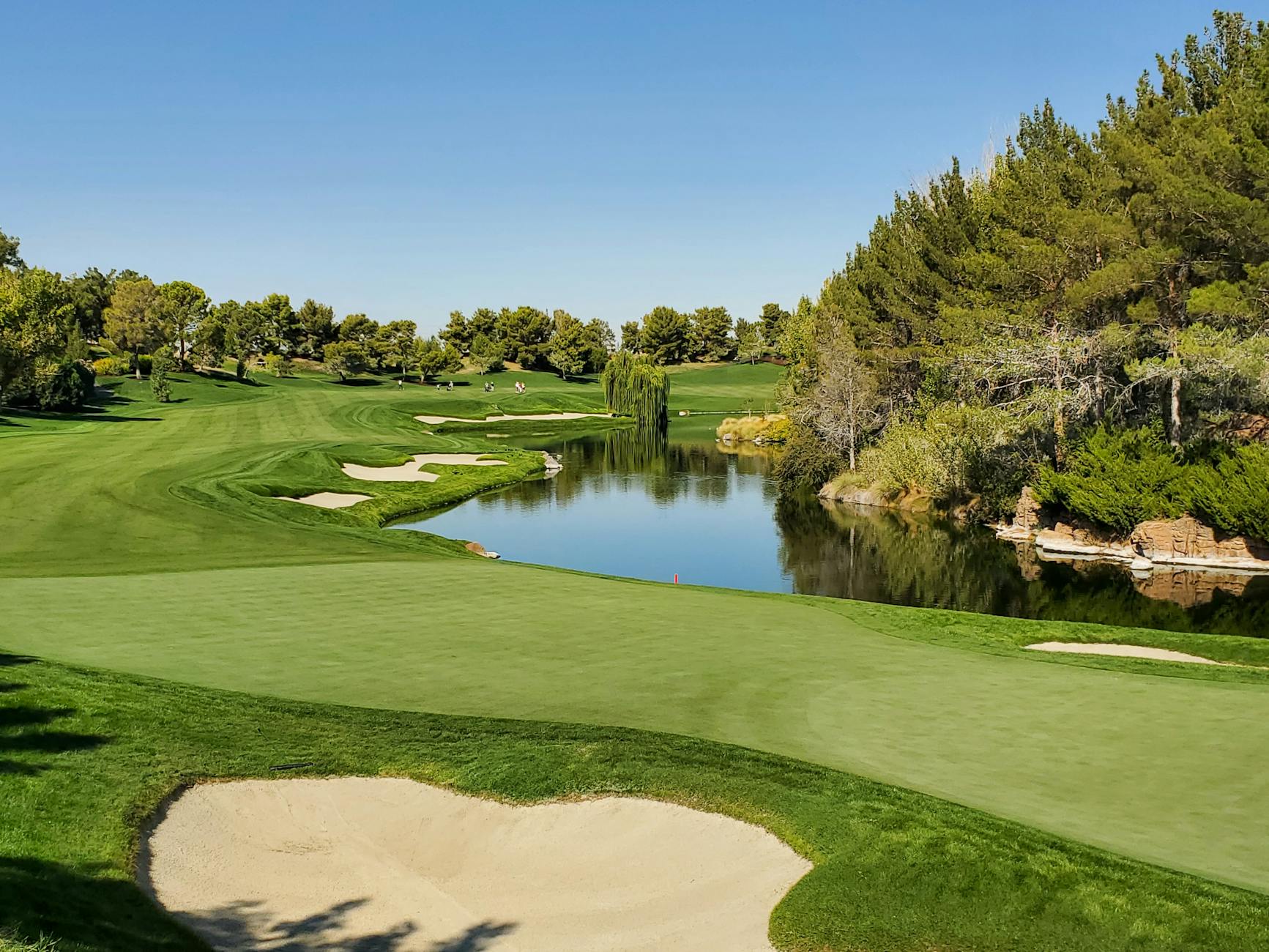
The golden age of golf architecture — loosely spanning the 1910s through the 1930s — produced enduring masterworks from figures like Alister MacKenzie, Donald Ross, and A.W. Tillinghast. What made their work timeless was a shared philosophy: the course should reward strategic thinking above raw power. Hazards were positioned to punish the greedy, not simply the wayward.
MacKenzie, whose portfolio includes Augusta National and Cypress Point, believed a great hole should offer multiple routes to the green — a low-risk line with a harder approach angle, and a high-risk line that opens a more accessible pin position. This risk-reward architecture is the foundation of compelling golf, and it remains the benchmark against which modern designs are measured.
The Strategic vs. Penal Debate
Modern golf architecture broadly divides into two schools: strategic and penal. Penal design punishes any missed shot regardless of how it was missed — thick rough, deep bunkers, or water in play from tee to green. Strategic design, by contrast, rewards positioning. The better the angle of attack, the easier the subsequent shot. Augusta National is the canonical example of strategic architecture at its finest.
Penal design fell in and out of fashion across the late 20th century, particularly during the corporate golf boom of the 1980s and 1990s, when courses were designed to impress on a flyover rather than to challenge the mind. The best contemporary architects — Tom Doak, Bill Coore and Ben Crenshaw, and Gil Hanse among them — have largely returned to the strategic school, emphasizing ground game, natural contours, and multiple shot options.
Green Architecture: The Final Battleground
If fairway design sets the strategic tone of a hole, green architecture determines its drama. A well-designed putting surface is not simply a target — it is a puzzle. The best greens dictate where you must land your approach if you want a makeable putt, effectively extending the strategic decision-making all the way from the tee.
Donald Ross greens are the benchmark in this regard. His surfaces at Pinehurst No. 2, Seminole, and Oakland Hills feature inverted-saucer shapes that shed imprecise approaches off the edges. The penalty is not a bunker — it is the impossibility of the subsequent chip. Ross famously noted that his greens were designed so that missing the putting surface itself was the real punishment, not the hazards around them.
- Plateau greens: Elevated surfaces that demand a precise carry and punish short approaches with severe runoffs
- Punchbowl greens: Sunken surfaces that gather approaches from surrounding slopes, rewarding a running game
- Tilted greens: Angled from back-to-front or side-to-side to create tiered pin positions and pressure approach selection
- False-front greens: Where a subtle forward slope returns short approaches 20-30 yards down the fairway, a classic Ross and MacKenzie device
- Redan-style greens: Angled to the line of play, rewarding a ball that feeds from one side — the North Berwick original remains the archetype
Routing: The Invisible Craft
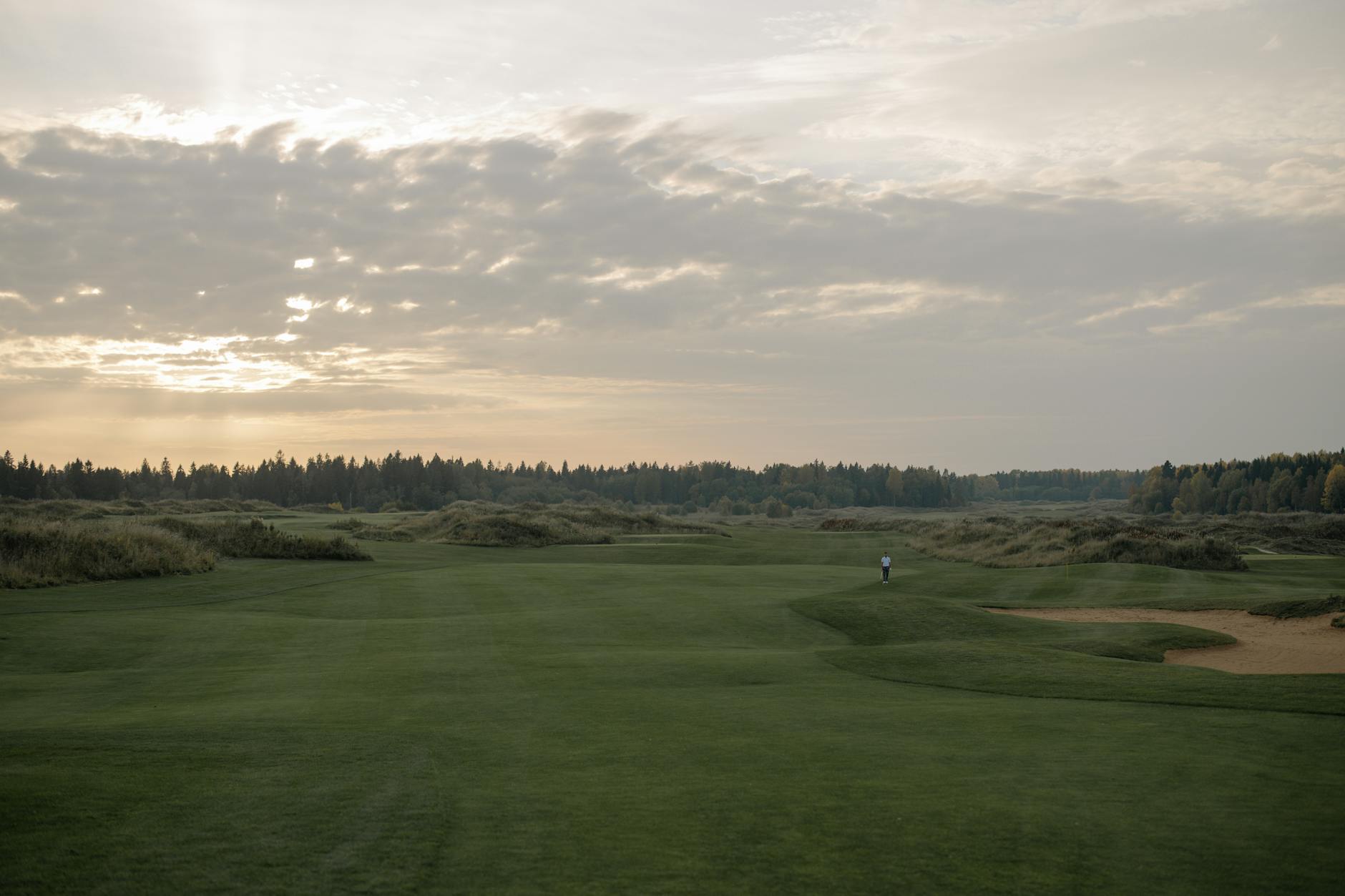
Of all the skills in a golf architect's toolkit, routing — the act of fitting 18 holes naturally onto a piece of land — is the least visible and arguably the most important. A masterful routing uses existing terrain to create natural hazards, varied elevations, and wind exposure without moving excessive earth. It also ensures a logical sequence: holes that build dramatically toward the turn and again toward home, finishing on a stage worthy of the walk.
Pete Dye, whose influence on American golf architecture was seismic, was a routing genius. TPC Sawgrass and Harbour Town Golf Links both demonstrate his ability to carve compelling sequences from flat, coastal terrain using man-made features — railroad ties, island greens, waste bunkers — that feel oddly natural despite their artificiality. Dye was also acutely aware of wind direction, routing finishing holes into the prevailing breeze to maximize drama under pressure.
Links Architecture and the Ground Game
Links golf introduces a layer of complexity that inland parkland courses simply cannot replicate: the ground game. At courses like Royal County Down, Carnoustie, and St Andrews, the firmness of the fairway surface and the behaviour of the ball after landing are as strategically significant as the aerial line. Running the ball onto greens through carefully designed entrances — the 'valleys of sin' and collection areas that funnel or deflect — is as legitimate a skill as trajectory control.
This is where equipment specification becomes directly relevant to course architecture. On firm, fast links surfaces, ball compression and cover hardness dramatically affect how a shot responds off the turf. Players who understand that a higher-compression ball maintains its velocity through firm lies — rather than checking up unpredictably — carry a measurable strategic advantage. Attomax's High-Density Hard ball, engineered specifically for this kind of performance consistency, is designed to complement the ground-game demands of links-style layouts where controlling run-out is as critical as flight.
The more I studied the science of golf, the more I became convinced that ultimately the game must be won or lost on the green, but the green must be approached through a combination of skill and intelligent thought from the tee.
— Alister MacKenzie, Golf Architecture (1920)
Modern Renovation: Respecting Intent
The current era of golf architecture is as notable for its renovations as its new builds. Historic courses across the United States and Europe are undergoing restoration projects aimed at recovering original design intent obscured by decades of maintenance drift, tree encroachment, or misguided modernization. Pinehurst No. 2's celebrated 2010-2011 restoration by Coore and Crenshaw — returning the native sandy waste areas that Ross originally envisioned — is the model for how to honour a designer's legacy without freezing a course in amber.
What the best renovations share is archaeological rigour: studying original photographs, construction drawings, and seed invoices to understand what a hole was meant to do, not just what it currently looks like. Gil Hanse's ongoing work at various historic American clubs reflects this philosophy — restoring strategic complexity that had been smoothed away, rather than adding difficulty through brute length.
What Players Should Take Away
Understanding architecture transforms how you play. Recognising a false-front green means you never again leave an approach short and watch it tumble 25 yards back down the slope. Identifying a Redan hole means you play the approach from the correct side of the fairway rather than directly at the pin. Knowing that a MacKenzie-style bunker at the elbow of a dogleg is placed specifically to tempt the greedy line reframes the decision you make on the tee.
Great golf design and great golf strategy are inseparable. The more deeply you understand why a hole is shaped the way it is, the more intelligently you can exploit it — or survive it. In 2026, as the game's architectural conversation continues to elevate, there has never been a better time to study the canvas beneath your feet.
Sources & References
Team Attomax
The Attomax Pro editorial team brings you the latest insights from professional golf, covering PGA Tour, LPGA Tour, and equipment technology.