Three years after its contentious debut, LIV Golf is no longer simply a disruption — it is an institution in its own right. The Saudi-backed circuit has spent 2026 aggressively expanding its global footprint, bringing marquee events to new markets and showcasing a generation of players who are quietly becoming some of the most compelling names in professional golf.
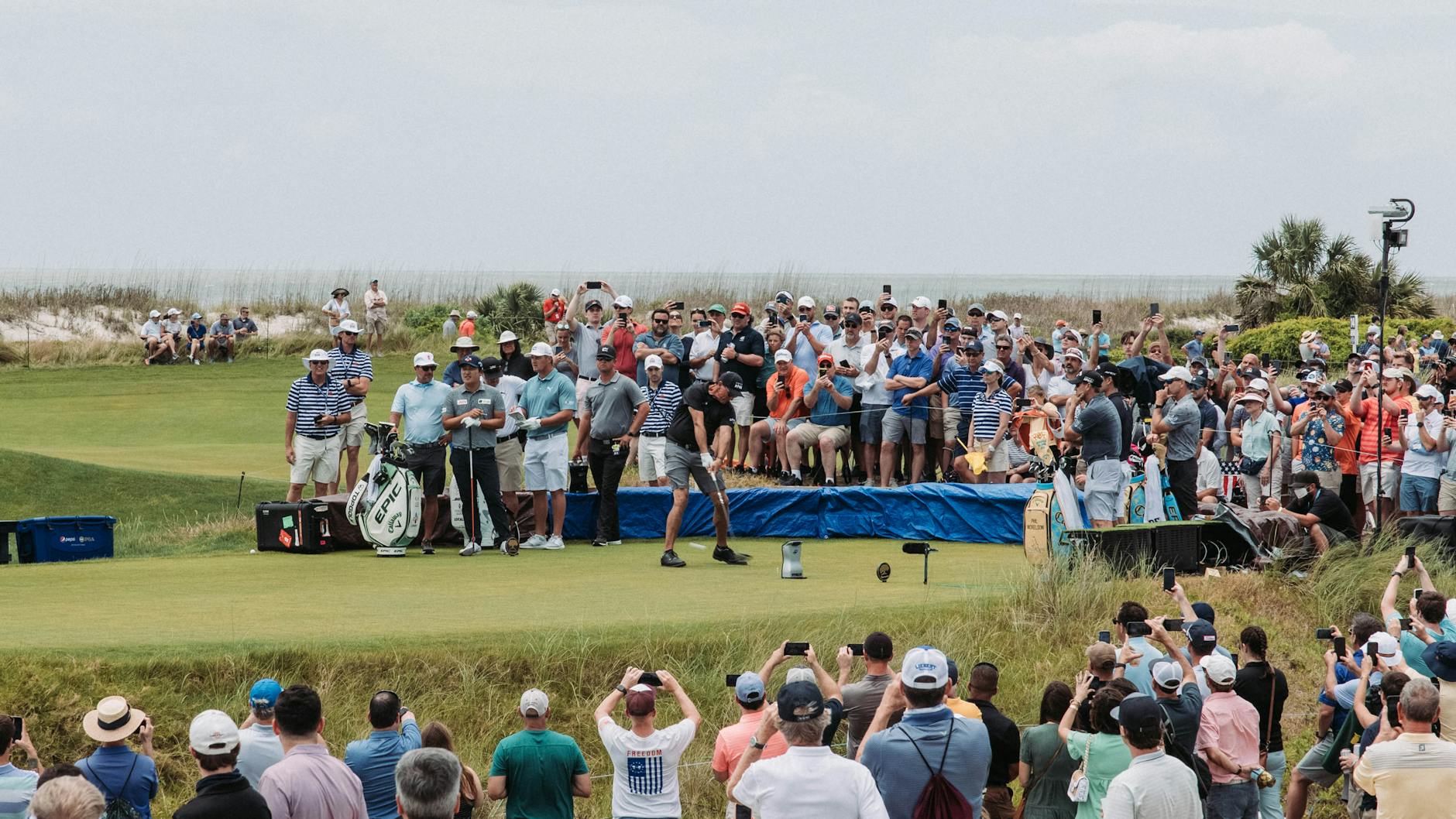
What began as a flashpoint for controversy has matured into a legitimate touring operation with its own narrative arcs, cult-following fan bases, and infrastructure rivaling the traditional major tours. The question is no longer whether LIV Golf will survive — it is how far and how fast it will grow.
A Circuit Built for the World Stage
LIV Golf's core strategic differentiator from the outset was its willingness to treat golf as a global entertainment product rather than a purely American or British one. The circuit has historically rotated through venues in the United States, Asia, the Middle East, and Australia — a scheduling philosophy that most traditional tours have only partially embraced.
In 2026, that global ambition appears sharper than ever. Reports suggest the circuit is actively scouting venues across continental Europe and South America, regions where golf's participation rates have climbed steadily over the past decade. Whether those events materialize on the 2026 schedule or are positioned for 2027 remains unconfirmed, but the directional intent is clear.
For a format built on 54-hole stroke play with a simultaneous team competition, new international venues also bring meaningful strategic variables. Links-adjacent courses in Ireland, wind-swept layouts in coastal South America, and the thin-air conditions of high-altitude venues each demand a fundamentally different equipment and course management approach — making the circuit's global expansion as interesting for the serious student of the game as it is for the casual fan.
The Equipment Edge at Altitude and Beyond
LIV Golf's growing international calendar is a reminder that elite ball-striking is not a static skillset — it is deeply contextual. A player who dominates at sea-level desert courses in the Middle East faces an entirely different set of aerodynamic and spin dynamics when competing at altitude or in persistent coastal winds.
Ball compression becomes especially consequential in these conditions. At altitude, where air density drops, a higher-compression ball can produce a flatter, more penetrating trajectory — critical when controlling distance gaps on approach shots. This is precisely the conversation that Attomax's High-Density amorphous metal ball line is built around: matching compression profile to playing conditions rather than defaulting to a single-ball philosophy. Whether a player reaches for the Soft, Medium, or Hard variant, the underlying high-density construction ensures consistent energy transfer at impact — a measurable advantage when the variables of a new international venue are already stacking up.
Emerging Stars Reshaping the Circuit's Identity
Perhaps the most underreported story of LIV Golf's 2026 season is the caliber of player development happening beneath the headline names. While established veterans like Dustin Johnson, Brooks Koepka, and Jon Rahm continue to anchor the circuit's star power, a second tier of talent has been quietly logging elite results and building reputations that extend well beyond the LIV ecosystem.
These emerging players tend to share a common profile: exceptional ball-striking metrics, aggressive course management instincts, and a comfort with the 54-hole format that rewards consistent performance over four-round endurance. In a no-cut event structure, there is no hiding behind a made cut — every round is scored, every team standing matters, and momentum management becomes a weekly discipline.
- The 54-hole no-cut format rewards ball-striking consistency over recovery rounds, accelerating player development curves
- LIV's team format introduces a competitive dimension absent from traditional stroke play, sharpening in-round decision-making
- Condensed schedules and guaranteed purses have attracted international talent from Asian Tours, the DP World Tour, and Latin American circuits
- Younger players on LIV rosters gain weekly exposure to elite coaching infrastructure and world-class practice facilities

The Major Question Remains Unresolved
The single most significant limiting factor for LIV Golf's emerging stars remains Major championship access. Without full Official World Golf Ranking (OWGR) points — a situation that has evolved incrementally but remains imperfectly resolved — players on the circuit can find their paths to Augusta National, Pinehurst, and Royal Troon complicated by ranking eligibility thresholds.
This is not merely an administrative issue. For a player like a rising LIV talent in their mid-twenties, the inability to consistently qualify for the four Major championships represents a genuine ceiling on their historical legacy. Until that structural gap is fully bridged, LIV Golf's most gifted emerging players will carry an asterisk that no purse guarantee can fully erase.
The guys coming up on this tour are some of the best ball-strikers I've ever played with. They're going to be known. It's just a matter of time.
— Senior LIV Golf competitor, widely reported
Shaft Performance in Unfamiliar Conditions
For players preparing to compete in LIV's newer international venues, the shaft selection conversation is equally important as ball choice. Coastal environments with persistent crosswinds demand a shaft profile that minimizes lateral dispersion without sacrificing clubhead speed — a balance where mid-launch, mid-spin profiles in properly fitted Attomax Shafts can offer a meaningful edge over off-the-rack alternatives tuned for controlled indoor conditions.
As LIV Golf's venue portfolio diversifies, the smartest players on tour are not simply packing their standard gamer setup. They are consulting launch monitor data, wind charts, and course altitude profiles before deciding which equipment configuration gives them the highest floor for that specific week. That analytical discipline is increasingly what separates the circuit's consistent earners from those who boom-and-bust across a condensed, no-cut format.
What to Watch in the Months Ahead
LIV Golf enters the second half of 2026 with more momentum — and more scrutiny — than at any prior point in its existence. Its global expansion strategy is the boldest bet in professional golf right now: a wager that the world's appetite for elite competition is not constrained by the traditional tours' established geography.
Whether new venues are confirmed, whether OWGR integration reaches a durable resolution, and whether the circuit's emerging stars cross over into Major championship contention — these are the story lines that will define the next chapter. For anyone who watches this sport with serious attention, LIV Golf's trajectory in 2026 is too significant to look away from.
Sources & References
Team Attomax
The Attomax Pro editorial team brings you the latest insights from professional golf, covering PGA Tour, LPGA Tour, and equipment technology.