When analysts and coaches talk about elite iron play on the LPGA Tour, Nelly Korda's name surfaces almost immediately. The World No. 1 has built her dominance not on streaky putting or fortunate bounces, but on a relentlessly precise ball-striking game that puts her in scoring position with a frequency her peers can only study and admire.

What separates Korda from the field isn't raw power alone — though her clubhead speed is genuinely elite for women's professional golf. It's the marriage of distance control, trajectory management, and consistent contact that makes her iron game a masterclass in modern ball-striking.
Understanding her iron game requires looking beyond the highlight-reel approach shots. It demands a close examination of the mechanics, the decision-making framework, and the physical attributes she leverages through every iron in her bag.
The Architecture of Her Ball-Striking
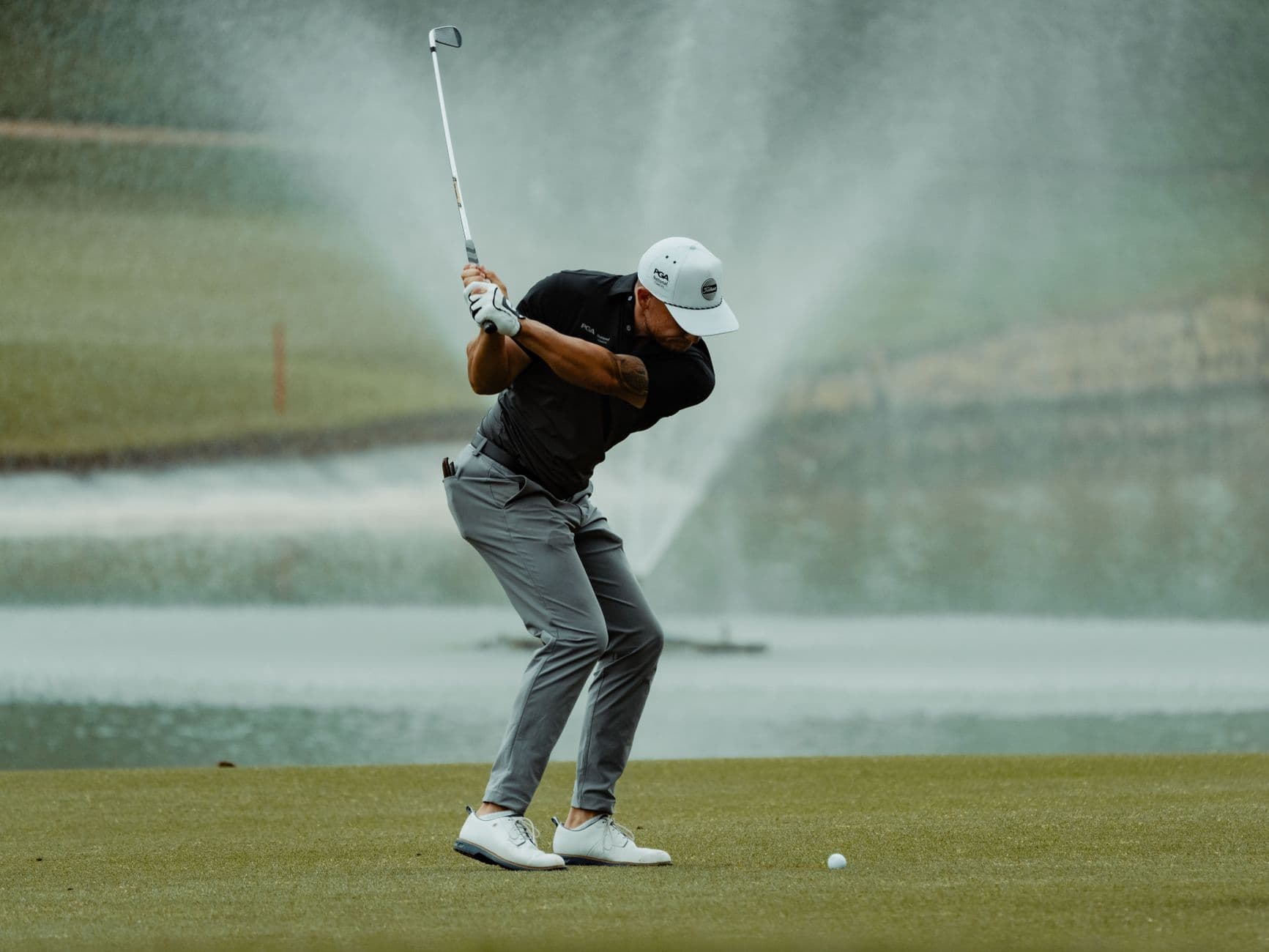
Korda's swing is built around a powerful coil and a remarkably stable lower body through the hitting zone. Her ability to maintain lag deep into the downswing generates the descending angle of attack that tour-level iron play demands — compressing the ball against the turf and producing that low-spin, penetrating ball flight that holds its line even in crosswinds.
Her contact consistency is one of the most discussed elements among swing coaches who analyze the LPGA Tour. Unlike players who rely on a narrower attack-angle window, Korda's sequence — shoulder turn, hip clearance, and weight transfer — repeats with mechanical reliability across full rounds and across varying course conditions.
What's particularly notable is her face control at impact. Observers tracking her shot dispersion patterns note a tight clustering that reflects minimal face rotation variance, which directly translates to start-line accuracy and, ultimately, Greens in Regulation numbers that sit at or near the tour's elite tier.
Distance Gapping and Course Management
Elite iron play at the tour level isn't just about mechanics — it's about knowing precisely what each iron does and trusting those numbers completely. Korda has spoken in interviews about the importance of knowing her exact carry distances rather than relying on total distance, allowing her to attack specific pin positions rather than just the center of greens.
Her approach play reveals a sophisticated understanding of when to take on a flag and when to favor the fat part of the green. On par-fives where she has a mid-iron or long iron into the green, she tends to select landing zones that allow the ball to feed toward the hole rather than gambling on a direct strike to a tight pin. This isn't passive play — it's aggressive course management.
- High GIR percentage driven by consistent face-angle control at impact
- Descending attack angle produces tour-quality compression and spin separation
- Shot dispersion patterns reflect elite repeatability across swing sequences
- Strategic pin targeting based on carry distances rather than total yardage
- Wind management through trajectory control, not just club selection
Trajectory Control and Wind Play
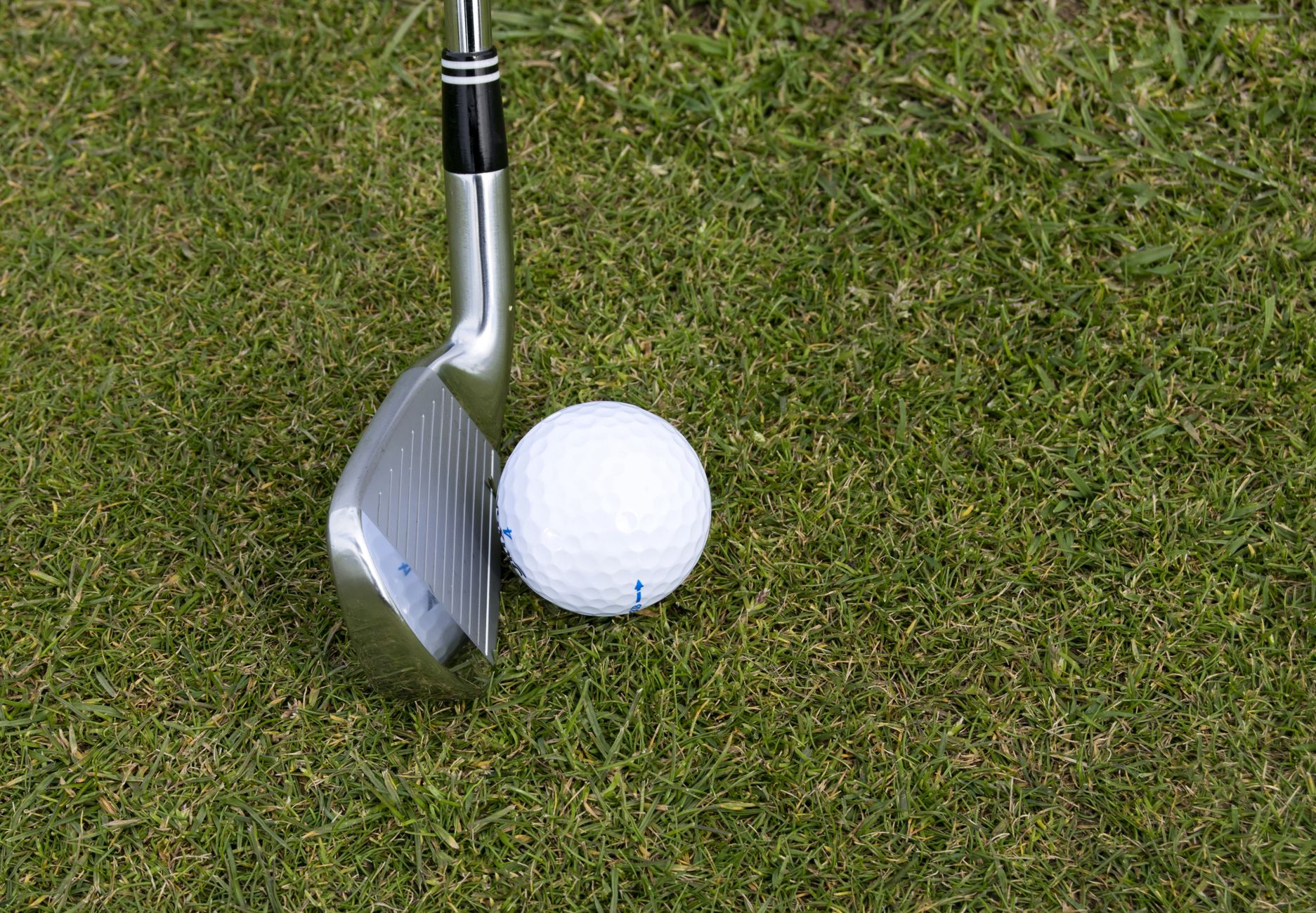
One of the quieter skills in Korda's arsenal is her ability to flight the ball lower without losing distance or spin — a skill that becomes critical on exposed, links-style layouts or during tournament days when wind becomes a factor. She achieves this through subtle adjustments in ball position and swing length rather than dramatic compensations that compromise her impact position.
This is a level of shot-shaping sophistication that goes beyond what most amateur golfers — even low handicappers — practice consistently. Understanding the relationship between dynamic loft, shaft lean, and resulting trajectory is something Korda deploys intuitively, and it gives her a meaningful advantage when conditions deteriorate over a weekend round.
You have to know what the ball is going to do before you swing. The shape, the height, the landing angle — all of it has to be committed before you step in.
— Nelly Korda, on pre-shot planning
The Equipment Equation
At the tour level, ball-striking statistics don't exist in isolation from equipment choices. The ball a player uses has a direct and measurable impact on iron performance — specifically in spin rate, peak height, and descent angle into greens. Players operating at Korda's level are acutely aware that compression matching between the club and ball affects how cleanly energy transfers through impact.
This is precisely where ball technology becomes a genuine performance variable rather than a marketing conversation. At Attomax, our High-Density amorphous metal core technology is engineered to optimize this energy transfer at impact — producing a more consistent smash factor across a wider range of contact points on the face. For players focused on tightening their iron dispersion patterns, ball construction at this level isn't an afterthought; it's part of the performance equation.
What Recreational Golfers Can Learn
Studying Korda's ball-striking offers instructive takeaways for any golfer serious about improving their approach game. The most transferable lesson isn't mechanical — it's attitudinal. Korda approaches every iron shot with a defined target, a committed trajectory, and a clear understanding of where the miss must stay. There is no ambiguity in her pre-shot process.
The second lesson is about practice structure. Korda's iron consistency is the product of deliberate, targeted repetition — not volume. Working on specific attack angles, specific shot shapes, and specific distances during range sessions produces more measurable improvement than blocked practice of full swings with the same iron at the same target.
- Define a specific target and trajectory before every iron shot — commit fully
- Practice carry distances, not total yardages, to improve pin-seeking accuracy
- Focus range sessions on attack angle variability, not swing volume
- Develop a low-flight option for each iron to expand your wind-play toolkit
- Audit your GIR misses by direction — pattern recognition drives focused improvement
The Mental Resilience Behind the Statistics
Numbers only capture part of what makes Korda's iron game elite. Equally important is the mental architecture she brings to pressure situations. Her ability to execute a demanding iron shot on the 72nd hole of a major — when the margin for error compresses and the consequence of a miss sharpens — is what elevates statistical consistency into championship performance.
That resilience isn't accidental. It's trained through repetitive exposure to high-pressure situations, through a pre-shot routine that creates cognitive anchoring, and through the deep technical confidence that comes from truly understanding your own game. Her iron statistics are the scoreboard. The process behind them is the real story.
As the 2026 LPGA Tour season progresses through its major championship stretch, Korda's ball-striking will remain one of the most compelling benchmarks in professional golf — a standard that frames the conversation about what elite iron play genuinely looks like at the highest level of the women's game.
Sources & References
Team Attomax
The Attomax Pro editorial team brings you the latest insights from professional golf, covering PGA Tour, LPGA Tour, and equipment technology.