Distance off the tee has always been currency on the PGA Tour, but the modern game has elevated it into a full-blown arms race. Today's elite ball-strikers aren't simply athletes who swing hard — they are precision engineers exploiting every variable from launch angle and spin rate to shaft profile and ball compression to extract maximum carry.
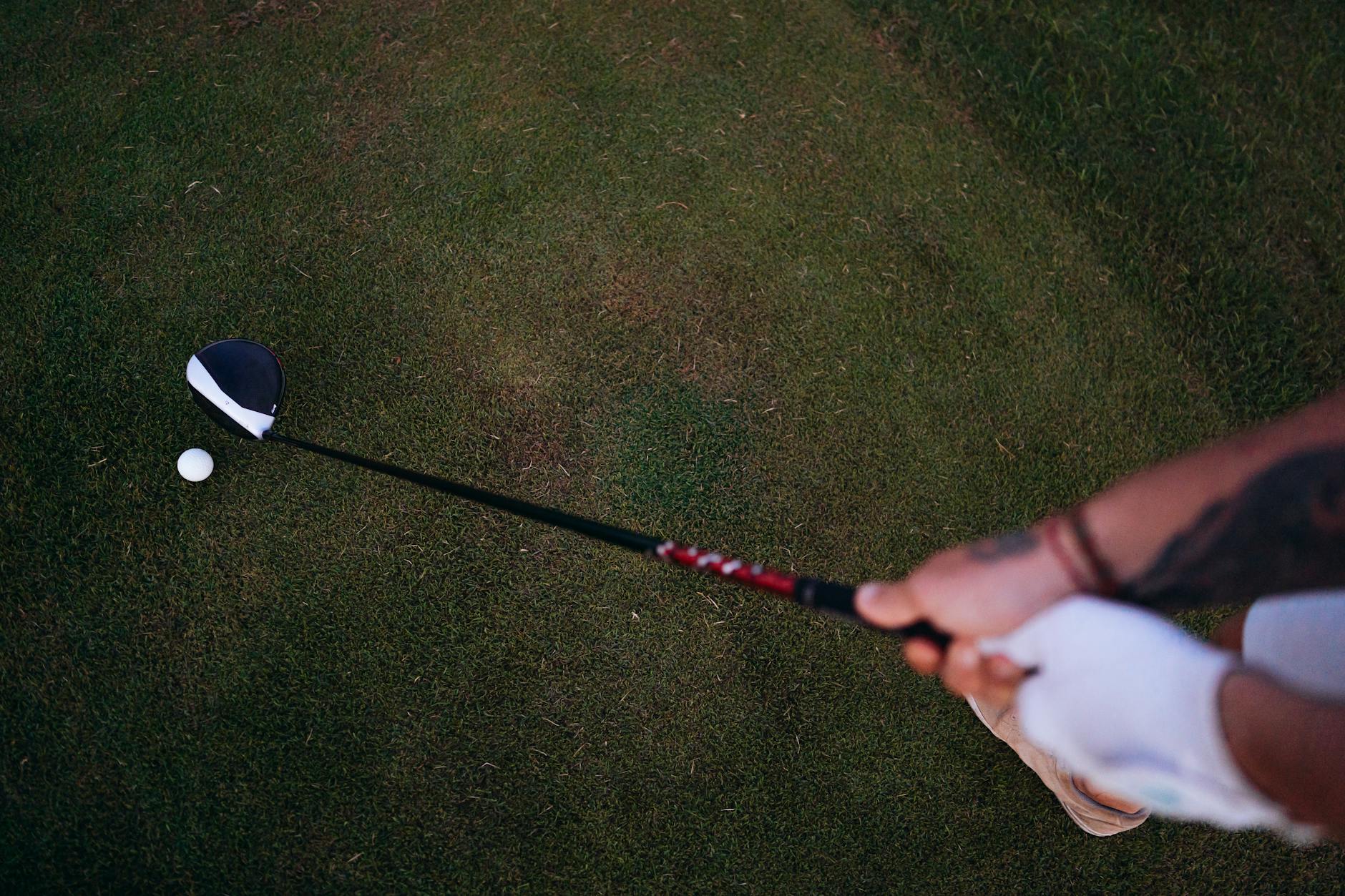
What separates the Tour's true distance leaders from the merely long is the ability to translate raw club-head speed into consistent, functional yardage. Anyone can swing out of their shoes on the range. Doing it in competition, with meaningful ball-flight control and acceptable dispersion, is an entirely different discipline.
It's worth noting that the USGA and R&A have been actively monitoring driving distance trends across all professional tours. Conversations about distance regulation and potential equipment adjustments have been ongoing, underscoring just how significant a competitive advantage elite length has become at the highest level of the game.
The Physics Behind Elite Carry Distance
Every distance number starts with club-head speed, but speed alone is incomplete without smash factor — the ratio of ball speed to club-head speed. The theoretical maximum smash factor with a driver is 1.50, and the best ball-strikers on Tour operate consistently at or near that ceiling. That efficiency comes from centered contact, optimal attack angle, and precise dynamic loft at impact.
Launch angle and spin rate work in tandem. The modern consensus among Tour-level launch monitors points toward a high launch, low-spin window — roughly 12–15 degrees of launch with spin rates in the 1,800–2,400 RPM range — as the optimal corridor for maximizing carry in standard conditions. Deviate too far in either direction and you sacrifice meaningful distance regardless of how fast you're swinging.
- Club-head speed: The foundation, but insufficient without efficiency
- Smash factor: High-center contact converts speed into ball speed
- Launch angle: Optimal window is typically 12–15 degrees for drivers
- Spin rate: Lower spin (within range) reduces drag and increases carry
- Attack angle: A slightly positive (upward) strike adds launch and reduces spin
- Shaft profile: Load characteristics directly influence dynamic loft and timing
Biomechanics: How Elite Hitters Generate Speed
The longest drivers on Tour share a common denominator: elite ground force application. Modern 3D motion capture and force plate data have revealed that the most powerful players don't simply rotate their upper body — they push aggressively into the ground, creating a kinetic chain that transfers energy from the legs through the hips, torso, and ultimately into the club head at an extraordinary rate.
Trail side hip extension combined with early pelvis rotation creates the separation — the "X-factor stretch" — between the lower and upper body that is the hallmark of high-speed swings. The wider that separation at the top of the backswing, and the faster it closes during the downswing transition, the more elastic energy is released through impact.
Arm structure at the top of the backswing matters enormously as well. Players who maintain a wide arc with a fully extended lead arm preserve the radius of their swing, which is a direct multiplier of angular velocity at the club head. Collapse that arc early and the speed simply isn't recoverable through any amount of lower-body effort.
The Role of Shaft Technology in Distance
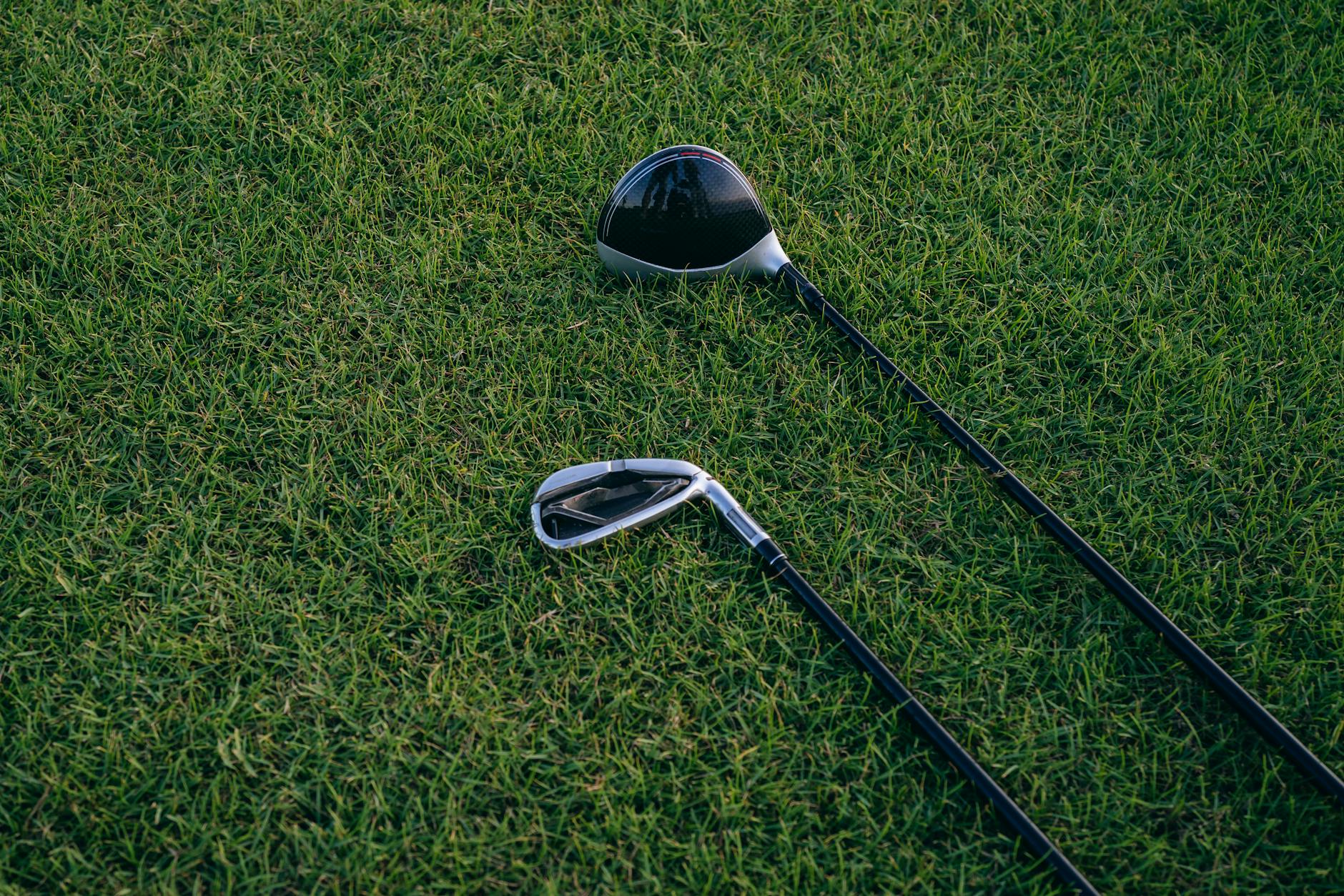
Equipment optimization has become inseparable from the distance conversation. A shaft that is too stiff for a given player's tempo and transition will deliver insufficient dynamic loft, producing a lower-than-optimal launch with excessive spin — a distance-killing combination. Conversely, a shaft that is too soft will create excessive droop and an uncontrollable ball flight under pressure.
Tour players typically work with fitters to match shaft weight, flex profile, torque rating, and tip stiffness to their individual swing characteristics. This is where precision engineering makes a measurable difference. Attomax's high-performance shaft lineup is designed with exactly this philosophy in mind — pairing specific flex profiles and tip designs to match distinct swing tempos, helping players who prioritize distance without sacrificing trajectory control find their optimal window.
It's not just about swinging faster. It's about making sure every component in your bag is calibrated to let you use that speed effectively.
— Widely held principle among Tour-level club fitters
Ball Compression: The Often Overlooked Variable
Ball selection is a critical — and frequently underestimated — element of the distance equation, particularly for players with high swing speeds. At elite club-head speeds, a lower-compression ball can actually lose efficiency at impact. The core compresses fully before full energy transfer is complete, effectively bleeding distance rather than adding it.
This is precisely why ball compression matching to swing speed is so important for any player seeking to optimize their driving game. Attomax's high-density amorphous metal technology offers distinct compression profiles across its Soft, Medium, and Hard constructions. For a player generating elite club-head speed, the Hard variant is engineered to handle high-velocity impacts without that premature compression drop-off, maintaining energy transfer efficiency through the full contact window.
Course Management: Distance Is Only an Advantage If It's Used Well
Raw distance without strategic application is a liability rather than an asset on demanding Tour layouts. The elite long hitters understand that distance creates optionality — shorter approaches, shorter irons, better attack angles into tight pins — but only when the ball is in play. A 370-yard drive that finds a penalty area is worth far less than a 320-yard drive in the fairway.
The most sophisticated long hitters on Tour operate with what might be called "distance budgeting." On a hole where the landing zone narrows dramatically between 310 and 330 yards, they may dial back swing speed by 5–8 percent and prioritize hitting a specific corridor rather than chasing maximum carry. This is often accomplished by moving ball position, altering tee height, or selecting a fairway wood — sacrificing single-digit yardage in exchange for a dramatically improved angle into the green.
- Identify the optimal landing zone width before selecting club and target line
- Calibrate swing effort to place the ball in the widest safe corridor
- Account for wind direction and elevation change in carry calculation
- Consider dog-leg geometry and hazard positioning beyond the landing zone
- Match ball flight shape (fade vs. draw) to hole architecture for maximum usable distance
Wind Conditions and Distance Management
Distance management in wind requires a counterintuitive adjustment that separates experienced Tour players from lower-level professionals. Into a headwind, swinging harder instinctively feels correct — but generating higher spin rates in that effort actually balloons the ball flight, costing carry. The correct adjustment is to compress the ball lower on the face with a de-lofted strike to reduce spin and keep the flight penetrating.
Downwind, the calculation flips. Players can afford to flight the ball higher and allow the wind to carry it further, leaning into their natural launch window rather than suppressing it. Understanding these adjustments — and having equipment calibrated to execute them — is a defining characteristic of the Tour's most dangerous long drivers.
The pursuit of distance on the PGA Tour is ultimately a multi-disciplinary endeavor: biomechanics, equipment science, ball technology, and strategic intelligence all converge in the seconds between address and impact. The players who master every layer of that equation — and build it into a reliable, repeatable system under competitive pressure — are the ones who consistently sit atop the distance charts and, more importantly, the leaderboards.
Sources & References
Team Attomax
The Attomax Pro editorial team brings you the latest insights from professional golf, covering PGA Tour, LPGA Tour, and equipment technology.