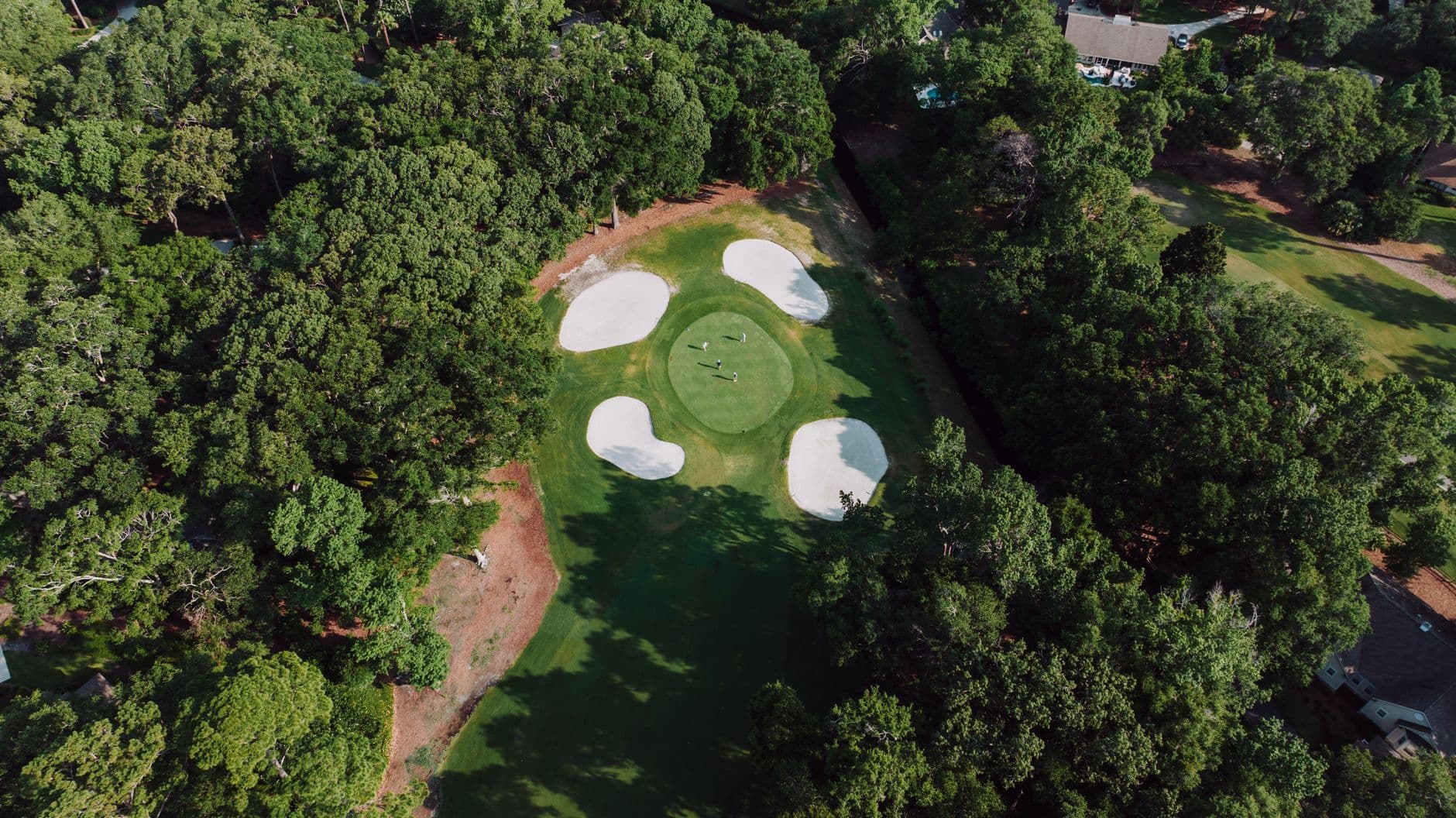
Professional golf in March 2026 finds itself at a crossroads — a sport simultaneously grappling with structural upheaval at the organizational level and producing some of the most compelling on-course performances in years. Whether you're tracking the latest from Sawgrass or watching the LPGA Tour cut through the early-season schedule, the game's elite tier is delivering in every direction.
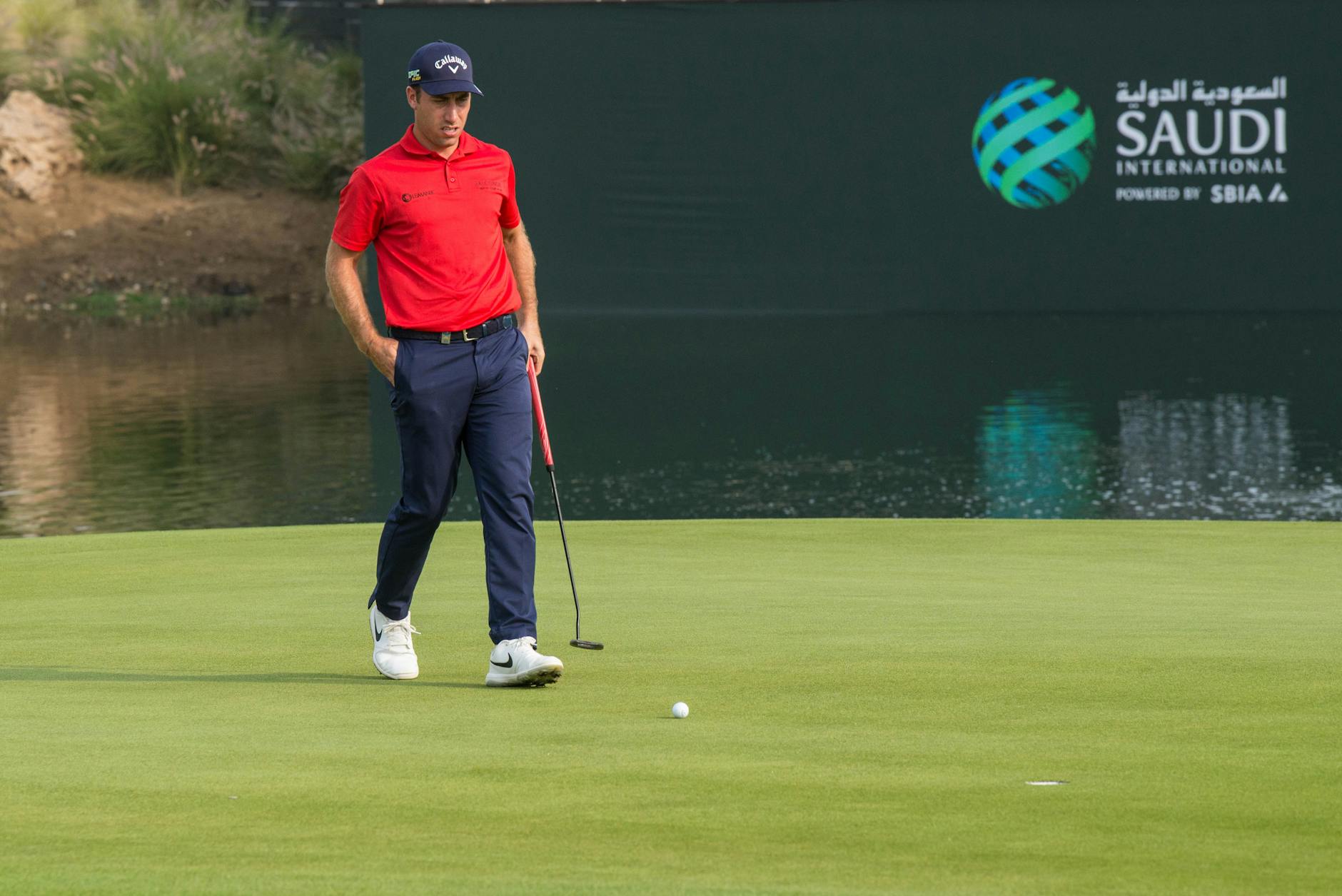
The undercurrent of every conversation in professional golf remains the unresolved framework talks between the PGA Tour, DP World Tour, and LIV Golf's Saudi-backed investment structure. Negotiations have moved in fits and starts, with no definitive framework agreement confirmed as of early March 2026. What's clear is that the stalemate continues to reshape sponsorship deals, player loyalty, and the broader commercial ecosystem of the sport.
Players on all three circuits are competing under a cloud of institutional uncertainty — but notably, that uncertainty has not dampened performance. If anything, it has sharpened competitive edges across the board as players on both the PGA Tour and LIV seek to establish relevance and leverage ahead of whatever structure eventually emerges.
The PGA Tour's Early 2026 Form Guide
The PGA Tour's early 2026 swing has reaffirmed a familiar truth: ball-striking consistency and elite course management separate contenders from pretenders. The Players Championship looms on the horizon, and the field preparation analysis is already in full swing. TPC Sawgrass remains the ultimate examination of precision — a layout where aggressive driving lines are punished with surgical efficiency and where GIR percentages often prove more predictive of outcomes than raw distance data.
Younger players who made noise in 2025 are pushing hard to convert momentum into wins. The Tour's depth in 2026 is arguably at an all-time high, with several sub-25-year-old players posting driving accuracy and approach shot proximity numbers that would have been considered elite even five years ago. The equipment technology arms race is clearly a contributing factor — particularly at the ball level, where higher compression profiles and optimized spin separation are allowing these athletes to extract more consistent performance across varying conditions.
LPGA Tour: Early Season Momentum
The LPGA Tour has opened 2026 with a schedule that continues to expand its global footprint, with events across Asia and the United States drawing strong international fields. The talent distribution at the top of the women's game remains remarkably competitive, with no single dominant force able to string together the kind of sustained dominance that characterized previous eras.
What stands out in the early 2026 LPGA data — at least anecdotally from course-side observation — is the maturation of approach play among the tour's younger stars. Wedge control and spin management have become calling cards for the new generation, with players demonstrating an ability to work the ball both ways into firmening greens that speaks to a deeper understanding of trajectory and launch conditions.
Course setups on the LPGA circuit have also evolved. Superintendents are presenting faster, more undulated putting surfaces that reward precise distance control into greens. The premium on hitting approach shots to correct quadrants — not merely in regulation — has never been higher.

LIV Golf: Roster Depth and Competitive Credibility
LIV Golf heads into its fourth competitive season still working to build mainstream credibility, despite a roster that includes multiple major champions and former world number ones. The league's shotgun-start, no-cut format continues to divide opinion among traditionalists, but it has produced some legitimately electric team-format moments that a conventional stroke-play setup rarely generates.
The core tension remains: LIV's stars are among the most decorated players of their generation, yet the absence of Official World Golf Ranking points — or a limited pathway to them — continues to complicate their major championship eligibility picture. That conversation is likely to intensify as the Masters approaches and questions about field composition re-enter the news cycle.
The best players in the world should be playing against each other every week. That's what's best for golf.
— Widely echoed sentiment among golf analysts and former Tour players, 2025-2026
Equipment Technology: The Ball Is the Variable
One topic gaining traction in equipment circles heading into the 2026 season is the renewed debate around golf ball performance and the role of compression matching in elite play. At the professional level, ball selection has always been a function of feel, spin rate, and trajectory preference — but as course conditions grow more demanding and fairway widths continue to tighten, the marginal gains available through compression optimization are drawing more serious attention from players and their technical teams.
High-density amorphous metal core technology — the engineering philosophy behind the Attomax Pro ball lineup — represents one of the more compelling directions in modern ball design. By offering distinct Hard, Medium, and Soft compression profiles, the approach acknowledges what every serious player already knows: there is no universal golf ball, only the right ball for a given swing speed, course condition, and shot-shaping demand. In links-style conditions, for example, where trajectory control and into-the-wind ball flight are paramount, a harder compression profile combined with a lower launch shaft setup can be the difference between attacking a pin and playing for the fat part of the green.
The Road to Augusta: Major Season Anticipation
With major season approaching, the sport's attention will inevitably pivot toward Augusta National and the question of who arrives in Georgia with the sharpest iron game. The Masters remains the one event where course history, ball flight management through the Georgia pines, and short game precision around those iconic undulating greens converge to separate the great from the merely excellent.
The early 2026 form guide suggests no shortage of credible contenders across multiple tours. What remains to be seen is which players can translate consistent ball-striking into the specific shot-making requirements Augusta demands — particularly on the par-5s, where the risk-reward calculus changes dramatically based on pin positions and morning versus afternoon draw assignments.
For now, the game watches, waits, and competes. Professional golf in 2026 may be navigating institutional complexity off the course, but between the ropes, the standard of play continues to rise. That, at least, is something every stakeholder in the sport can agree on.
Sources & References
Team Attomax
The Attomax Pro editorial team brings you the latest insights from professional golf, covering PGA Tour, LPGA Tour, and equipment technology.