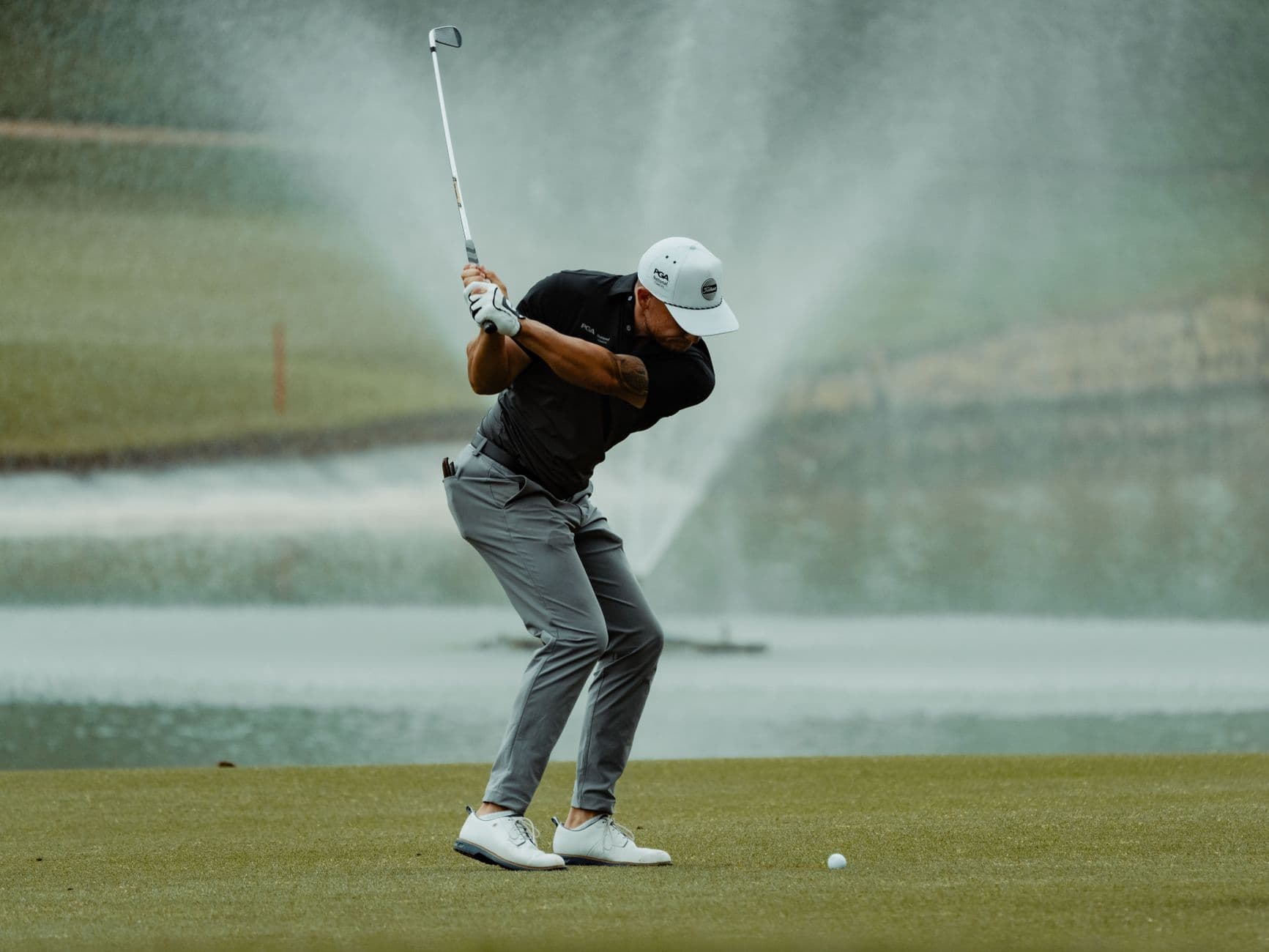
There are perhaps five players in the history of professional golf who have genuinely threatened the career Grand Slam — and fewer still who have done so with the sustained brilliance Rory McIlroy has brought to the pursuit. Four major championships across three different continents, multiple world number one stints, and a statistical record that places him among the very greatest who have ever played the game. Yet the conversation always circles back to Augusta National, and the one green jacket that has so far escaped his grasp.

McIlroy's major championship record reads like a masterclass in versatility. His US Open victory at Congressional in 2011 — delivered with a final-round 69 that was almost academic in its control — announced him as a generational talent. The back-to-back Open Championship and PGA Championship victories in 2014 silenced any lingering doubts about his ability to perform under the heaviest of pressure on links and parkland alike.
What separates McIlroy from the players who merely flirt with greatness is the quality of his ball-striking. His combination of elite driving distance and above-average accuracy produces a Greens in Regulation rate that consistently ranks among the Tour's finest. His Smash Factor off the tee is a product of exceptional sequencing — he generates speed through timing and rotation rather than brute strength, which has allowed his game to age with remarkable grace.
The Augusta Enigma
Augusta National is where the Grand Slam narrative both thrives and stalls. McIlroy has been close — agonizingly so on more than one occasion — but the Masters demands a specific style of approach play and short-game creativity that has at times run counter to his natural instincts. The course rewards those who can shape the ball both ways with precision, who can flight iron shots low into the back pins without releasing them through the green, and who can manage their ego on the par-fives.
McIlroy's natural ball flight — a controlled draw with occasional fade on demand — is theoretically well-suited to Augusta. The real challenge has been converting the proximity-to-hole numbers into the putts made. Augusta's bentgrass putting surfaces are notoriously subtle, and the tournament has historically rewarded those with intimate, repeated knowledge of each green's true movement.
What the Statistics Reveal
When you analyse McIlroy's overall Tour-level numbers, the consistency is striking. He rarely has an event where his tee-to-green game truly abandons him — the misses are usually traceable to putting or short-game execution under specific pressure situations rather than the long game collapsing. This is actually an encouraging sign for his continued major championship viability: the foundation remains elite.
- Four major championships: 2011 US Open, 2012 PGA Championship, 2014 Open Championship, 2014 PGA Championship
- Multiple World Number 1 rankings across his career, a reflection of sustained dominance
- Consistent elite-level GIR percentage — a hallmark of his tee-to-green brilliance
- One of the most statistically reliable drivers on Tour in terms of distance-accuracy balance
- The Masters remains the sole missing piece of the career Grand Slam
The Mental Architecture of a Pursuit
The psychological weight of chasing the career Grand Slam is a subject McIlroy has addressed with increasing candour over the years. Early in his career, Augusta appeared to carry a kind of mythological burden — the place where the collapse of 2011 Sunday played out in real time, a lead surrendered in a manner that would define lesser careers. What is remarkable is that McIlroy did not allow that moment to hollow him out.
I feel like I have unfinished business there. I've come close enough times to know I can win it. That belief never goes away.
— Rory McIlroy
The mental resilience required to return to Augusta year after year — to walk those same fairways with the same ambition despite previous near-misses — is itself a form of greatness. Many elite players have found that sustained fixation on a single event can erode performance elsewhere. McIlroy has largely avoided that trap, continuing to compete at the highest level across all four majors and on multiple continents.

Equipment, Precision & Marginal Gains
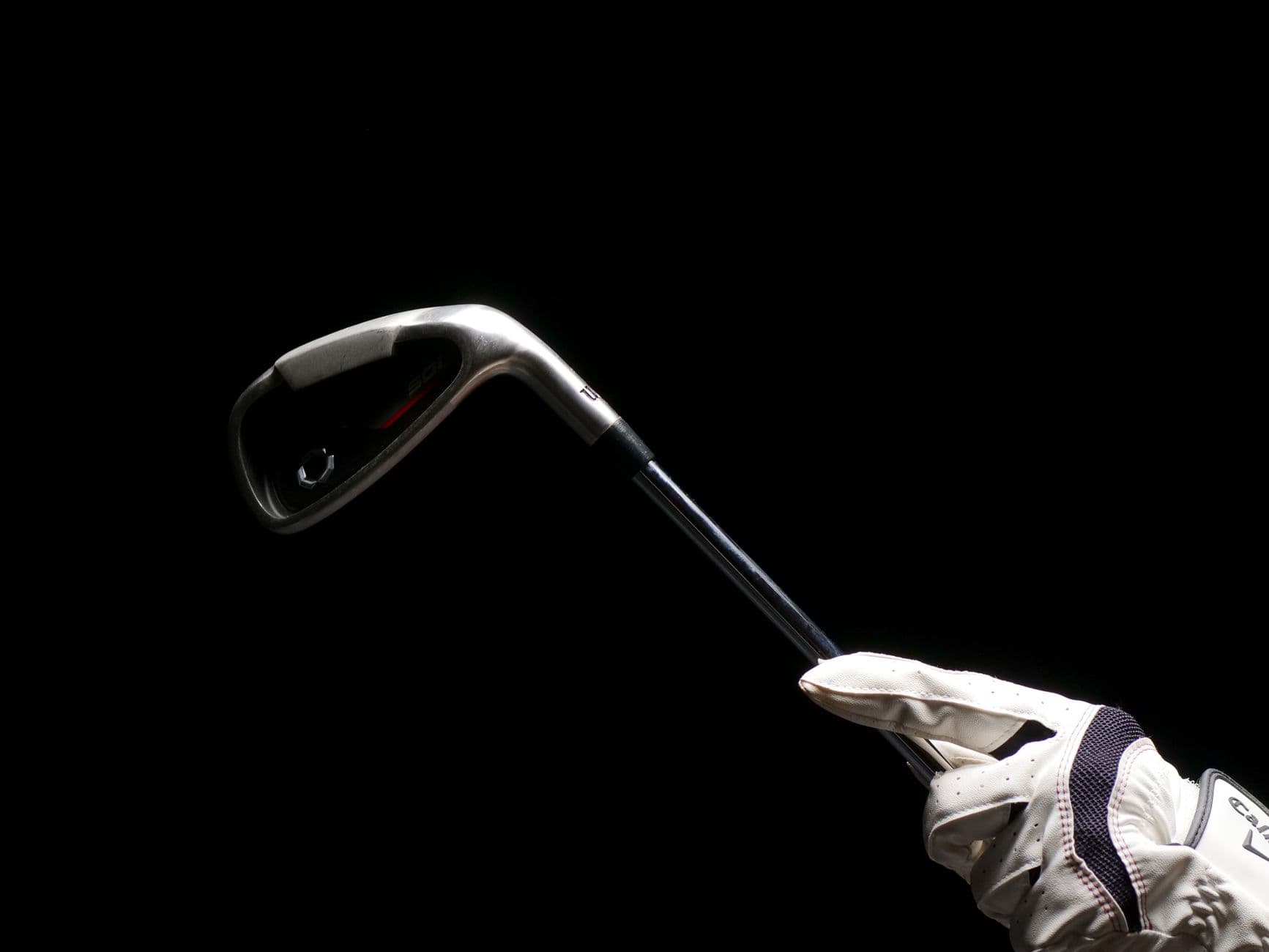
At the elite level, the pursuit of marginal gains in equipment is not optional — it is existential. McIlroy's team has always been meticulous about shaft profiling, ensuring that the launch angle and spin rate off the driver align precisely with Augusta's demand for specific distances into par-fives and long par-fours. The conversation around shaft flex and tip stiffness is one that resonates across all levels of serious competition.
Ball selection is similarly critical. The ability to produce predictable spin rates with approach irons — particularly on Augusta's demanding approach angles into elevated greens — requires a ball that delivers consistent compression response under pressure. This is precisely where high-density construction, as found in the Attomax Pro line, becomes relevant: the uniformity of the core translates directly into the spin predictability that players at every level of the game need when trajectories and stopping power are non-negotiable.
The Broader Legacy Question
It would be reductive to suggest that McIlroy's legacy is incomplete without the Masters. The breadth of his career — the FedEx Cup titles, the Race to Dubai victories, the dominance across multiple eras of Tour competition — is sufficient to place him in any serious conversation about the greatest players of the 21st century. Jack Nicklaus won 18 majors; the measure of legacy is not a single tournament.
And yet, the career Grand Slam carries a weight that transcends statistics. Only five players have achieved it in the modern era — Gene Sarazen, Ben Hogan, Gary Player, Jack Nicklaus, and Tiger Woods. The exclusivity of that list is precisely what gives the pursuit its gravitational pull. McIlroy knows this, and the golfing public knows it. The narrative has become inseparable from the man.
What Needs to Happen
For McIlroy to claim the Masters, the consensus among analysts is that he needs to arrive at Augusta in form that combines peak iron play with the kind of putting confidence that comes only from weeks of positive feedback on fast surfaces. He also needs to manage the par-fives ruthlessly — not recklessly, but with the cold arithmetic of a player who understands that Augusta rewards calculated aggression over spontaneous brilliance.
- Arrive in consistent iron form — proximity to hole on par-threes is often the decisive metric at Augusta
- Commit to a putting routine built around speed control rather than line — Augusta putts break more than they appear to
- Manage the back nine on Sunday with course management discipline, not reactive heroics
- Trust the process through the middle rounds rather than forcing the issue in Round 2
Rory McIlroy's career is, by any objective measure, one of the finest in the history of professional golf. The Grand Slam remains unfinished business — but it is business that still feels entirely within reach. For a player whose game has aged with such control and whose competitive instincts remain as sharp as ever, the story is far from over. Augusta will wait, and McIlroy will return. That much, at least, is certain.
Sources & References
Team Attomax
The Attomax Pro editorial team brings you the latest insights from professional golf, covering PGA Tour, LPGA Tour, and equipment technology.