There's a reason Tour professionals can attack pins that weekend players wouldn't dream of challenging. It's not just raw talent or hours on the range—it's a sophisticated understanding of spin dynamics that transforms approach shots from hopeful attempts into precision instruments. Mastering spin control separates good iron players from genuine scoring threats.

The modern game demands more than just hitting greens. Today's firm, fast putting surfaces require players to control exactly where the ball stops, not just where it lands. This means understanding the relationship between clubhead speed, angle of attack, and friction at impact—the holy trinity of spin generation.
Elite wedge players aren't simply swinging harder or softer. They're manipulating launch conditions with surgical precision, adjusting for firmness, wind, and pin positions that demand specific shot shapes.
The Physics of Spin Generation
Spin rate on approach shots is primarily determined by three factors: clubhead speed, the friction coefficient between ball and clubface, and the angle of attack. Contrary to popular belief, hitting down aggressively isn't the primary spin generator—it's the quality of contact and the grooves' ability to grip the cover.
Clean contact is paramount. Any moisture, grass, or debris between the ball and clubface dramatically reduces friction, leading to those frustrating "flyers" that release off the back of greens. This is why professionals obsessively clean their grooves and prefer tight lies when maximum spin is required.
- Clubhead speed contributes roughly 70% of total spin potential
- Groove condition and ball cover interaction account for friction efficiency
- Angle of attack influences launch angle but has diminishing returns on spin beyond optimal parameters
- Ball compression characteristics affect energy transfer and spin retention
Trajectory Control: The Forgotten Variable
Many players focus exclusively on spin rate while neglecting trajectory management. A high-spinning wedge shot that lands too steeply will check and release differently than one with a flatter descent angle. Understanding this relationship allows you to predict and control ball behavior after landing.
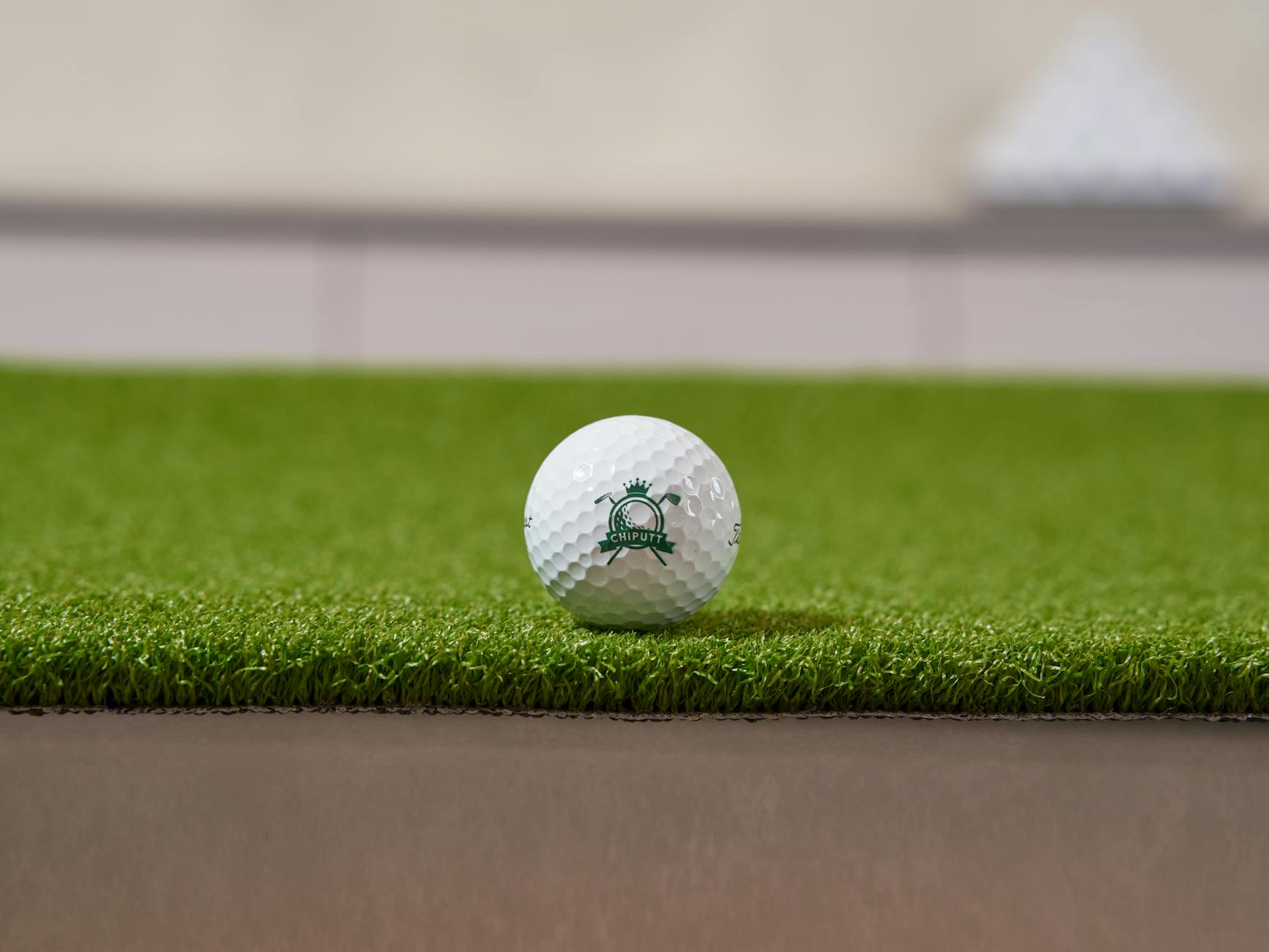
The key insight is that spin rate alone doesn't determine stopping power—it's the combination of spin rate, descent angle, and landing speed. A lower trajectory shot with moderate spin often holds better than a towering approach with maximum spin, particularly on firm surfaces.
This is where ball selection becomes critical. High-density constructions, like those engineered by Attomax, maintain spin characteristics more consistently through various trajectories. The amorphous metal core technology provides stable energy transfer, allowing players to flight the ball differently without sacrificing spin predictability.
Wedge Play: Distance Control Through Spin Management
Inside 100 yards, the game changes entirely. Here, spin control becomes less about generating maximum spin and more about consistency and predictability. The best wedge players know exactly how their ball will react on the second and third bounce, not just the first.
The difference between a good wedge player and a great one isn't how much spin they can generate—it's how precisely they can predict what that spin will do.
— Tour coaching consensus
Developing this predictability requires systematic practice with specific landing zones. Rather than hitting wedges to a single target, elite players map their spin characteristics across multiple trajectories and swing lengths. They know that their 50-yard pitch will check and release two feet, while their 70-yard three-quarter swing will spin back eighteen inches.
The Three-Shot Wedge System
Building a reliable wedge arsenal requires mastering three distinct shots for each club: a full swing, a three-quarter motion, and a half-swing. Each produces different spin characteristics that serve specific situations.
- Full swing: Maximum spin, highest trajectory, most stopping power on receptive greens
- Three-quarter swing: Controlled spin with flatter trajectory, ideal for windy conditions or firm surfaces
- Half swing: Lower spin with predictable roll-out, preferred for back pins or when bounce-and-check isn't possible
The critical practice element is documenting carry distances and roll-out for each shot type. This data becomes your scoring foundation, removing guesswork from approach shot selection.
Environmental Factors and Adaptation
Spin control doesn't exist in a vacuum. Temperature, humidity, altitude, and wind all influence how spin translates to stopping power. Cold, dense air increases drag and can reduce effective spin by up to fifteen percent. Altitude decreases air resistance, allowing balls to fly farther but reducing the aerodynamic effect of backspin.
Wind presents the most complex challenge. Into-the-wind conditions amplify backspin effect, often causing balls to balloon and land shorter with more check. Downwind shots lose aerodynamic spin assistance, frequently releasing more than expected.
Sophisticated players adjust ball selection for these conditions. Attomax's medium-compression option provides stability in wind while maintaining spin consistency—a balance that traditional multi-layer constructions struggle to achieve in variable conditions.
Practice Protocols for Spin Mastery
Effective spin control practice goes beyond hitting wedges at flags. It requires deliberate work on specific skills that translate to course performance.
- Practice from various lies: tight, fluffy, and semi-rough to understand friction variations
- Use alignment sticks to verify swing path consistency—spin direction follows path
- Track landing spots separately from final positions to isolate spin behavior
- Practice in different conditions whenever possible to build environmental awareness
The most overlooked practice element is green-reading for approach shots. Understanding how grain, slope, and firmness affect spin behavior post-landing is just as important as generating the spin itself.
The Mental Component
Committing to a spin strategy requires confidence in your preparation. Doubt leads to deceleration, the primary killer of quality spin contact. Building this confidence comes from logged practice data and successful execution under pressure.
Trust your numbers. When you know your 56-degree three-quarter swing carries 78 yards with six feet of check, commit to that shot without second-guessing. The players who master spin control aren't necessarily more talented—they're more certain of their capabilities because they've done the work to verify them.
Spin control mastery isn't achieved through a single breakthrough session. It's built through systematic understanding of physics, deliberate practice, and careful documentation of your personal ball flight characteristics. Invest in this process, and you'll find yourself attacking pins that once seemed unreachable—and watching your scoring average drop accordingly.
Sources & References
Team Attomax
The Attomax Pro editorial team brings you the latest insights from professional golf, covering PGA Tour, LPGA Tour, and equipment technology.