There is no course on earth that demands more intellectual honesty from a professional golfer than the Old Course at St Andrews. The Home of Golf is ancient, wind-scarred, and relentlessly unforgiving of arrogance — yet it rewards patience, creativity, and course management with a clarity that few venues can match. When The Open Championship returns to St Andrews, the strategic calculus becomes the story.
St Andrews has hosted The Open Championship more times than any other venue in the world. Its layout — shared fairways, cavernous bunkers named like old adversaries, and greens so vast they almost defy belief — is not merely a golf course. It is a document of the game's history, written in turf and sand over more than six centuries.
For the modern professional accustomed to target golf, manicured approach corridors, and predictable bounce, the Old Course is a genuine culture shock. Success here requires a wholesale shift in how a player thinks about every single shot — from tee to green to putter.
The Wind Is the Course Architect
Before discussing specific holes, any serious analysis of St Andrews must begin with the wind. The prevailing southwest breeze off the Firth of Forth transforms the Old Course from manageable to monstrous within a matter of hours. A calm morning scoring session means nothing if the afternoon draw faces a gale off the Eden Estuary. Reading the wind forecast is arguably as important as reading the greens.
The routing of the Old Course — an outward nine running broadly west to northwest, followed by a clockwise return loop — means the wind rarely plays the same way twice in a single round. Players who fail to recalibrate their club selection and shot shape hole-by-hole pay a steep price. This is precisely where shaft technology becomes a subtle but meaningful variable. Players who pair a mid-to-low launch shaft profile with an appropriately compressed ball can keep the flight out of the wind on the narrow outward holes, rather than ballooning into the rough or, worse, the famous whins.
At Attomax, our shaft design philosophy prioritizes trajectory control under variable conditions — exactly the kind of precision that separates a respectable links score from a competitive one. Pairing an Attomax shaft with a Hard compression ball from the Attomax HD lineup gives players the penetrating flight needed to attack into a headwind without sacrificing spin control on the approach.
The Bunker Problem: Think Before You Swing
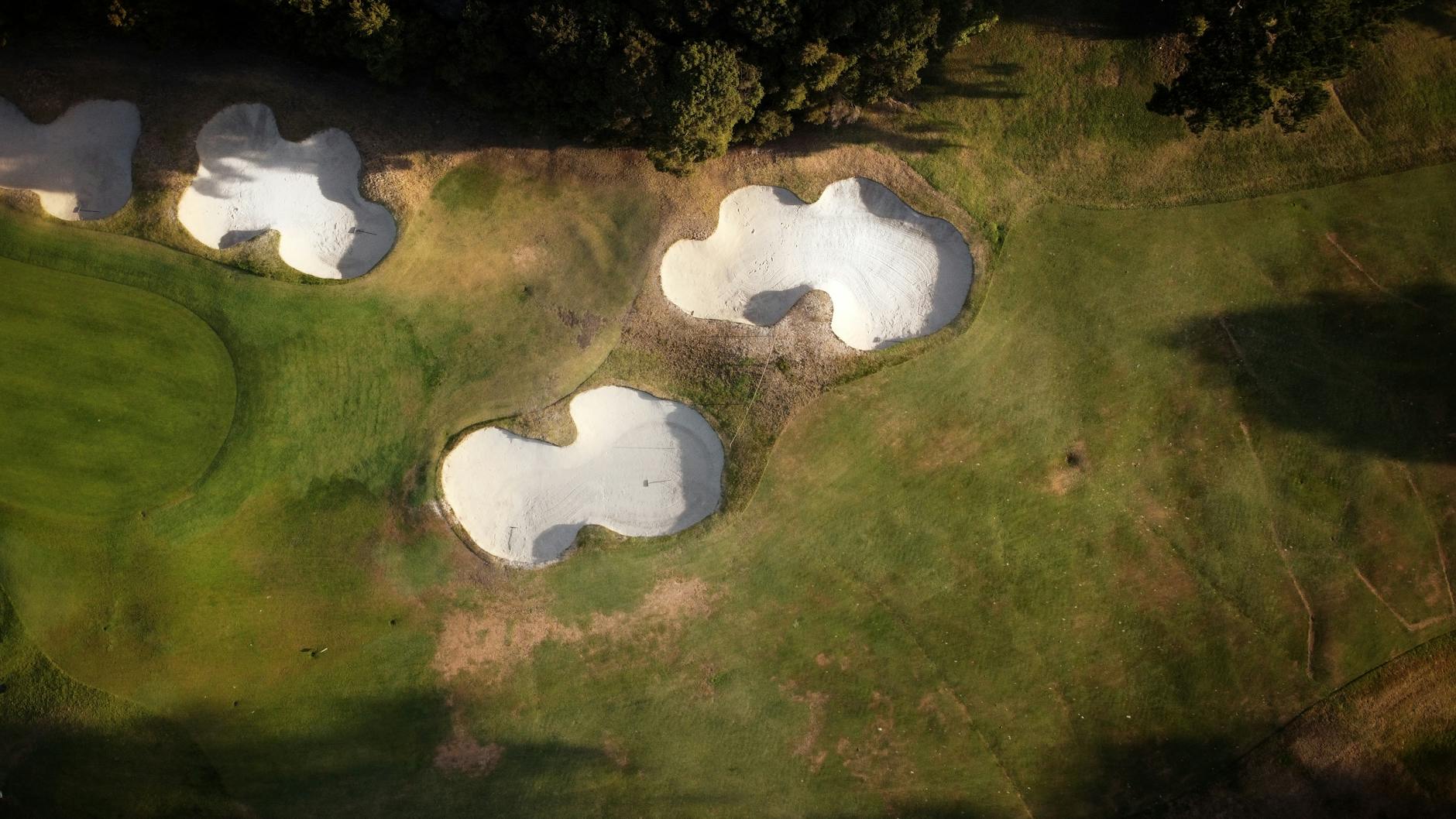
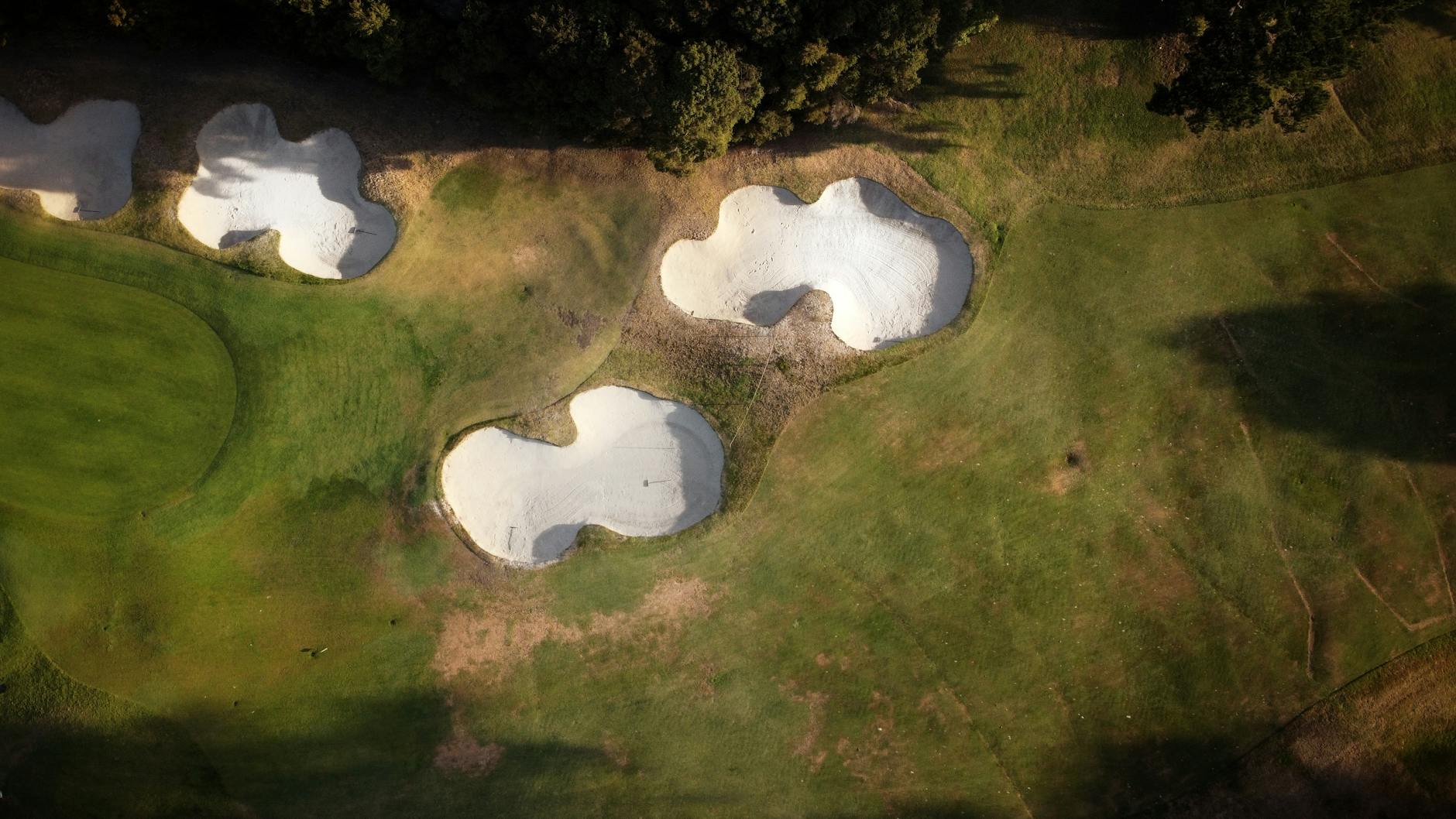
St Andrews hosts more than one hundred bunkers on the Old Course alone, and several of them have earned the kind of legendary status that borders on mythological. Hell Bunker on the 14th. The Road Hole Bunker on the 17th. The Principal's Nose cluster running down the 16th. These are not simply sand traps — they are strategic decision points that define tournament outcomes.
The key strategic principle around St Andrews bunkers is avoidance through intentionality. Unlike a parkland course where a stray tee shot may find a bunker on the side of a hole, many Old Course bunkers are positioned dead center — most infamously the Coffins and the Beardies on the early holes. Players must commit to a specific line, often aiming at what appears to be open countryside or an adjacent fairway, trusting the design to funnel the ball toward safety.
- Hell Bunker (14th): A forced lay-up for most players in difficult conditions; even a clean escape often leaves a long third shot.
- Road Hole Bunker (17th): Statistically one of the most destructive hazards in major championship golf — a plugged lie here has ended multiple Claret Jug bids.
- The Beardies (4th): Invisible from the tee on the outward loop; players must commit to a conservative line even when birdie instincts say otherwise.
- Strath Bunker (11th): Guards the front of the green on the iconic short hole; a front pin position with this bunker in play is one of the most demanding par-3 decisions in The Open rotation.
Double Fairways and the Art of the Lay-Up
One of the Old Course's most distinctive architectural features — and most misunderstood by first-timers — is its system of shared, double fairways. The 1st and 18th share the same stretch of turf. The 2nd and 16th, the 3rd and 15th — the pattern continues throughout the layout. This creates an almost unprecedented strategic complexity: your ideal line on one hole may deposit you exactly where you do not want to be playing from on the return leg.
Experienced Open Championship contenders carry a mental map of these interactions. A driver down the right-center of the 10th fairway avoids the bunkers, yes — but it also sets a better angle for the 10th green while keeping you clear of the 8th green complex on your left. This multi-dimensional spatial awareness is something no rangefinder can provide. It is earned through repetition and study.
The 17th: The Road Hole's Brutal Geometry
No hole in championship golf provokes more pre-round anxiety than the par-4 17th, the Road Hole. The tee shot demands a calculated carry over the corner of the Old Course Hotel — an out-of-bounds line that has punished the over-aggressive for generations. Even a perfect drive leaves a long-iron or fairway wood approach to one of the most dangerous greens in golf.
The Road Hole Bunker sits front-left, steep-walled and unforgiving. Long and right finds the narrow road that gives the hole its name — and from the road, virtually any result other than a bogey is a minor miracle. The professional consensus is almost always the same: accept the bogey risk from the road, never attempt the hero shot from the bunker. Pars here during Open week feel like birdies.
The Road Hole is the most famous and infamous hole in golf. It's the hole that's broken the most hearts.
— Tom Watson
Ball Selection: The Links Compression Question
Links golf forces a reconsideration of equipment choices that many tour-level players make once per year, specifically for Open preparation. The firm, fast fairways of the Old Course mean that a high-spin, soft ball that performs beautifully in the damp conditions of a parkland major can become a liability at St Andrews — generating too much spin off the ground and losing the valuable links run-out that adds distance and positions the ball for optimal approach angles.
The Attomax HD Hard ball, engineered with our high-density amorphous metal core technology, is designed precisely for this scenario. It delivers a penetrating, lower-spin trajectory off the driver that benefits from firm turf, while still offering the feel and greenside control needed for delicate chip-and-run shots around those enormous St Andrews greens. It is not a ball that fights the links — it is a ball built to work with it.
A Living Museum of Championship Golf
What separates the Open Championship at St Andrews from every other major is the weight of context. This is the ground where golf was codified, where the rules of the game were first formalized, where every great champion has eventually had to answer the Old Course's ancient questions. The British Golf Museum sits yards from the 18th green for a reason — here, history is not a backdrop. It is a participant.
For players, caddies, and the serious golf enthusiast watching from home or from behind the ropes on the Scores Road, understanding the strategic logic of St Andrews deepens every moment of the championship. The decisions made between club selection and shot execution tell the real story of who wins a Claret Jug — not just the scoreboards. When The Open returns to the Old Course, watch the tee shot on 14. Watch how the leaders play 17 on Sunday. That is where the championship is decided.
Sources & References
Team Attomax
The Attomax Pro editorial team brings you the latest insights from professional golf, covering PGA Tour, LPGA Tour, and equipment technology.