Golf course architecture represents one of the most sophisticated forms of landscape design, where artistry meets athletic challenge. The routing decisions made by architects decades—or even centuries—ago continue to influence every shot you play, from tee box angles to green complexes that demand precise distance control.

Understanding the principles behind course design does more than satisfy intellectual curiosity. It provides a competitive edge, helping you decode why certain holes play harder than their yardage suggests and how to exploit strategic options that less observant players miss entirely.
The Philosophy of Strategic Design
Course architecture generally falls into three philosophical camps: penal, strategic, and heroic. Penal design punishes poor shots severely—think narrow fairways with heavy rough or water hazards that swallow anything offline. Strategic design offers multiple paths to the hole, rewarding golfers who match their shot selection to their skill level.
Heroic architecture, pioneered by legendary designers, combines both approaches. It presents risk-reward decisions where aggressive lines yield scoring opportunities, but failure carries significant consequences. The best modern courses blend all three philosophies across eighteen holes, creating variety that tests every aspect of your game.
Reading Green Complexes
Green design represents the architect's final statement on each hole. Contours, slopes, and surrounding hazards dictate not just putting difficulty but approach shot strategy. A green that slopes front-to-back demands you factor in release when selecting your landing zone.
False fronts—those deceptive slopes that reject shots landing short—separate recreational from competitive-level thinking. When you spot a false front, your calculation must account for carrying the ball beyond the visual edge of the putting surface.
- Crowned greens shed shots to the edges, favoring center-targeted approaches
- Bowl greens funnel balls toward the middle, allowing more aggressive play
- Tiered greens effectively create multiple putting surfaces within one complex
- Turtle-back greens reject anything but the most precise approaches
The Strategic Value of Bunker Placement
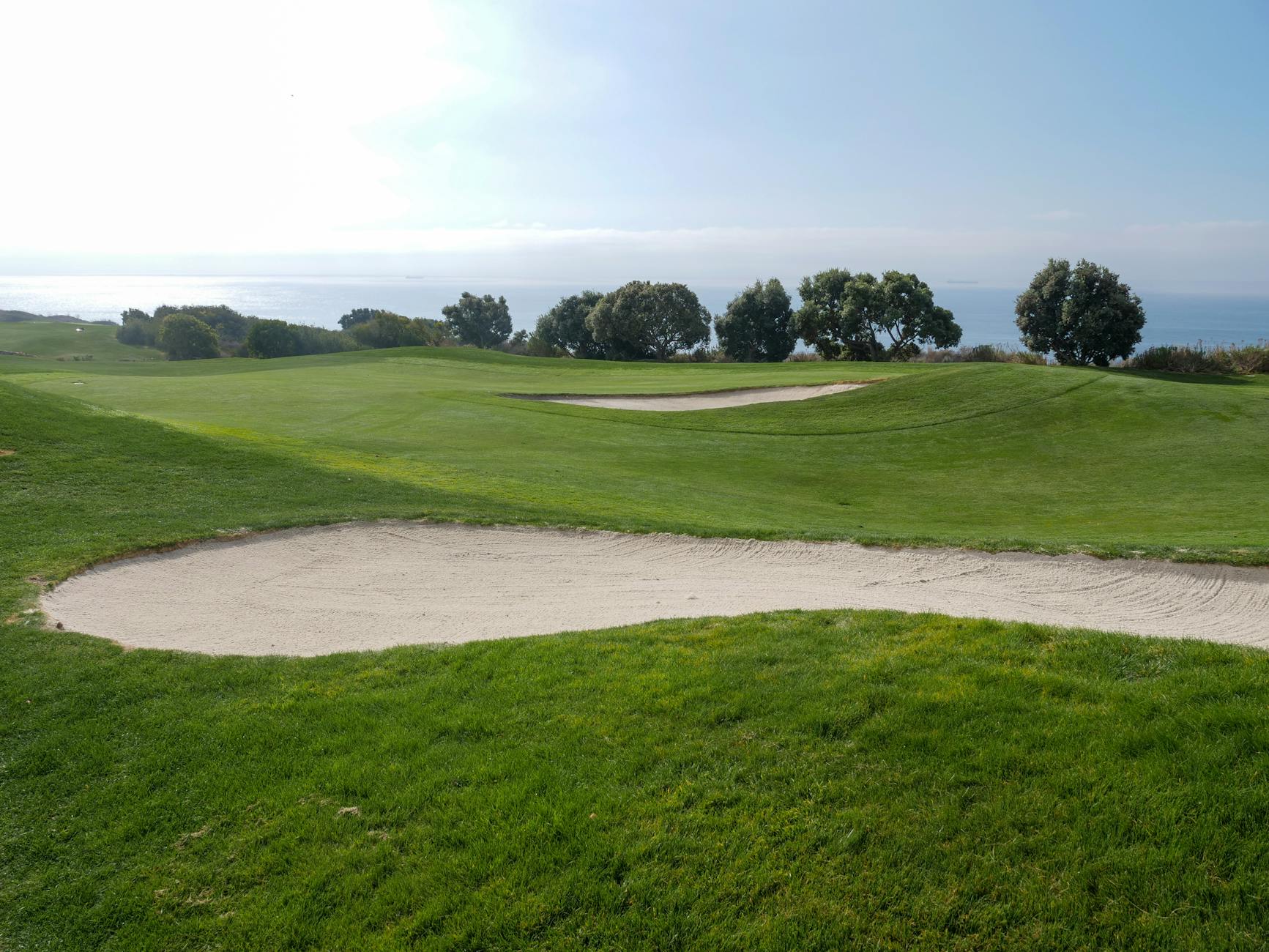
Bunkers serve purposes beyond mere penalty. Strategically placed sand forces decision-making from the tee and influences approach angles. A bunker positioned short-right of a green might protect a tucked pin location, but it also provides depth perception for your approach shot.
Consider how bunker depth affects recovery difficulty. Shallow bunkers with low lips might cost you only half a stroke on average, while deep pot bunkers can destroy a round. Knowing which hazards to avoid at all costs versus which represent acceptable misses marks experienced course management.
Wind and Terrain: Nature's Design Partners
Links courses demonstrate how architects work with prevailing winds rather than against them. Holes playing downwind become reachable par-fours or risk-reward par-fives, while into-the-wind holes transform mid-irons into demanding long-iron approaches.
Elevation changes create similar strategic complexity. A downhill par-three plays shorter, but the ball lands at a steeper angle, reducing roll-out. Uphill approaches demand more club but land softer. These calculations become automatic for skilled players, but understanding the underlying physics sharpens your decision-making.
The object of a bunker or trap is not only to punish a physical mistake, but also to punish pride and egotism.
— Charles Blair Macdonald, pioneering American golf architect
Routing and Rhythm
Great routing—the sequencing of holes across the property—creates psychological momentum. Notice how championship courses often place demanding holes early, testing your warm-up, then provide scoring opportunities mid-round before finishing with a challenging closing stretch.
The routing also considers directional changes. Courses that constantly shift orientation relative to wind and sun create diverse shot requirements. You might face a left-to-right wind on the third hole but right-to-left on the fourth, preventing you from grooving one ball flight.
Applying Architecture Knowledge to Your Game
Before your round, study the course layout with fresh eyes. Identify holes where the architect clearly rewards specific shot shapes or penalizes particular misses. Look for collection areas around greens—those spots where misdirected balls gather—and plan to avoid them.
During play, observe how better players approach unfamiliar holes. They typically identify the architect's intended strategy, then decide whether to execute it or find an alternative based on their strengths. This analytical approach transforms course management from guesswork into calculated decision-making.
- Study aerial views before playing unfamiliar courses
- Identify primary and secondary landing zones on each hole
- Note green orientation and how it affects approach angles
- Recognize where the architect wants you to miss—and go there when trouble looms
- Adjust strategy based on pin positions and course conditions
Equipment Considerations for Design Challenges
Course architecture influences equipment selection more than many golfers realize. Tight, tree-lined layouts favor accuracy over distance, making shaft consistency crucial. Links courses in windy conditions demand balls that maintain trajectory stability.
When courses present firm, fast greens with significant slope—a hallmark of classic design—spin control becomes paramount. High-density ball constructions can provide the consistency needed to hold challenging green complexes while maintaining feel around the putting surface.
Understanding golf course architecture transforms you from a passive participant into an active problem-solver. Every hole presents a puzzle the architect created, and decoding that puzzle represents one of golf's most rewarding intellectual challenges. The next time you stand on a tee box, look beyond the obvious hazards and ask yourself: what is this hole really asking me to do?
Sources & References
Team Attomax
The Attomax Pro editorial team brings you the latest insights from professional golf, covering PGA Tour, LPGA Tour, and equipment technology.