Golf course architecture is one of sport's most enduring art forms — a discipline where topography, turf science, strategic intent, and aesthetic vision converge into something that challenges players for generations. The greatest courses in the world are not accidents of nature. They are deliberate compositions, shaped by designers who understood that the game is won and lost long before the club makes contact with the ball.
In recent years, a renewed appreciation for classic design principles has swept through the industry. Architects and green committees alike are revisiting the foundational philosophies of Golden Age designers — Alister MacKenzie, Donald Ross, C.B. Macdonald, and A.W. Tillinghast — and asking a critical question: have we overcomplicated what these masters understood intuitively?
The answer, increasingly, is yes. The modern restoration movement is not nostalgia for its own sake. It is a substantive architectural argument — one that prioritizes ground game, strategic optionality, and visual intrigue over the brute-force penal design that dominated course construction through much of the 1990s and 2000s.
Strategic vs. Penal: The Core Debate
The central tension in golf course design has always been the same: should a hole punish error, or should it reward brilliance? Penal design says if you miss the fairway, you pay dearly — forced carries, deep rough, impossible angles. Strategic design offers a more nuanced proposition: multiple routes exist, but the most aggressive line yields the greatest reward, while the conservative path demands precision on the approach.
Augusta National is the canonical example of strategic architecture. Nearly every hole presents a visible risk-reward corridor. The tee shot on the par-five 13th invites a draw around the dogleg corner — those who take on the angle shorten the hole dramatically; those who bail right face a longer, more demanding approach over Rae's Creek. The course punishes poor decision-making far more than poor ball-striking.
- Strategic design rewards intelligent course management over raw power
- Penal layouts prioritize accuracy through forced carries and tight corridors
- Heroic design blends both — offering a single high-risk line alongside a safe alternative
- The best modern courses combine all three philosophies depending on the hole's terrain
Green Complexes: Where Rounds Are Made or Broken
If the tee shot sets the table, the green complex closes the deal. MacKenzie understood this better than almost anyone. His greens at Cypress Point and Royal Melbourne are masterclasses in creating multiple pin positions that fundamentally alter the strategic calculus of the approach shot. A front-left pin on a green that slopes sharply away toward a chipping hollow is not the same hole as a back-right pin tucked behind a false front.
The finest green complexes reward players who control trajectory and spin rather than simply launch angle and carry distance. A low, piercing approach that lands short of the pin and feeds toward the hole via a ground contour is infinitely more satisfying — and often more effective — than a high-spinning wedge dropped directly from altitude. This is where ball technology intersects directly with architectural intent.
Discerning players who play links and heathland courses regularly understand this acutely. On firm, fast surfaces, the ability to manage compression and control how a ball interacts with the turf becomes paramount. Attomax's High-Density ball lineup — with Soft, Medium, and Hard compression variants — is engineered precisely for this kind of course-reading play, giving skilled golfers the tactile feedback and consistent response needed when the ground game matters as much as the air game.
Bunkering Philosophy: Visual Threat vs. Actual Peril
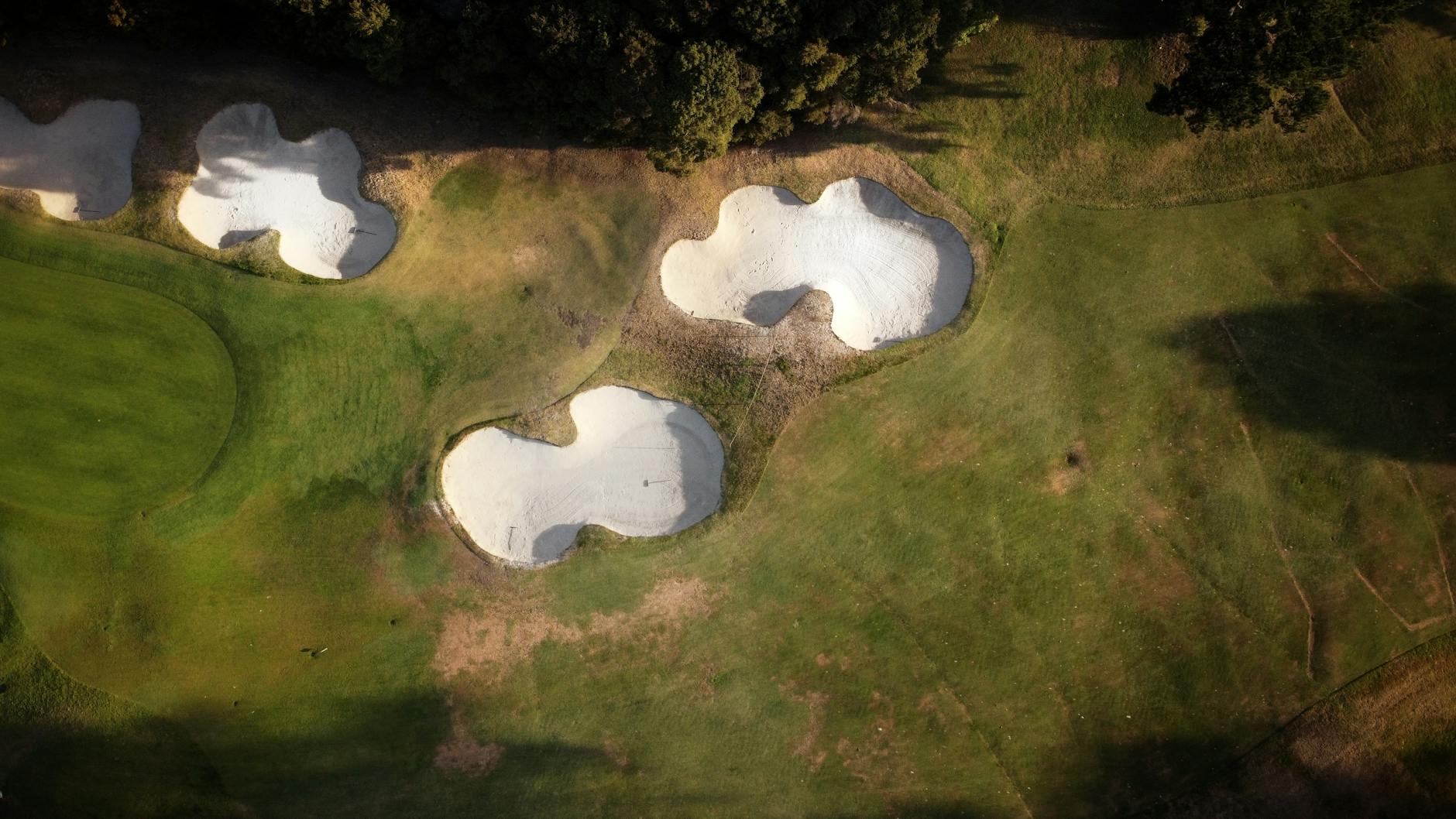
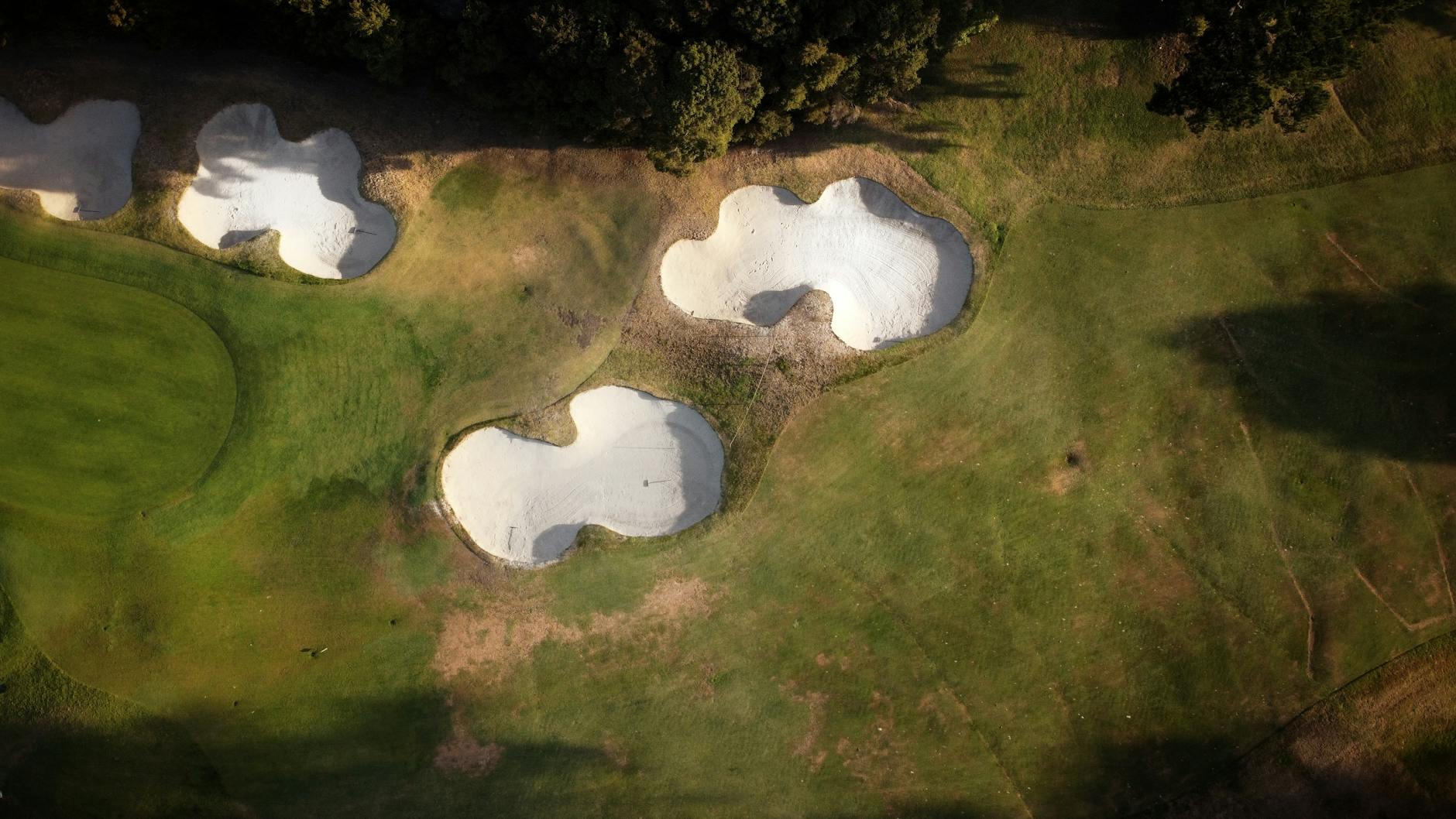
One of the most misunderstood elements of great course design is bunkering. Many golfers assume a bunker's primary function is to trap errant shots. In reality, the most intelligent bunkering serves a different purpose: it shapes decision-making before the shot is even played. A well-positioned fairway bunker that a 10-handicapper will never reach still influences how they aim, simply through its presence in the sightline.
Donald Ross was a virtuoso of this psychological bunkering. At Pinehurst No. 2, his famous 'turtle back' green complexes reject shots that are not precisely flighted, sending them into tight chipping areas with myriad awkward stances. The bunkers at Pinehurst are almost secondary — the greens themselves do the real punishing work.
The object of the architect is not to punish the bad player, but to make the good player show his skill.
— Alister MacKenzie
Routing: The Invisible Architecture
Perhaps the most underappreciated skill in course design is routing — the art of laying out 18 holes across a piece of land in a sequence that maximizes strategic variety, minimizes artificial earthmoving, and creates a compelling narrative arc for the round. A great routing feels inevitable, as if the course could not exist any other way. A poor routing feels forced, with awkward adjacencies, identical hole orientations, and transitions that require walking past greens and tees with no spatial logic.
Wind orientation is a critical routing variable, particularly on links and coastal courses. The best routings send players into the wind, downwind, and crosswind in relatively equal measure across 18 holes, ensuring no single wind condition completely dominates the day's scoring. This is why links courses like St Andrews, Carnoustie, and Royal Portrush play so differently depending on wind direction — the routing was conceived with prevailing winds in mind, but the course yields different strategic challenges when conditions shift.
Shaft Selection and Wind-Adjusted Architecture
Wind-sensitive routing also has direct implications for equipment selection. Players who invest in understanding a course's wind corridors and plan shaft flex accordingly will consistently outperform those who simply reach for the same driver setup every round. Attomax shafts, designed with variable flex profiles, allow players to dial in trajectory management that aligns with how a specific routing exposes them to crosswind and headwind conditions — a detail that separates thoughtful course managers from those simply reacting to conditions.
The Restoration Renaissance
The last decade has witnessed a remarkable renaissance in course restoration. Clubs across the United States and Europe have commissioned architects to strip back decades of well-intentioned but ultimately damaging 'improvements' — irrigation systems that softened firm-and-fast playing surfaces, tree plantings that closed off strategic sightlines, green surrounds that eliminated the ground-game options original designers intended.
Courses like Merion, Oakland Hills, and Shinnecock Hills have all undertaken significant restoration projects aimed at recovering the architectural integrity of their original designs. The results are layouts that play faster, firmer, and with far greater strategic depth than their over-manicured predecessors. These restorations are not merely cosmetic — they are philosophical corrections.
For golfers who pay attention to design, playing a restored Golden Age course is a revelation. Suddenly, the bump-and-run from 40 yards short of the green is not a consolation shot — it is the preferred play. The course invites imagination rather than demanding formula. That shift in mindset is precisely what the greatest architects always intended, and it remains the most compelling argument for why the art of course design continues to reward study, respect, and genuine curiosity.
Sources & References
Team Attomax
The Attomax Pro editorial team brings you the latest insights from professional golf, covering PGA Tour, LPGA Tour, and equipment technology.