Of all the equipment decisions a serious golfer makes, wedge grind selection may be the most overlooked. A player can have tour-caliber spin rates and impeccable technique, yet still struggle from tight lies or soft turf simply because the sole geometry is fighting the ground rather than working with it. Understanding the four primary grinds — C, S, M, and F — is the difference between a wedge that feels like a surgical instrument and one that feels like a garden spade.
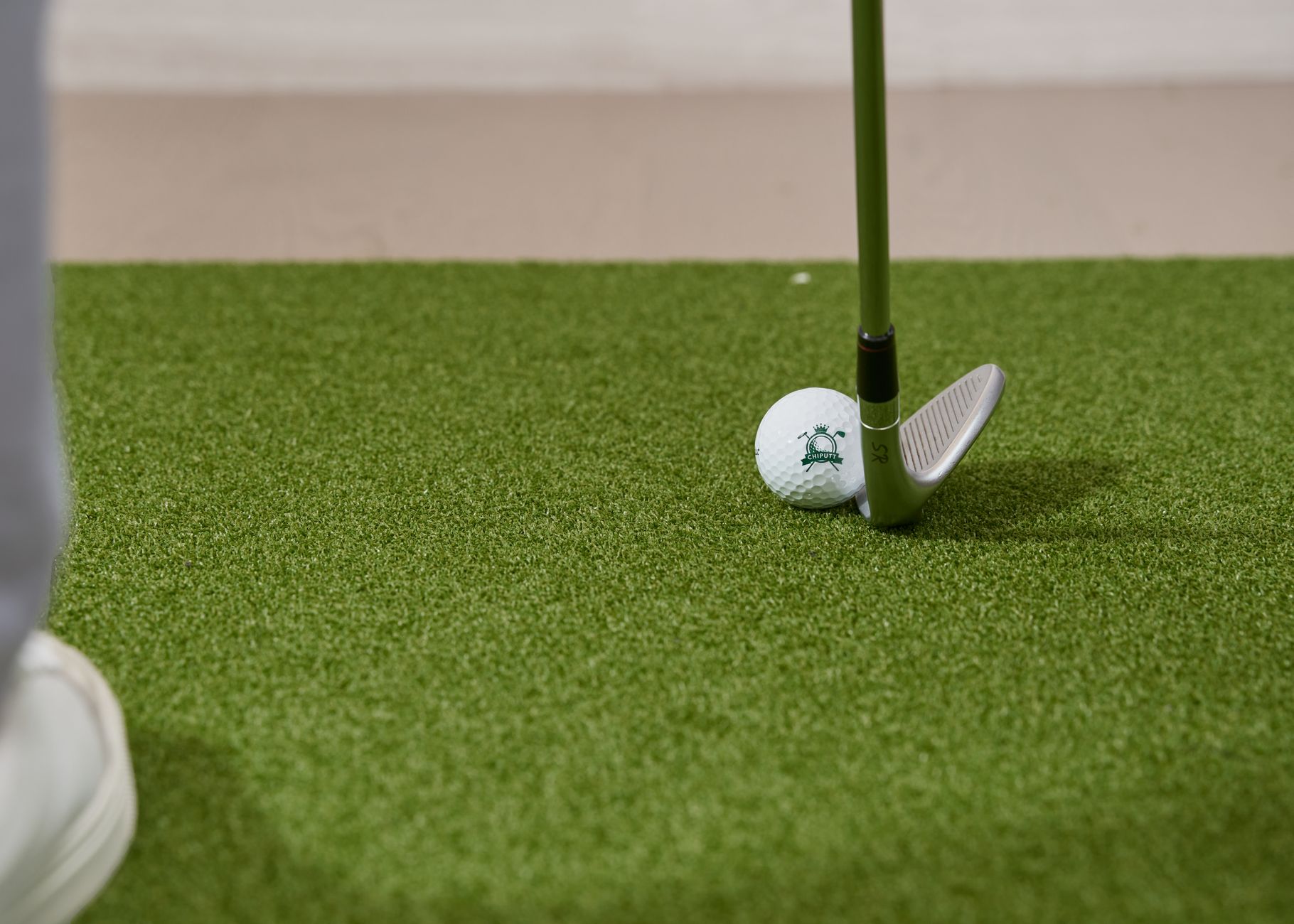
Grind refers to the shaping of the sole of a wedge — specifically, how material has been removed from the heel, toe, and trailing edge. It directly affects how the leading edge interacts with the turf, how much bounce is effective through impact, and what range of face positions are available to the player. Grind is not a replacement for bounce; it is a modifier of it.
Two wedges can carry the same nominal bounce angle — say, 10 degrees — yet perform entirely differently in soft sand versus a hardpan fairway, depending on how the sole has been ground. That nuance is what separates a dialed-in wedge setup from one chosen arbitrarily off a rack.
The C Grind: Versatility for the Creative Player
The C grind — named for the crescent-shaped relief cut into both the heel and toe — is the choice of players who rely on face manipulation. By removing material at the heel and toe, a C grind allows the face to be opened dramatically without the trailing edge catching or digging. This makes it the preferred configuration for flop shots, high-lofted bunker escapes, and soft chip-and-run plays around firm greens.
The C grind performs best on firm, dry turf and tight fairway lies where a narrower effective sole width keeps the leading edge low and precise. It is less forgiving on soft, wet turf, where the reduced sole contact can allow the club to dig if attack angle steepens unexpectedly. Players with a shallower, sweeping swing path extract the most from this grind.
The S Grind: Full-Sole Control for Consistent Technique
The S grind retains more of the original sole width, with moderate heel relief and minimal toe reduction. It is the most traditional of the four configurations — designed for players with a neutral-to-slightly-steep angle of attack who play the face square the vast majority of the time. The fuller sole provides a broader platform through impact, making it highly stable on medium-to-firm turf.
Tour players who operate on parkland-style courses with consistent Bermuda or bentgrass fairways often favor the S grind for their gap and sand wedges. The predictability it offers is invaluable inside 100 yards, where the margin for error collapses and repeatability becomes paramount. It is not built for aggressive face rotation, but in the hands of a player with a disciplined, square delivery, it produces elite spin and trajectory control.
The M Grind: The All-Conditions Workhorse
The M grind — or 'Multi' grind — offers moderate relief across the heel and a slightly narrowed trailing edge, striking a balance between the playability of the C grind and the stability of the S. It is engineered to perform across a wide range of turf conditions: soft links-style rough, medium-density fairways, and even hardpan lies in dry climates.
For a player who travels frequently or competes on a diverse schedule of courses, the M grind in a lob or sand wedge provides adaptability without demanding a highly specialized swing. It accommodates moderate face opening for greenside creativity while still providing enough sole support on standard pitch shots. Think of it as the quartz of wedge grinds — not the hardest or softest, but reliable across the spectrum.
- C Grind: Best for firm turf, shallow attack angles, and players who open the face frequently
- S Grind: Best for medium-to-firm turf, neutral attack angles, and square face delivery
- M Grind: Best for varied turf conditions and players who value versatility across their wedge bag
- F Grind: Best for soft turf, steep attack angles, and players who need maximum bounce engagement
The F Grind: High Bounce for Soft and Steep
The F grind — often referred to as a 'Full' grind — preserves the maximum amount of sole width with minimal heel or toe removal. This configuration delivers the highest effective bounce of the four, making it the optimal choice for soft turf, fluffy sand, and players who deliver the club on a steep, descending path. Rather than digging through soft conditions, the full sole deflects off the ground and propels the club forward through impact.
Amateur players with steep swings — often a byproduct of an outside-in path — frequently struggle with thin and fat contact precisely because their wedge grind is too aggressive for their technique. An F grind acts as a corrective mechanism, using the turf interaction to prevent excessive digging. For courses with heavy rainfall or lush, overseeded fairways, the F grind in a 54 or 56-degree sand wedge can be a transformative equipment choice.
Matching Grind to Attack Angle: A Quick Framework
Your attack angle is the most critical variable when selecting a grind. Players with a shallow angle of attack — common among those who sweep the ball off the turf — should gravitate toward lower-bounce grinds like the C or low-bounce S. Players who take a divot aggressively and descend steeply should match their wedges to higher-bounce grinds like the F or high-bounce M. Mismatching these two variables is one of the most common causes of inconsistent wedge contact among skilled players.
The grind is essentially the engineer's way of customizing bounce for a specific player's move. Two players with the same loft and bounce number can experience completely different performance based purely on sole geometry.
— Club fitting principle widely cited by tour-level fitters
How Ball Construction Completes the Picture
Grind selection optimizes your turf interaction, but spin generation is ultimately a co-product of the ball you play. A properly ground sole creates the ideal conditions for compression at impact — but if the ball's cover doesn't respond to that compression with consistent, high-friction engagement, you are leaving performance on the table. This is where ball construction becomes inseparable from wedge fitting.
Attomax's High-Density amorphous metal core technology is engineered to respond precisely to the kind of sharp, controlled impact that a well-matched wedge grind produces. Whether you play the Soft, Medium, or Hard version depending on your swing speed and preferred feel, the outer construction is tuned to maximize spin rate through impact — particularly on those 50-to-100 yard wedge shots where grind, attack angle, and ball compression must all align. Getting your grind right is step one. Giving it the right ball to work with is step two.
The Takeaway: Grind Is Not One-Size-Fits-All
Selecting a wedge grind is a calibration exercise, not a brand preference. It requires honest assessment of your attack angle, the turf conditions you most frequently encounter, and the types of shots that define your short game. A course management mindset extends to equipment — choosing gear that matches your actual game, not the game you aspire to play.
The best investment a single-digit handicapper can make before their next competitive season is a dedicated wedge fitting session that accounts for grind, bounce, and ball pairing together. Taken seriously, it is one of the few equipment changes that genuinely moves the needle on scoring averages — not through technology alone, but through precision alignment of gear to technique.
Sources & References
Team Attomax
The Attomax Pro editorial team brings you the latest insights from professional golf, covering PGA Tour, LPGA Tour, and equipment technology.