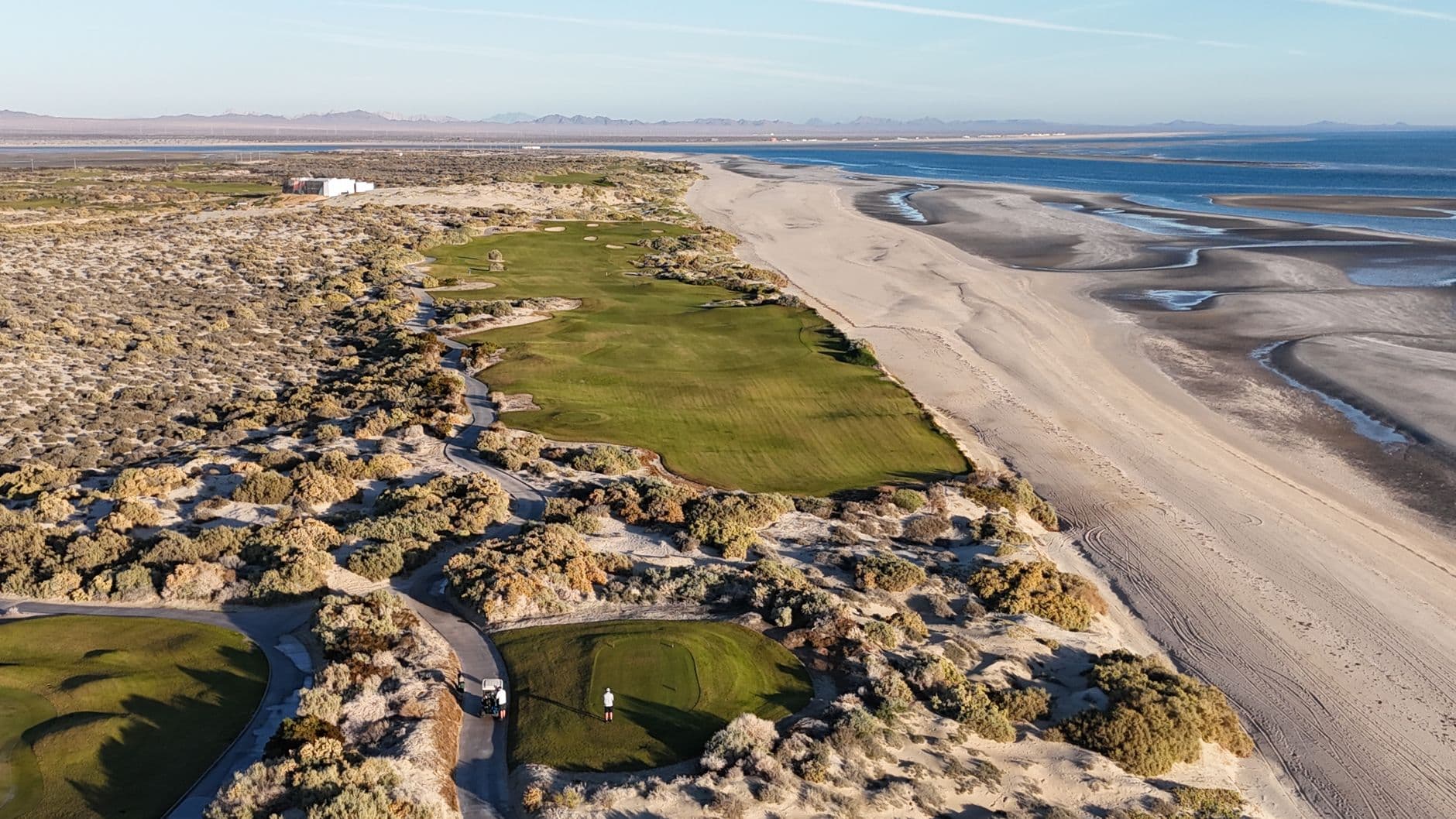
When the AIG Women's Open descends on Royal Troon, it does so with the full weight of links golf's most demanding traditions. The Ayrshire coastline offers no shelter, no sympathy, and absolutely no margin for error. For the world's best women professionals, Troon is not simply another major — it is a referendum on adaptability, shot-making intelligence, and the willingness to take what the course gives rather than what ego demands.

Royal Troon holds a singular place in major championship history. Founded in 1878, it has hosted The Open Championship multiple times and carries a course personality that is both brutal and deeply fair — provided you respect its conditions. The wind off the Firth of Clyde is not a variable; it is a co-designer. Any player arriving with a gameplan built around target golf and predictable ball flight will be exposed before they reach the turn.
The AIG Women's Open's rotation through links venues has consistently produced some of the most tactically rich major championships in women's professional golf. Troon amplifies that tradition. Its combination of tight, firm fairways, cavernous pot bunkers, and greens that demand approach angles as much as spin rates makes it a venue where course management is not a secondary skill — it is the primary one.
Understanding Troon's Character
Royal Troon's layout follows the classic out-and-back links structure: the front nine runs broadly southward along the shore, while the back nine returns northward, meaning the wind rarely plays the same way twice in a single round. A player who benefits from a helping wind on the outward stretch must then negotiate into or across that same wind coming home. Reading the shifts — and adjusting shot shape and club selection in real time — is where links rounds are won or lost.
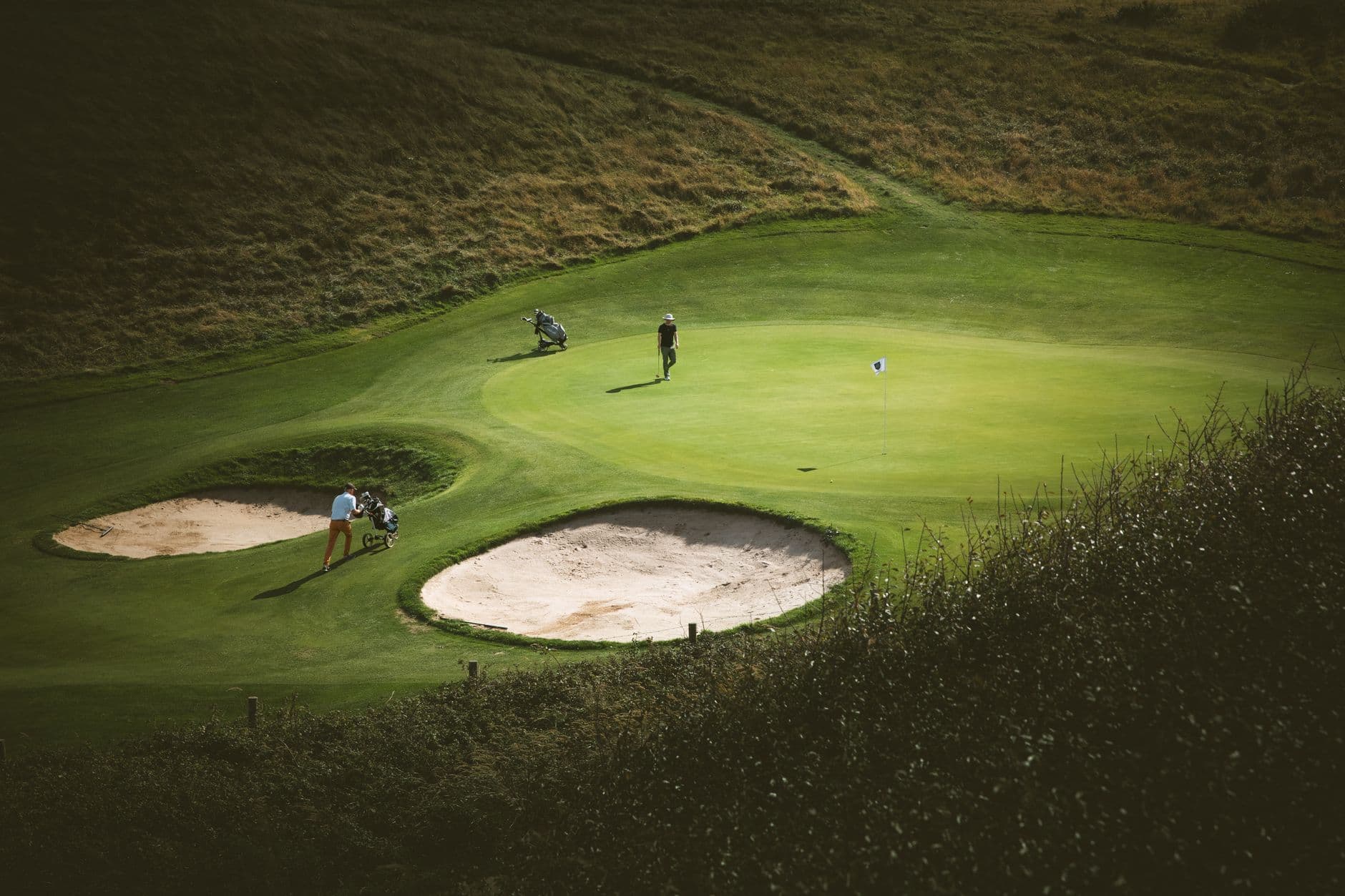
The infamous Postage Stamp — the par-3 8th hole — is arguably the most celebrated short hole in championship golf. At roughly 123 yards, it plays with the illusion of simplicity. But the green is elevated, narrow, and flanked by some of the deepest pot bunkers on the British Isles. In links conditions with a crosswind, the shot demands precise trajectory control. Players who flight their irons low and trust their carry distance calculations will find the surface. Those who balloon the ball into the wind will be collecting bogeys — or worse.
- Postage Stamp (8th, par 3): Requires precise trajectory management and iron flight discipline under crosswind pressure
- Pot bunkers throughout: Recovery demands creativity — often a controlled sideways exit rather than forced heroics toward the pin
- Firm, fast fairways: Ground game is essential; bump-and-run approach play consistently outperforms high-trajectory aerial attacks
- Green complexes: Slope and grain interaction with sea breeze creates multi-break putts that reward pre-round reconnaissance
Links Strategy for Elite Competition
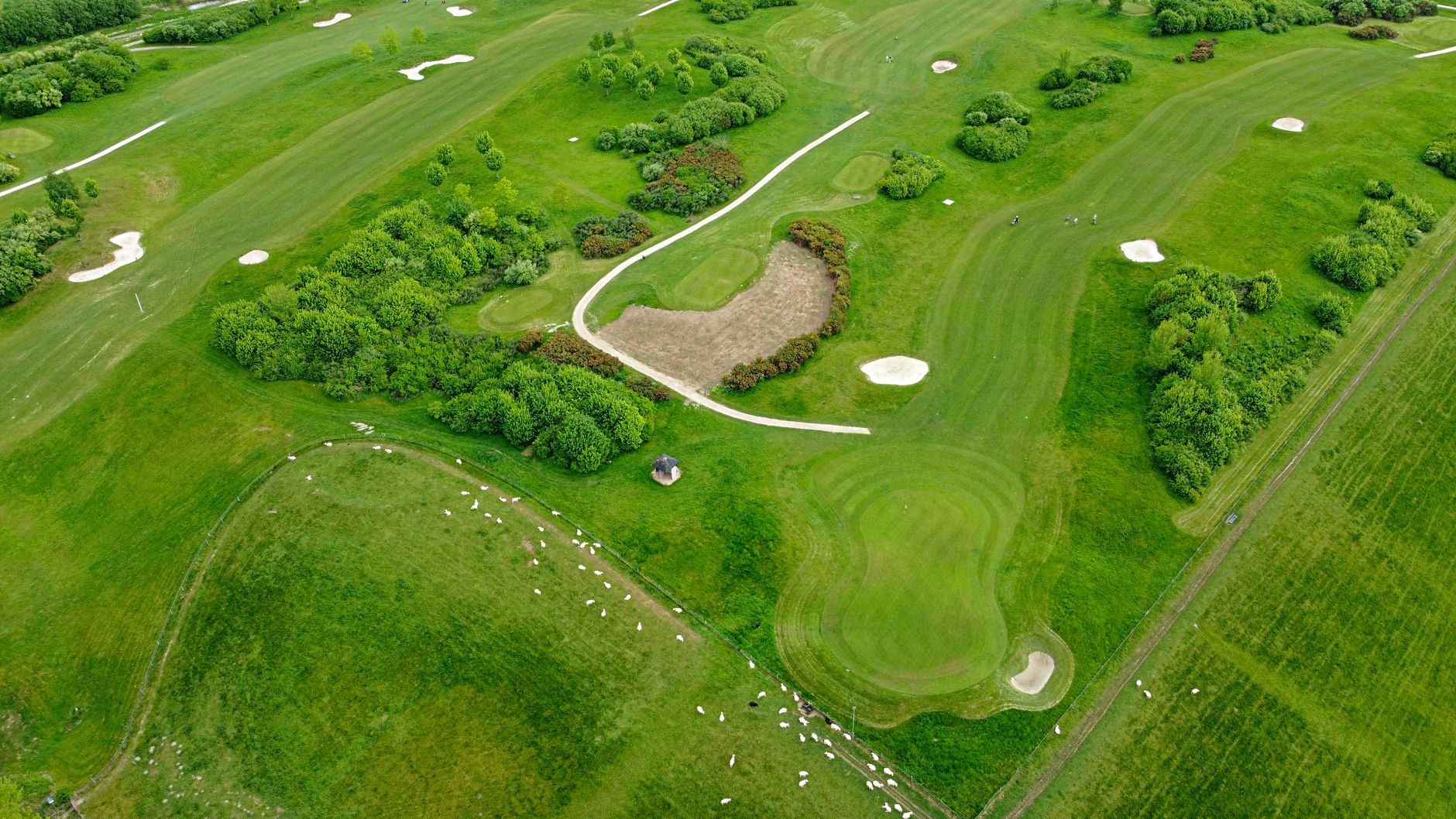
The strategic architecture of links play at this level comes down to one foundational principle: position over aggression. At Troon, the player who consistently finds the correct side of the fairway — not simply the fairway — gains an exponential advantage on approach. Miss left or right in the wrong sector and the pot bunkers, rough, or deflection angles will punish the next shot as severely as the original error.
Wind management at Troon is equally about ball selection as it is club selection. Compression matters enormously in cold, damp Scottish conditions. A ball that performs ideally in warm, calm conditions at a parkland venue may behave unpredictably when temperatures drop and the wind accelerates off the Firth. Players who understand the relationship between their ball's compression rating and its flight characteristics in cool, high-humidity air gain a measurable edge across a 72-hole championship. This is precisely where the engineering behind Attomax's High-Density amorphous metal core becomes relevant — a ball engineered for consistent energy transfer and flight stability is a genuine asset when atmospheric conditions are in constant flux across a Scottish major week.
Shaft performance, too, is amplified under links conditions. A player relying on a shaft profile dialed for a more controlled, penetrating ball flight will consistently outperform one generating excessive spin into a headwind. The numbers compound over four rounds: unnecessary spin translates to lost distance, ballooned trajectories, and approach shots arriving from awkward distances.
History of the AIG Women's Open at Links Venues
The AIG Women's Open — formerly the Women's British Open — has built its identity on links golf. The championship's rotation through iconic Scottish and English coastal venues has produced champions who demonstrate that sustained success on links terrain requires a different athletic and mental toolkit than the one that wins on tour week-to-week.
Historically, players who have excelled at the AIG Women's Open at links venues share a common profile: a controlled, versatile ball flight; comfort with unconventional shot shapes demanded by ground contours; and a composed temperament that resists forcing birdies in conditions where par is genuinely a strong score. The championship rewards patience as much as precision.
Links golf teaches you that the course is always going to win a few holes. The best you can do is make sure you win more than it does.
— Common refrain among links-experienced LPGA Tour professionals
What to Watch at Royal Troon
When the championship field assembles at Troon, the tactical narrative to follow is not simply about power or putting. Watch how the elite contenders manage their tee shot placement relative to the prevailing wind direction each morning. The players who arrive with a nuanced pre-round plan — accounting for wind strength, pin positions, and their own miss tendencies — will consistently outperform those reacting shot-by-shot.
Pay close attention to approach play into the par-4s. Troon's medium-length par-4s are where the championship will be decided. They are long enough to demand respect but short enough that over-aggression leads to bunker play from the most disadvantageous positions on the course. The controlled, measured approach — whether from 160 yards or 200 — defines links-caliber championship golf.
Royal Troon does not announce its secrets on the first hole. It reveals them slowly, across four rounds, to players willing to listen. The AIG Women's Open at this venue will produce a champion who did not simply hit the best shots of the week — she will have made the best decisions. That combination of technical excellence and strategic discipline is what links majors have always been about, and why Troon remains one of the most compelling stages in world golf.
Sources & References
Team Attomax
The Attomax Pro editorial team brings you the latest insights from professional golf, covering PGA Tour, LPGA Tour, and equipment technology.