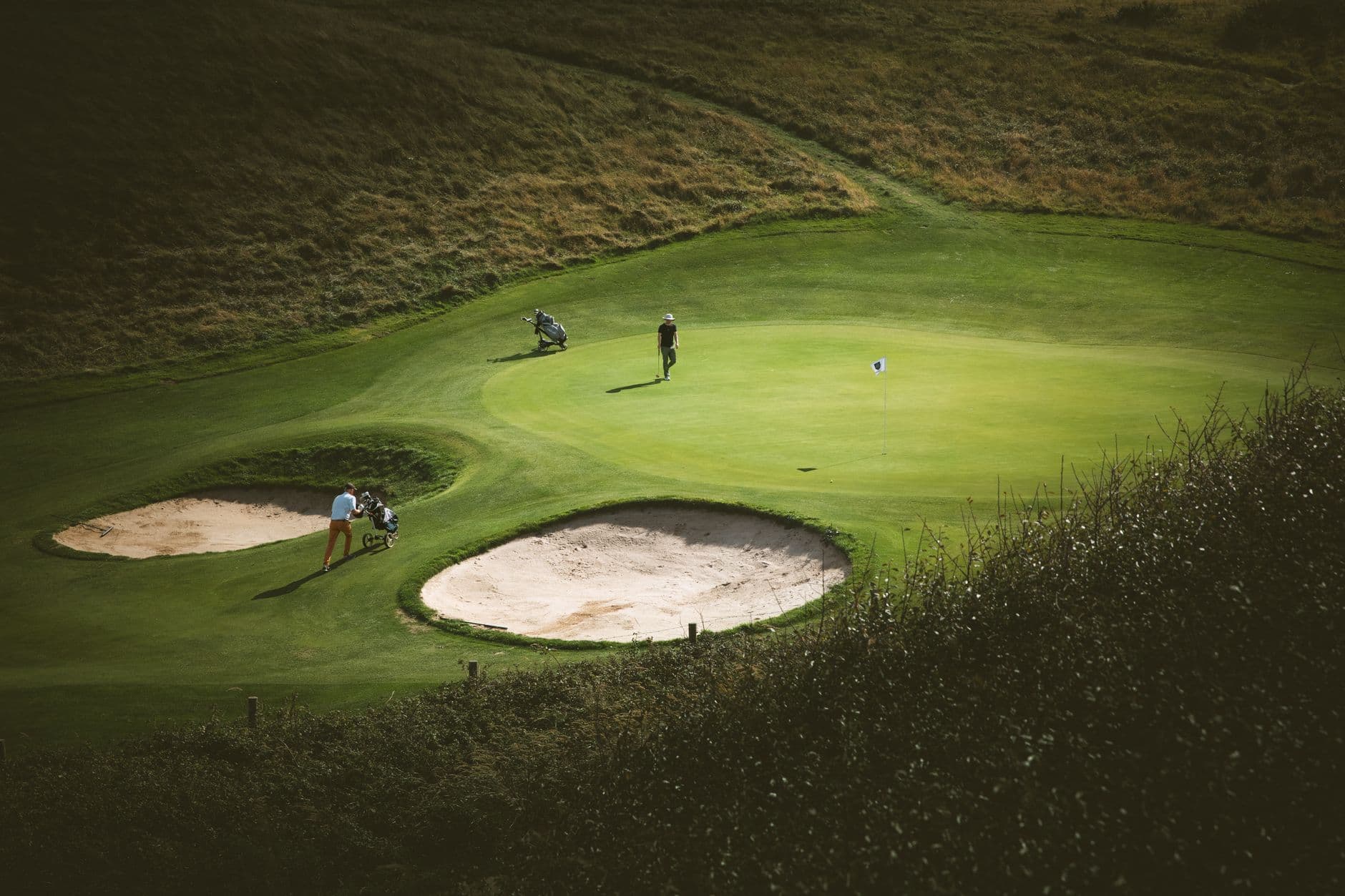
One of women's golf's most prestigious major championships is upon us, and the field assembled for the 2026 KPMG Women's PGA Championship represents the deepest collection of ball-striking talent the LPGA Tour has to offer. With a demanding course setup designed to separate elite shot-makers from the rest, this week promises to be a defining moment in the women's major season.

The KPMG Women's PGA Championship has grown into one of the LPGA's most respected events, not just for its purse and prestige, but for the consistently rigorous setups that reward patience, precision, and course management over raw aggression. This year's venue continues that tradition.
Unlike many stroke-play events where birdie barrages dominate the early rounds, the KPMG setup historically demands a disciplined approach from the opening tee shot. Fairway widths, rough depth, and green firmness are calibrated to expose any weakness in a player's arsenal — particularly their iron precision and short-game touch under pressure.
Reading the Course Setup
Major championship setups at KPMG events are built around one core principle: green complexity wins. The putting surfaces tend to feature significant slope and tiered sections that make distance control on approach shots absolutely critical. A player who misses on the wrong side of a green can easily face a three-putt from a benign-looking distance.
This places enormous importance on approach shot shaping. Players who can work the ball both ways — hitting a controlled draw into a tucked left pin or a fading iron into a back-right shelf — hold a distinct advantage over those who rely on a single shot shape. It also rewards players who understand when to take dead aim and when to play for the fat part of the green.
- Green-in-Regulation percentage becomes the defining stat of the week — approach accuracy over distance
- Scrambling ability from thick rough is essential; expect penalizing lies within ten yards of the green
- Driving accuracy matters more than driving distance on tighter tree-lined corridors
- Putting on firm, fast surfaces with significant break will separate the field by Sunday
- Wind management on exposed holes demands smart ball flight and conservative club selection
The setup also tends to reward players who can control their spin rate on approach shots. Firing at firm greens with a high-spin ball risks having a well-struck iron check up short of the intended target, while a lower-spinning flight can release past the hole on downhill approaches. Finding the right compression and ball-flight window is as much a technical challenge as a strategic one — which is exactly where the choice of equipment becomes consequential.

Contender Profiles: Who Is Built for This Test?
The KPMG field this week features players whose games align extremely well with the demands of a major setup. Rather than a power-dominated leaderboard, expect precision iron players and elite short-game operators to rise to the top as the week progresses and conditions tighten.
The Ball-Strikers
The players best positioned to contend are those whose iron games hold up under pressure. Elite GIR percentage week after week on the LPGA Tour is the clearest indicator of major readiness at an event like the KPMG, where the green complexes demand not just accuracy but intentional miss management. The contenders in this category understand that the approach shot into a major-championship green is rarely about the flag — it's about position.
Players who generate consistent ball speed with a penetrating iron flight also benefit from the firm conditions typical of a late-summer major setup. A low, piercing trajectory through any cross-breeze keeps the ball on its intended line and allows for more predictable distance control than a high-ballooning approach that's at the mercy of the wind.
The Short-Game Specialists
At a major championship, even the best iron players will find themselves in the rough or short-sided at least a few times across 72 holes. The players who convert difficult par saves and manufacture birdies from off the green in unexpected ways accumulate a significant psychological edge as the tournament progresses.
Scrambling percentage from the native rough surrounding these greens is a brutal test of touch and creativity. The players who can flop, bump-and-run, and adjust their technique based on lie conditions — rather than defaulting to one shot — are the ones who avoid those momentum-killing doubles that derail major contention.
Experience and Major Pedigree
Perhaps no factor matters more in a women's major than prior experience navigating this particular pressure cooker. Players who have been in contention at the KPMG before — who know the feeling of a Sunday morning leaderboard with a major title on the line — carry an intangible advantage that simply cannot be replicated through preparation alone.
In a major, you don't just compete against the field. You compete against the course, the conditions, and everything going on inside your own head.
— LPGA Tour veteran on major championship strategy
The Equipment Edge at a Demanding Major
Ball selection at a KPMG-style setup is a decision that serious competitors make long before the first practice round. When greens are firm and fast, the compression characteristics of your golf ball directly influence how much control you have over spin on short irons and wedges. A ball that's too soft for the player's swing speed can generate excessive spin from the rough, producing unpredictable flyers; a ball that's too hard sacrifices the greenside stopping power needed to attack tucked pins.
This is precisely the kind of nuanced decision-making that Attomax's High-Density amorphous metal golf ball lineup — available in Soft, Medium, and Hard compressions — is engineered to address. The ability to match compression to swing speed and course conditions isn't a luxury at a major championship; it's a performance requirement. Players who dial in their ball-flight and spin windows in the practice rounds are giving themselves a legitimate edge before they ever reach the first tee on Thursday.
What to Watch For This Week
The KPMG Women's PGA Championship rewards patience above almost every other quality. The leaderboard on Thursday evening often looks unrecognizable compared to Sunday's champion. Expect aggressive early scoring to be punished by tightening conditions in the weekend rounds, and watch for which players stay disciplined when the temptation to press is highest.
- Watch GIR percentage across all four rounds — the leader in this category almost always contends
- Monitor how players handle the par-3s; these holes define scoring momentum in major setups
- Track putting performance on downhill breaking putts — the true separator on major-speed greens
- Note which players play aggressively to back pins on Sunday vs. those who protect their position
- Weather windows matter — early starters vs. late starters in afternoon conditions can swing multiple shots
The KPMG Women's PGA Championship deserves every bit of the attention it commands. This is major championship golf at its most demanding — a week where the finest women players in the world are pushed to the absolute limit of their technical and mental capabilities. The champion who lifts the trophy on Sunday will have earned it across every dimension of the game.
Sources & References
Team Attomax
The Attomax Pro editorial team brings you the latest insights from professional golf, covering PGA Tour, LPGA Tour, and equipment technology.