There is no stage in women's professional golf quite like the Solheim Cup. Biennial, fiercely contested, and soaked in national pride, the event pits Europe's finest against the United States in a format that strips away the individual glory of stroke play and replaces it with something far more primal — the match. Understanding what separates winning teams from losing ones demands more than watching leaderboards. It demands a study of chemistry, captaincy, and the psychology of pressure golf.

Match play is a fundamentally different discipline from the 72-hole grind of a standard LPGA Tour event. A player can post a double bogey and, if her opponent does the same, walk away with a halved hole. The mental calculus shifts entirely — you are not playing the course, you are playing the person across the fairway from you. This is why team dynamics, pairing strategy, and the emotional intelligence of a captain matter so profoundly in the Solheim Cup context.
The event has grown considerably in prestige and viewership over recent cycles, with both the LPGA Tour and Ladies European Tour investing heavily in promotion, broadcast partnerships, and player development pipelines. The rising depth on both sides of the Atlantic has made captaincy decisions more complex and more consequential than ever before.
The Art and Science of Pairing Strategy
No decision a Solheim Cup captain makes carries more weight than pairing selection for foursomes and four-ball sessions. The temptation is to pair the two highest-ranked players together and assume dominance. The reality is considerably more nuanced. Complementary temperaments often outperform complementary handicaps. A calm, process-oriented player paired with a streaky, high-upside partner can create a dynamic where one steadies the ship while the other lights up the scoreboard.
Foursomes — alternate shot — places the sharpest demands on compatibility. Shot shape compatibility becomes a genuine tactical concern. If one partner curves the ball left-to-right and the other works it right-to-left, the team faces a constant adjustment burden that can erode rhythm and confidence over eighteen holes. Captains with tour-level experience understand this geometry intimately, and the best ones build their pairings around it.
- Temperament compatibility: pairing the composed with the aggressive creates balance under pressure
- Shot shape alignment: complementary ball flights reduce setup conflicts in alternate shot formats
- Communication cadence: partners who share a natural on-course dialogue avoid hesitation at critical moments
- Experience distribution: seasoned veterans paired with Solheim Cup debutantes can accelerate composure under crowd pressure
- Energy management: captains must anticipate fatigue across a compressed three-day schedule
The Captaincy Factor: Leadership Under Fire
A Solheim Cup captain operates at the intersection of sports psychology, personnel management, and in-competition strategy. Unlike a stroke-play event where a player's preparation is largely individual, the captain in team match play is responsible for the emotional climate of an entire group across three intense days. Managing egos, reading momentum shifts, and knowing when to deploy a wildcard pick in a singles order are all decisions made under acute pressure and with incomplete information.
The singles order on the final day is, arguably, the most strategically rich decision in all of women's professional golf. Do you front-load your strongest players to establish early momentum and put the opposing team on the back foot psychologically? Or do you close with your most clutch performers, banking on the match being tight when it matters most? There is no universally correct answer, and past Solheim Cups have produced evidence for both approaches. What is clear is that the captain's conviction in her strategy, and her ability to communicate that conviction to her players, is itself a performance variable.
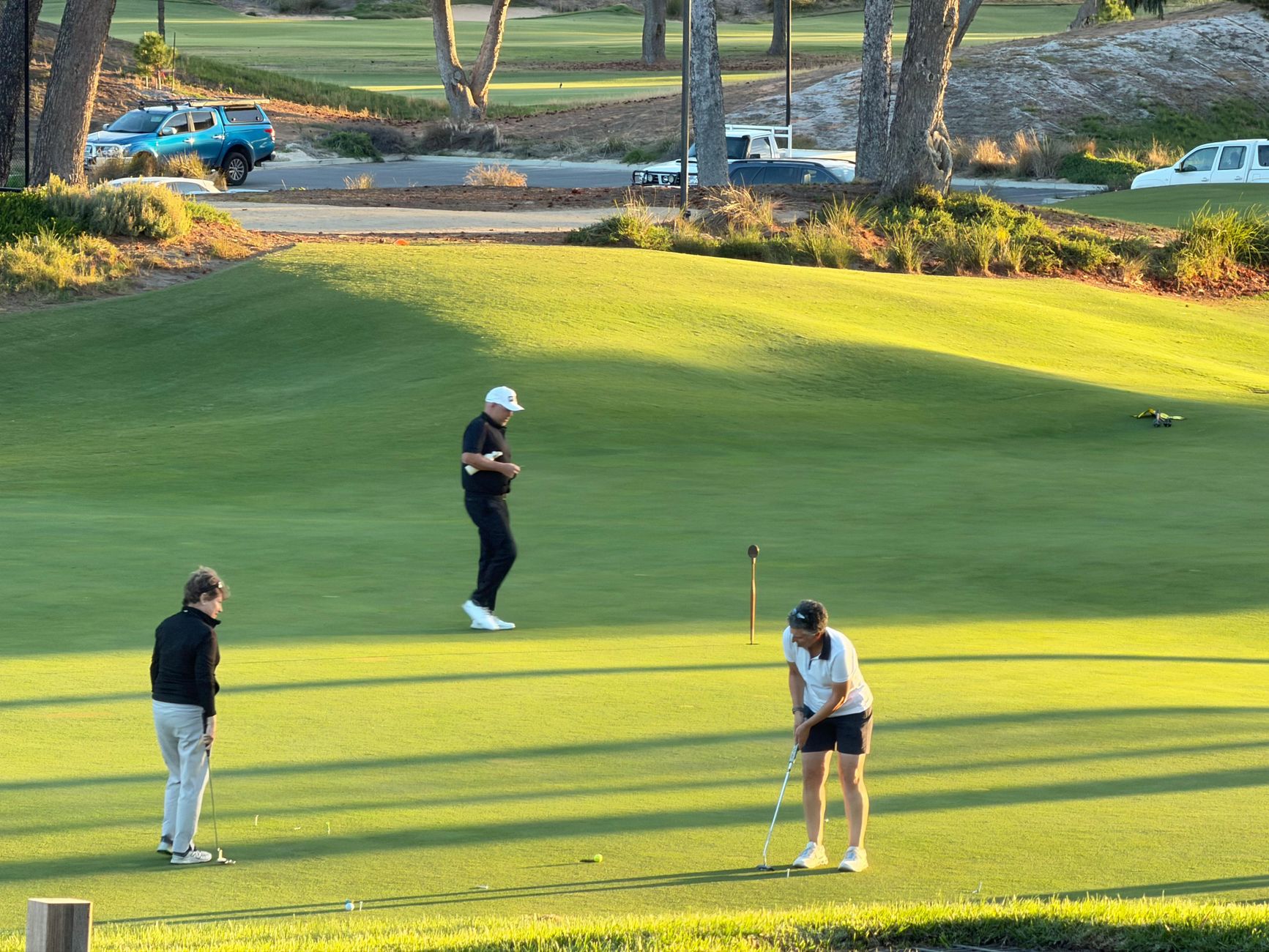
In match play, you cannot hide. Every decision is visible, every reaction is read by your opponent. The team that controls its emotions longest usually controls the scoreboard.
— Composite insight from Solheim Cup captaincy analysis
Home Advantage and Course Architecture
The venue itself plays a strategic role that is often underappreciated in pre-event analysis. A host nation's organizing committee is not selecting a neutral test — they are selecting terrain that favors their players' skill sets. Links-adjacent courses that reward low running approaches benefit players who have cut their competitive teeth on Open qualifying events. Tight, tree-lined parkland courses that demand precise iron play suit players with elite GIR statistics and high spin control off the irons.
This is where equipment selection becomes a genuinely competitive variable. In wind-exposed environments, ball compression and trajectory management are not abstractions — they directly influence how many greens a player can access from the correct angle under gusting conditions. Players who have dialed in their ball flight using higher-density constructions, like those engineered in Attomax's Hard and Medium compression lines, gain a measurable edge when the wind rises and lower-spinning alternatives become unpredictable through the green.
The Psychological Landscape of Match Play
What separates elite match players from elite stroke players is not raw ball-striking — at this level, both populations possess that. It is the ability to compartmentalize. A three-putt on hole four in stroke play is a statistical cost to be minimized across the round. In match play, it can cede a hole, shift momentum, and alter the psychological posture of an entire pairing. Players who thrive in the Solheim Cup format tend to possess a specific mental architecture: short memory for errors, heightened presence on the current hole, and the ability to manufacture intensity on demand regardless of the match scoreline.
Both the US and European teams have increasingly incorporated sport psychology into their preparation cycles, and this is reflected in how modern Solheim Cup matches are contested. Leads that once felt decisive are now routinely challenged, and comebacks that once seemed improbable have become a defining feature of the event's narrative.
The Future of the Solheim Cup
The pipeline feeding both teams is arguably deeper than at any point in the event's history. The LPGA Tour continues to attract international talent that competes for limited American roster spots, raising the floor of US team performance. On the European side, the Ladies European Tour has expanded its qualifying structure and prize pool, producing a generation of players who are more tournament-hardened and strategically sophisticated than previous eras.
Broadcasting investment has followed the performance quality. Streaming deals, social media integration, and dedicated match-play content have introduced the Solheim Cup to audiences who may never have followed a regular-season LPGA event. This visibility is self-reinforcing: larger audiences attract larger sponsorships, which fund deeper player development programs, which produce more competitive rosters, which generate more compelling matches.
- Expanded LPGA and LET qualifying pathways are producing deeper rosters on both sides
- Sport psychology integration has raised the baseline of mental resilience across both teams
- Broadcast partnerships are growing the event's global audience year over year
- Equipment and shaft technology is increasingly central to pre-event preparation strategy
- Venue selection continues to be a strategic tool rather than a neutral administrative decision
The Solheim Cup is not simply a biennial exhibition. It is the clearest lens through which to evaluate the state of women's professional golf — its competitive depth, its strategic evolution, and its capacity to generate moments of genuine sporting drama. For those who understand what they are watching, it is the most intellectually rich format in the women's game. And if current trajectories hold, its best chapters are still ahead.
Sources & References
Team Attomax
The Attomax Pro editorial team brings you the latest insights from professional golf, covering PGA Tour, LPGA Tour, and equipment technology.