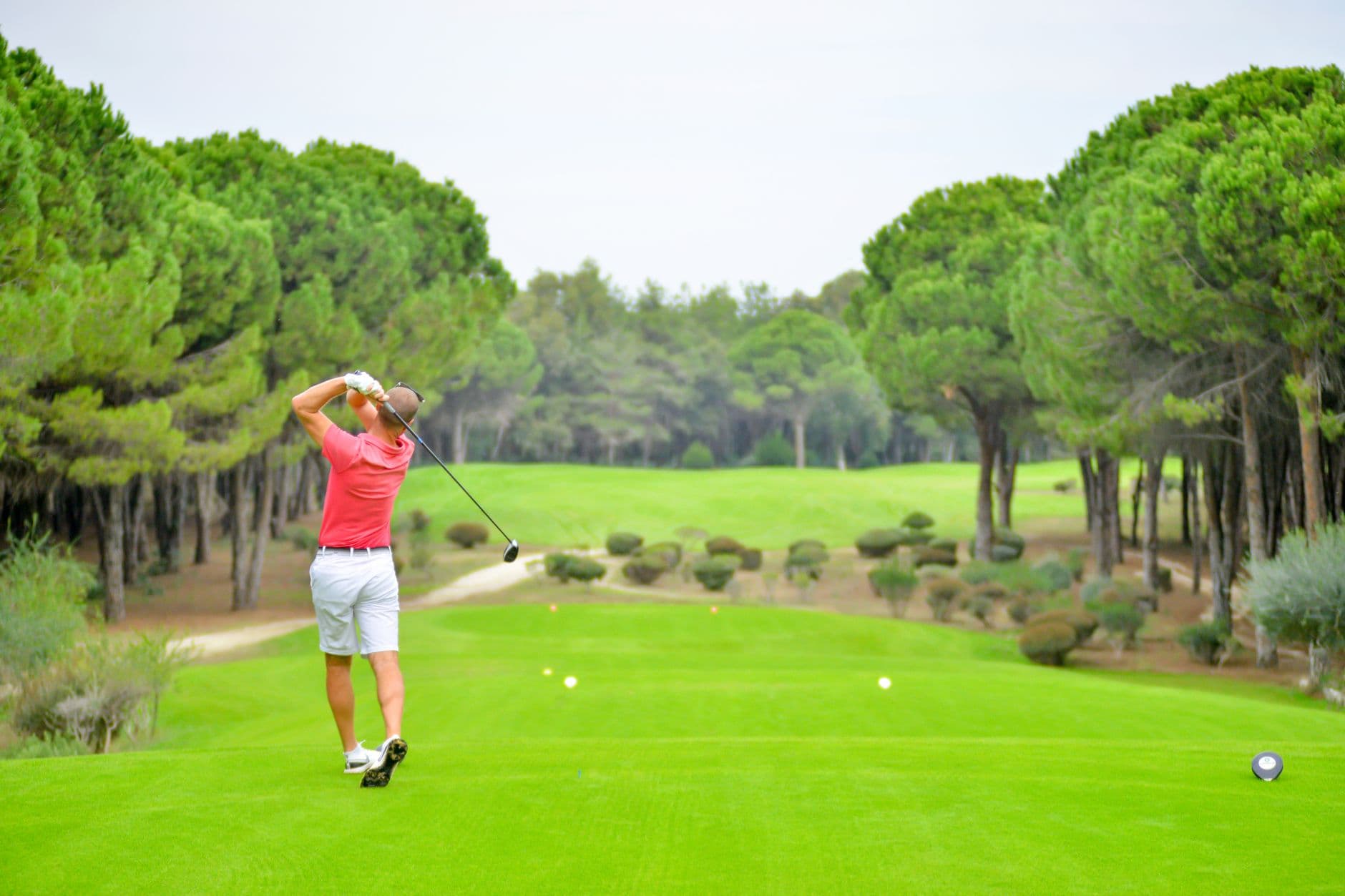
Every April, the world's best players arrive at Augusta National with meticulous game plans, dialed equipment, and months of preparation. Then they reach Amen Corner — holes 11, 12, and 13 — and everything they thought they knew gets tested. This legendary stretch of golf has determined Masters outcomes for decades, and understanding why requires more than just knowing the yardages.
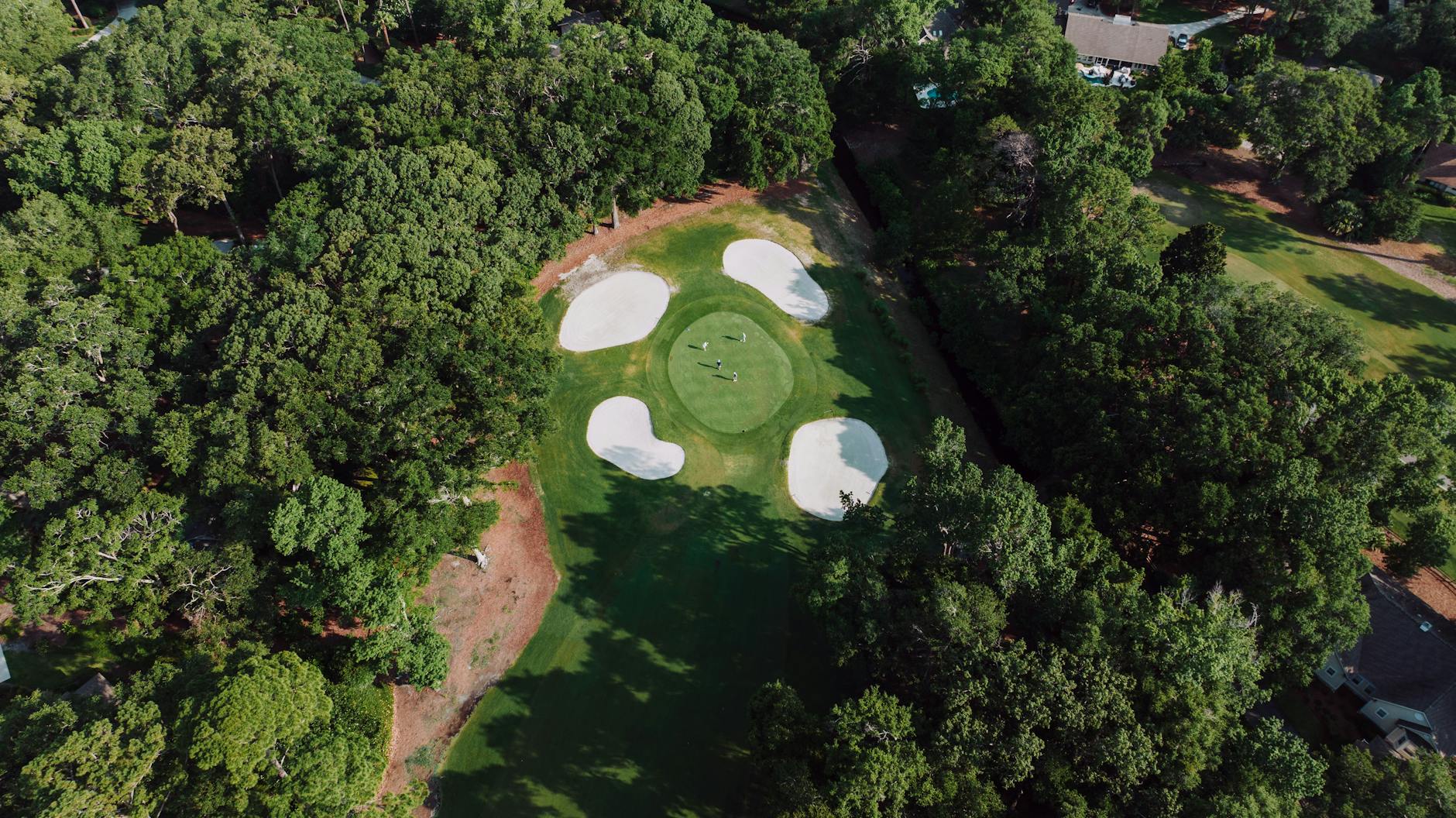
The term 'Amen Corner' was coined by writer Herbert Warren Wind in 1958, referencing a jazz recording called 'Shouting at Amen Corner.' Wind used it to describe the pivotal sequence where Arnold Palmer made critical birdies that year. The name stuck, and so did the legend.
What makes this three-hole stretch so uniquely punishing isn't raw difficulty in isolation — it's the confluence of risk, wind variability, water hazards, and the psychological weight of knowing that a single poor decision can incinerate a tournament lead built over three days.
Hole 11: White Dogwood — The Setup
The 11th hole at Augusta — a par-4 playing downhill toward a pond guarding the left side of the green — is where conservative instincts go to die. The hole demands a long, accurate tee shot to a generous fairway, but the approach is where careers are made or broken. The pin is almost never placed far left, but players know that any ball leaking left finds water.
Elite course managers at Augusta tend to play the 11th with a decisive bias toward the right side of the green. Missing right is recoverable — a difficult chip, a bogey at worst. Missing left is catastrophic. The decision framework here is asymmetric risk management: accept a less aggressive line in exchange for avoiding a double or worse.
Wind at the 11th typically comes from the right, which can sweep approach shots toward the pond. Reading that wind accurately — and trusting the read — is a discipline that separates experienced Augusta campaigners from first-time contenders.
Hole 12: Golden Bell — The Crucible
The 12th hole is the most famous par-3 in major championship golf. It measures only around 155 yards, and yet it has generated more drama per square foot than almost any other patch of ground in the sport. The green is shallow, narrowly guarded front and back by Rae's Creek and a steep slope, and it's ringed by the most treacherous wind corridor in golf.
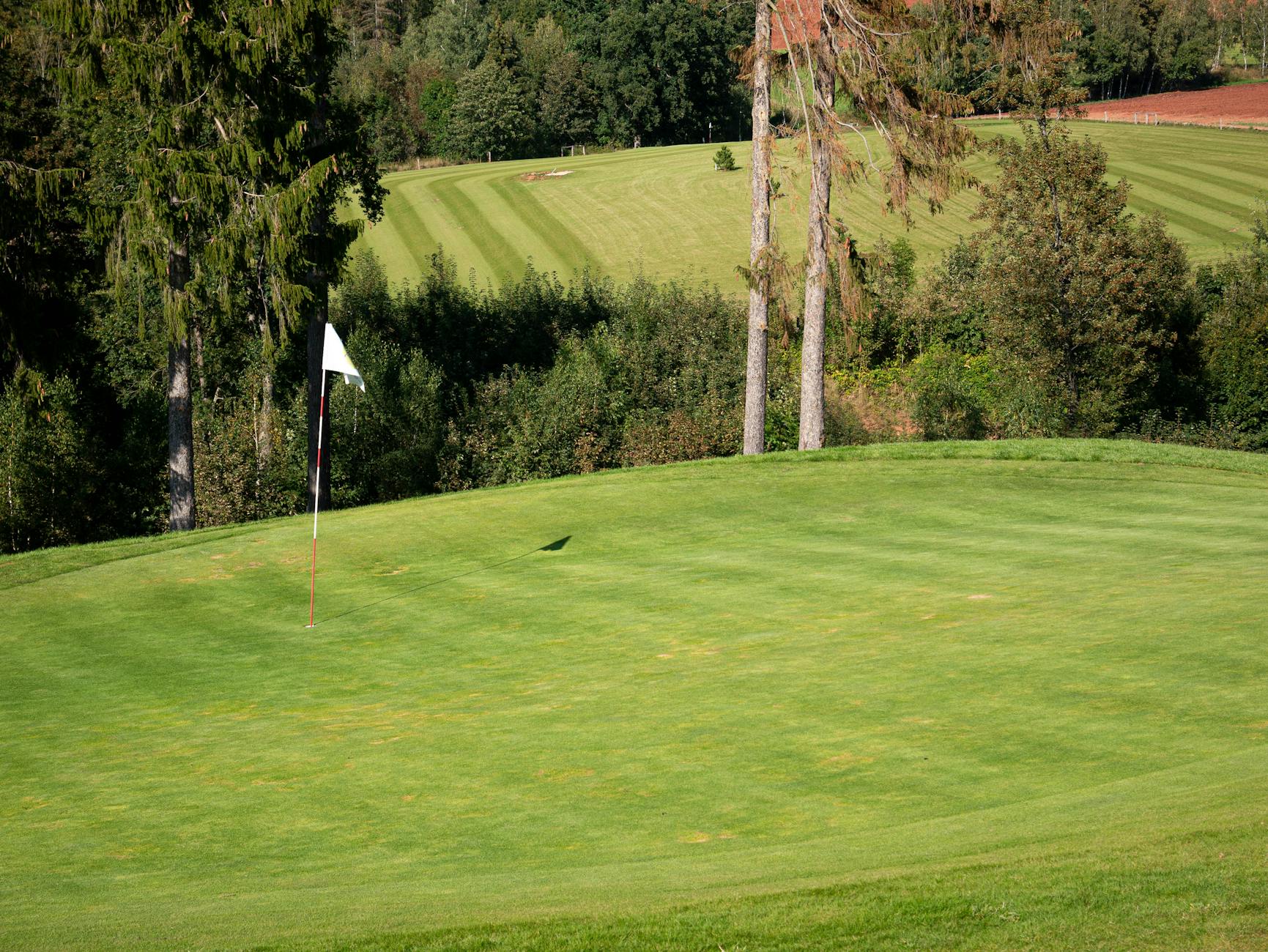
The wind at the 12th is notoriously deceptive. The swirling air currents through the trees can show one direction on the flagstick and an entirely different direction at ball height. Players routinely watch the tops of the pines, observe the flag, and still get a club wrong. The only reliable strategy is to commit: pick your number, trust your read, and execute without hesitation.
- Commit to one club selection — second-guessing mid-swing is fatal here
- When in doubt, favor the center of the green over any pin-hunting attempt
- Understand that a bogey at 12 is almost always survivable; a double or triple is often not
- Watch multiple wind indicators simultaneously: flagstick, treetops, and the wind's feel on your face
- The front bunker is far more manageable than Rae's Creek — always take the bunker over the water
You can make six at 12 and still win the Masters. You cannot win by trying to be a hero at 12.
— Widely held Augusta National wisdom
Hole 13: Azalea — The Reward for the Bold
After the anxiety of 12, the 13th offers what feels like an exhale — but only for those willing to take on its particular brand of risk. This par-5 sweeps left around a stand of pines, with Rae's Creek cutting in front of a green that slopes severely from back to front. Birdies and eagles are genuinely available here, which is precisely what makes it dangerous.
The 13th is where Augusta rewards players who have managed their tee shot trajectory off the tee. A draw around the corner opens up a more direct line to the green with a shorter iron or hybrid. A blocked or faded tee shot leaves an awkward angle and a much longer approach over the creek, forcing a layup decision that bleeds momentum.
Players who have survived 11 and 12 with their scorecard intact frequently go aggressive here — and rightly so. The 13th is one of the few places in major championship golf where calculated aggression has a genuinely positive expected outcome. The key word is 'calculated': knowing your yardage precisely, understanding your carry distance with the approach club, and accounting for any elevation change to the green.
Ball Flight, Compression, and the Augusta Equation
What often goes undiscussed in Masters strategy conversations is the role of ball selection across Amen Corner. Wind play in particular is highly sensitive to ball compression and launch characteristics. A higher-spinning, lower-compression ball can be thrown off course by Augusta's swirling winds more readily than a firmer, more penetrating option.
This is exactly the context in which Attomax's High-Density ball lineup — Soft, Medium, and Hard — becomes a meaningful conversation. Players who typically favor a softer feel might consider stepping up to the Medium or Hard construction for Augusta conditions specifically, where maintaining a predictable, wind-resistant trajectory on the 12th tee matters far more than greenside feedback. High-density construction delivers a more consistent, penetrating ball flight that holds its line through swirling conditions better than lower-density alternatives.
The Mental Architecture of Amen Corner
Beyond shot-making, surviving Amen Corner is fundamentally a mental discipline exercise. The players who fall apart here almost always share a common thread: they arrive at the 11th tee thinking about the leaderboard rather than the shot in front of them. They start playing the result instead of the process.
The most effective mindset is one of radical acceptance combined with decisive commitment. Accept that you cannot control the wind at 12. Accept that the outcome might not match the execution. What you can control is your pre-shot routine, your target selection, and your commitment level at the moment of truth.
- Play each hole in isolation — resist leaderboard arithmetic until the 14th tee
- Establish a firm go/no-go criterion for the 13th layup decision before you reach the fairway
- Use your caddie aggressively at 12 — two sets of eyes on the wind are better than one
- Embrace the bogey on difficult days — protecting against doubles is more valuable than chasing birdies
- Reset between holes with a consistent routine: deep breath, look at the trees, re-center
What Actually Wins at Augusta
Masters champions are rarely the players who play Amen Corner brilliantly on every trip through. They are, more often, the players who lose the least ground when conditions turn hostile. They par 12 when others make doubles. They execute a clean layup at 13 when the lie doesn't support the aggressive play. They grind through 11 with a two-putt and walk to 12 with a clear head.
Augusta National rewards emotional regulation and process discipline as much as it rewards pure ball-striking. The green jacket goes to players who can hold their competitive intensity in check — who can be simultaneously aggressive in strategy and calm in execution. That combination, across 72 holes and three brutal passes through Amen Corner, is among the hardest things in professional golf to sustain.
Augusta National is the only place I know where you can make a double bogey and still feel like you made the right decision.
— Veteran Tour caddie perspective
For those fortunate enough to play Augusta — or even to study it from the grandstands — Amen Corner remains the sport's most compressed lesson in course management, risk assessment, and mental fortitude. Three holes. Roughly thirty minutes of golf. And the entire Masters can turn on any one of them.
Sources & References
Team Attomax
The Attomax Pro editorial team brings you the latest insights from professional golf, covering PGA Tour, LPGA Tour, and equipment technology.