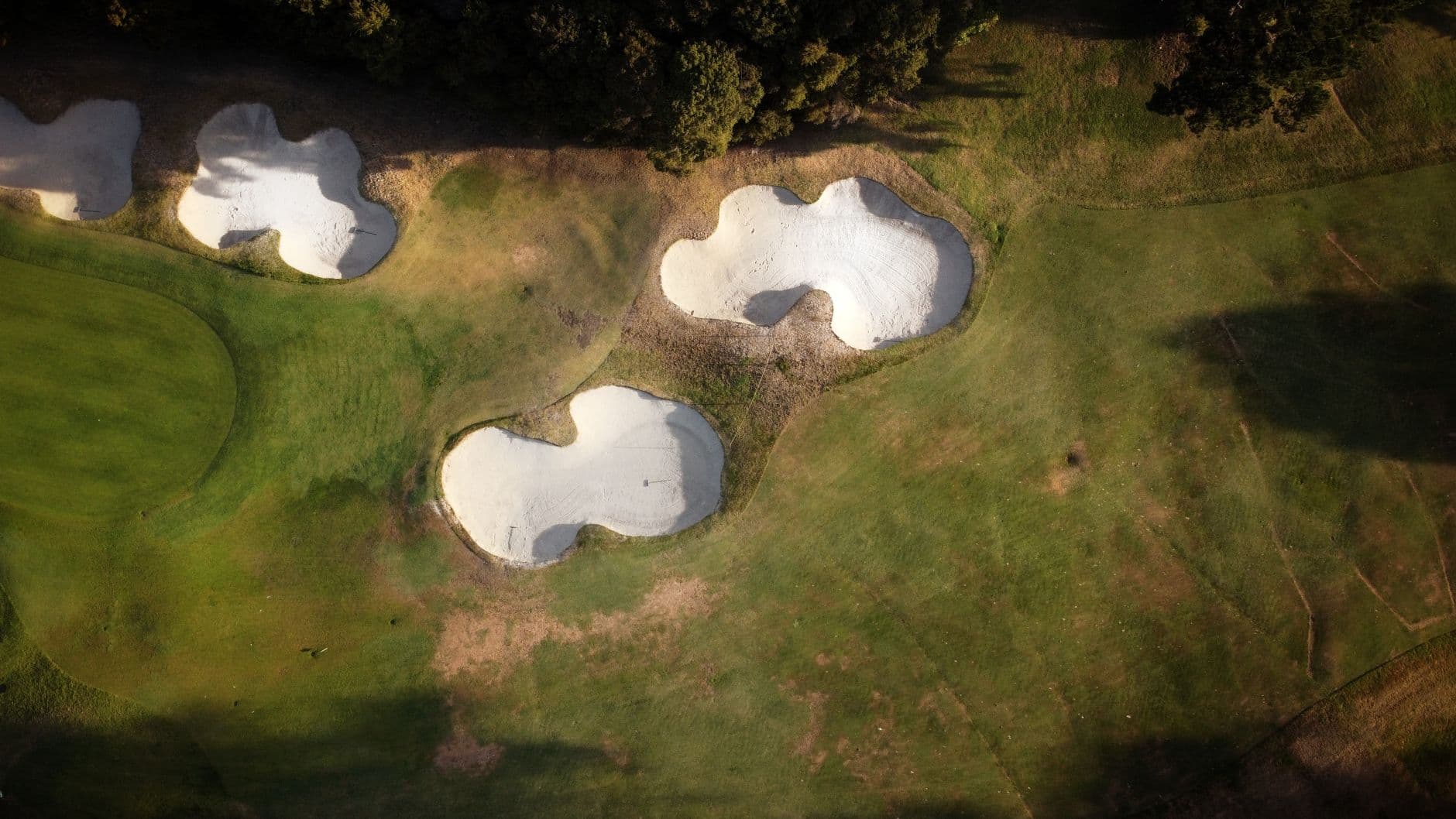
There exists a rarefied tier of American golf where membership waitlists span decades, initiation fees rival luxury automobiles, and the courses themselves represent the absolute pinnacle of design excellence. These private sanctuaries have hosted countless major championships, shaped the careers of legends, and continue to challenge the world's finest players with holes that have become synonymous with golf itself.

For the discerning golfer, understanding these signature holes isn't merely academic—it's essential knowledge. These are the proving grounds where champions are crowned and legacies are forged, each offering lessons in course management, risk-reward assessment, and the mental fortitude required to compete at the highest level.
Augusta National: Where Legends Face Their Defining Moments
No discussion of America's elite private clubs begins anywhere but Augusta National Golf Club. The brainchild of Bobby Jones and Alister MacKenzie, this Georgia sanctuary has hosted The Masters since 1934, creating more iconic moments per square yard than perhaps any other venue in golf.
The 12th hole at Amen Corner stands as arguably the most consequential par-three in championship golf. Playing at approximately 155 yards, Golden Bell appears deceptively simple—a short iron over Rae's Creek to a shallow green. Yet the swirling winds through the Georgia pines have destroyed more Masters dreams than any other single hole.
There is no hole in golf that causes more consternation, more second-guessing, more outright fear than the 12th at Augusta.
— Ben Crenshaw
The green's extreme horizontal orientation—running left to right at roughly 35 yards wide but barely 10 yards deep in places—punishes any miscalculation severely. Front bunkers and Rae's Creek await short approaches, while the back bunker and azaleas punish overcooks. Masters history is littered with double and triple bogeys here that have cost green jackets.
Pine Valley: The Cathedral of American Golf
Consistently ranked among the world's finest courses, Pine Valley Golf Club in New Jersey represents George Crump's masterwork—a layout so demanding that it has never hosted a major championship, deemed simply too severe for professional medal play at the highest level.
The seventh hole epitomizes Pine Valley's uncompromising philosophy. This par-five features the notorious Hell's Half Acre, a massive sandy wasteland that bisects the fairway and forces golfers into existential decisions. From an elevated tee, players must choose between laying up short of this abyss or carrying it entirely—a carry of considerable distance that leaves little margin for error.
- Hell's Half Acre spans approximately two acres of sandy waste
- The green sits elevated and well-protected by bunkers
- A ball finding Hell's Half Acre typically results in a half-shot penalty minimum
- Course management here separates elite players from aspirational ones
Pine Valley's allure lies precisely in its refusal to offer bail-out options. Every shot demands commitment, and the seventh hole represents this philosophy in its purest form.
Cypress Point: Where Pacific Drama Meets Strategic Brilliance
Alister MacKenzie's other American masterpiece sits along the Monterey Peninsula's rugged coastline, and its 16th hole may be the most photographed par-three on the continent. This oceanfront gem demands a carry entirely over the Pacific crashing against rocky outcrops—a shot of pure theater.

The carry to the green stretches approximately 220 yards from the back tees, with the Pacific Ocean churning below the entire route. A bailout fairway exists to the left for those unwilling to challenge the direct line, but accepting this safer route fundamentally changes the hole's character, often requiring three shots to make par.
Wind off the Pacific adds another variable entirely. What plays as a smooth three-wood in calm conditions may demand driver into a coastal breeze—or conversely, become a controlled seven-iron when winds favor the golfer. Reading these conditions separates local knowledge from visiting ambition.
The Mental Calculus of the Heroic Shot
Cypress Point's 16th presents the ultimate risk-reward examination. In stroke play, the mathematical calculation often favors the safe play—a guaranteed bogey attempt versus a potential water ball. But in match play, circumstances change entirely. Down two with three to play, the ocean becomes a secondary concern.
Shinnecock Hills: Links Golf on American Soil
Among America's oldest clubs, Shinnecock Hills in Southampton, New York, offers the closest approximation to authentic links golf found stateside. Its 14th hole exemplifies the creative shot-making these conditions demand.
This par-four doglegs around natural dune formations, requiring precise positioning off the tee to access a green protected by both terrain and wind. The Peconic Bay winds rarely rest, transforming club selection into a constantly shifting puzzle.
- Evaluate wind direction and strength before club selection
- Position tee shots to avoid dune interference with approach angles
- Account for firm, fast green conditions that reject high-spinning approaches
- Utilize bump-and-run options when conditions permit
Shinnecock's greens run firm and fast, rejecting the high-spin, target-golf approaches that work elsewhere. Players accustomed to attacking pins must adapt, using the ground as ally rather than obstacle.
The Common Thread: Strategic Integrity
What unites these signature holes across America's most exclusive clubs isn't mere difficulty—public courses can offer punishing length and penal rough. Rather, these holes share an architectural honesty that presents clear choices with proportional consequences.
Each offers multiple paths to par, rewarding boldness when executed properly while punishing hubris with mathematical precision. The heroic line at Cypress Point's 16th, the aggressive play at Pine Valley's seventh, the pin-hunting at Augusta's 12th—all represent calculated gambles where the player, not the architect, determines their fate.
The object of a bunker or trap is not only to punish a physical mistake, but also to punish pride and egotism.
— Alister MacKenzie
For golfers fortunate enough to walk these hallowed grounds—or those studying course design principles to improve their own games—these signature holes offer master classes in strategic architecture. They remind us that golf's greatest challenges exist not in mere length or hazard placement, but in the space between our ears where risk and reward are eternally weighed.
Understanding how elite players navigate these holes provides valuable insight for managing risk-reward scenarios on any course. The principles remain constant: assess conditions honestly, commit fully to chosen shots, and accept that golf's finest moments often emerge from its most demanding challenges.
Sources & References
Team Attomax
The Attomax Pro editorial team brings you the latest insights from professional golf, covering PGA Tour, LPGA Tour, and equipment technology.