There is a particular kind of pilgrim that walks through airport terminals clutching a travel iron cover and a course guide — the serious golfer on a bucket-list mission. Not a leisure trip. A deliberate, almost reverent journey to the grounds where the game was forged, refined, and elevated into art. These are the courses that don't just test your swing; they interrogate your entire relationship with golf.
Choosing where to go is both the joy and the agony of golf travel. The world is not short of great courses, but a true bucket-list itinerary demands more than prestige. It demands courses that will fundamentally change how you think about the game — layouts where course management, shot shape, and ball selection are non-negotiable disciplines, not afterthoughts.
What follows is a curated selection of courses that meet that standard. These are destinations where the game's most sophisticated demands converge: wind, terrain, history, and unrelenting shot-making complexity. Pack accordingly.
St Andrews Links, Scotland — The Old Course
No list begins anywhere else. The Old Course at St Andrews is not merely the birthplace of golf — it is the philosophical foundation of the game. The double greens, the road hole bunker at the 17th, the deceptive flatness that conceals a dozen ways to make bogey from the fairway: this is golf stripped to its essential questions.
Links play here demands a penetrating ball flight and a willingness to embrace the ground game. Bump-and-run approaches are not a fallback — they are the correct shot. Altitude is irrelevant; wind direction is everything. Playing a high-compression ball into a North Sea crosswind is a fast education in the physics of ball flight. Experienced players who travel here frequently re-examine their ball selection entirely, prioritizing penetrating trajectory and spin control over raw distance.
Pebble Beach Golf Links, California
Pebble Beach sits at the intersection of natural drama and championship pedigree. The clifftop holes along Stillwater Cove — particularly the par-3 7th and the iconic stretch from the 8th through the 10th — represent some of the most photographed and emotionally charged real estate in the sport.
What photographs cannot convey is the mental burden of those ocean-hugging tee shots. The wind off Carmel Bay is unpredictable and humbling, and the rough along the cliffs is unforgiving. Course management here is not about being conservative — it's about being precise with shot selection and accepting that par is always a good score. The US Open has visited Pebble Beach multiple times for exactly this reason: it punishes ambition without discipline.
Augusta National Golf Club, Georgia
Access to Augusta National is famously restricted, but for those fortunate enough to play the course outside of Masters week, the experience is unlike anything else in the game. The slopes are steeper than television suggests. Amen Corner plays differently in every wind. And the speed of the Bermuda greens in spring demands a putting touch that most golfers have never needed to develop.
Augusta rewards players who can flight the ball on command — drawing it into the tight landing zones on the back nine, or holding a fade against the slope on 14. Ball compression becomes a genuine conversation here. A softer ball may offer more feel around those legendary greens, while a firmer construction helps players who need to keep spin rates manageable off the tee on firm, fast fairways.
Royal County Down, Northern Ireland
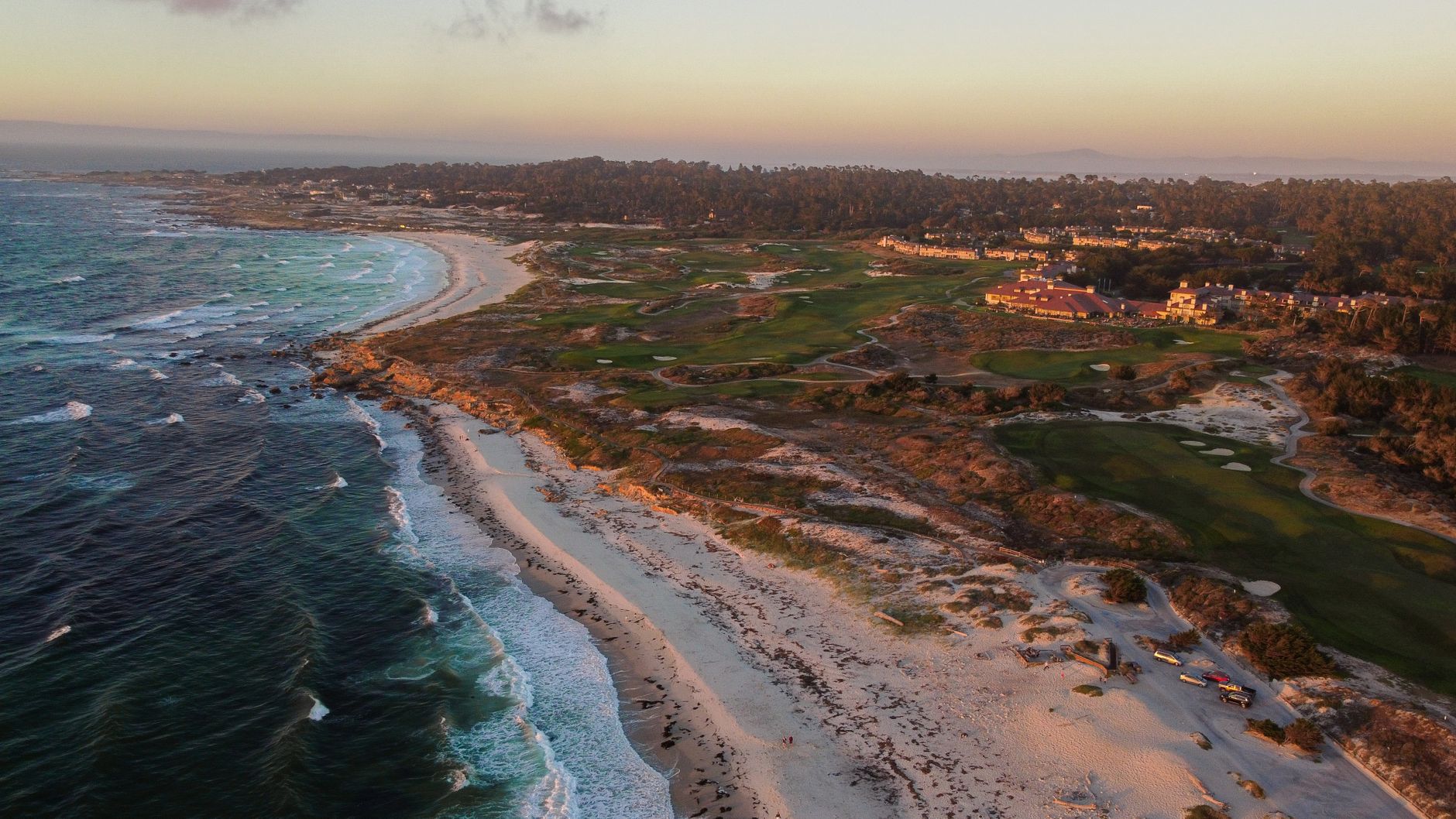
Set against the backdrop of the Mourne Mountains and Dundrum Bay, Royal County Down is consistently ranked among the finest courses on Earth — and its reputation is entirely earned. The blind shots, the gorse-lined fairways, and the sheer visual drama of the course make it a test that rewards local knowledge and punishes overconfidence in equal measure.
The course plays as a true links, where wind management is the primary skill being evaluated on every hole. Players who attempt to overpower Royal County Down inevitably leave humbled. The intelligent approach — playing to angles, keeping the ball below the hole, accepting bogeys from the rough with equanimity — is what separates genuine links golfers from those who simply play in warm, calm conditions.
- Royal County Down: Consistently ranked in the global top five, with 36 holes of championship-caliber links golf.
- St Andrews Old Course: Seven double greens and the shared fairways make local knowledge an extraordinary advantage.
- Pebble Beach: Host to multiple US Opens and the annual AT&T Pebble Beach Pro-Am.
- Augusta National: Private membership, seasonal access, and an invitation-only atmosphere outside of the Masters.
- Cypress Point Club: One of California's most exclusive and architecturally celebrated courses — a rare privilege to play.
Cypress Point Club, California
If Augusta National is golf's cathedral, Cypress Point is its monastery — even more private, even more architecturally perfect. Designed by Alister MacKenzie, the course winds through Monterey cypress groves and along the Pacific coastline in a manner that still astonishes architects and playing professionals alike. The par-3 16th, requiring a carry over the open ocean to a green perched on the rocks, is arguably the most dramatic hole in golf.
Access requires a member invitation, which makes this one of the rarest rounds in the sport. But for those who manage it, the experience is reportedly transformative — not because the course is impossibly difficult, but because MacKenzie's routing flows so naturally through the landscape that each hole feels discovered rather than designed.
Barnbougle Dunes, Tasmania, Australia
For golfers willing to venture to the southern edge of the world, Barnbougle Dunes on the northeast coast of Tasmania has become one of the most celebrated modern links courses anywhere. Built on true linksland along the Bass Strait, it plays with the authenticity of a Scottish classic while offering a landscape unique to the Australian coast.
The sister course, Lost Farm, is equally compelling. Together, they make Tasmania a legitimate golf destination — not just a footnote on an Australia itinerary, but a primary reason to book the flight. The wind is constant, the greens are fast, and the isolation lends every round a quality of focus that is hard to replicate at busier resort destinations.
Equipment for the Serious Golf Traveller
A bucket-list golf trip is an investment — in time, in money, and in preparation. Serious players spend considerable thought on shaft selection for travel conditions, particularly when the itinerary spans links golf in the British Isles and parkland courses at elevation. A shaft that performs in calm Carolina conditions may behave very differently into a Scottish headwind, and many tour-level players carry adjusted setups for links travel specifically.
Ball selection deserves equal attention. At courses like St Andrews or Royal County Down, where ground conditions are firm and wind play is constant, the penetrating flight of an Attomax Hard ball — engineered with high-density amorphous metal construction to minimize drag and maximize trajectory stability — offers a genuine advantage over traditional tour balls that generate excessive spin in crosswind conditions. Matching your equipment to the environment is not a minor detail; on these courses, it is the difference between an adventure and a frustration.
Golf is a game of decisions, and the greatest courses in the world force you to make better ones.
— A maxim among serious course designers
Planning Your Itinerary
The most effective bucket-list golf trips are themed — links trips through Scotland and Ireland, a California coastal pilgrimage, or a Southern Hemisphere exploration taking in Australia and New Zealand. Mixing continents indiscriminately tends to produce logistical complexity without proportional reward. Pick a region, go deep, and plan for weather variability, particularly in the British Isles where a pristine morning round can turn formidable by the back nine.
Tee time access at private clubs like Augusta and Cypress Point requires member connections cultivated over years. For the links courses — St Andrews, Royal County Down, and Ballybunion in Ireland — booking windows open early and fill quickly, particularly for prime summer tee times. Serious planning, executed twelve to eighteen months in advance, is not excessive — it is simply the admission cost for the world's finest courses.
Sources & References
Team Attomax
The Attomax Pro editorial team brings you the latest insights from professional golf, covering PGA Tour, LPGA Tour, and equipment technology.