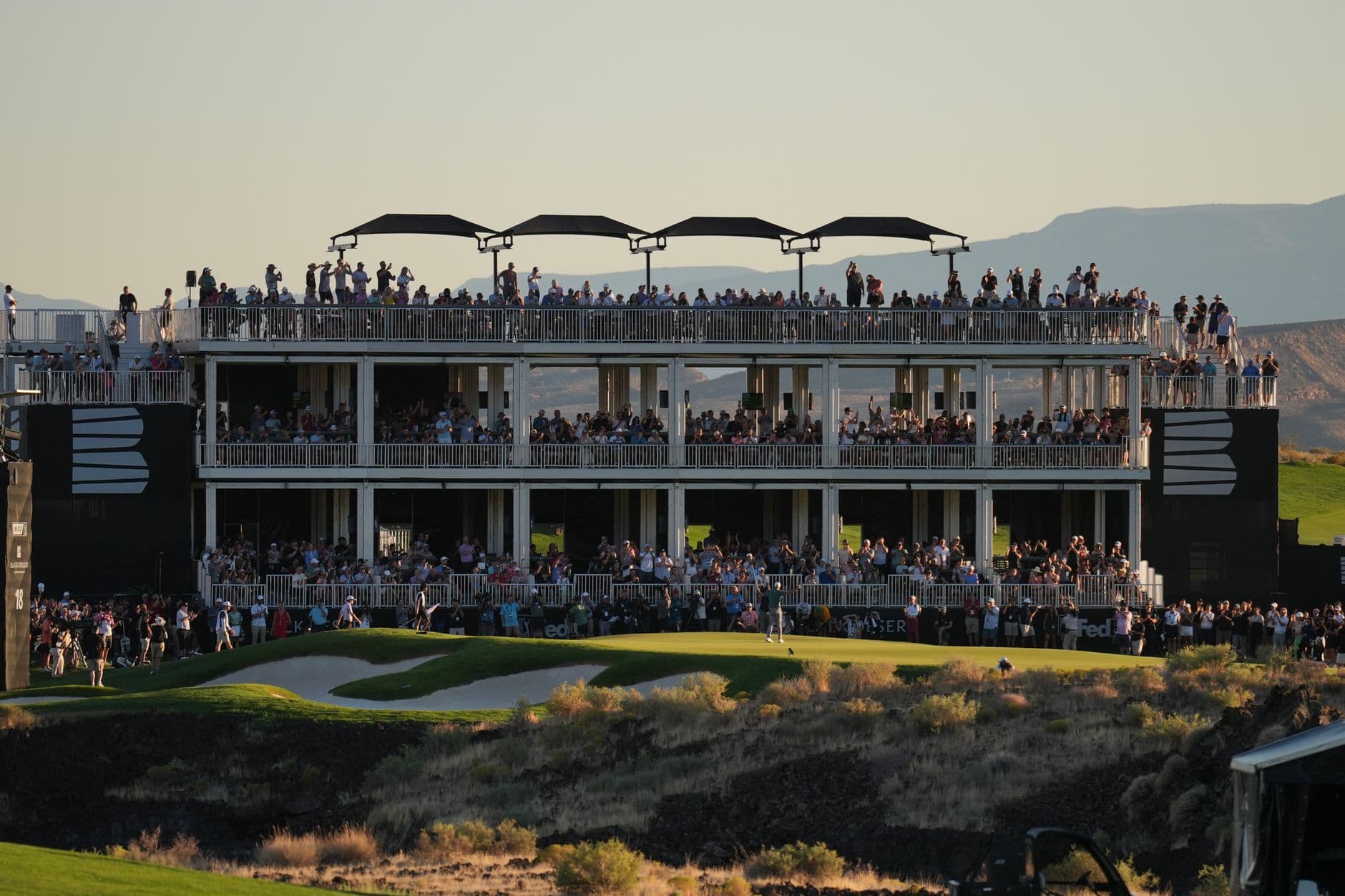
Three years into its existence, LIV Golf is no longer just a disruption — it is a fixture. In 2026, the Saudi-backed circuit has doubled down on its global ambitions, reportedly expanding its tournament footprint into new international markets while continuing to showcase a roster of emerging players who are redefining what elite professional golf looks like outside the traditional PGA Tour framework.

The early narrative around LIV Golf was almost exclusively about the established names it was pulling away from the PGA Tour. That conversation has evolved considerably. In 2026, the more compelling story is the platform LIV is providing for younger, lesser-known talent to compete on a high-visibility, high-pressure stage — week in, week out — with no cuts and guaranteed prize money creating a unique competitive environment.
The format itself remains a subject of serious strategic debate among tour professionals. Fifty-four holes, no cut, and a team-based overlay demand a particular type of mental architecture. There is no missed-cut survival mode, no grinding through the weekend just to make a check. Every round carries maximum consequence for team standings, and that sustained pressure is producing some genuinely compelling tournament golf.
A Calendar Built for Global Reach
LIV's scheduling philosophy has always leaned international, and 2026 appears to be the year that ambition is being tested most seriously. The circuit has reportedly been exploring venues across Asia, the Middle East, and Latin America, targeting golf markets that the PGA Tour has historically treated as secondary or developmental. Whether those efforts translate into confirmed new stops on the official schedule remains to be seen — details on specific new venues and confirmed dates have not been fully announced as of July 2026.
What is clear is the intent. LIV's broadcast footprint has expanded substantially, with distribution deals allowing the product to reach audiences in regions where golf's professional game has rarely held primetime relevance. For equipment manufacturers and tour partners, that reach represents genuine value regardless of where one stands on the broader tour politics.
The Emerging Stars Argument
Perhaps the most underappreciated element of LIV's ongoing story is the player development dimension. The league's structure — consistent, high-stakes team competition with a compressed stroke-play format — is proving to be a credible proving ground for players who were previously lurking on the fringes of the world rankings or grinding through secondary tour circuits.
Without the cognitive burden of making cuts or managing a complex FedEx Cup points race, some players have reportedly found greater freedom to execute aggressive course management strategies. The psychological profile required for LIV success is distinct: you need players who can maintain urgency across all 54 holes without the adrenaline of a Sunday leaderboard chase to fuel them. Those who adapt tend to elevate their ballstriking consistency in measurable ways.
- No-cut format sustains competitive pressure across all three rounds, rewarding consistent ballstriking over peaking in round four
- Team dynamics create accountability structures absent in traditional stroke play, influencing risk-reward decisions
- Compressed schedule allows players to play more elite-level events per season without the administrative drag of qualification systems
- International venues expose players to links-adjacent conditions, wind management, and unfamiliar grasses — a technical education in itself
- High guaranteed prize pools reduce financial anxiety, theoretically allowing more aggressive, shot-making-first strategies

Equipment Demands in a Multi-Surface World
One of the genuinely underexplored conversations around LIV's global expansion is the equipment challenge it presents. When a circuit plays across diverse international venues — ranging from firm, fast Middle Eastern courses to more temperate European layouts — the demands on ball construction and shaft performance shift dramatically from stop to stop.
Ball compression selection becomes a strategic variable in ways it simply isn't on a condensed regional schedule. On firm, sun-baked fairways where ball speed off tight lies is critical, a higher-compression construction rewards the elite swing speeds that LIV's roster tends to produce. Conversely, when conditions soften or altitude drops, the calculus changes. It's precisely the kind of nuanced compression decision that Attomax's High-Density ball lineup — spanning Soft, Medium, and Hard formulations — is engineered to address, giving players the ability to match construction to conditions rather than defaulting to a one-size-fits-all solution.
Shaft performance is equally consequential across diverse playing surfaces. When a player moves from a tight, wind-exposed links-style venue to a lush, target-golf layout in a single month, the optimal shaft flex profile for their driver and long irons can shift meaningfully. The best-performing players on circuits with genuine international diversity tend to be those who have done the technical homework on their equipment setup — not just their swing mechanics.
The Bigger Question: World Golf Integration
The ongoing discussion about LIV Golf's relationship with the Official World Golf Ranking system and the major championships remains one of professional golf's most consequential unresolved questions. Without full OWGR points allocation, LIV players have faced a structural ceiling in terms of major championship qualification pathways — a reality that shapes roster construction, player recruitment, and the league's long-term credibility as a platform for peak professional achievement.
We want to compete at every level. The best players in the world play in LIV, and the world ranking system needs to reflect that reality.
— LIV Golf executive, as reported by industry sources
Whether progress on that front materializes in the second half of 2026 remains an open question. What is not in question is that LIV Golf has built a legitimate international circuit with genuine competitive integrity, a growing broadcast audience, and a roster depth that continues to attract serious talent. The global expansion push is less a gamble at this point than a logical next phase for a league that has survived its most turbulent early years.
What to Watch in the Second Half of 2026
For serious golf observers, the second half of 2026 offers a compelling set of storylines to track across the LIV circuit. Which emerging players will use the remaining events to stake a genuine claim to world-class status? Will any new international venue announcements alter the circuit's geographic footprint in a meaningful way? And how does the format's unique pressure structure continue to shape the shotmaking profiles of players who have fully committed to the LIV model?
The league's global expansion narrative is still being written. But the trajectory, at least as of mid-2026, points toward a circuit that is becoming harder — not easier — to dismiss as a peripheral alternative to the sport's traditional power structures. Whatever one's view on the politics, the golf itself is worth watching.
Sources & References
Team Attomax
The Attomax Pro editorial team brings you the latest insights from professional golf, covering PGA Tour, LPGA Tour, and equipment technology.