Ask most golfers what makes a shaft "stiff" and they'll point to the flex letter stamped near the grip. But that single-axis rating describes only bending stiffness — how much the shaft flexes along its length during the swing. It says almost nothing about hoop strength, the shaft's resistance to crushing or ovalizing around its circumference, which governs feel at impact, energy transfer efficiency, and long-term durability.
Conflating the two is one of the most common mistakes serious equipment buyers make. A shaft can be extremely stiff in bending yet structurally weak in hoop terms, and vice versa. Understanding the distinction is essential for anyone trying to interpret spec sheets rather than marketing copy.
What Bending Stiffness Actually Measures
Bending stiffness, sometimes expressed through EI (modulus of elasticity multiplied by moment of inertia) profiles, describes how much the shaft resists deflection when force is applied perpendicular to its axis. This is what produces the load-and-release sensation players feel through transition and into impact. Flex ratings, kick points, and torque figures are all downstream expressions of this bending profile.
Manufacturers manipulate bending stiffness by varying wall thickness, fibre orientation, and the layering sequence of prepreg sheets along the shaft's length. A butt section can be engineered stiff for stability while the tip section is softened to promote a specific release timing — all without changing the shaft's outer diameter.
Hoop Strength: The Overlooked Variable
Hoop strength refers to the shaft's ability to resist deformation around its circumference — essentially, its resistance to being crushed into an oval rather than remaining round under load. During the downswing and especially at impact, a shaft experiences compressive forces from multiple directions simultaneously, not just the bending forces along its length.
A shaft with insufficient hoop strength can exhibit micro-ovalization at impact, bleeding energy that should otherwise transfer to ball speed. This is invisible on a standard flex chart. Two shafts can carry identical bending stiffness ratings and yet feel and perform very differently because one has a fibre architecture reinforcing circumferential strength and the other does not.
- Bending stiffness governs the timing and feel of the load-and-release action through the swing
- Hoop strength governs how efficiently the shaft holds its shape under compressive and torsional loads at impact
- A shaft can be stiff along its length but structurally weak against ovalization, producing energy loss invisible to flex charts
- Fibre orientation — not just wall thickness — is the primary lever for improving hoop strength without adding weight
Why This Matters at Impact
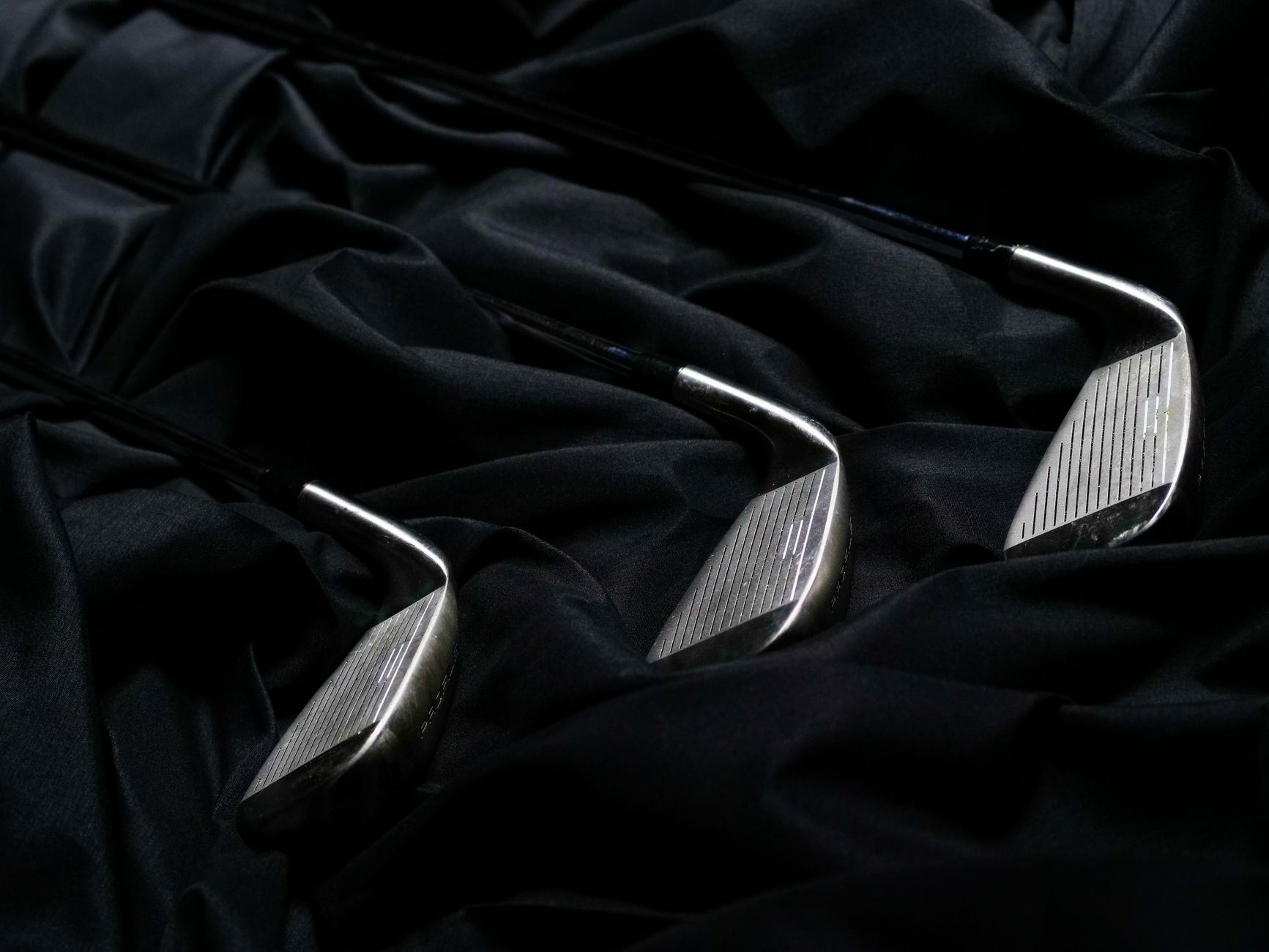
The moment of impact generates the shaft's highest instantaneous loads, and much of that loading is circumferential rather than purely longitudinal. A shaft that maintains its round cross-section under this stress delivers more consistent face contact and a crisper feel at the hands. One that ovalizes, even fractionally, tends to feel muted or "dead" through impact regardless of how the flex profile was tuned.
This is precisely why materials selection matters as much as architecture. High-modulus fibres like TORAYCA carbon fibre can be laid in hoop-oriented plies specifically to reinforce circumferential integrity, while separate longitudinal plies handle the bending profile. Attomax engineers this distinction directly into the ATOM Black and ATOM Blue platforms, pairing UHM 65T carbon with NANOALLOY resin to reinforce hoop strength independently of the bending stiffness curve — a construction detail explained in more depth on the brand's materials and engineering explainer.
Amorphous Metal's Role in Hoop Integrity
Carbon fibre alone cannot solve every hoop-strength challenge, particularly in the tip section where torsional and compressive loads concentrate. This is where amorphous metal — metallic glass alloy wire — becomes relevant. Its super-elastic properties allow it to absorb circumferential stress and return to its original shape without the micro-fatigue that eventually degrades conventional composite layups.
Layering amorphous metal wire strategically within the tip section reinforces hoop strength in the exact zone where impact loads are most concentrated, without meaningfully altering the bending stiffness profile the player has already been fitted for. It's a materials-science answer to a problem that pure carbon layup schedules struggle to solve on their own.
Flex tells you how the shaft loads. Hoop strength tells you how well it holds its shape while doing so — and only one of those shows up on a spec sheet.
— Attomax Pro Engineering Team
What This Means for Fitting
For golfers working through a fitting process, the practical takeaway is that flex and torque numbers should never be treated as the whole picture. A player experiencing a dull or inconsistent feel despite an otherwise correct flex match may be dealing with a hoop-strength deficiency rather than a bending-profile mismatch. This distinction is difficult to diagnose from static specs alone, which is why dynamic swing-load analysis matters.
Tools that assess actual swing characteristics rather than relying solely on stated flex categories are far better positioned to catch this. The free ATOM AI swing-analysis fitting tool evaluates tempo and load patterns to help match players not just to a flex letter, but to a full shaft architecture — bending profile and hoop integrity together.
Grip selection plays a supporting role here too, since a compound that allows the hands to remain relaxed through impact reduces the extraneous torque a golfer inadvertently introduces into the shaft. The grip range is engineered with this in mind, and full details on shaft models across flexes are available in the shaft range.
As shaft technology continues to mature, expect hoop strength to receive more attention in technical marketing — not as a replacement for flex conversations, but as the missing half of a story that's been incomplete for decades.
Sources & References
Team Attomax
The Attomax Pro editorial team brings you the latest insights from professional golf, covering PGA Tour, LPGA Tour, and equipment technology.