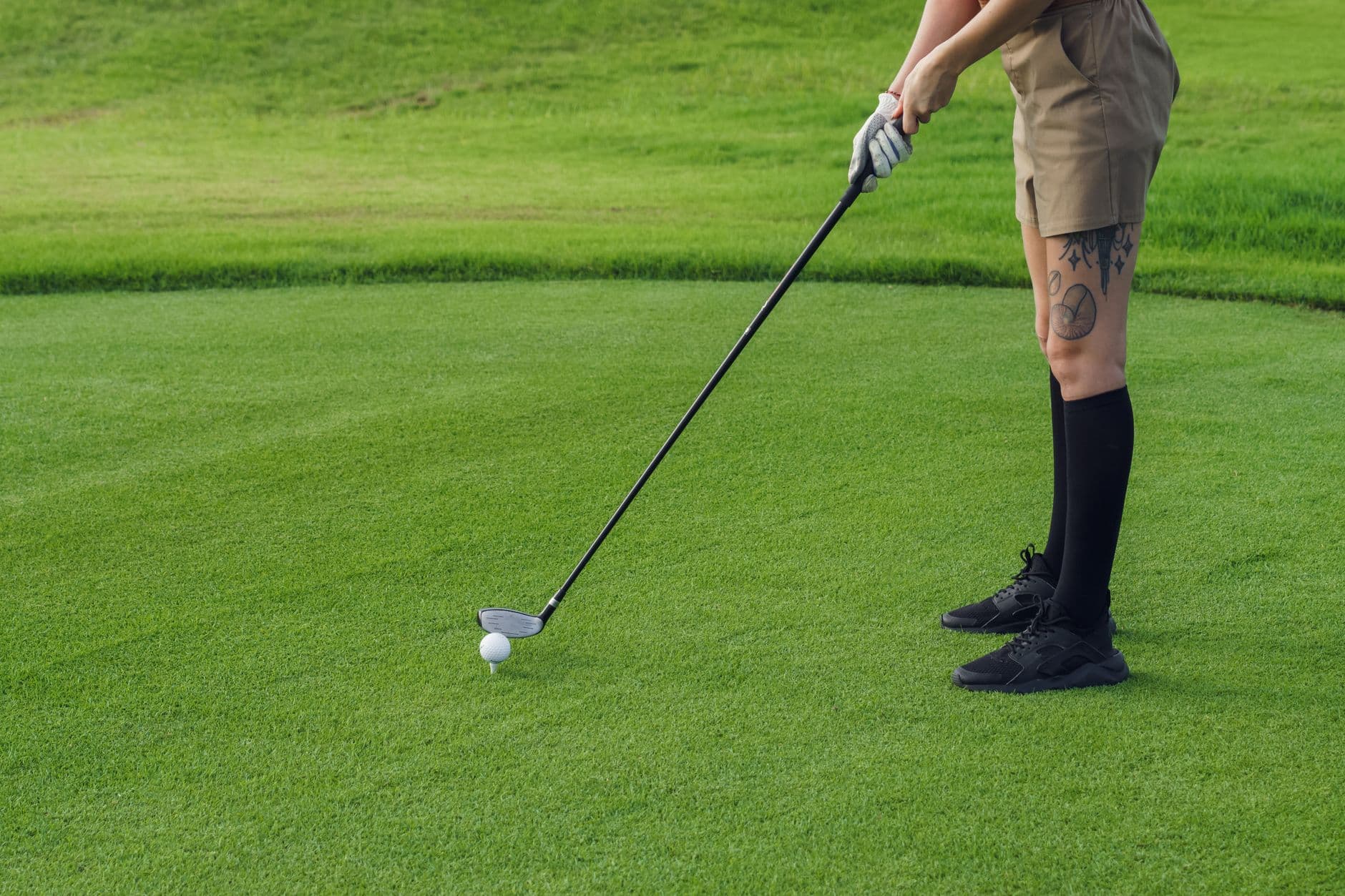
Golf instruction has always been as much art as science. But in 2026, the balance has shifted decisively. Across PGA Tour practice facilities, high-performance academies, and even well-equipped private clubs, artificial intelligence and data analytics platforms are supplanting the clipboard and the human eye with multi-dimensional performance models that would have seemed implausible a decade ago.
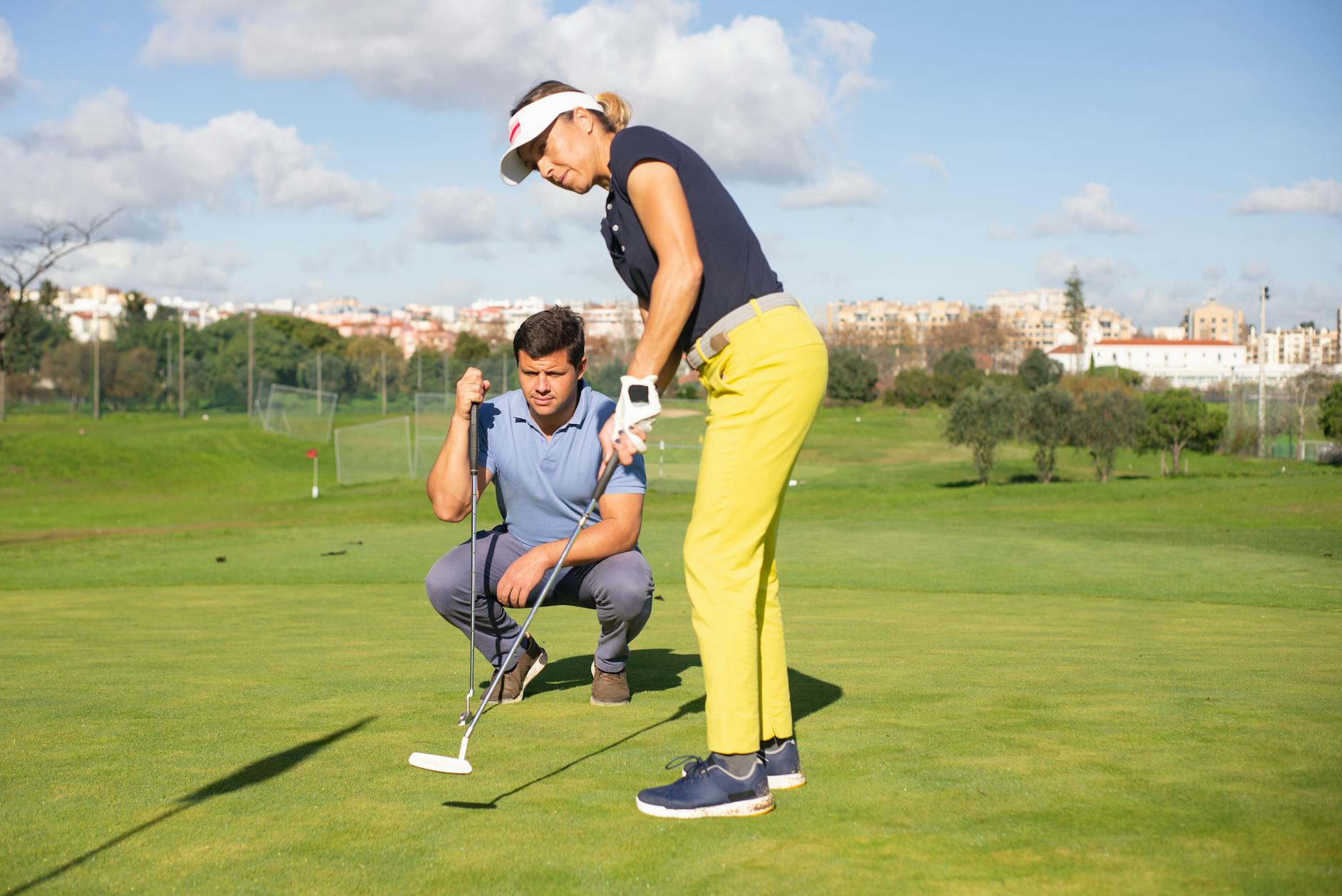
This is not about replacing the coach. The best instructors in the world — the likes of those working with the game's elite — still read intent, emotion, and competitive psychology in ways no algorithm can replicate. What AI does is arm those coaches with an unprecedented layer of objective data, closing the gap between what a player thinks they're doing and what they're actually doing.
The implications reach every skill level. A touring professional can identify micro-patterns in their shot dispersion across 72-hole tournaments. A single-digit handicapper can finally quantify why their scoring deteriorates on par-5s played into a prevailing wind. The data revolution is inclusive — provided you know how to interpret it.
From Launch Monitors to Predictive Models
The first wave of data-driven instruction arrived with high-speed launch monitors that measured ball speed, launch angle, spin rate, and smash factor with scientific precision. That foundation is now the baseline, not the ceiling. Modern AI coaching platforms ingest launch monitor data alongside 3D motion capture, pressure mapping, on-course GPS tracking, and even eye-tracking technology to construct a holistic performance fingerprint for each individual golfer.
Where this becomes genuinely transformative is in predictive analytics. Rather than simply cataloguing what happened on a given shot, these systems can model what is statistically likely to happen under specific conditions — elevated tee, firm fairways, crosswind of a certain magnitude — and recommend swing or equipment adjustments before the player ever steps to the tee. This is course management intelligence elevated to an entirely new plane.
- Shot-pattern dispersion mapping across full rounds, not just range sessions
- Real-time ground reaction force analysis to identify power-leak positions
- AI-generated video overlay comparing a player's current move to their own historical peak
- On-course strokes-gained modeling broken down by shot type, lie, and distance
- Predictive club selection recommendations based on individual carry variance data
The Biomechanics Revolution
Perhaps nowhere is AI's impact more profound than in biomechanical analysis. Systems using markerless motion capture — meaning no restrictive sensor suits — can now deliver detailed kinematic sequencing data from a smartphone video clip processed through a trained neural network. Elite academies are deploying this technology to monitor swing changes across multiple sessions and flag early signs of compensatory movement patterns that historically lead to injury.
For tour-level professionals, this is particularly valuable during high-volume competitive stretches. Fatigue subtly alters sequencing — hip clearance slows, lag deteriorates, attack angle steepens — and AI-powered biomechanical tools can detect these drift patterns days before they manifest as a missed cut. The coaching conversation shifts from reactive to preventive.

Equipment Fitting: The Data-Driven Dimension
Nowhere does the convergence of AI instruction and equipment technology feel more immediate than in fitting. When a player's swing data is fed into an AI fitting engine, the system can identify shaft profiles, flex points, and torque characteristics that align with their specific kinematic signature — not just their measured swing speed. The difference between a shaft that performs and one that merely fits a spec sheet is increasingly being resolved by this kind of granular algorithmic matching.
This is where premium shaft technology plays a decisive role. Attomax shafts, engineered around high-performance materials and precise flex-point calibration, become significantly more powerful as a fitting tool when paired with AI-generated swing data. A fitter armed with a player's real kinematic sequence — rather than a single swing speed number — can match an Attomax shaft profile to a golfer's actual loading pattern, extracting consistency gains that a traditional fitting session might miss entirely.
Ball Compression and Algorithmic Optimization
The same data-driven logic extends to ball selection. AI coaching platforms are beginning to incorporate ball performance modelling into their output — factoring in a player's peak ball speed, typical spin rates across shot types, and playing conditions to recommend compression profiles that optimize carry distance without sacrificing short-game feel. This matters enormously at altitude, on firm links-style turf, or in the cold morning rounds that define so many competitive rounds.
Attomax's high-density amorphous metal ball lineup — spanning Soft, Medium, and Hard compression variants — maps cleanly onto this analytical framework. Where traditional ball fitting relied on subjective feel and broad swing speed categories, AI-informed fitting can identify the precise compression profile that delivers maximum smash factor consistency for a specific player's delivery pattern, not just their peak clubhead speed. The Soft variant, for instance, may prove statistically superior for a player whose attack angle produces elevated spin even at moderate swing speeds — a nuance that only emerges through comprehensive data analysis.
Mental Performance: The Final Frontier
The most intriguing frontier in AI-assisted coaching is cognitive and emotional performance modelling. Platforms are beginning to integrate biometric wearables — heart rate variability, galvanic skin response, sleep quality metrics — alongside shot data to identify correlations between physiological state and on-course execution. The question is no longer just 'what did you hit?' but 'what were the conditions — internal and external — under which you hit it?'
The data doesn't replace the conversation between a coach and a player. It just makes that conversation infinitely more honest.
— Leading performance coach, high-performance golf academy
This layer of insight is particularly powerful for competitive golfers who understand their technical game deeply but struggle to replicate range performance under pressure. AI systems that correlate biometric stress indicators with swing metric deviation give coaches a language for that conversation — one grounded in objective measurement rather than anecdote.
The Coach's Role in the AI Era
It bears repeating: the best coaches are becoming more valuable in the AI era, not less. What the technology eliminates is wasted time — hours spent identifying patterns that algorithms can surface in seconds. What it cannot replace is the experienced coach's ability to prioritize which data points matter for a specific player at a specific moment in their development, and to deliver feedback in a way that builds trust and long-term technique.
The golfers who will gain the most from this technological moment are those willing to engage with the data seriously — to interrogate their strokes-gained numbers across shot types, to pursue biomechanical analysis with genuine curiosity, and to pair that information with expert instruction. In 2026, the gap between a data-informed golfer and one still operating on instinct alone has never been wider. The tools exist. The question is whether you are using them.
Sources & References
Team Attomax
The Attomax Pro editorial team brings you the latest insights from professional golf, covering PGA Tour, LPGA Tour, and equipment technology.