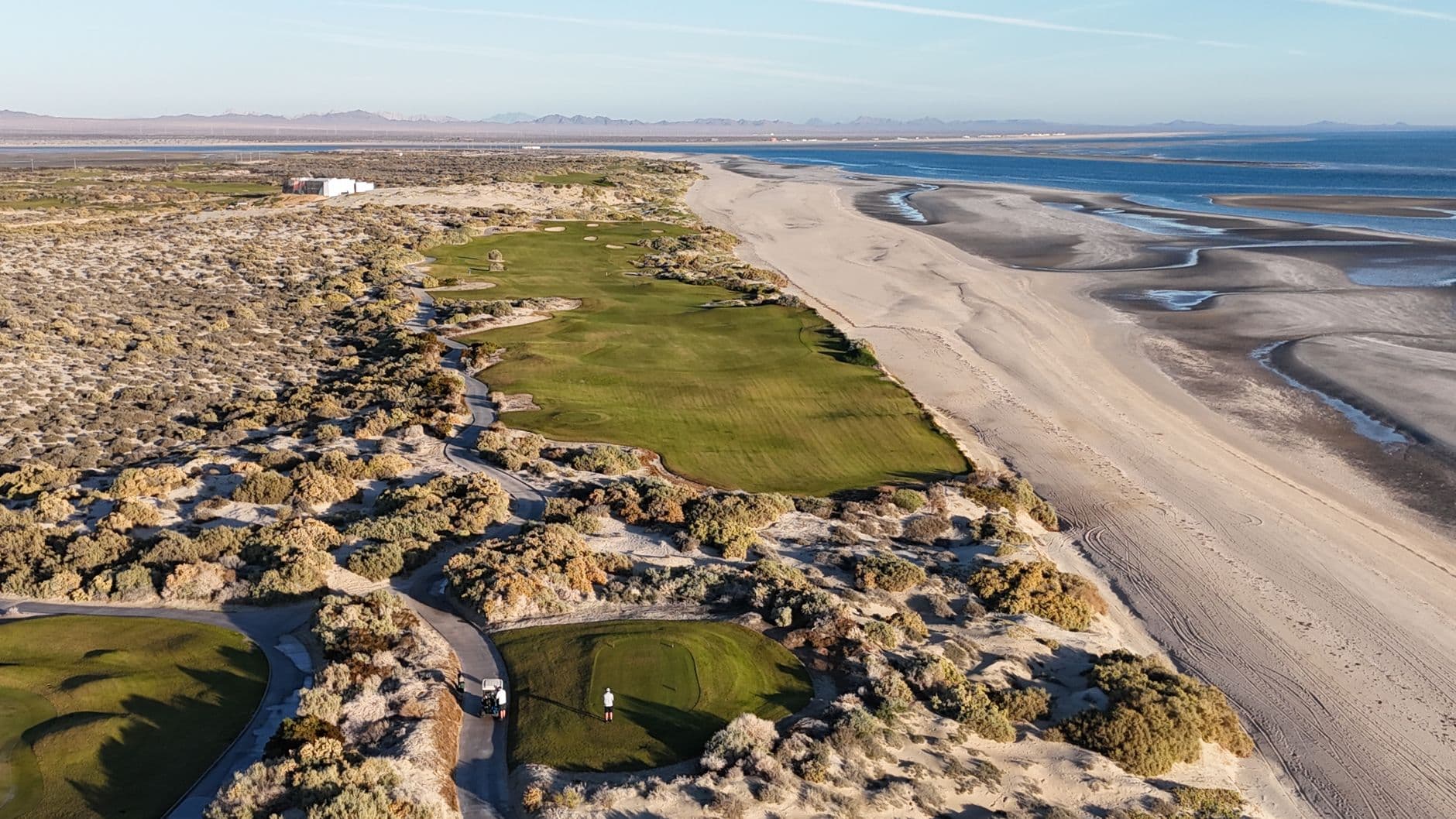
There exists a parallel universe in American golf—one where tee times are irrelevant, where initiation fees rival luxury home down payments, and where the waiting list for membership can span decades. These are the country clubs that have shaped not just the game's competitive landscape, but its very soul.

For the serious golfer, understanding these institutions goes beyond mere curiosity. These clubs have influenced course architecture worldwide, hosted the most consequential moments in professional golf, and continue to set standards for conditioning, hospitality, and tradition that ripple throughout the industry.
Augusta National: Where Tradition Becomes Religion
No discussion of elite American golf begins anywhere but Magnolia Lane. Founded in 1933 by Bobby Jones and Clifford Roberts on the site of a former indigo plantation and nursery, Augusta National Golf Club has transcended its Georgia roots to become golf's most recognizable cathedral.
The course itself, designed by Alister MacKenzie with significant input from Jones, undergoes constant refinement. Unlike most historic layouts that remain frozen in time, Augusta National continues to evolve—lengthening holes, repositioning bunkers, and adding a second cut of rough to combat modern equipment advances.
Membership at Augusta remains perhaps golf's most closely guarded secret. The club does not accept applications; members are invited at the discretion of the existing membership. The estimated 300 members reportedly pay modest annual dues, but the initiation fee—while never officially disclosed—is believed to be in the low six figures.
Augusta National is a young man's golf course, and you really need your A-game every time you step on the property.
— Jack Nicklaus
Pine Valley: The World's Most Difficult Walk
Tucked into the New Jersey Pine Barrens, Pine Valley Golf Club has maintained its reputation as the most challenging—and most exclusive—course in America since opening in 1918. George Crump, a Philadelphia hotelier with no formal design training, dedicated the final years of his life to creating what many consider the ultimate examination of golf.
The course features no parallel fairways, creating an isolation that makes each hole feel like its own private battle. Sandy waste areas, dense forests, and greens that reject anything but precision approach shots combine to create a layout where bogey often feels like victory.
- Founded in 1913, opened for play in 1918
- Designed by George Crump with consulting from H.S. Colt
- Located in Pine Valley, New Jersey
- Consistently ranked among the top courses in the world
- Known for its penal design philosophy and natural hazards
Membership invitations are extraordinarily rare, with the club maintaining an intentionally small roster. Pine Valley has historically been male-only, though recent years have seen gradual policy evolution at many traditionally single-gender clubs across the country.
Cypress Point: Where the Pacific Meets Perfection
On California's Monterey Peninsula, Cypress Point Club occupies what many consider the most stunning real estate in golf. Alister MacKenzie's 1928 masterpiece weaves through dunes, forests, and along cliff edges overlooking the Pacific Ocean, creating a sensory experience unmatched in the game.
The 15th through 17th holes—a routing that climbs along the coastline before the famous par-3 16th demands a carry over the churning Pacific—represent perhaps the finest three-hole stretch in existence. The 16th, requiring approximately 230 yards over ocean to a green perched on rock, has humbled generations of elite players.
Cypress Point's membership has never exceeded 250, and the club withdrew from hosting PGA Tour events decades ago, preferring anonymity to exposure. This decision, while limiting public access, has preserved the intimate character that makes the club so revered.
Shinnecock Hills: America's First Truly Great Golf Club
Established in 1891 on Long Island's eastern end, Shinnecock Hills holds claim to being the first incorporated golf club in America with a formal clubhouse and the first to admit women from its founding. The course, redesigned by William Flynn in 1931, embodies links-style golf adapted to American soil.
The windswept terrain, fescue-lined fairways, and greens that shed all but the most precise approaches have made Shinnecock a favorite among U.S. Open contestants. The course has hosted multiple U.S. Opens and consistently tests the world's best with its demanding second shots and unpredictable coastal winds.
- 1891: Club founded, one of five founding members of USGA in 1894
- 1896: Hosted second U.S. Open in history
- 1931: William Flynn redesign shapes modern layout
- Multiple U.S. Open host through the decades
- Continues to be regarded as one of America's finest tests
The Modern Membership Reality
For those harboring dreams of joining these institutions, the path remains intentionally obscured. Most elite clubs operate on invitation-only systems where prospective members must be sponsored by current members in good standing—often requiring multiple sponsors and extensive vetting periods.
Financial requirements represent merely the first hurdle. Initiation fees at top-tier clubs reportedly range from $250,000 to over $1 million at the most exclusive addresses. Annual dues, while often surprisingly modest at legacy clubs, can exceed $20,000 at more resort-oriented private facilities.
Beyond finances, these clubs seek members who will contribute to the club culture. Playing ability matters less than character, community standing, and demonstrated commitment to golf's traditions. Many clubs require regular attendance and minimum spending, ensuring active membership rather than trophy collectors.
The Equipment Connection
What unites members at these elite venues isn't just net worth—it's an obsessive pursuit of performance optimization. Players at this level understand that course conditions at Augusta or Pine Valley demand equipment precision impossible with standard offerings.
This explains why high-performance equipment choices, including advanced ball technologies like Attomax's high-density amorphous metal cores, resonate with this demographic. When your approaches must hold greens running at 13 on the Stimpmeter, spin consistency becomes non-negotiable.
Preserving Legacy While Embracing Evolution
America's iconic country clubs face a perpetual tension: honoring traditions that define their character while adapting to contemporary expectations. Dress codes, pace-of-play initiatives, and technology policies require constant calibration.
Yet what makes these institutions endure isn't resistance to change—it's their unwavering commitment to excellence. The conditioning at Augusta, the challenge at Pine Valley, the beauty at Cypress Point—these standards remain uncompromised regardless of what evolves around them.
For those fortunate enough to experience these hallowed grounds, whether as guests or members, the privilege carries responsibility. These clubs persist because generations of stewards have protected their character against the homogenizing forces of modern golf. That legacy, more than any initiation fee, represents their true currency.
Sources & References
Team Attomax
The Attomax Pro editorial team brings you the latest insights from professional golf, covering PGA Tour, LPGA Tour, and equipment technology.