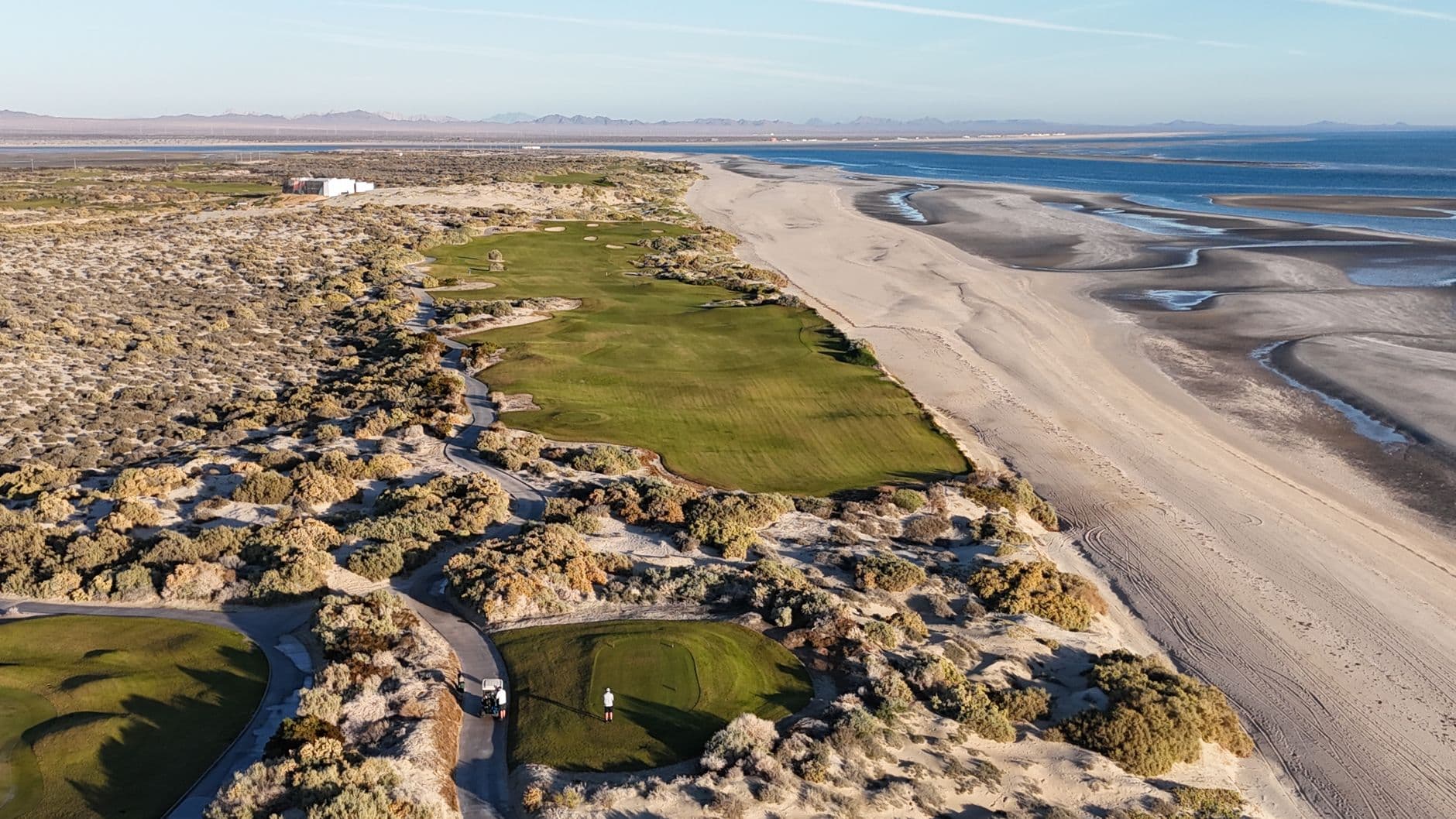
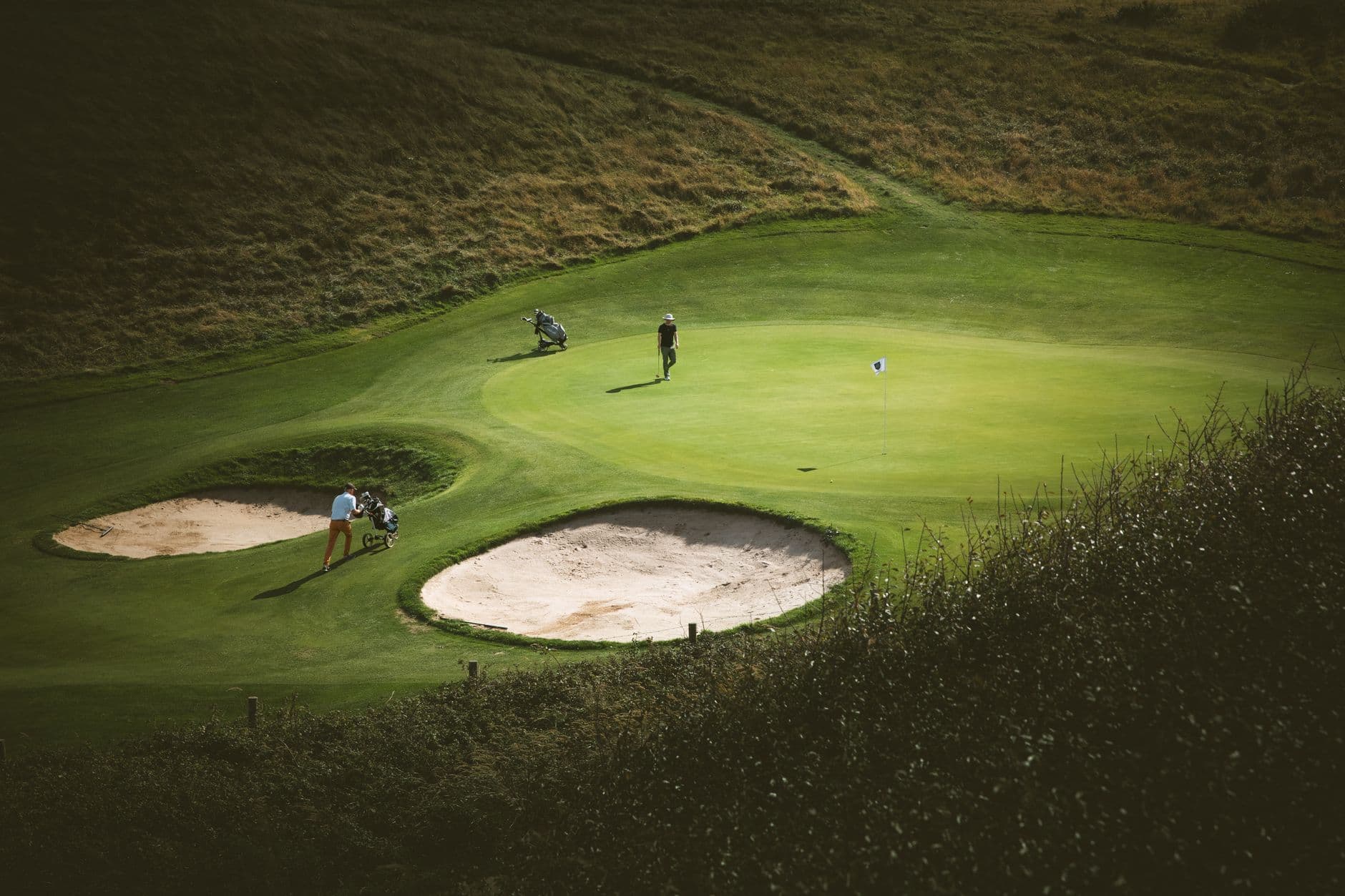
Nestled in Ardmore, Pennsylvania — just a short drive from Philadelphia — Merion Golf Club stands as one of the most revered and architecturally significant courses in the world. It does not overwhelm with length. It does not dazzle with stadium grandeur. Instead, it seduces with precision, history, and a quiet ruthlessness that has undone the world's greatest players across more than a century of championship golf.
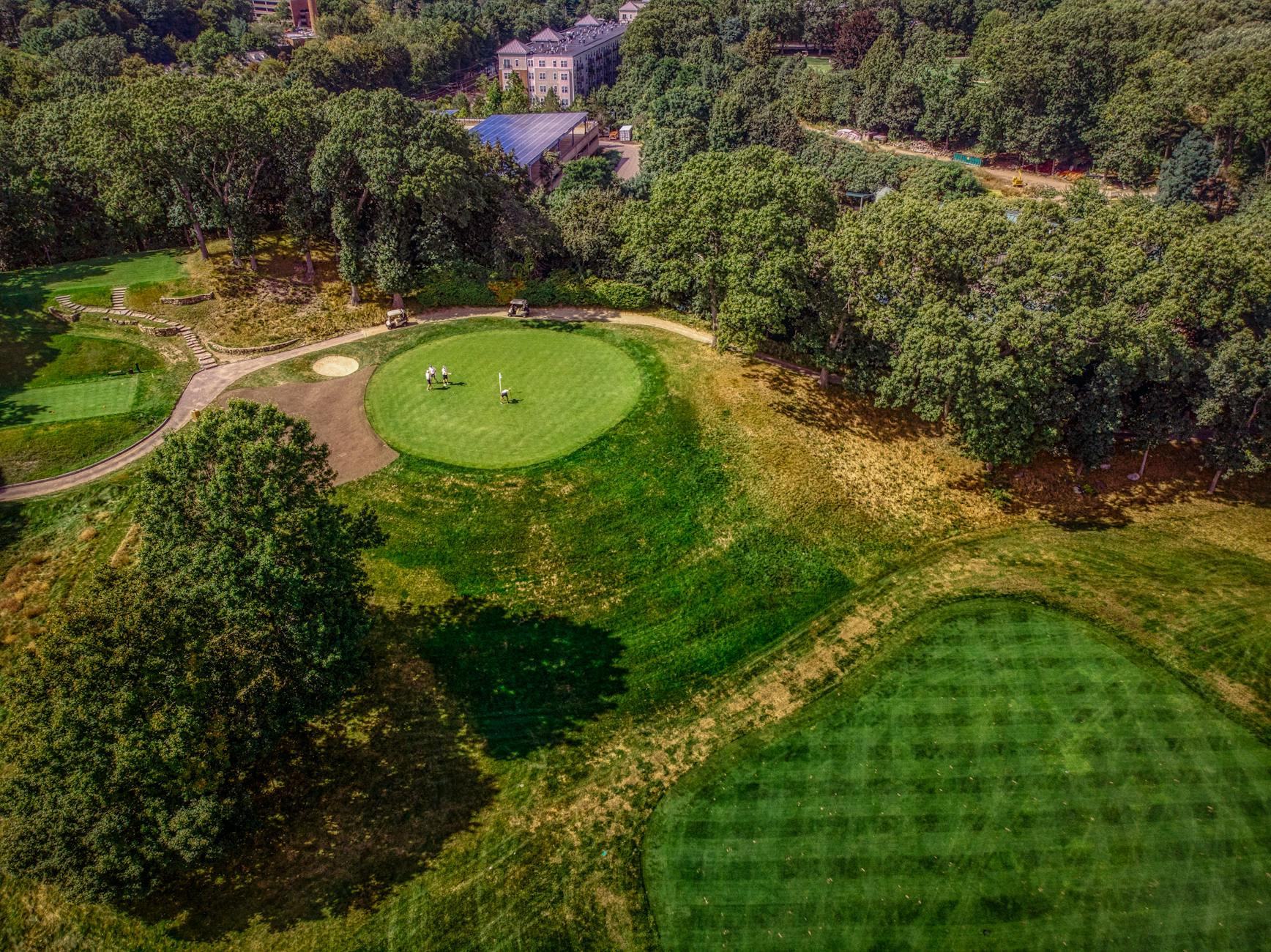
Founded in 1896, the club initially operated on a different site before commissioning Hugh Wilson to design the East Course — the one that matters in championship lore — in 1912. Wilson, a young club member with no formal architecture training, spent 18 months traveling the great links of Britain and Ireland before returning to craft what many consider the finest inland course on the American continent. He died at 32, leaving behind a legacy far larger than his years.
The East Course plays as a par 70, a figure that immediately separates it from the modern championship template. At under 7,000 yards in its traditional form, it forces a conversation that longer, more forgiving layouts actively avoid: pure shot-making over raw power. Every hole demands a decision, and those decisions compound with remarkable speed.
The Wicker Baskets: A Symbol Unlike Any Other
Ask any golfer what they associate with Merion, and the answer comes before they've finished thinking: the wicker baskets. In place of traditional flagsticks, Merion uses red wicker baskets mounted atop slender white poles to mark its holes. The tradition traces back to the club's earliest days, though the precise origin remains a subject of gentlemanly debate among historians.
One widely accepted account suggests the baskets were adopted from the British tradition of using similar markers on private estates and early links courses. Another theory points to a practical early-century solution: wicker baskets were simply more durable and visible in wind than cloth flags. Whatever the origin, the effect is unmistakable. When you arrive on a Merion green and see that basket swaying gently in a Pennsylvania breeze, you feel the full weight of the club's lineage.
The baskets are not merely decorative nostalgia — they have become a philosophical statement. In an era where courses compete to install technology-forward features and signature aesthetics, Merion's insistence on its wicker markers signals exactly where the club places its values: tradition, restraint, and a confidence that the game itself is the spectacle.
A Championship Venue Without Equal
Merion's East Course has hosted more USGA championships than virtually any other venue in America. Its major championship résumé reads like a highlight reel of the sport's defining moments, spanning amateur and professional golf across multiple generations.
- Bobby Jones completed his historic Grand Slam at Merion in 1930, winning the U.S. Amateur — the final leg of his unprecedented sweep of the U.S. Open, The Open Championship, U.S. Amateur, and British Amateur in a single calendar year.
- Ben Hogan's iconic 1-iron approach to the 18th hole during the 1950 U.S. Open playoff — just 16 months after surviving a near-fatal car accident — is one of the most photographed moments in golf history.
- Lee Trevino defeated Jack Nicklaus in a playoff at the 1971 U.S. Open, cementing his legacy as one of the game's great pressure performers.
- The 1981 U.S. Open saw David Graham become the first Australian to win the championship, posting one of the most surgically precise final rounds in major history.
- The 2013 U.S. Open returned after a 32-year absence, with Justin Rose claiming the title and the world watching a modern field grapple with a course that had not softened with time.

Course Architecture: Where Strategy Lives
What separates Merion architecturally is Wilson's use of the landscape's natural contours rather than wholesale reshaping. The routing winds through quarry cuts, elevated ridges, and tight doglegs that reward intelligent course management over brute force. The greens are famously small and wickedly contoured — missing by fifteen feet is frequently indistinguishable from missing by forty.
The par-4 11th, often called one of the finest holes in American golf, plays across a natural ravine that swallows errant approaches with no apology. The 16th, 17th, and 18th form a closing stretch of such consistent difficulty that championship leads have evaporated there across multiple eras. There is no let-up, no comfort hole, no birdie gift when the tournament is on the line.
Merion is the kind of course where you can make three birdies and feel like you stole something, and then it takes them all back on one hole.
— Common sentiment among tour professionals who have competed at Merion
Ball Selection & Equipment at Merion
Merion is precisely the type of venue where ball compression and spin characteristics become strategic variables rather than afterthoughts. With premium on approach precision into small, contoured greens — and the rough capable of costing players significant spin control on short-game shots — the relationship between ball construction and scoring is direct. Players who understand compression windows and can control trajectory through varying Eastern Pennsylvania conditions consistently outperform those who rely on length alone.
The Attomax High-Density lineup — Soft, Medium, and Hard compressions — addresses exactly this kind of course-specific demand. On a venue like Merion, where spin control into tight pins and feel around the green can define outcomes, matching compression to swing speed and conditions is the kind of precision that separates a competitive round from a great one.
The Club Beyond the Championship
It is easy to reduce Merion to its major championship footnotes, but the club's identity runs far deeper than its USGA partnership. The West Course, also designed by Wilson and opened in 1914, offers a shorter, more accessible experience that remains architecturally significant in its own right. The clubhouse, a converted farmhouse with modest interiors and no pretension toward palatial excess, reinforces the same ethos as those wicker baskets.
Membership at Merion has historically been understated and selective — the club has no interest in broadcasting its exclusivity precisely because that exclusivity is self-evident. Long waiting lists and a culture that prizes engagement with the game over social posturing have defined the membership experience for decades. Members play the course because it demands to be played, studied, and respected — not simply because it offers a prestigious address.
Why Merion Endures
In a landscape where golf course development has trended toward spectacle — volcano-flanked desert layouts, oceanside cliffhangers, courses that exist as much for photography as play — Merion represents something increasingly rare: a design whose genius is purely functional. Every feature serves the strategic challenge. Nothing exists for optics alone.
As the game evolves — equipment technologies advance, ball distances creep upward, and courses respond by adding yardage almost reflexively — Merion stands as proof that length was never the point. The point was always the shot. The decision. The consequence. That is what wicker baskets, a quarry crossing, and a century of championship drama have to teach us, and Merion has been a patient, unrelenting instructor for all of it.
Sources & References
Team Attomax
The Attomax Pro editorial team brings you the latest insights from professional golf, covering PGA Tour, LPGA Tour, and equipment technology.