Most mid-to-low handicap golfers obsess over swing mechanics, yet leave significant performance on the table because their irons are spec'd for someone else's body. A proper iron fitting—focused on loft, lie angle, and shaft weight—is one of the highest-leverage investments a serious player can make. The ball does not lie: impact data reveals fitting errors that even video analysis misses.
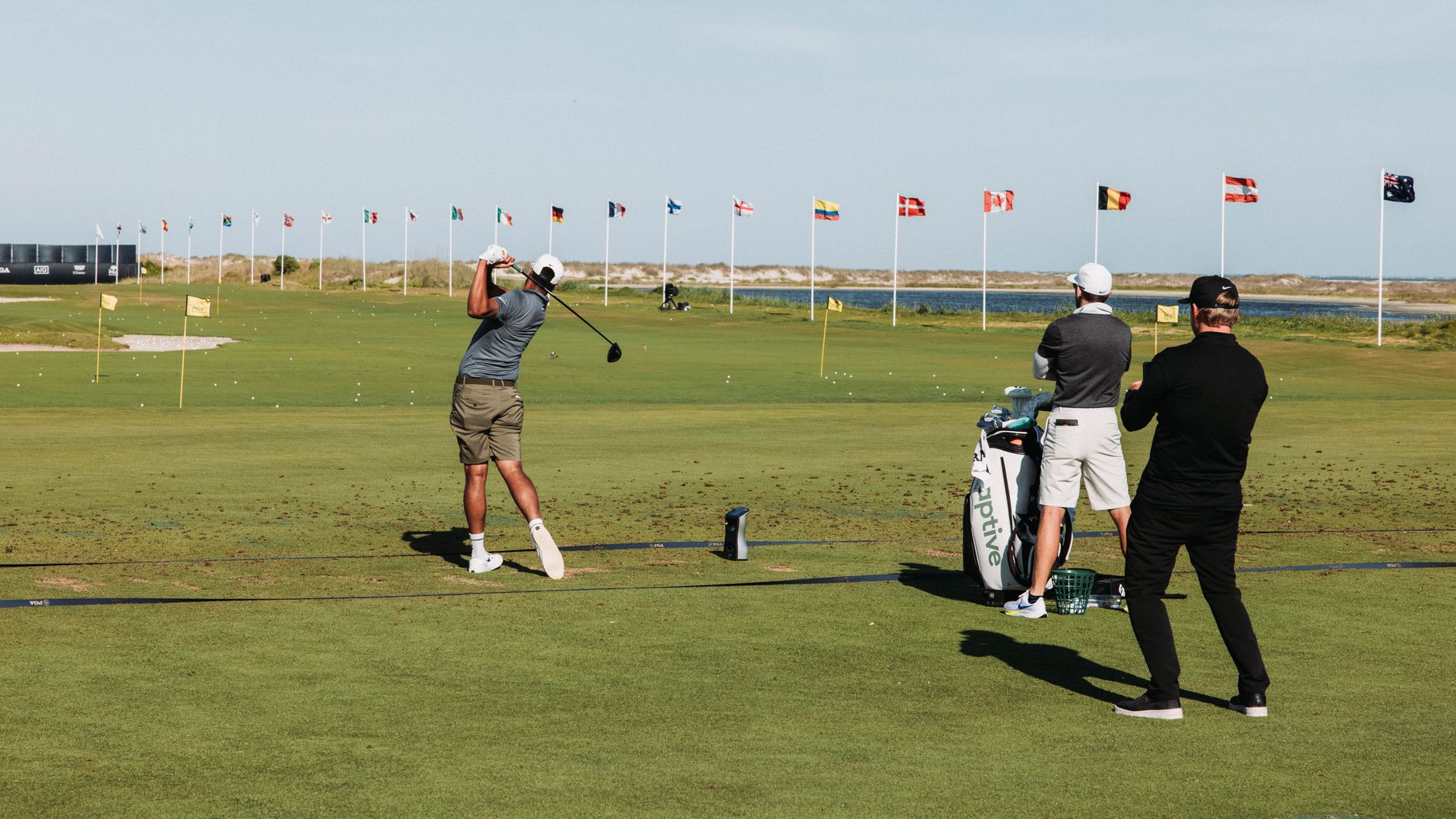
The conversation around iron fitting has matured considerably. Launch monitors, 3D pressure mapping, and sophisticated bending gauges have moved the discipline far beyond a fitter simply watching you hit on a mat. Today, the best fitting sessions marry dynamic data collection with an understanding of how the three pillars—loft, lie angle, and shaft weight—interact under real swing conditions.
This is not about vanity handicaps or chasing distance marketing claims. It is about optimizing every iron in the bag so that your actual swing produces the ball flight, dispersion, and distance gapping you intend—round after round.
Loft: Distance Gapping and Compression Reality
Iron loft is arguably the most misunderstood fitting variable among skilled amateurs. Over the past two decades, OEM manufacturers have progressively strengthened loft across iron sets—a marketing-driven move that inflates distance numbers on spec sheets. A modern 7-iron frequently carries 28–31 degrees of loft, a figure that would have been considered a strong 5-iron not long ago.
The practical consequence is gapping chaos. When a player transitions from a set with 32-degree 7-iron loft to one at 28 degrees, the distance jump can render one or two irons redundant while creating a dangerous yardage gap between mid-irons and wedges. For a player managing a par-4 approach or a precise layup distance, that gap can cost strokes.
A competent fitter will map your carry distances with a launch monitor across every iron in the set, then assess whether loft adjustments—or a blended set configuration combining distance irons with true players irons—produce consistent, playable gaps of roughly 10–15 yards per club. Loft bending within a forged or cast iron (typically ±2 degrees per club without risking structural integrity) can fine-tune gaps without a full set purchase.
- Target 10–15 yard carry gaps between consecutive irons for reliable course management
- Verify true loft with a calibrated loft/lie machine before and after any bending adjustment
- Strengthened lofts demand higher swing speeds to generate adequate spin for stopping power—know your numbers
- Wedge loft must be fitted in context with the irons; a 46-degree PW paired to strong-lofted irons often leaves a yardage cliff before the 52-degree gap wedge
Lie Angle: The Variable That Directs Your Misses
Lie angle is the angle formed between the shaft axis and the sole of the club at address. At impact, if the toe of the iron is raised and the heel contacts the ground first, the face rotates closed and shots pattern left of target (for a right-handed player). Conversely, a heel-up impact promotes an open face and a persistent right-side miss.
The insidious part of an incorrect lie angle is that it mimics swing path errors. A player with irons two degrees upright can spend months on the range working against a ball flight that is actually a fitting problem, not a technique problem. This is why a dynamic lie fitting—using impact tape on the sole or a fitting board to capture true ground contact position at speed—is essential, not optional.
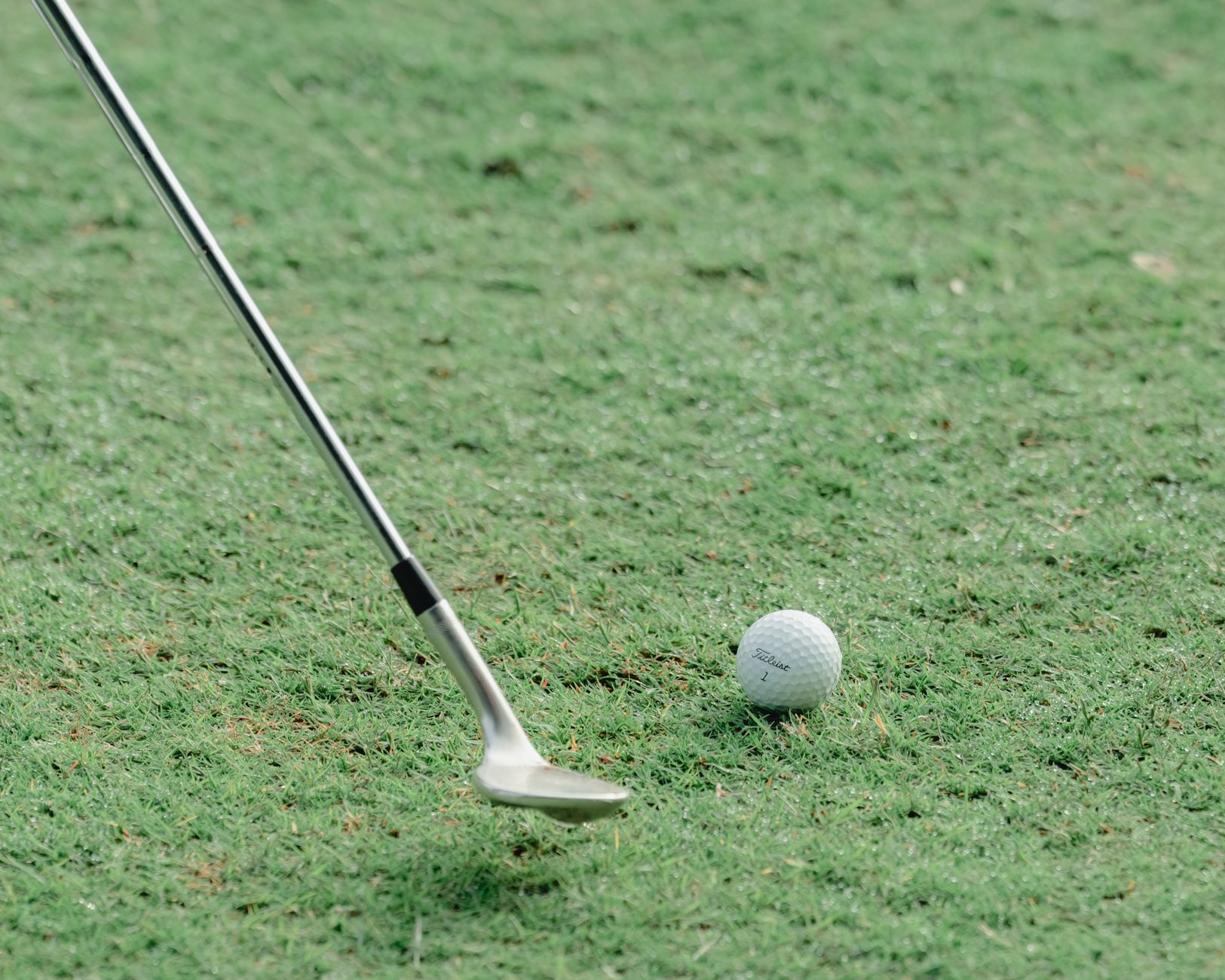
Taller players with upright posture and longer arms typically need upright lie angles; shorter players or those with a flatter swing plane often need flat adjustments. But body dimensions alone are insufficient—your dynamic swing arc determines the lie angle that produces a square face at impact. A good fitter captures this at tempo, not at a rehearsed slow-motion pace.
- Use impact tape and a lie board to assess dynamic sole contact, not just static address position
- Forged irons accommodate lie bending more predictably than cast clubs with harder alloys
- Reassess lie angle after any significant swing change, weight loss, or change in posture or fitness routine
- Distance from the ball at address is a lie angle variable—shaft lean and hand position at impact shift the effective lie
Shaft Weight: The Control Variable Nobody Talks About Enough
Shaft flex gets most of the press in iron fitting conversations, but shaft weight is the variable with the most direct influence on tempo, transition, and dispersion. A shaft that is significantly too light for a player's swing speed and transition tempo will load unpredictably, creating inconsistent face angle at impact—the exact opposite of what a shot-shaper needs.
Players with aggressive transitions and high swing speeds—think 90+ mph iron swing speeds—typically benefit from heavier steel shafts in the 120–130 gram range. These provide the mass necessary to dampen the force of a fast transition and deliver a more stable, consistent feel through impact. Mid-speed players often find the 95–110 gram range optimal, balancing control with the energy return needed to generate adequate ball speed.
The shaft is the engine of the golf club. Everything else is bodywork.
— Common maxim among PGA-certified club fitters
Graphite shafts in irons—once dismissed as a senior or injury accommodation—have evolved dramatically. Modern high-modulus graphite iron shafts now offer tip stiffness profiles that rival steel in stability while reducing cumulative fatigue across an 18-hole round. For competitive players dealing with elbow or wrist stress, a premium graphite iron shaft is a performance choice, not a concession.
How Weight Affects Swing Tempo and Timing
Think of shaft weight as a tempo governor. A heavier shaft demands a slightly more deliberate transition to load properly, which can actually improve sequencing for players with quick, disconnected transitions. Conversely, a lighter shaft allows faster clubhead acceleration, benefiting players with smooth, longer swings who need help generating clubhead speed without overloading the shaft.
The fitting process should include shaft weight testing across at least two or three weight classes with identical flex profiles, isolating weight as the variable. Dispersion data—not just average carry—will reveal which weight class produces the tightest pattern under fatigue, which is ultimately what you need on the 17th hole of a tournament.
Bringing It Together: The Fitting Session Protocol
A thorough iron fitting session should run 60–90 minutes and include dynamic data capture across all three variables. The sequence matters: establish loft gapping first with a baseline shaft, then dial in lie angle using impact tape and a lie board, and finally iterate on shaft weight and flex with lie and loft locked in. Changing all three simultaneously creates confounded results.
Ball selection also plays a role in the fitting equation. The compression of the ball you game directly influences how the iron's loft interacts with your swing speed to produce spin. Attomax's High-Density amorphous metal balls—available in Soft, Medium, and Hard compressions—are engineered to deliver precise spin consistency across iron shots, which means a fitting done with the right ball compression translates directly to on-course performance without spin surprises.
Ultimately, iron fitting is not a one-time event. As your swing evolves—whether through coaching, fitness changes, or simply the natural adjustments that come with age—your optimal specs can shift. Elite players on tour get re-fitted seasonally. For the serious amateur competing at a high club or regional level, an annual fitting check is a sound investment in sustained ballstriking quality.
You can't practice your way out of a fitting problem. The club has to match the swing first.
— Industry standard principle in professional club fitting
Sources & References
Team Attomax
The Attomax Pro editorial team brings you the latest insights from professional golf, covering PGA Tour, LPGA Tour, and equipment technology.